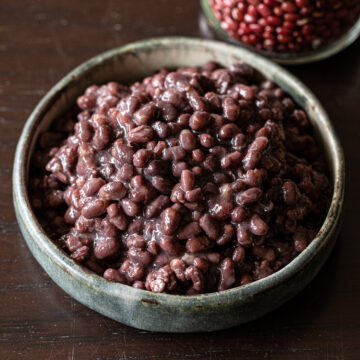
How to Cook Dried Adzuki Beans — Stovetop or Pressure Cooker
A step-by-step guide to cooking dried adzuki beans from scratch using traditional Japanese techniques. This method works on the stovetop or in a pressure cooker.Parboiling is optional, and the cooking liquid can also be enjoyed as nutritious adzuki tea.
Equipment
- Saucepan
- lid
- pressure cooker optional
- Sieve
Ingredients
A — First cook
- 200 g dried adzuki beans
- 600 ml water
- 600 ml water after parboiling
B — Second cook: stovetop version
- water as needed
B — Second cook: pressure cooker version
- 250–300 ml cooking liquid or water just enough to cover the beans
Instructions
A — First cook
- Bring 600ml of water to a boil in a saucepan.600 ml water
- Rinse 200g of dried adzuki beans quickly under running water and add to the pot.200 g dried adzuki beans
- Bring to a boil over high heat, then reduce to medium and cook for 5 minutes.
- Remove from heat and drain through a sieve (first parboil). Return the beans to the pot with 600ml of fresh water.600 ml water
- Bring to a boil over high heat, then reduce to medium-low to maintain a gentle simmer (the surface should bubble lightly, with the beans moving just slightly). Cook for about 15–20 minutes until the skins of most of the beans are smooth and taut (the plumping stage).
- Remove from heat, cover with a lid, and steam for 30 minutes.
If skipping parboiling (cold shock method): Turn off the heat and add about 250g of ice. Wait until the ice has fully melted (1–2 minutes), give it a gentle stir, then continue.
Add water little by little as needed to keep the beans submerged.
If parboiling twice, drain again at around the 5–10 minute mark, return to fresh water and continue.
B — Second cook: stovetop version
- Add just enough water to cover the beans.water
- Bring to a boil over high heat, then reduce to low to medium-low (the surface should barely move, with the beans not knocking against each other). Cook until the beans crush easily between your fingers, checking as they cook.
- Remove from heat, cover with a lid, and steam for at least 30 minutes.
- Drain through a sieve if needed and transfer to an airtight container. Refrigerate. If making anko or oshiruko, reserve the cooking liquid.
The beans absorb water at different rates depending on variety and age, so start with just enough to cover and add more as needed.
Add water as needed to keep the beans just submerged.
You can also leave them overnight if you like (refrigerate in summer).
Handle gently while still warm — the beans are fragile.
B — Second cook: pressure cooker version
- Drain the beans over a bowl to catch the cooking liquid. Return the beans to the pressure cooker.
- Measure the cooking liquid, then add water to bring the total to about 250–300ml. Add it to the pot — the water level should just cover the surface of the beans.250–300 ml cooking liquid or water
- Cover and bring to high pressure over high heat. Reduce to low and cook for 2 minutes. Turn off the heat.
- Let the pressure release naturally.
- Drain as needed and refrigerate. Reserve the cooking liquid if making anko or oshiruko.
The beans are especially fragile right after cooking — let them cool slightly before handling if you want to keep them whole.
Notes
- Parboil only if you want a cleaner, milder flavor — skip it to retain more of the beans' natural flavor and nutrients.
- The plumping stage (cooking until the skins are smooth and taut) is the key to evenly cooked, tender beans.
- The cooking liquid can be used as adzuki tea, or reused in anko, oshiruko, soups, and stews.
- A regular pot gives you more control over texture; a pressure cooker produces softer beans in less time.