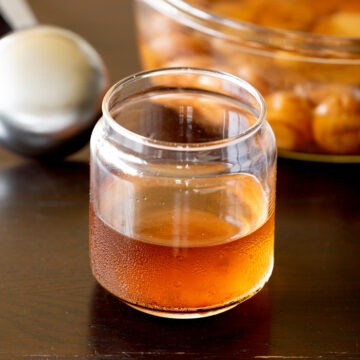
How to Make Ume Plum Vinegar (Umezu)
Ume plum vinegar (umezu) is a traditional Japanese condiment that forms naturally when plums are salt-pickled to make umeboshi. Its bright acidity comes from the citric acid in the plums, making it a versatile addition to dressings, pickles, sushi rice, and more — and making it at home lets you control the salt level to suit your needs.
Equipment
- Glass or enamel storage container for storing the vinegar
- Ladle or spoon
- Funnel optional, but helpful
Ingredients
- 500 g ripe ume plums
- 75–90 g coarse salt 15–18% of plum weight
- 2 tablespoon shochu or vodka, or white ume plum vinegar
Instructions
Salt-pickle the plums
- Follow the basic umeboshi recipe to salt-pickle the plums. Wait until the plums are fully submerged in the rising liquid.500 g ripe ume plums, 75–90 g coarse salt, 2 tbsp shochu
Collect the ume plum vinegar
- When the plums are ready to be removed for drying, carefully ladle the liquid into a clean glass or enamel container.
Store the vinegar
- Seal and store in a cool, dark place or in the refrigerator.
If using a metal lid, place a sheet of plastic wrap or parchment paper between the lid and container to prevent corrosion.
Notes
▶ About the umeboshi process Ume plum vinegar is a natural byproduct of making umeboshi. Start with the basic umeboshi recipe.
▶ Storage
- 15% salt or higher — room temperature, in a cool dark place away from direct sunlight
- Low-sodium (under 15%) — refrigerate
- Shelf life — up to 6 months to a year; longer with proper storage
- As a seasoning — sunomono, salad dressing, sushi rice
- For pickles — beni shoga, Japanese-style pickles, rakkyo, Western-style pickles
- Everyday — onigiri hand water, add 1 tablespoon per 2 cups of uncooked rice