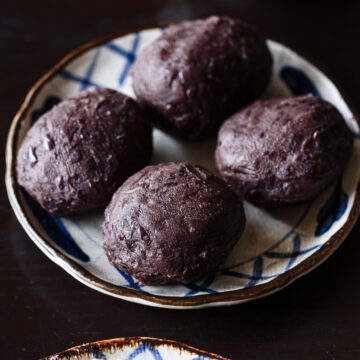
Ohagi (Japanese Sweet Rice Balls with Red Bean Paste)
Homemade ohagi made with lightly sweetened tsubu-an (chunky red bean paste) and a 1:1 blend of glutinous and regular rice. Light in texture, with the natural flavor of adzuki beans coming through.
Equipment
- rice cooker
- Large bowl or flat plate
- Pestle or rolling pin for mashing the rice
- Small bowl of water for dampening your hands
- Spoon
- Plastic wrap, or a tightly wrung damp cloth
- Plate or tray for resting the finished ohagi
Ingredients
- 90 ml glutinous rice mochi rice
- 90 ml regular Japanese short-grain rice
- about 200 ml water rice to water ratio 1:1.1 by volume — or follow the water line on your rice cooker
- anko ½ batch homemade anko, or approx. 250g store-bought
Instructions
Prepare the Rice
- Rinse the glutinous and regular rice together, then cook as you normally would.90 ml glutinous rice , 90 ml regular Japanese short-grain rice, about 200 ml water
- Once cooked, transfer to a flat plate or bowl and use a pestle or rolling pin to gently crush about half the grains — this is called hangoroshi.
- Dampen your hands lightly and portion out roughly 35–40g of rice per piece — about what fits comfortably in one hand. Shape each portion into a small oval.
Shape the rice while it's still warm — it becomes harder to mold as it cools.
Wrap
- Lay a sheet of plastic wrap flat and spoon a heaping tablespoon of anko onto the center.
- Use the back of the spoon to spread anko into a round, then place a rice ball in the middle.
- Shape your hand into a cup so the anko begins to wrap around the rice.
- Ease the anko evenly over the surface until the rice is fully covered.
- Smooth the surface through the plastic wrap with your fingers.
- Repeat with the remaining rice and anko.
Traditionally, the surface is smoothed directly with a dampened index finger, giving it a soft, glossy finish. I prefer a slightly uneven surface, so I smooth it through the plastic wrap instead — it keeps a more handmade feel.
Notes
- If using store-bought anko: If it feels wet or loose, transfer to a saucepan and simmer over low heat, stirring constantly, until some of the moisture has cooked off. Let it cool completely before using. Anko can burn easily, so keep stirring throughout.
- Note on measuring rice: In Japan, rice is traditionally measured in go (合). One go = 180ml, measured using the cup that comes with a Japanese rice cooker. This recipe uses ½ go (90ml) of each rice.