
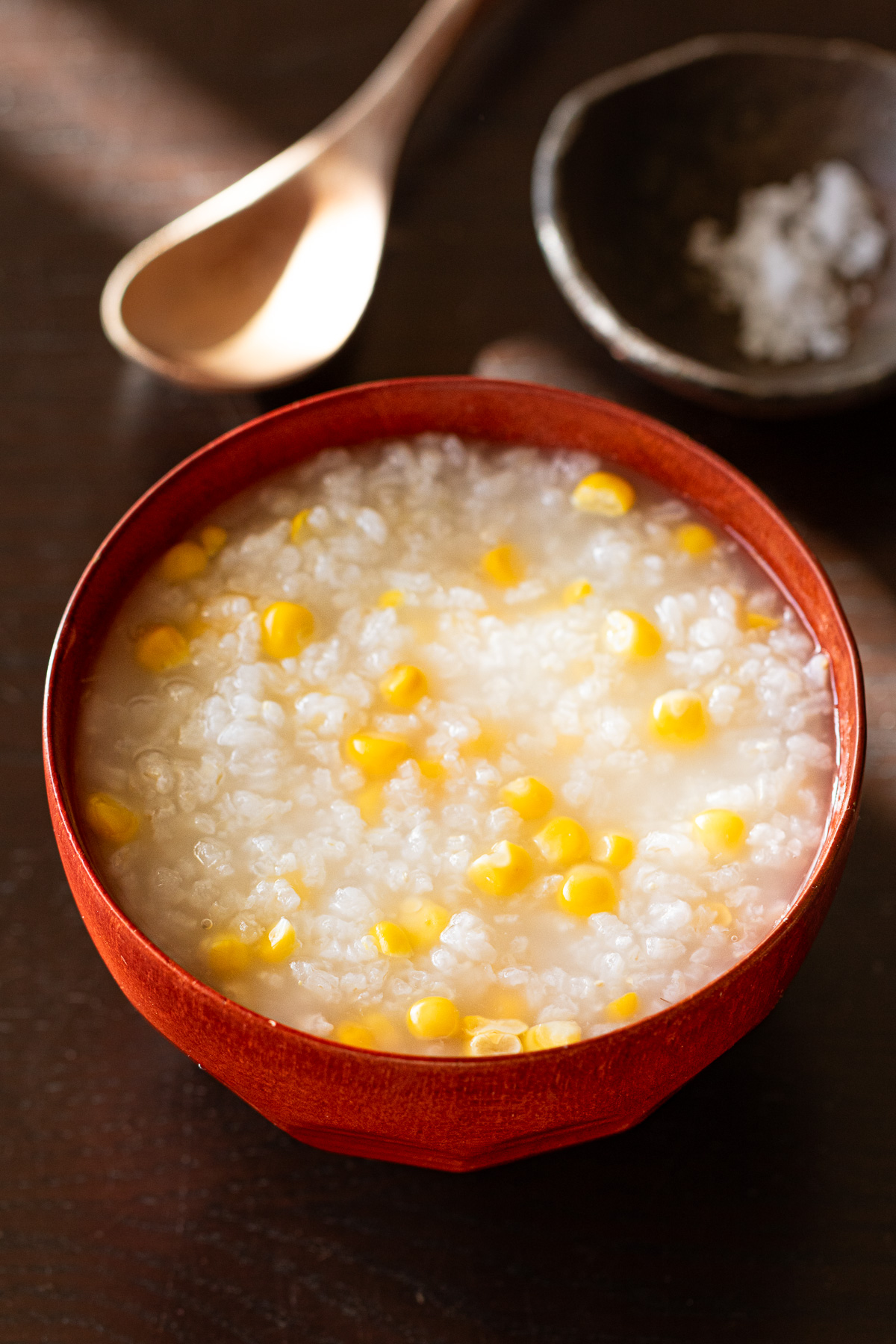
Just corn and rice in the rice cooker.
Cook the cob whole, and gentle umami slowly moves into the porridge—an easy vegan congee that asks very little of you.
Jump to:
⛄️ From My Winter Kitchen | About This Corn Congee
How many times did I make congee this year?
And how many times did it carry me through?
Looking back, I’ve never cooked congee as often as I did this year.
Among all those bowls,
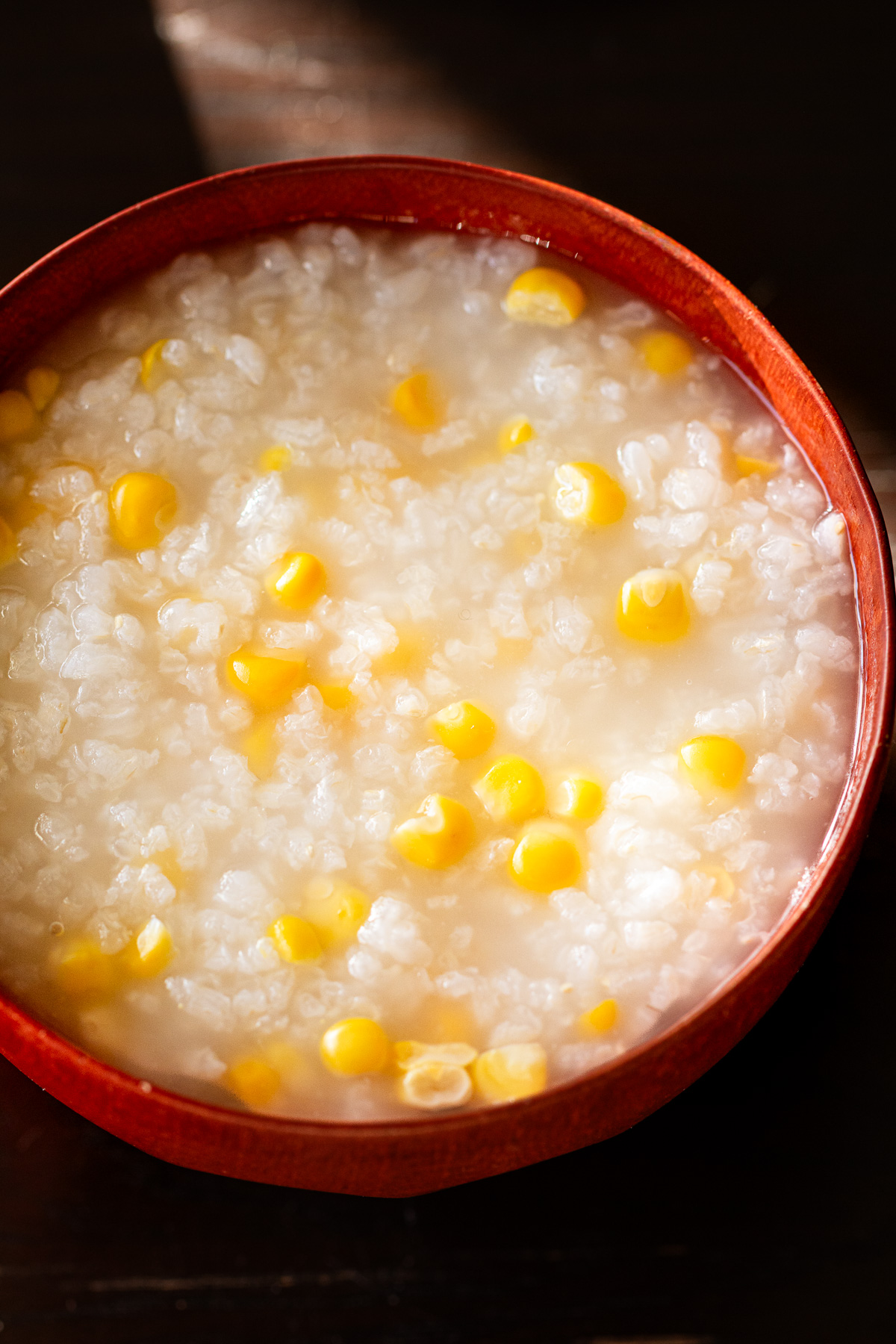
this corn congee is the one I returned to again and again.
The texture of each kernel,
the juicy sweetness—
it supported me more times than I can count.
In summer, I freeze fresh corn.
When I need it, I drop it straight into the pot.
Corn cut from the cob.
Corn boiled, then frozen.
Corn frozen raw.
Any of them work.
Cook it with the cob,
and a quiet, natural broth forms on its own.
Sitting in front of a steaming bowl,
there’s a moment when you just
exhale.
That’s this congee.
🐈 What I Like About This Recipe
- Easy rice cooker congee: Add everything to the rice cooker and press start.
- Umami from the cob: Cooking the corn on the cob releases a clear, natural broth.
- Works with frozen or canned corn: A vegetable congee you can make year-round.
- Pop and natural sweetness: Each kernel keeps its texture and sweetness.
- Gentle on the stomach: A simple bowl for mornings or days when you want something light.
- Vegan congee: Made with only plant-based ingredients.
🍊 Ingredients & Tools
Ingredients
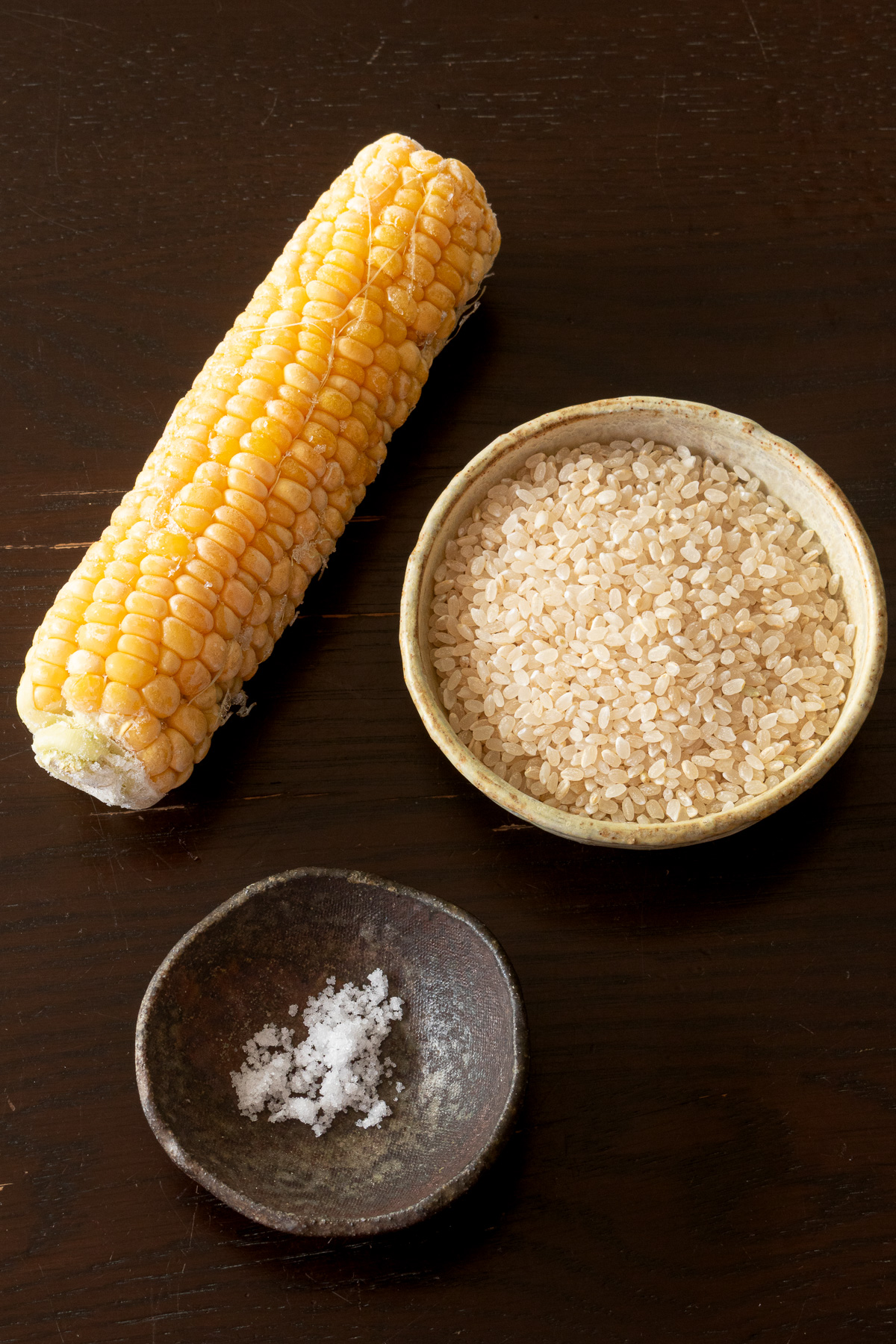
● Corn: I use whole frozen corn on the cob here, but this recipe also works with kernels cut from the cob or canned corn
● Rice: Regular white rice. Short-grain rice (such as Japanese rice) works especially well, but any white rice is fine.
● Water: Filled to the congee line of the rice cooker
● Salt: Added at the end, to taste
Tools
- Knife and cutting board
- Tongs
- Rice cooker or Instant Pot (with porridge mode)
📖 How to Make | Congee in a Rice Cooker
▶︎ Basic Method (With Whole Frozen Corn)
- Prepare
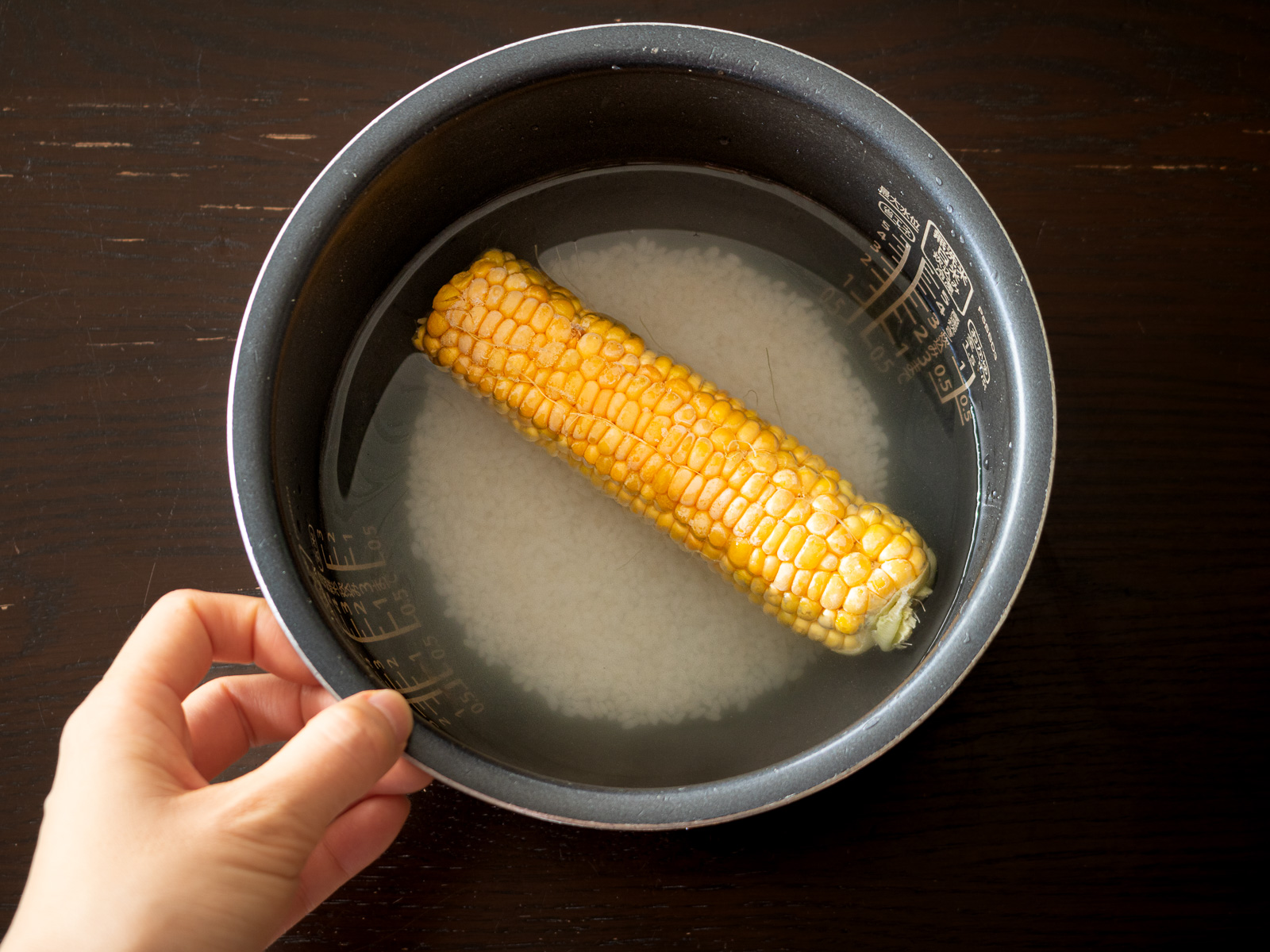
- Rinse the rice and add water according to your rice cooker’s congee or porridge markings (I usually choose the thinner congee setting, but the regular one works well too)
- Add the whole corn on the cob
- Cook using the congee or porridge mode
🌿 Tip:
If your rice cooker doesn’t have congee markings, use about 5 times the volume of water for a thicker congee, or up to 10 times for a thinner, more soup-like texture.
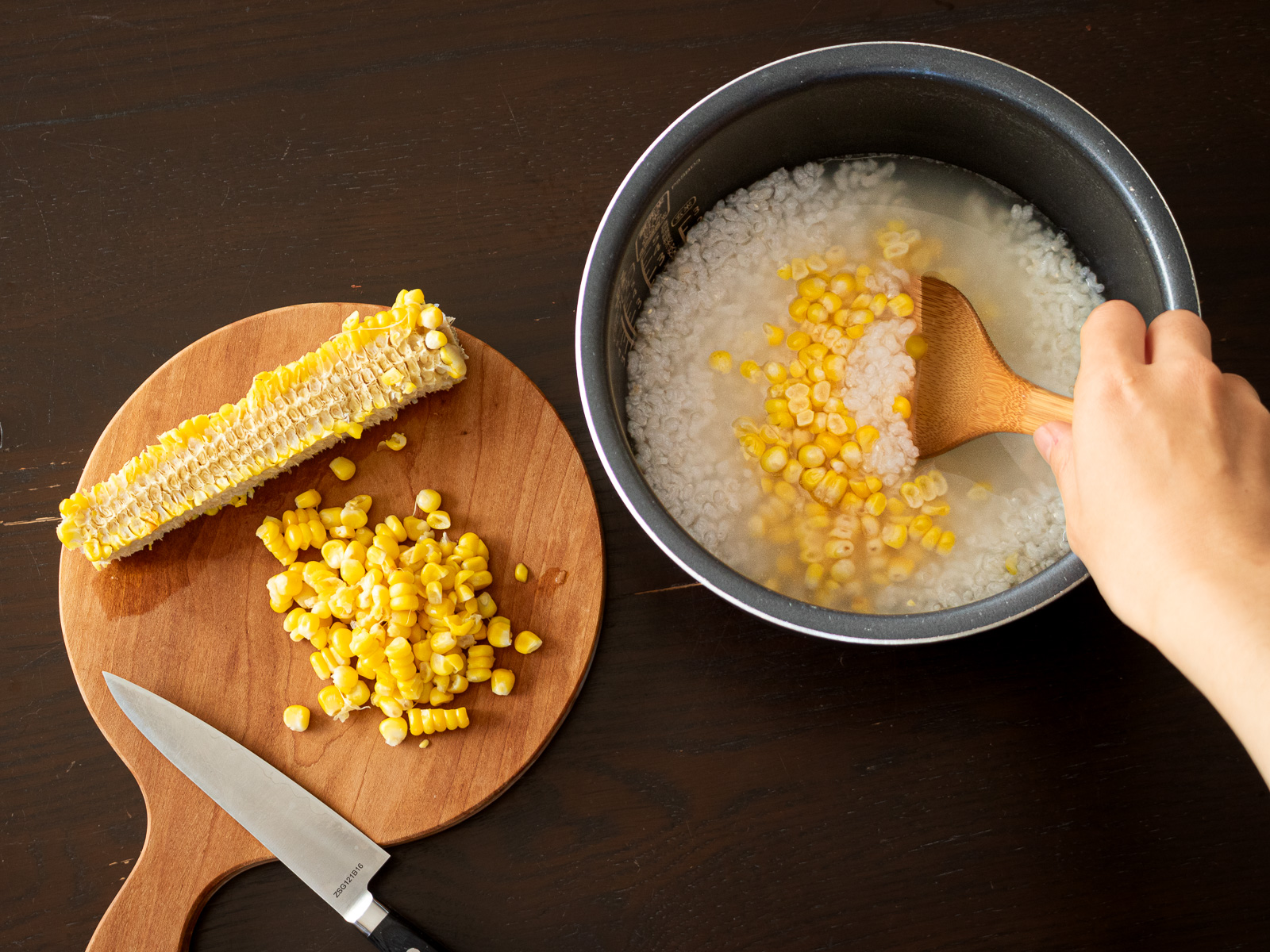
- Cut the Kernels
- Once the congee is cooked, remove the corn cob.
- Cut the kernels off with a knife.
- Return the kernels to the rice cooker and stir them into the congee.
- Serve in bowls and season with salt to taste.
🌿 Tip:
When cutting kernels from hot corn, hold the cob with tongs to avoid burning your hands.

If the congee thickens after cooking, add a little water and warm gently, stirring until smooth.
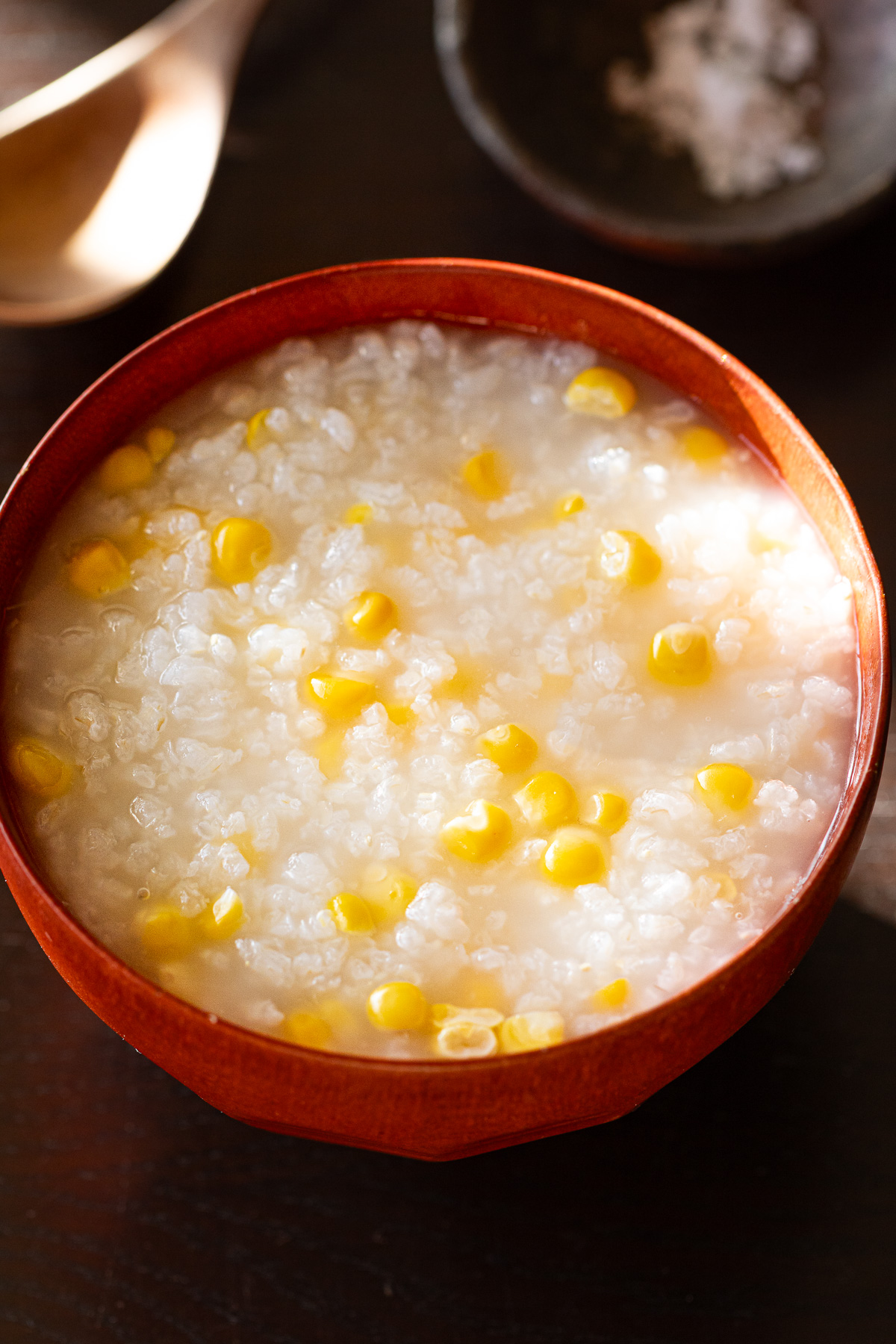
▶︎ For More Depth
For more depth of flavor, here’s what works well:
- Cut the kernels off fresh or thawed corn first
- Add the cob, the kernels, rice, and water to the rice cooker
- Cook on the congee or porridge setting
- Remove the cob before serving
🌿 This method draws out more umami from the cob.
📘 Kitchen Notes | Tips for Delicious Congee
➤ About the Water
Less water makes the congee thicker and more comforting.
More water gives a lighter, almost soup-like finish.
I choose somewhere in between most days,
adjusting quietly to what I need in that moment.
➤ Getting the Most from Corn
Cooking the corn with the cob brings out a deeper umami.
As it cooks, the sweetness and flavor slowly move from the cob into the rice.
This congee can be made with fresh, frozen, or canned corn.
Still, using corn on the cob gives the most depth.
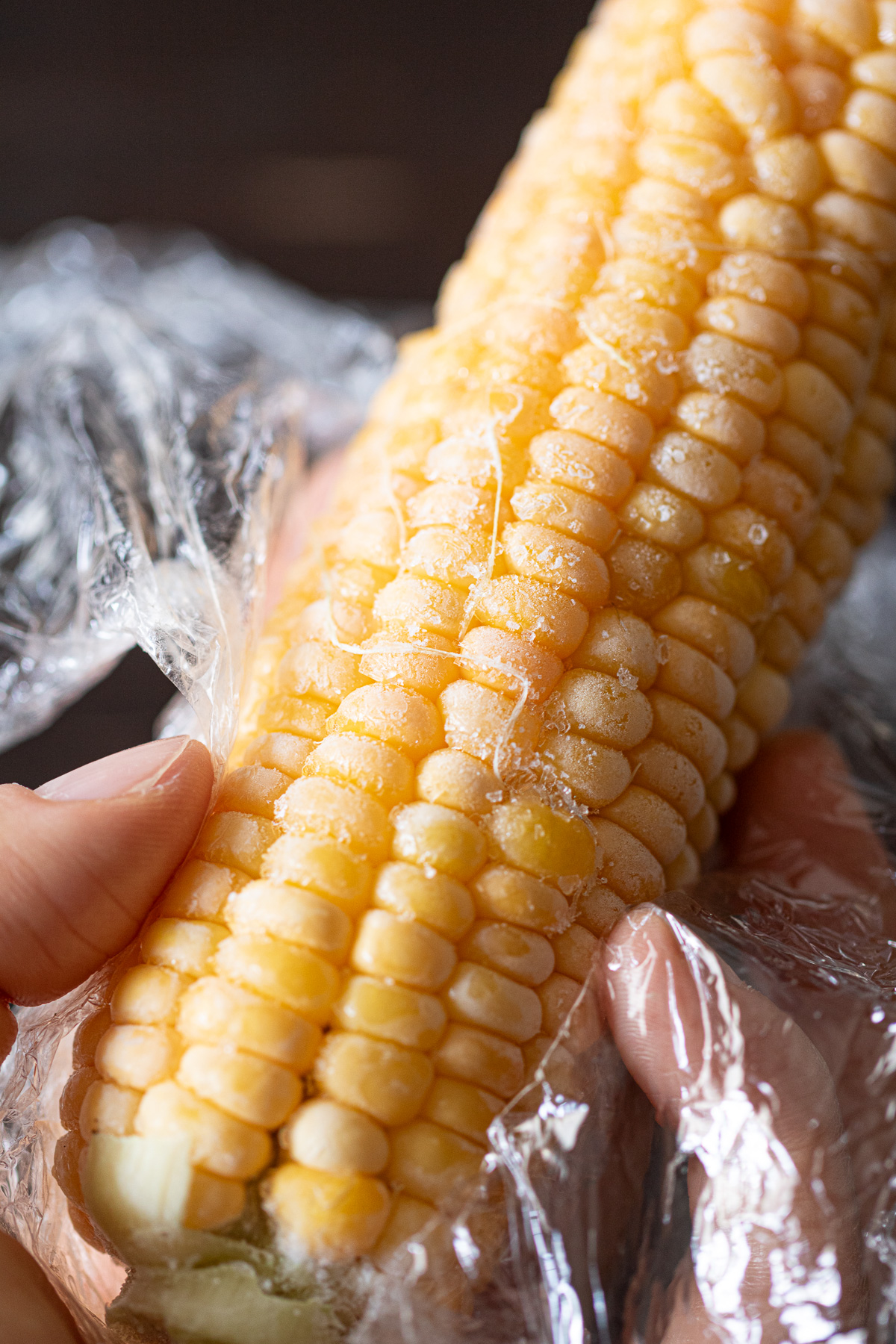
● Frozen corn on the cob: Add it straight from the freezer and cook as is. Once cooked, cut off the kernels. (You can also thaw it first and treat it like fresh corn.)
● Fresh corn: Cut off the kernels, then cook both the kernels and the cob together. The cob gently enriches the broth as it cooks.
● Just kernels or canned corn: Cook them directly with the rice and water. If you like, add a small piece of kombu for extra umami.
📚 Q&A
Yes. Add the rice, water, and corn to a pot and simmer over low heat.
Stir occasionally to keep it from sticking.
That works too. Add cooked rice, water, and corn to a pot and simmer.
It comes together faster this way.
The regular congee setting works fine.
If you prefer a thinner texture, you can always add a little water after cooking and gently adjust it. You can do this while reheating or keeping it warm.
As the rice sits, it continues to absorb liquid.
Add a little water and reheat gently on the stove or in the rice cooker until it loosens to your liking.
🌽 More With Corn
Other vegan Japanese corn recipes:
🍲 Other Congee I Make
Sweet and savory congee recipes:

✏️ Recipe Card|Printable
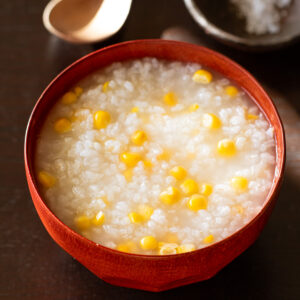
Sweet Corn Congee (Rice Cooker / Instant Pot)
Equipment
- Knife and cutting board
- Tongs
- Rice cooker or Instant Pot - (with porridge mode)
Ingredients
- ½ cup rice (rice cooker cup)
- 1 corn on the cob (fresh, frozen, canned)
- water (to congee markings, if available)
- salt (to taste)
Instructions
- Rinse the rice and add it to the rice cooker.½ cup rice
- Add water according to the congee or porridge markings (thinner or regular congee settings both work).water
- Add the whole corn on the cob.1 corn on the cob
- Cook using the congee or porridge mode until the rice is completely tender.
- Once cooked, remove the corn and cut the kernels off with a knife.
- Return the kernels to the congee and stir well.
- Serve warm and season with salt to taste.salt

Comments
No Comments