
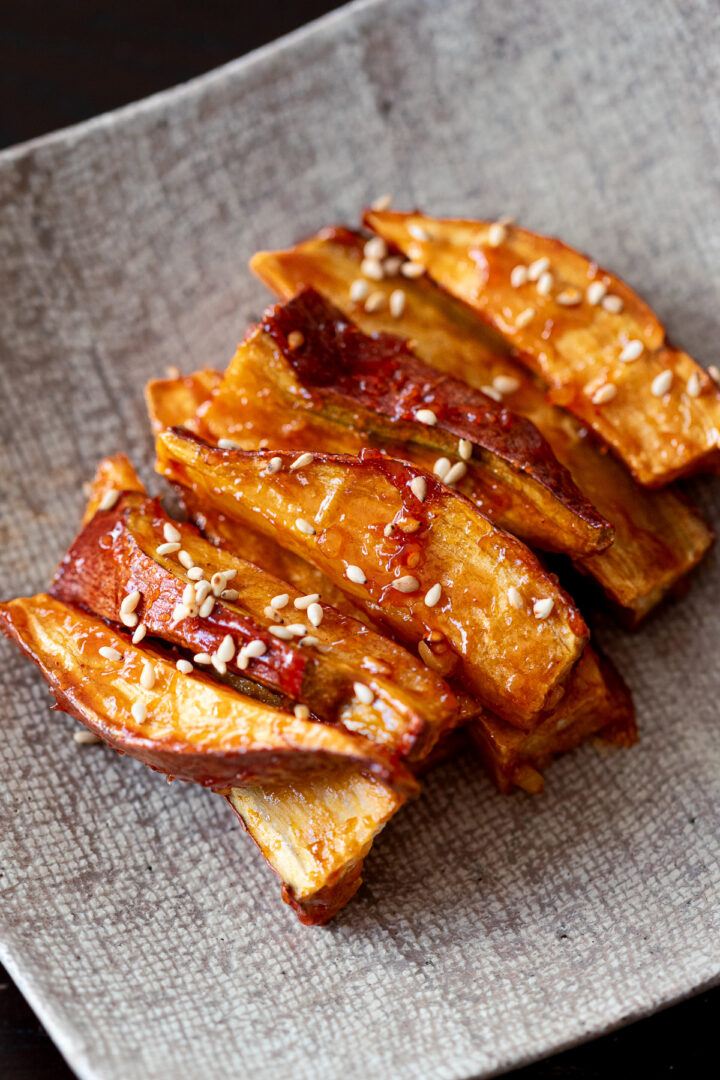
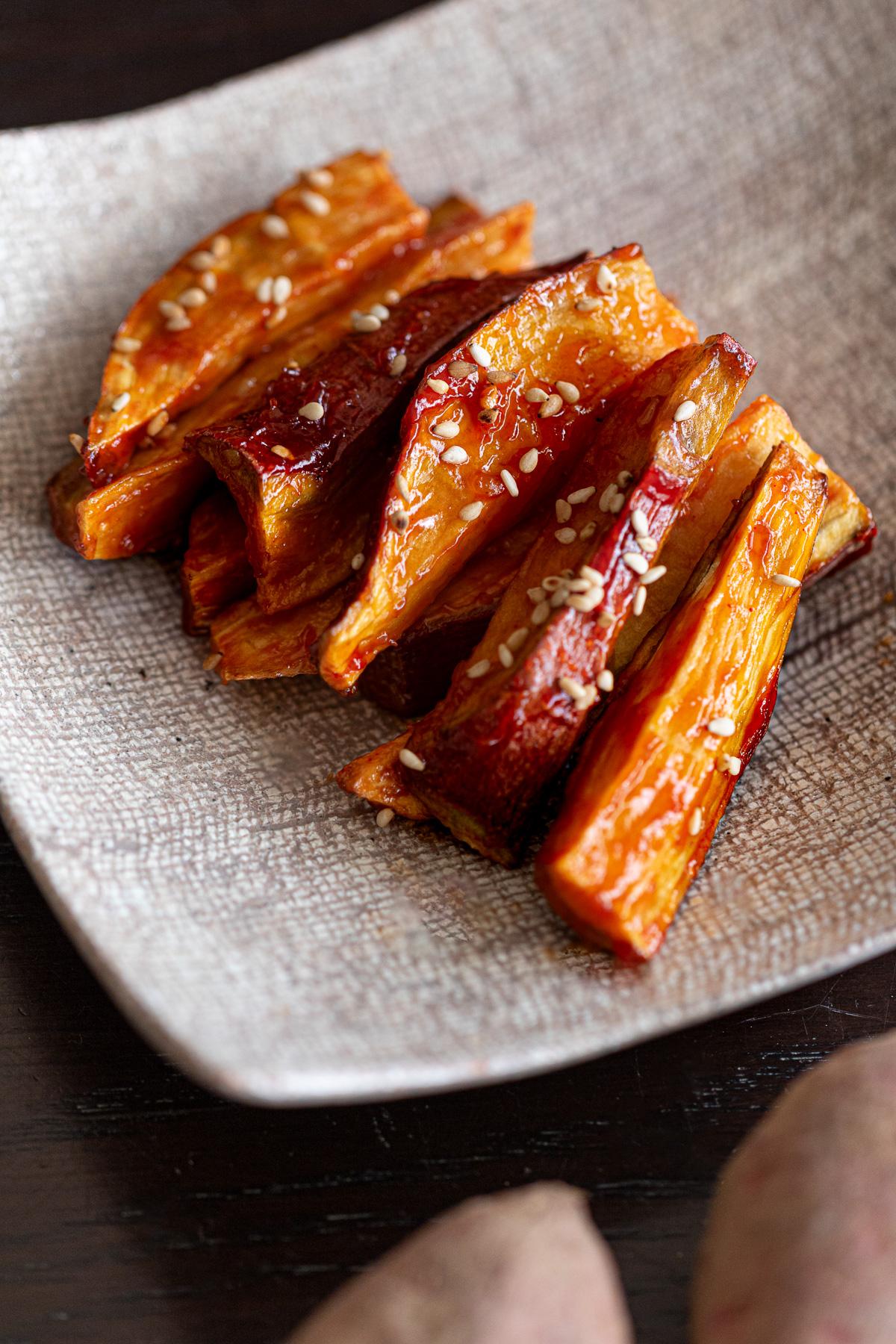
Sweet, savory, and slightly spicy, these yangnyeom sweet potato sticks are baked in a toaster oven and coated in a glossy yangnyeom sauce.
The sauce brings sweetness and tang while letting the natural flavor of the sweet potatoes come through.
An irresistible vegan snack or simple appetizer you’ll want to make again and again.
Jump to:
- ⛄️ From A Winter Kitchen|Yangnyeom Sweet Potato Sticks
- 🧺 Why You'll Love This Recipe
- 🍊 What Is Yangnyeom Sauce?
- 🍠 Ingredients
- 🥣 Kitchen Tools
- 📖 How to Make
- 🫙 Storage & Serving Ideas
- 📘 Kitchen Notes & Flavor Variations
- 📚 FAQ
- 🛷 More Vegan Recipes with Gochujang
- 🧣 More Vegan Sweet Potato Recipes
- 🐕 More Vegan Korean Recipes
- ✏️ Recipe Card|Printable
⛄️ From A Winter Kitchen|Yangnyeom Sweet Potato Sticks
This vegan sweet potato stick recipe has been my quiet obsession from last winter through this year.
Inspired by the mildly sweet-and-spicy tteokbokki I enjoyed in Busan, I wondered: "Could I recreate this feeling as a home snack?" And this recipe was born.
The method is the same as my no-fry candied sweet potatoes, but here the sweet potatoes are cut into finger-friendly sticks—easy to serve as a cozy vegan snack or appetizer.
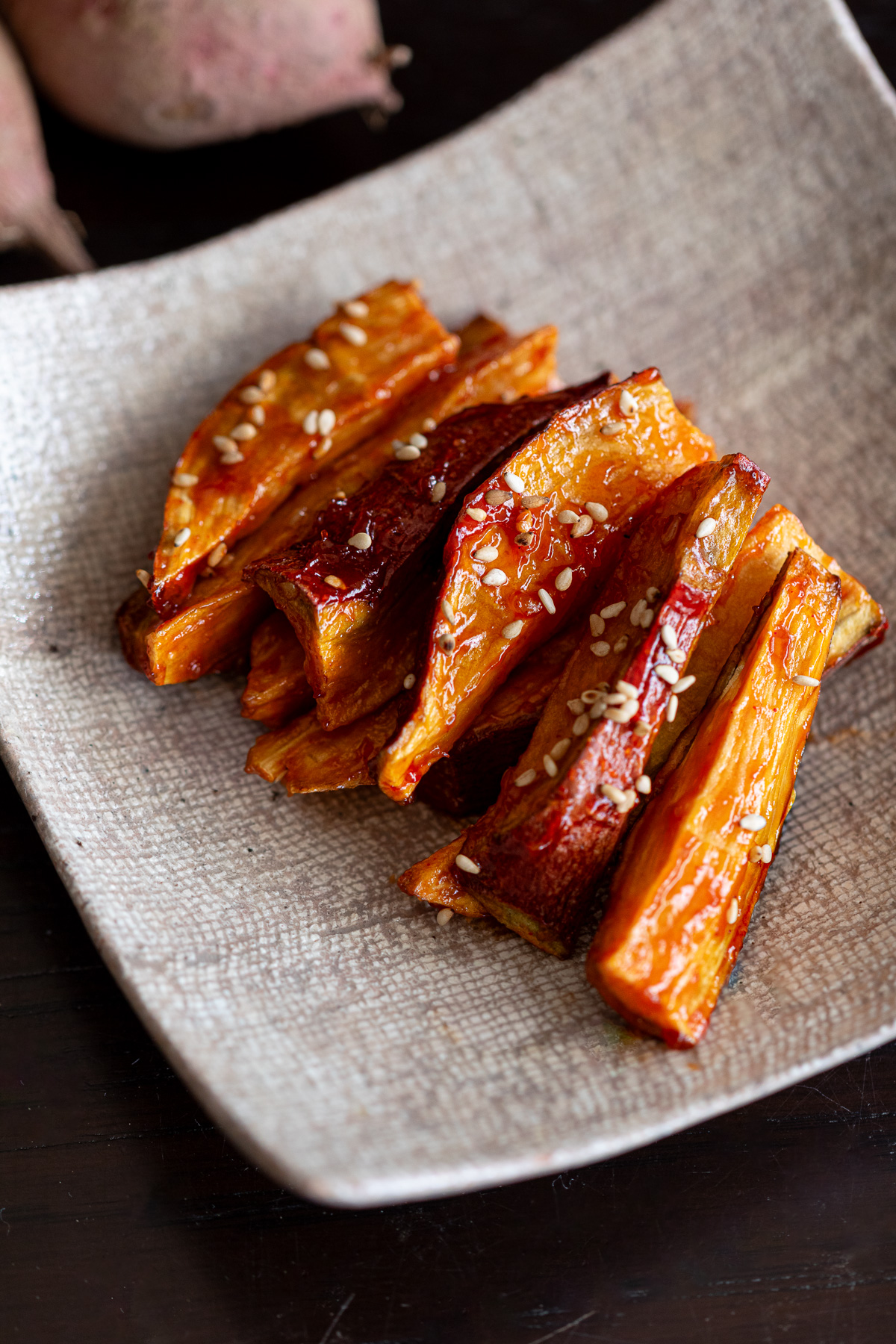
Glazed in a gochujang-based yangnyeom sauce, these sweet potato sticks are slightly sticky in the best way.
Your hands get a little messy, but that’s part of the charm.
Eating with your hands—primitive, honest, satisfying—sometimes brings unexpected joy.
The flavor stays even when cooled, so they’re perfect for bento boxes or evening appetizers — and just right for cozy nights with close friends, passing the plate around while you talk, laugh, and watch a movie.
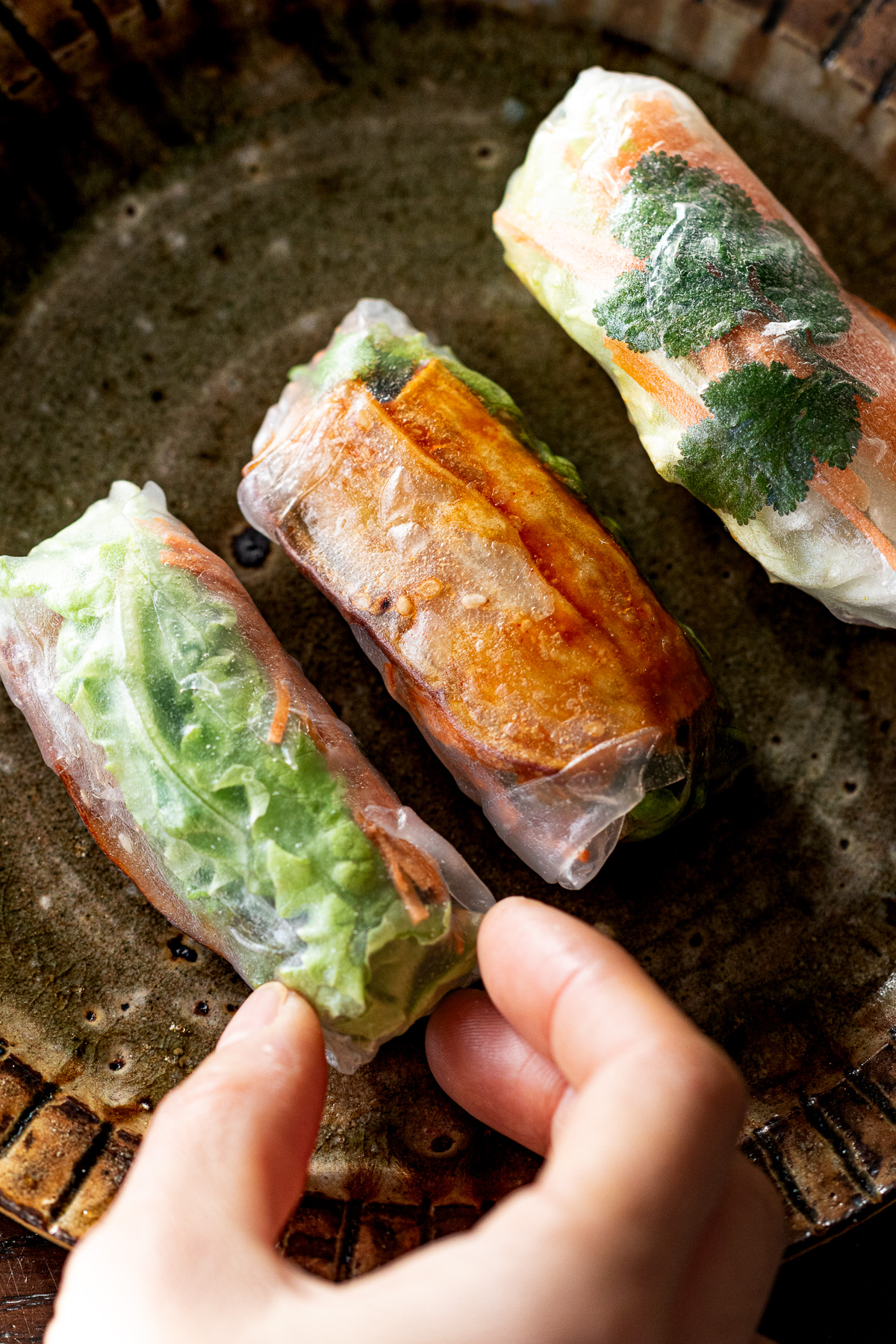
Leftovers?
Wrap them in rice paper with crisp lettuce, julienned carrots, and a bit of cilantro.
You’ll have an instant fresh spring roll with a sweet-spicy Korean-inspired flavor — no dipping sauce needed✌️
🧺 Why You'll Love This Recipe
- No-fry & healthy – baked, not fried
- Easy toaster oven recipe – no special equipment
- 100% vegan, plant-based & gluten-free
- Perfect as vegan snacks or sweet potato appetizer bites
- Customizable yangnyeom sauce with adjustable heat
- Gochujang sweet potato flavor for a mildly spicy-sweet kick
🍊 What Is Yangnyeom Sauce?
Yangnyeom sauce is a classic Korean sweet and spicy glaze most famously used for yangnyeom chicken, but it also works wonderfully on vegetables and plant-based dishes.
Made from gochujang (Korean chili paste), it combines red pepper flakes, soy sauce, sugar, rice syrup, and garlic to create a rich, balanced flavorーsweet, savory, and aromatic.
In this recipe, the sauce is mildly sweet and gently spiced, allowing the natural sweetness of the sweet potatoes to shine through. It's a versatile glaze that brings a touch of Korean flavor to vegan sweet potato sticks or other plant-based bites.
🍠 Ingredients
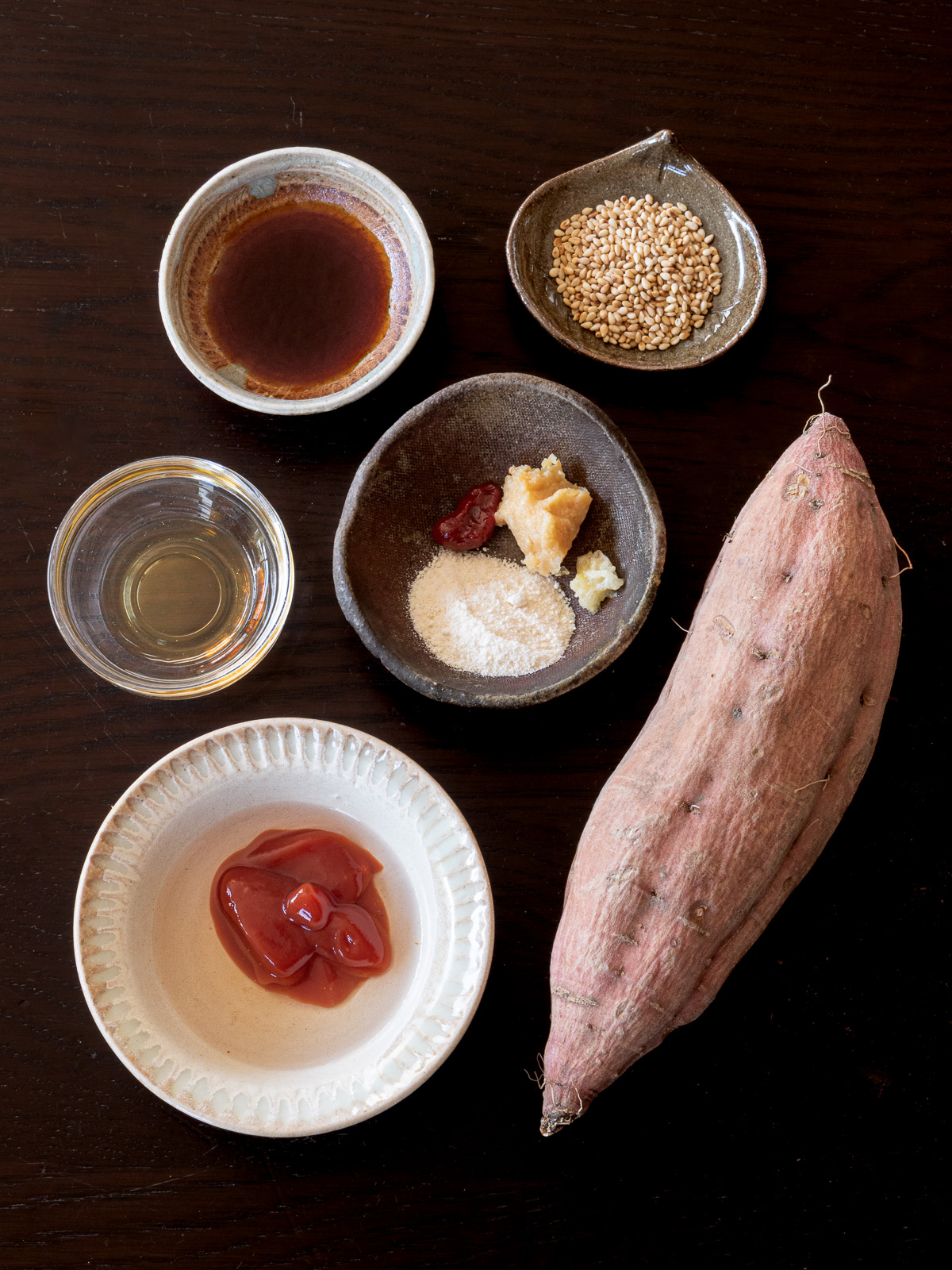
▶︎ Base Ingredients
- Sweet potatoes (preferably Beniharuka or Annō-imo for natural sweetness)
- Toasted sesame seeds (for garnish)
About the Sweet Potatoes
For this recipe, naturally sweet varieties such as Beniharuka or Annō-imo work especially well.
Unlike my round-cut candied sweet potatoes, I slice them into finger-friendly sticks and bake them in a toaster oven until soft and fluffy inside.
I once tried this with regular potatoes, but the deep, natural sweetness of a good sweet potato balances the yangnyeom glaze far better.
That natural sweetness makes all the difference.
▶︎ Vegan Yangnyeom Sauce
For this version, I keep both the sweetness and heat gentle and balanced.
The base is ketchup, rounded out with miso and soy sauce so the glaze feels rich but not heavy.
Key ingredients:
- Ketchup (I use Heinz)
- Mirin (Japanese sweet rice wine)
- Beet sugar (powdered or fine-grain dissolves more easily)
- Soy sauce (use tamari for gluten-free)
- Sweet Rice miso / 米味噌(甘口)
- Gochujang (Korean chili paste—I use bibigo for its clean, sharp heat)
- Grated garlic
- Sesame oil
About the Sugar
Beet sugar has a softer, less intense sweetness compared to many cane sugars, which helps keep the glaze from becoming overly sweet.
If substituting, fine cane sugar, organic sugar, or coconut sugar can be used instead. Since some sugars are sweeter, start with slightly less and adjust to taste.
About the Gochujang
I usually keep a larger container in the freezer.
Like miso, gochujang freezes well and stays easy to use, so there’s no need to worry about it becoming rock solid.
👇 Full measurements in the recipe card below
🥣 Kitchen Tools
- Knife and cutting board
- Mixing bowl and spoon
- Toaster oven
- Aluminum foil
- Frying pan
- Spatula
📖 How to Make
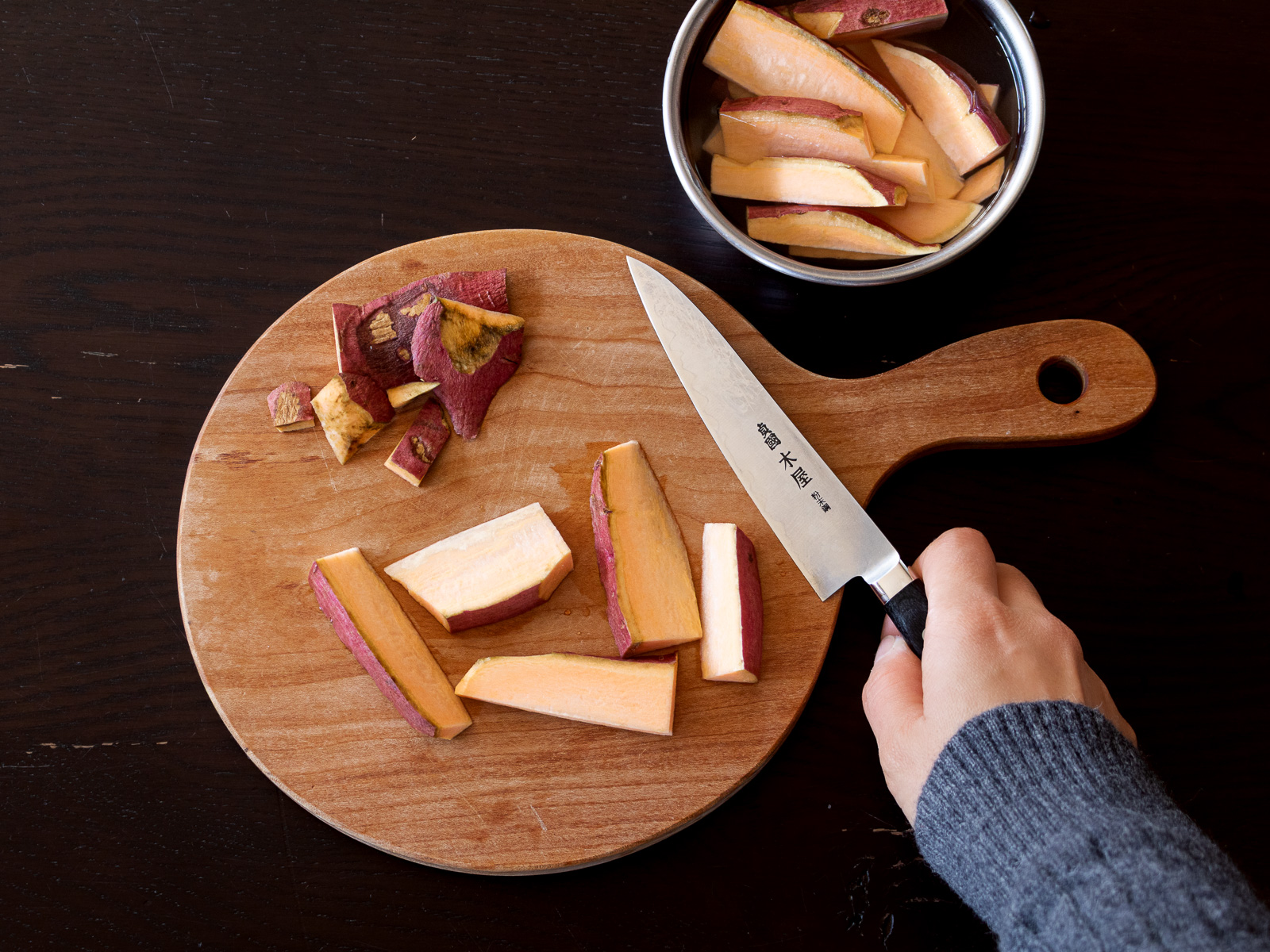
- Cut the Sweet Potatoes
- Scrub the skin clean, then cut them into 2 cm-thick wedges for easy snacking.
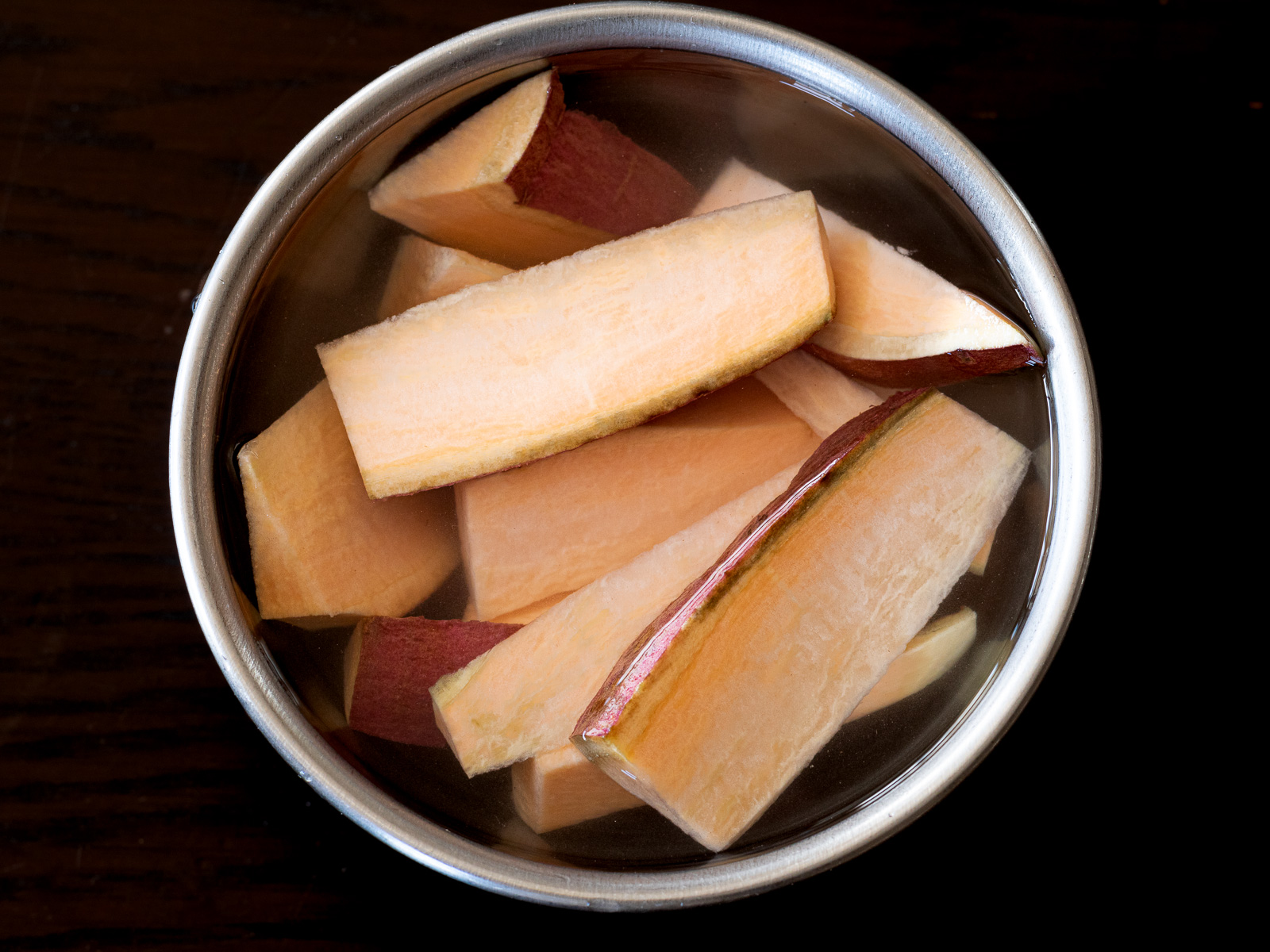
- Soak in Water
- Place the cut sweet potatoes in water to prevent browning.
- After 5–10 minutes, drain well in a colander.
🌿 This step is optional if you don’t mind a bit of discoloration.
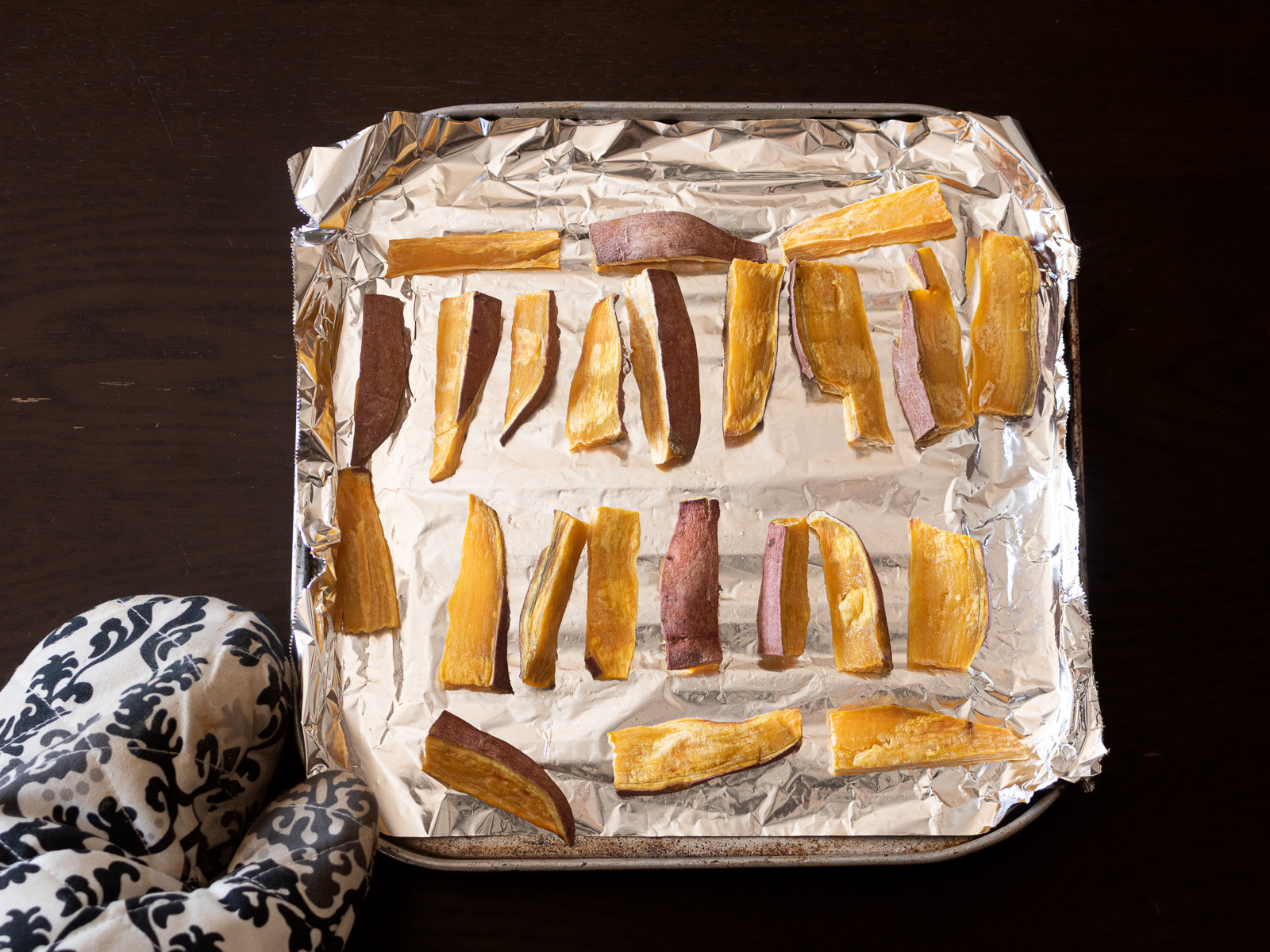
- Bake in the Toaster Oven
- Line a baking tray with aluminum foil and arrange the sweet potatoes in a single layer without overlapping.
- Bake at 250°C (480°F) for about 15 minutes—no preheating needed🫰
🌿 You can leave the surface moisture—it helps them develop a beautiful golden finish.

🌿 If your tray has extra space, bake a few extra and toss some with traditional Japanese candied sweet potato glaze (daigaku imo–style) for a second variation.
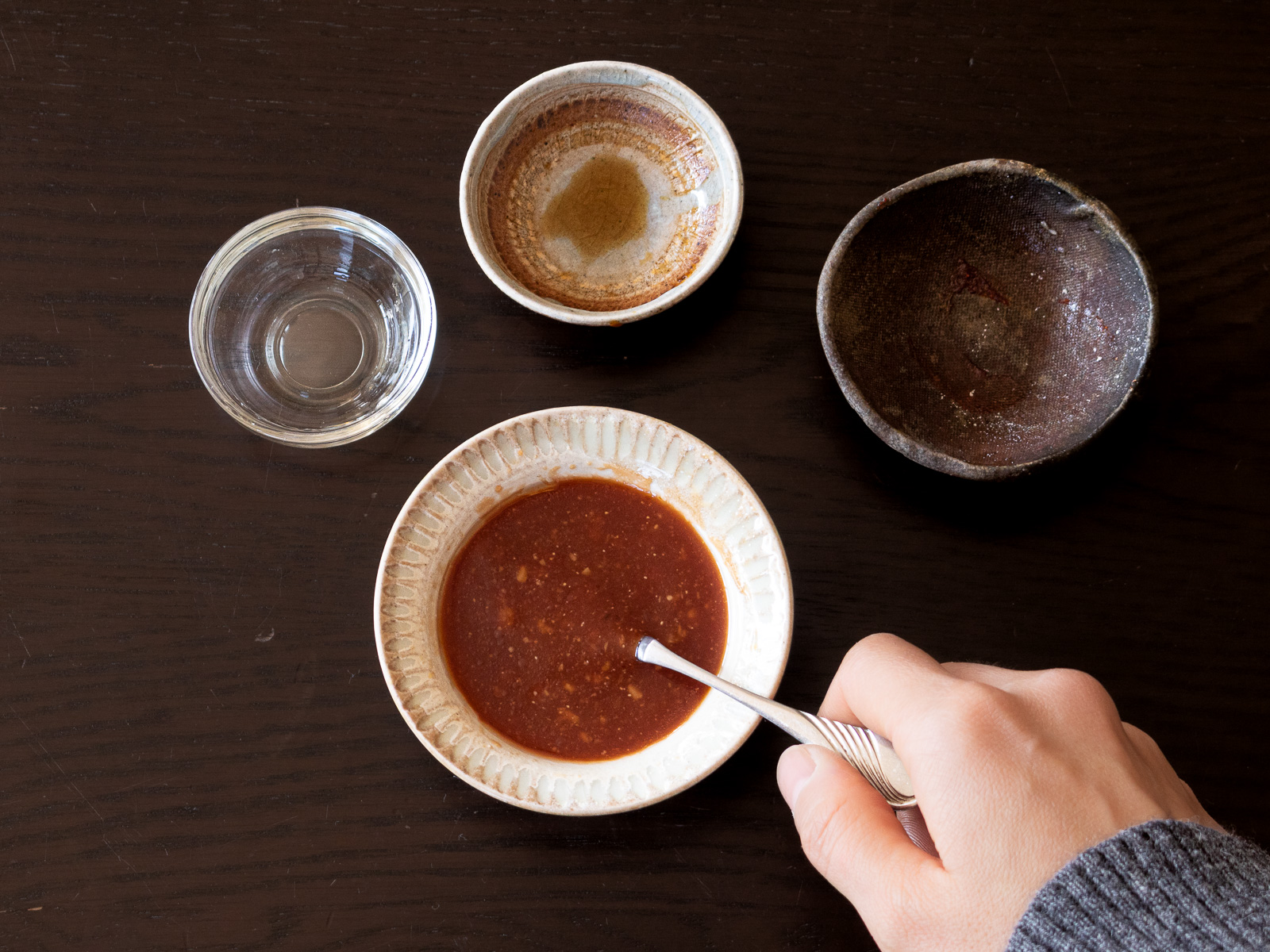
- Make the Yangnyeom Sauce
- Add all the sauce ingredients to a bowl and mix well.

- Heat the Sauce
- Transfer the sauce to a frying pan and heat gently over low heat.
- Once it comes to a boil, remove it from the heat immediately.
🌿 Just enough to cook off the mirin's alcohol—watch carefully to avoid burning.
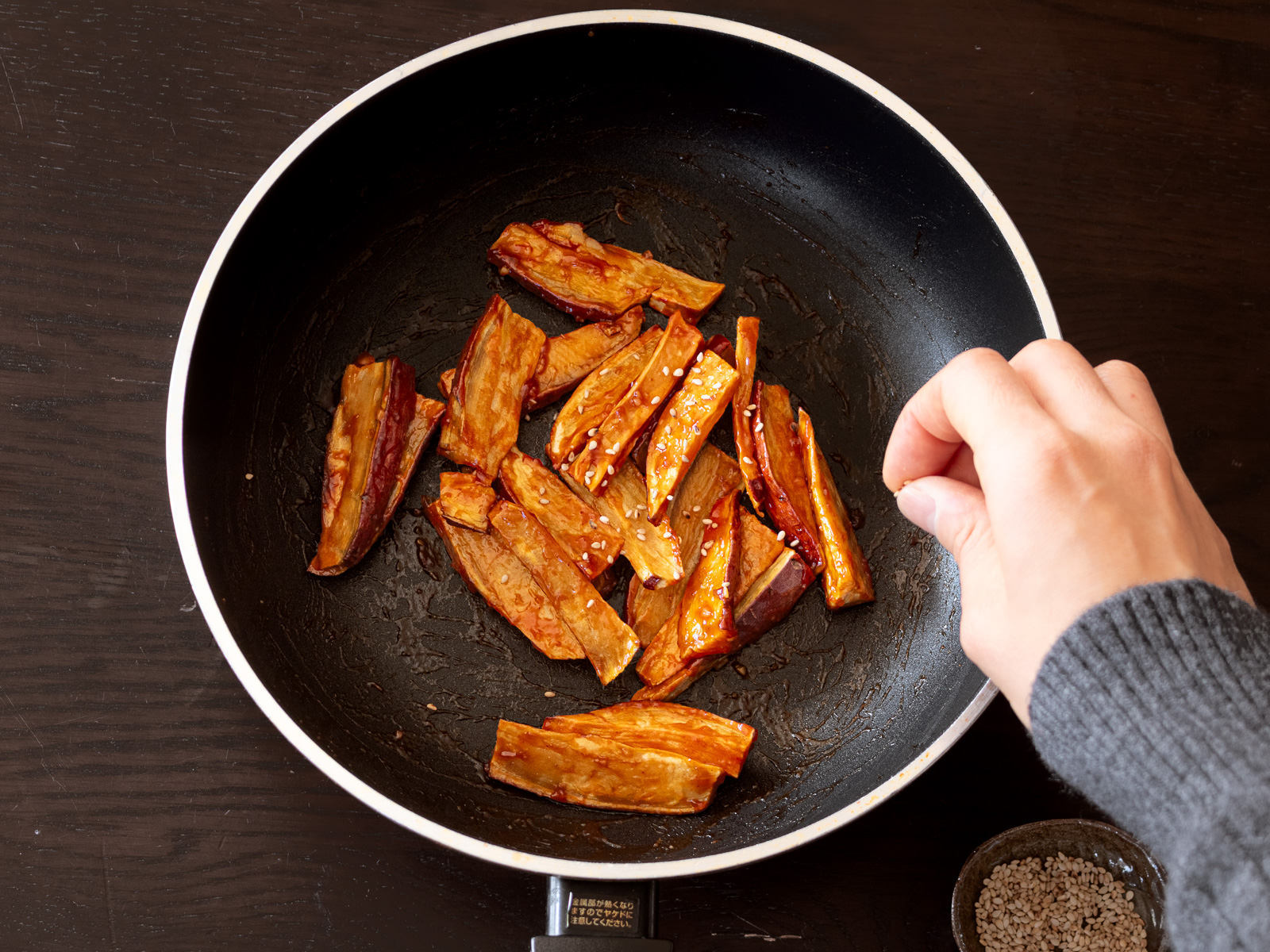
- Toss and Serve
- Add the baked sweet potato sticks to the pan and quickly toss to coat evenly in the glaze.
- Sprinkle with toasted sesame seeds and serve while hot.
🫙 Storage & Serving Ideas
- Best enjoyed fresh – the flavor is brightest when hot
- Still tasty when cooled – perfect for bento boxes or as a light snack/appetizer
- Spring roll idea – wrap leftover sweet potato sticks in rice paper with crisp veggies for an easy, party-ready vegan appetizer(👉 Fresh Vegan Summer Rolls with Yangnyeom Sweet Potato)
📘 Kitchen Notes & Flavor Variations
➤ Adjust the heat – control the spice level by adding more or less gochujang
➤ Try other vegetables: This yangnyeom sauce works well with vegetables like lotus root, kabocha squash, or broccoli. The sauce pairs best with naturally sweet ingredients. For less-sweet vegetables, add a touch more sugar or mirin to balance the flavor
➤ Vegan protein option: Pan-fry pressed firm tofu, then toss with the yangnyeom sauce for an easy plant-based main
📚 FAQ
A regular oven works perfectly. Toaster ovens often give a fluffier texture, while a regular oven can bring out more of the sweet potato’s enhanced natural sweetness.
Yes. They keep their flavor well, so they’re great for bento boxes or appetizers. But still, eating them fresh and warm gives the best aroma and texture.
Absolutely. Some store-bought sauces are sweeter than homemade, so you may want to adjust with a little soy sauce (for saltiness) or vinegar (for sourness) to balance the flavor.
Yes—simply reduce the gochujang. The natural sweetness of the sweet potatoes means even a small amount still gives plenty of flavor.

If you feel like whispering a thought, asking a question, or simply saying hello — the comment section is always open 📮
🛷 More Vegan Recipes with Gochujang
Korean-inspired plant-based recipes featuring bibigo gochujang:

🧣 More Vegan Sweet Potato Recipes
Vegan recipes highlighting sweet potatoes’ natural sweetness:


🐕 More Vegan Korean Recipes
From mains to sides and desserts—explore more plant-based Korean cooking:


✏️ Recipe Card|Printable
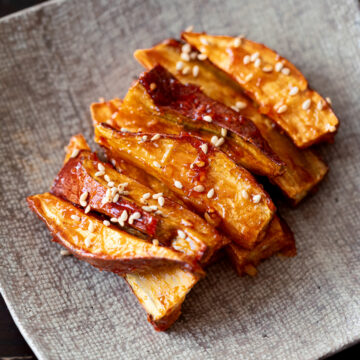
Yangnyeom Sweet Potato Sticks|Vegan Snack & Appetizer
Equipment
- Knife and cutting board
- mixing bowl and spoon
- toaster oven
- frying pan
- Spatula
- aluminum foil
Ingredients
Base Ingredients
- 200 g Japanese sweet potatoes (a sweeter variety like Beniharuka or Annō-imo, 7 oz)
Vegan Yangnyeom Sauce
- 1 tablespoon ketchup
- 1 tablespoon miirin
- 1 teaspoon beet sugar powder (or other sugar)
- 1 teaspoon soy sauce (or tamari for gluten-free )
- ½ teaspoon sweet rice miso (米味噌(甘口))
- ¼ teaspoon gochujang (Korean chili paste) (bibigo recommended )
- ½ teaspoon toasted (dark) sesame oil
- grated garlic (to taste)
Garnish
- toasted sesame seeds ( to taste)
Instructions
- Cut the Sweet Potatoes: Scrub the sweet potatoes clean. Cut into 2cm-thick finger-friendly sticks.200 g Japanese sweet potatoes
- Soak to Prevent Browning: Place the cut sweet potatoes in water for 5–10 minutes. Drain well.*If discoloration doesn’t bother you, feel free to skip this step.
- Bake in Toaster Oven: Arrange on an aluminum foil-lined tray in a single layer. Bake at 250°C (480°F) for ~15 minutes.* You can leave the surface moisture—it helps them develop a beautiful golden finish.* If your tray has extra space, bake a few extra and toss some with daigaku imo glaze for a second variation.
- Prepare the Yangnyeom Sauce: Mix all sauce ingredients in a bowl.1 tbsp ketchup1 tbsp miirin1 tsp beet sugar powder1 tsp soy sauce½ tsp sweet rice miso¼ tsp gochujang (Korean chili paste)½ tsp toasted (dark) sesame oilgrated garlic
- Heat the Sauce: Transfer the sauce to a frying pan and heat gently over low heat. Once it boils, remove from heat immediately.* Just enough to cook off the mirin’s alcohol—watch carefully so it doesn’t burn.
- Toss & Serve: Add baked sweet potato sticks to the pan and toss quickly to coat in the glaze. Sprinkle with toasted sesame seeds and serve hot.toasted sesame seeds
Notes
- Best fresh: enjoy while hot for maximum flavor.
- Stays flavorful when cooled: suitable for bento boxes or appetizers.
- Spring roll filling: wrap leftovers in rice paper with veggies for a party-ready vegan appetizer(Vegan Yangnyeom Sweet Potato Summer Rolls).
Kitchen Notes & Flavor Variations
- Adjust the heat: control the spice level by adding more or less gochujang.
- Try other vegetables: this sauce works well with lotus root, kabocha, or broccoli. Pairs best with naturally sweet ingredients; for less-sweet veggies, add a touch more sugar or mirin.
- Vegan protein option: pan-fry pressed firm tofu, then toss with the sauce for an easy plant-based main.

If this recipe made its way into your kitchen, and you'd like to share that moment, feel free to tag @veginveganvegun or use #vegin_vegan_vegun.
Your quiet stories inspire me deeply 🕊️


Comments
No Comments