
There's something almost magical about a bowl of kitchari.
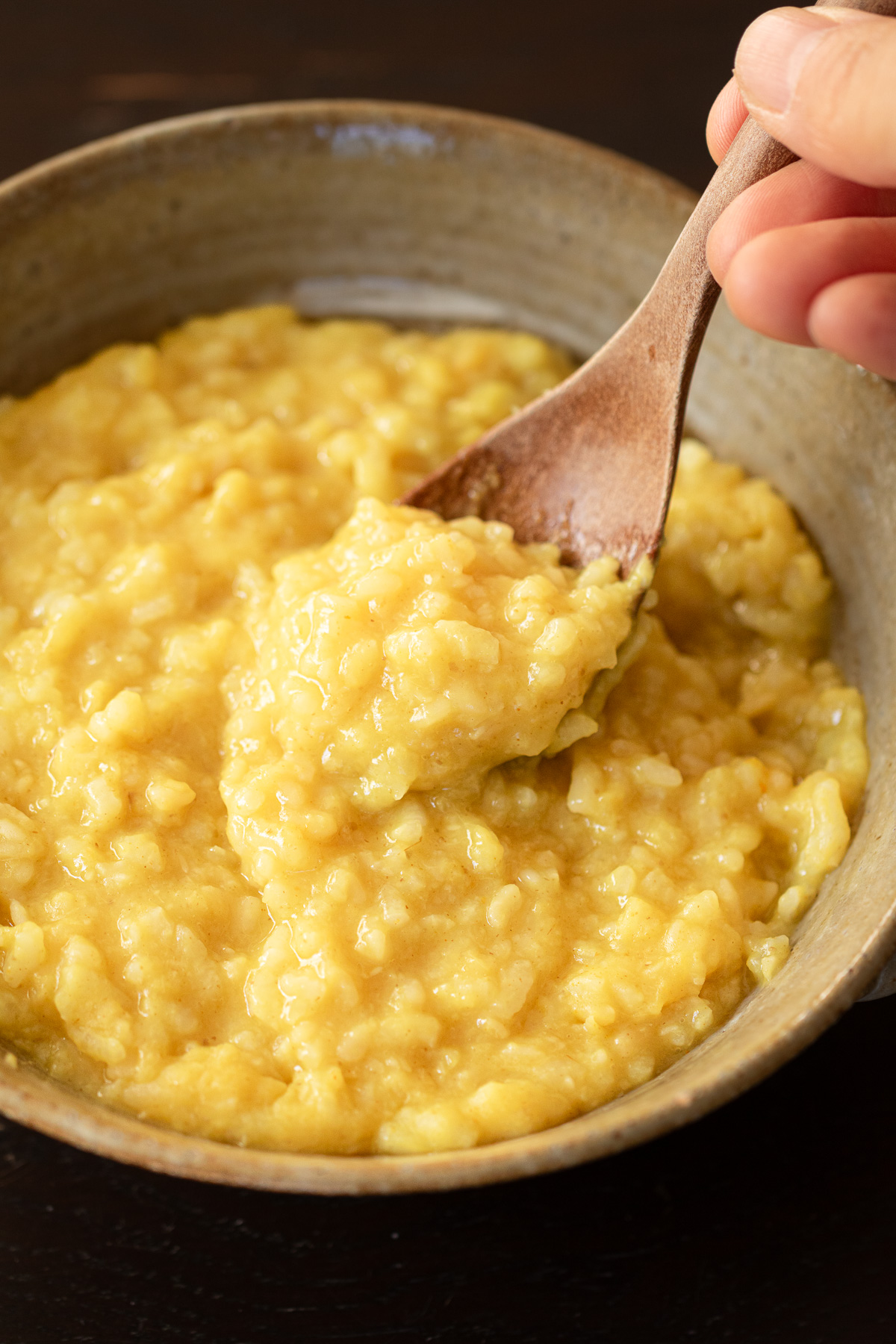
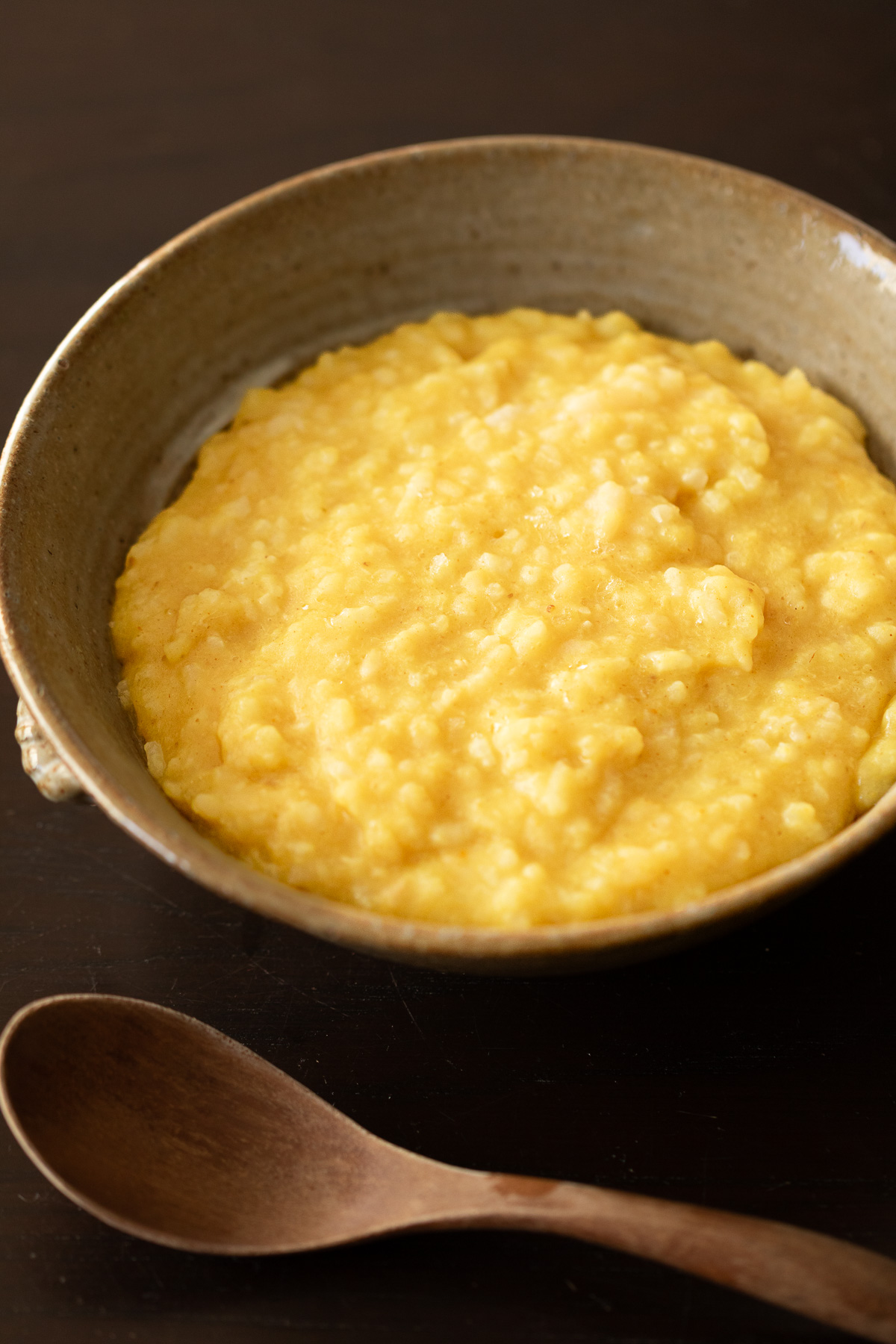
This simple porridge, made with just yellow mung beans, rice, and a few warming spices, gently settles both body and mind.
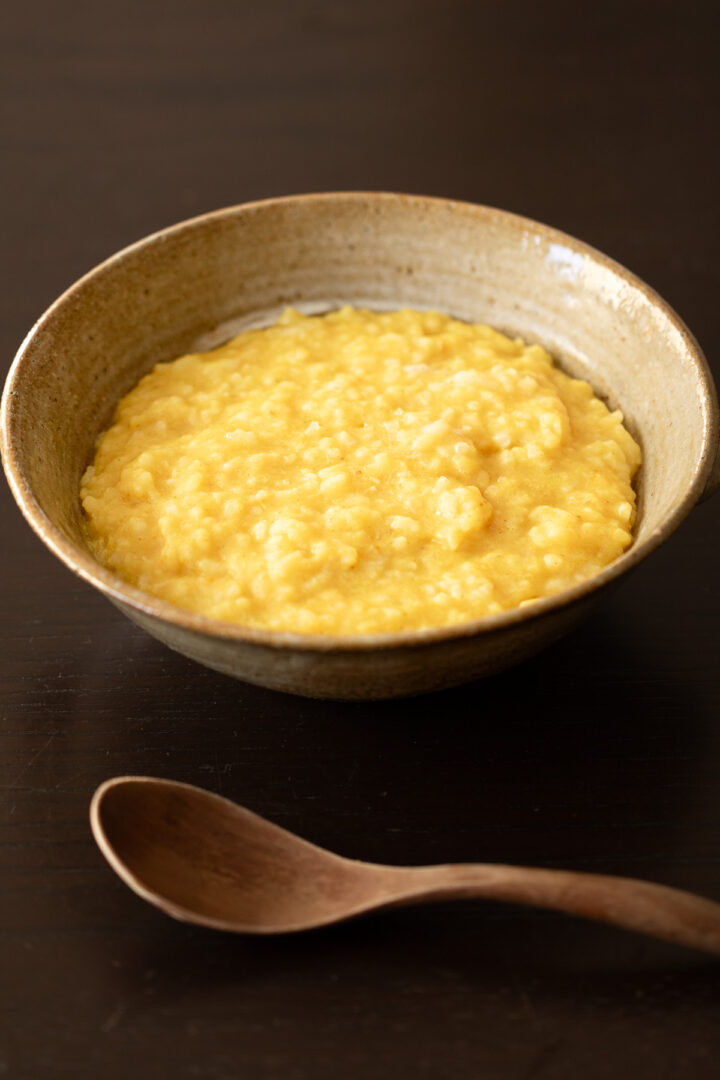
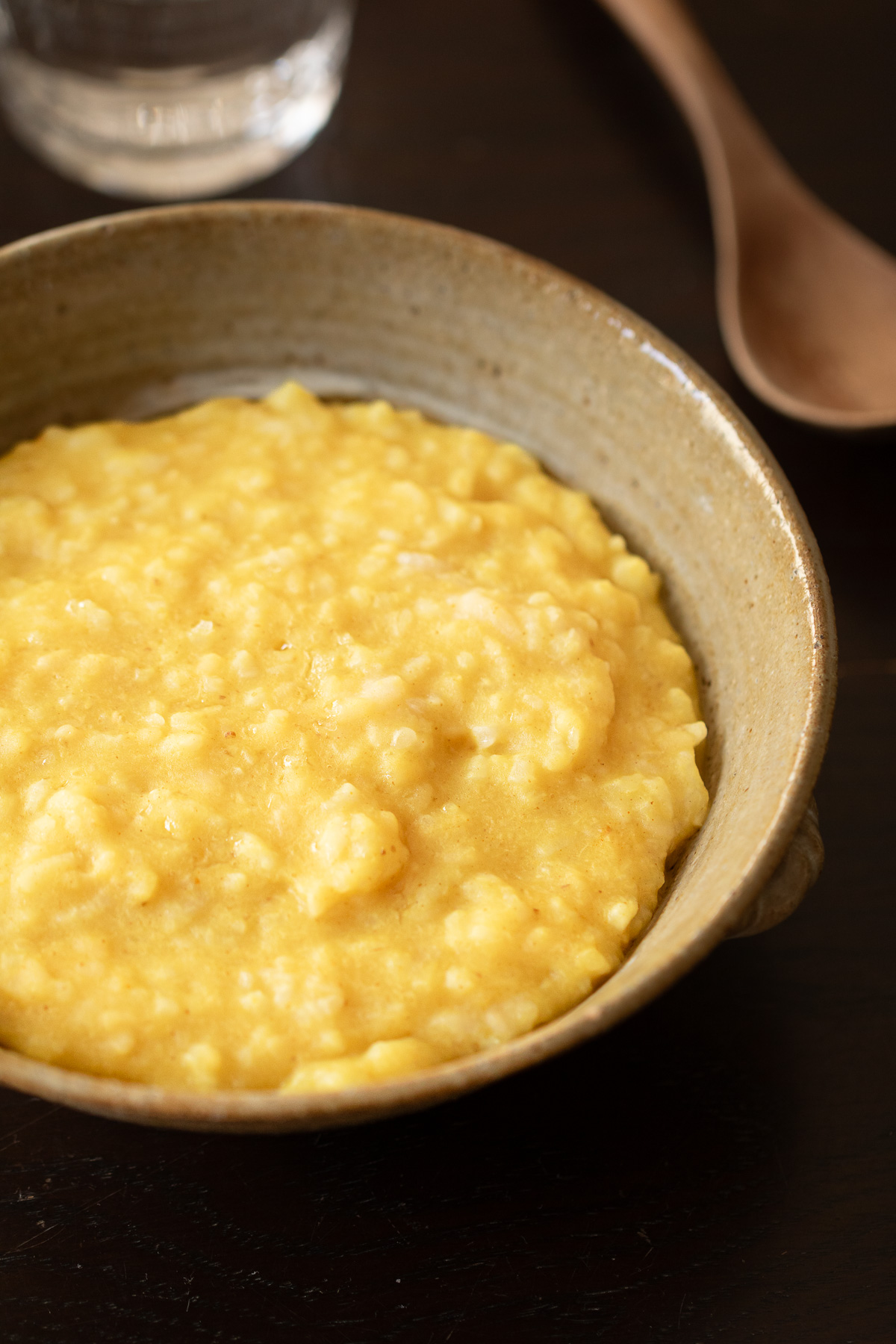
With a golden color and comforting richness reminiscent of egg congee, it's surprisingly easy to make in a pressure cooker.
I adapted this recipe from an Ayurvedic café in India to be more approachable at home — warm, nourishing, and always ready to help me feel a little better.
Jump to:
🪷 This Kitchari Recipe Is…
- Simple & easy — one-pot pressure cooker dish using cooked rice (leftovers welcome🍚)
- Vegan & nourishing — made with yellow mung beans for gentle plant protein
- Gently spiced — warming spices that comfort without overwhelming
- Soothing & healing — perfect when you need something light and restorative
- Versatile — works for slow mornings, quick breakfasts, or anytime you need comfort
🪘 Ingredients
Kept intentionally simple, so it’s easy to make even on low-energy days.
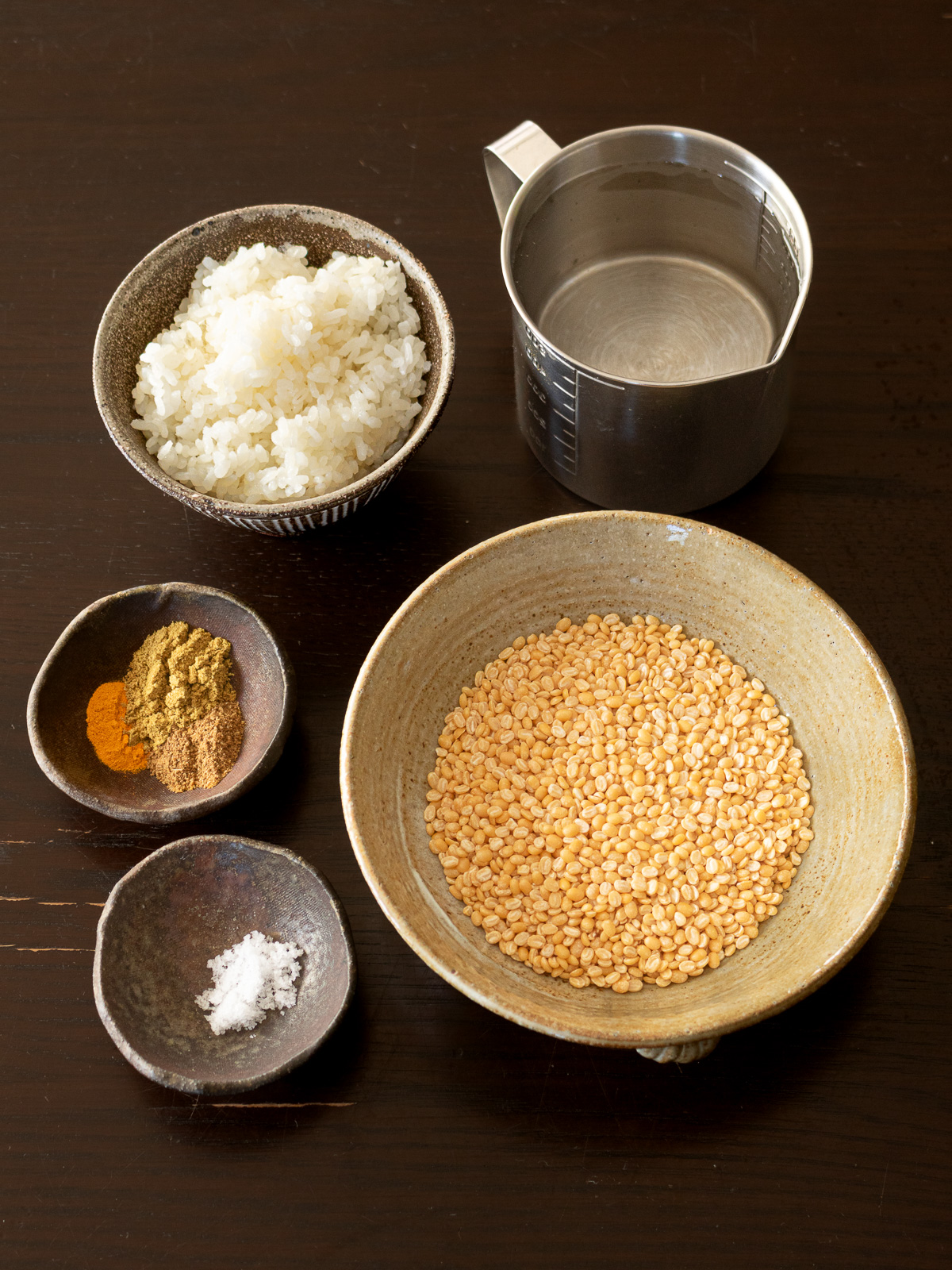
□ Yellow mung dal
Hulled and split mung beans, essential for kitchari.
I use yellow mung dal from Ambika (available on Amazon).
□ Cooked rice
Traditional kitchari uses Indian rice, but I use cooked Japanese short-grain rice to make the recipe more approachable at home.
□ Spices
A simple blend of cumin, coriander, and turmeric powder — the basic spices that bring gentle warmth without heaviness.
□ Salt
Seasoned simply, letting the ingredients speak for themselves.
□ Ghee (optional)
Traditionally, kitchari is finished with a drizzle of ghee.
It adds richness and depth, making the porridge even more comforting.
If you’re not vegan, it’s worth trying.
👇 Exact measurements are listed in the recipe card at the bottom.
🥣 Tools
- Bowl & fine-mesh strainer
- Pressure cooker
I use a Pearl Metal pressure cooker.
It’s a reliable tool for cooking beans like adzuki beans, chickpeas, and whole mung beans — and it works beautifully for kitchari. - Spatula or wooden spoon
📖 How to Make Kitchari in One Pot
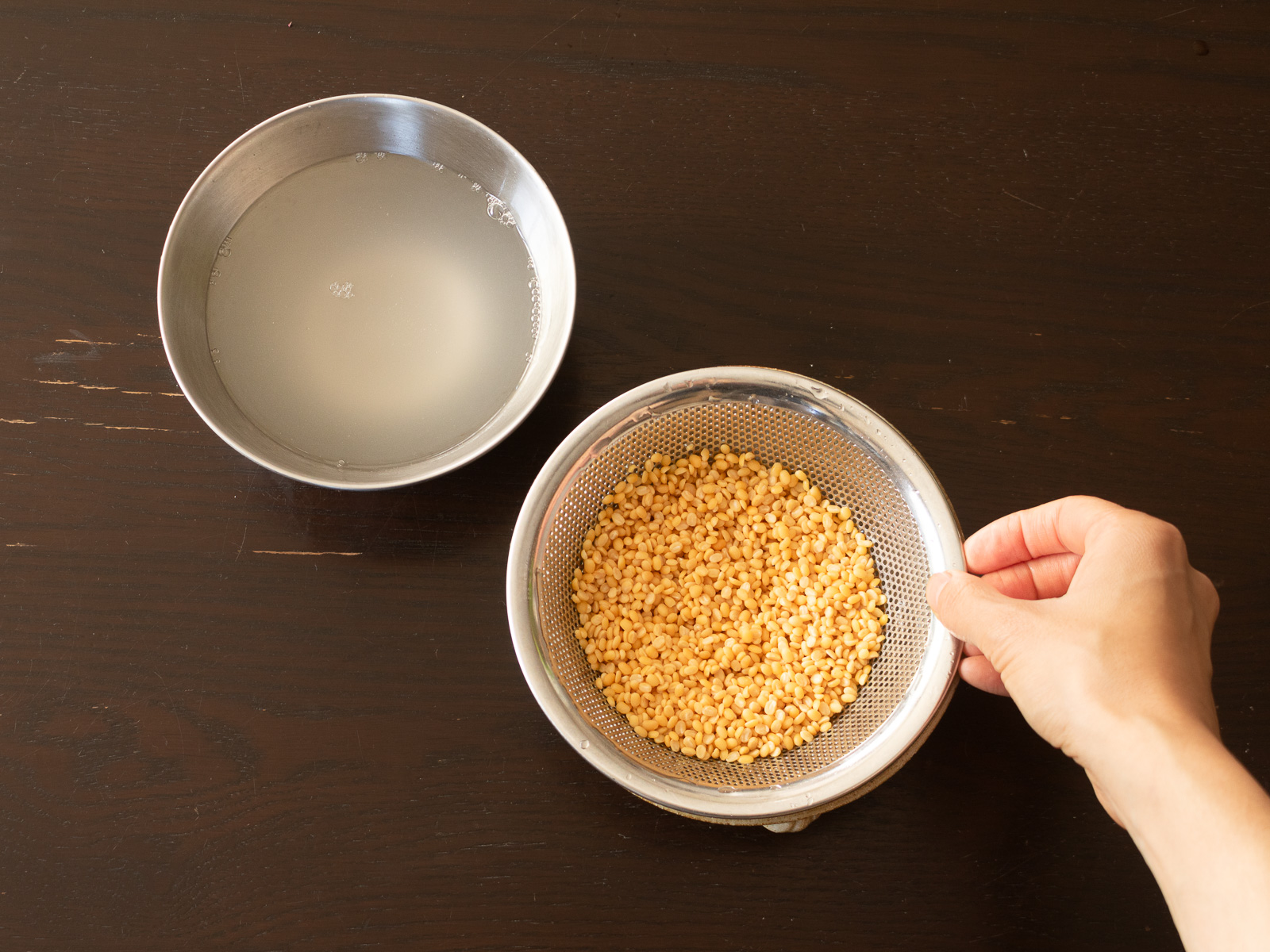
- Rinse
- Rinse the yellow mung beans, then drain well in a strainer.
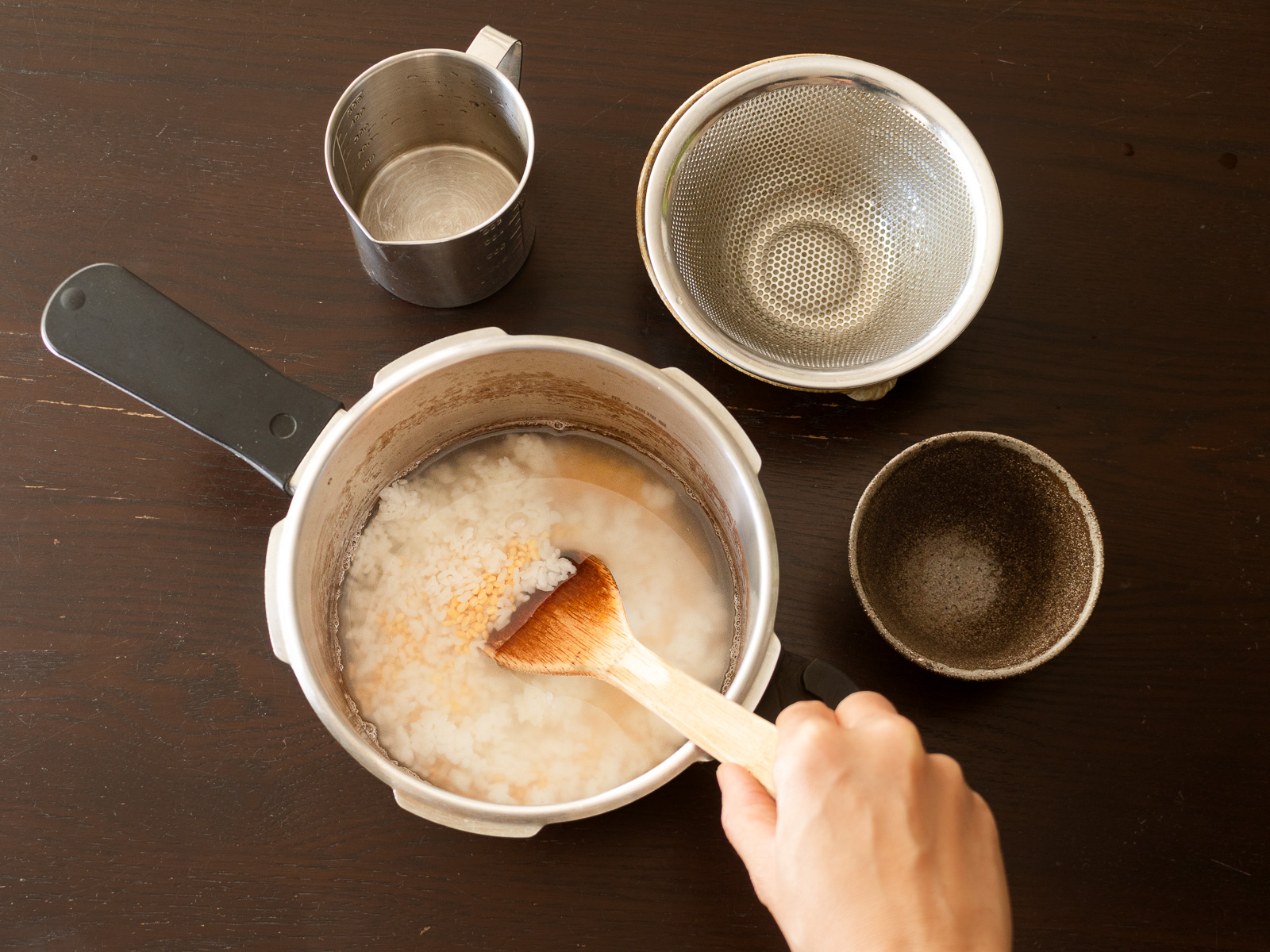
- Combine
- Add the rinsed mung beans, cooked rice, and water to a pressure cooker.
- Stir gently to combine.
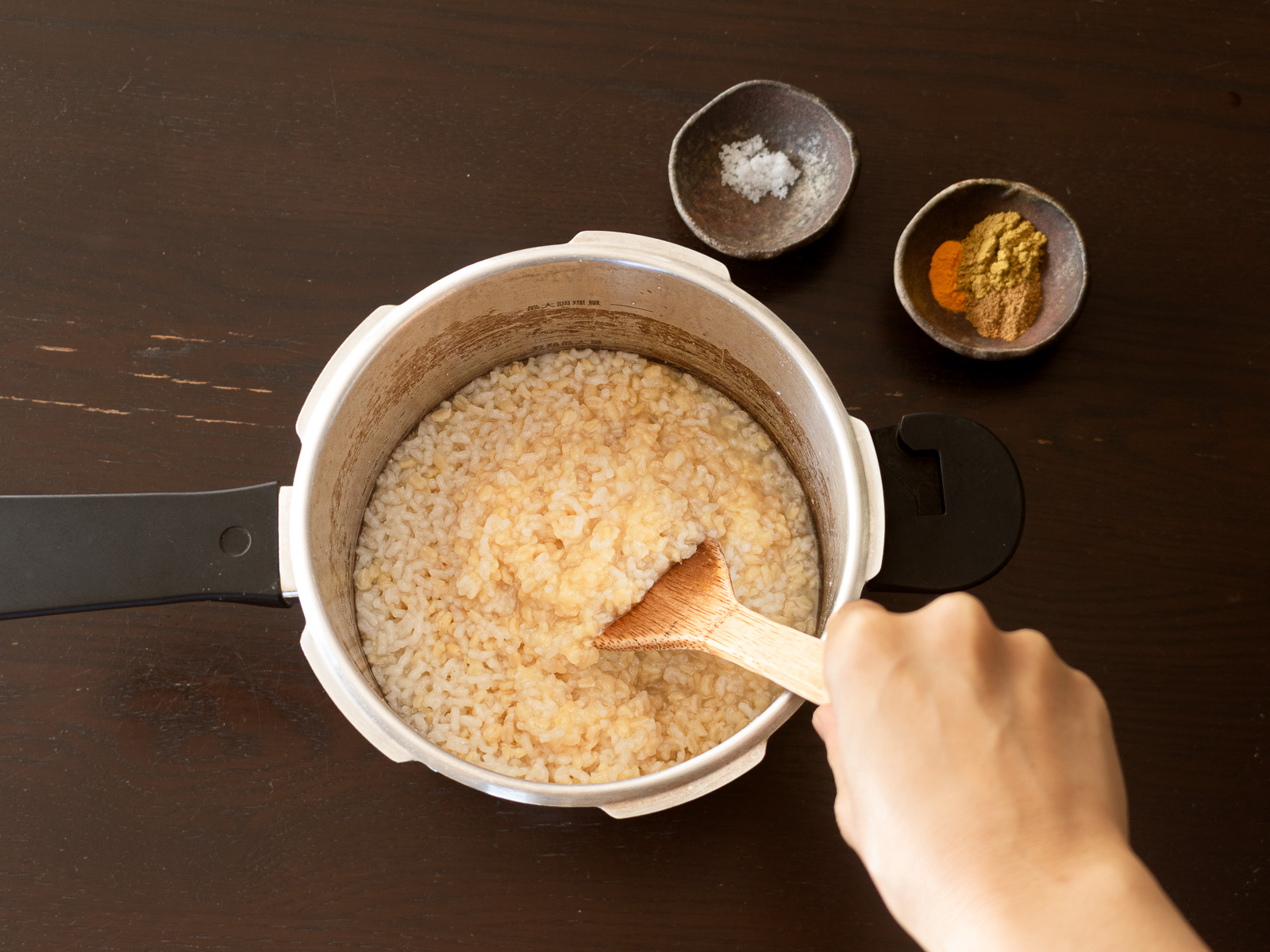
- Cook
- Close the lid and cook over high heat.
- Once pressure is reached, lower the heat and cook for 2½–3 minutes.
- Remove from heat and let the pressure release naturally.
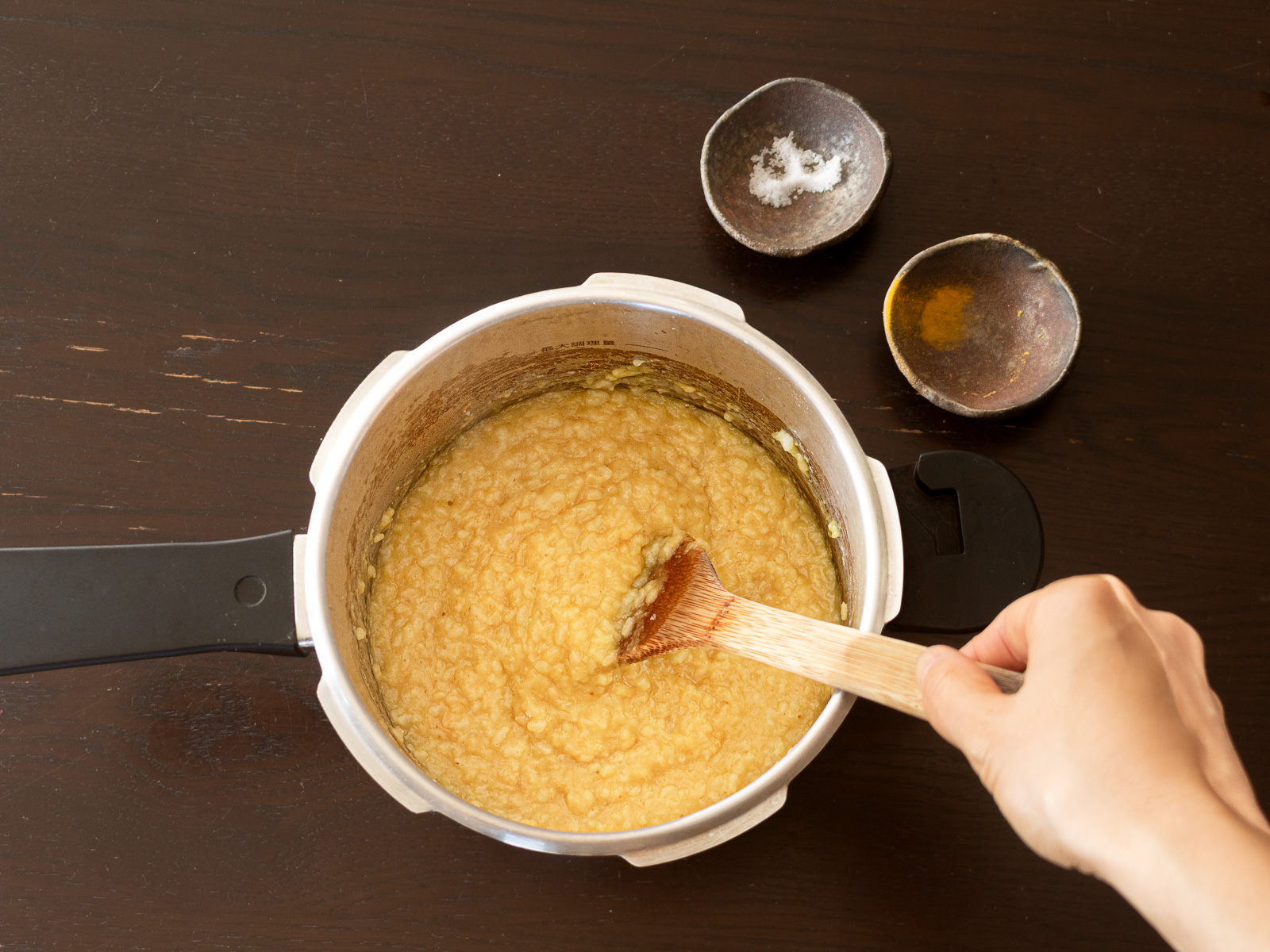
- Season
- Once the pressure has dropped, open the lid and add the spices.
- Stir well, then season with salt to taste.
🌿 Gentle Notes:
- Adjust the amount of spices depending on how you feel.

- On days when your digestion feels weak, use less spice — or skip the spices entirely and season simply with salt.
📘 Simple Variations
🌿 Very Gentle (No-Spice Kitchari)
When your body feels tired or sensitive,
skip the spices and season only with salt.
The flavor is mild and comforting,
letting the natural sweetness of rice and mung beans come through.
🌿 Extra Soft & Soupy
For an even gentler texture,
add a little more water after cooking and warm it gently.
This version is especially soothing
when you want something close to a drinkable porridge.
🌿 Add Aroma, Gently
On days when you want a little more aroma,
try one of these simple additions.
- With spiced oil (tempering)
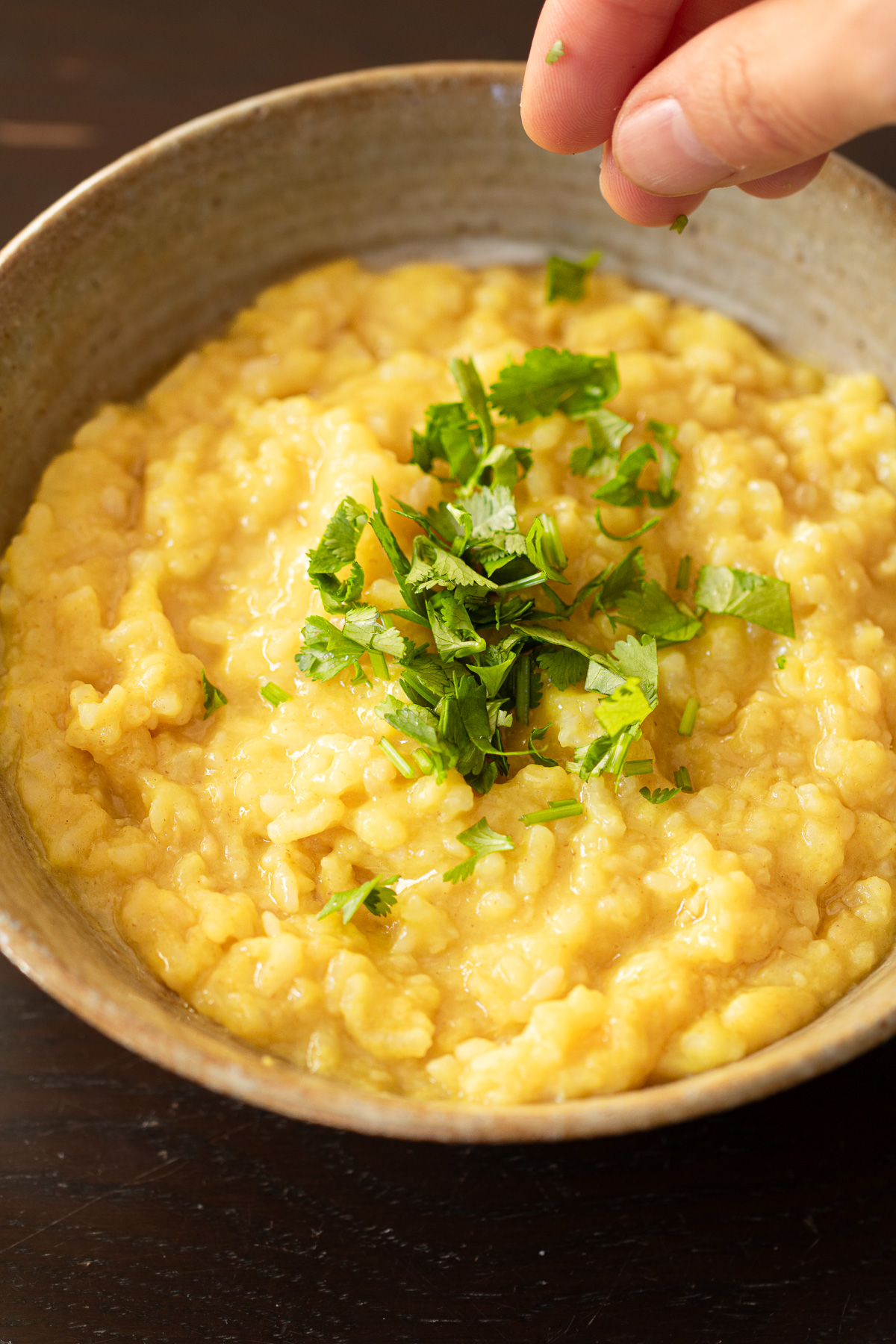
Lightly toast whole spices such as cumin seeds or mustard seeds in oil, then drizzle the aromatic oil over the finished kitchari. - With fresh cilantro
Sprinkle chopped cilantro just before serving to add a fresh, curry-like brightness.
Both options add warmth without making the dish too heavy.
🌿 With Oil or Ghee (Optional)
Traditionally, kitchari is finished with a drizzle of ghee.
If you’re vegan, a small amount of neutral oil works well.
If not, ghee adds depth and a comforting richness.
🧺 How to Store Kitchari
Kitchari is at its best when freshly made,
but it can be stored if you cook a little extra.
- Refrigerator: Store in an airtight container for 1–2 days
When reheating, add a little water and warm gently on the stove,
or reheat slowly in the microwave.
📚 FAQ
Red lentils could be used as a substitute, as they cook relatively quickly.
Other beans, such as chickpeas or adzuki beans, require soaking or much longer cooking times, so they are not recommended for this recipe.
You can make kitchari in a regular pot.
It will take longer to cook, so simmer gently and add water as needed to prevent sticking or burning.
Yes. When you’re not feeling well, you can skip the spices entirely and season only with salt.
This makes the porridge even gentler and easier to digest.

If you feel like whispering a thought, asking a question, or simply saying hello — the comment section is always open 📮
🫘 Ways to Use Leftover Mung Beans
Everyday vegan recipes you might enjoy:
🍲 More Comforting Porridge Recipes
Porridge recipes from different food cultures:



✏️ Recipe Card|Printable
Vegan Kitchari (Indian Mung Bean Rice Porridge)
Equipment
- Bowl
- fine-mesh strainer
- Spatula - or wooden spoon
- pressure cooker
Ingredients
- 180 g yellow split mung beans (moong dal, rinsed)
- 150 g cooked Japanese short-grain rice (leftover rice works well)
- 700 ml water
- 1 teaspoon ground cumin
- 1 teaspoon ground coriander
- ¼ teaspoon turmeric powder
- ½~ teaspoon salt (to taste)
Optional
- ghee or neutral oil (for finishing)
- fresh cilantro (finely chopped)
Instructions
- Rinse the mung beans well and drain.180 g yellow split mung beans
- Add mung beans, cooked rice, and water to a pressure cooker. Stir gently.150 g cooked Japanese short-grain rice700 ml water
- Close the lid and cook on high heat.
- Once pressure is reached, lower the heat and cook for 2½–3 minutes.
- Remove from heat and allow the pressure to release naturally.
- Open the lid, add cumin, coriander, and turmeric. Stir well.1 teaspoon ground cumin1 teaspoon ground coriander¼ teaspoon turmeric powder
- Season with salt to taste.½~ teaspoon salt
- Finish with oil and cilantro if desired.ghee or neutral oilfresh cilantro
Notes
- Adjust the amount of spices depending on how you feel.
- On days when your stomach feels weak, you can reduce the spices — or skip them entirely and season with salt only.
- For extra aroma, finish with a little ghee or spiced oil if desired.
Serving Suggestions
- Enjoy as is for a simple meal
- Garnish with chopped cilantro for a fresher, more curry-like aroma
- Serve warm as a light breakfast or restorative meal
Storage
- Store leftovers in an airtight container in the refrigerator for up to 1-2 days.
- Reheat gently with a little water to loosen the texture.

If this recipe made its way into your kitchen, and you'd like to share that moment, feel free to tag @veginveganvegun or use #vegin_vegan_vegun.
Your quiet stories inspire me deeply 🕊️
🕰️ Closing|A Story Behind This Kitchari
About ten years ago, I was traveling in India.
No matter how many times I asked for “no chili,” what was placed in front of me was always spicy.
Day after day, the spiciness hurt my stomach without my noticing.
Little by little, my body grew tired,
Or perhaps it was something I had carried with me from my life in Japan—a kind of exhaustion I hadn’t put down yet.
Before I realized it,
my body stopped accepting any food.
What saved me was a simple rice porridge I found at an Ayurvedic café in Rishikesh, a town along the Ganges River.
ーIt was kitchari.
Just rice and mung beans,
cooked with a little spice and salt.
Nothing fancy. Nothing loud.
The first spoonful felt gentle.
Something deep inside my stomach slowly loosened.
It was the first time in a long while
my body felt real relief.
After that, I went back to the café almost every day.
I ate the kitchari slowly, one spoon at a time,
listening to my body.
Within a few days,
the heavy discomfort quietly faded away.
Before I realized it,
I had naturally stopped reaching for medicine.
Like a gentle remedy,
this dish quietly restored my body and mind,
asking nothing of me.
This recipe is my way of recreating that experience—using familiar ingredients here in Japan, in a way that feels gentle and easy for anyone.
I hope that somewhere today,
this kitchari brings a small sense of comfort,
and helps someone take a warmer, deeper breath.
With that quiet wish 🙏

Comments
No Comments