
A homemade vegan futomaki sushi recipe for vegans and vegetarians.
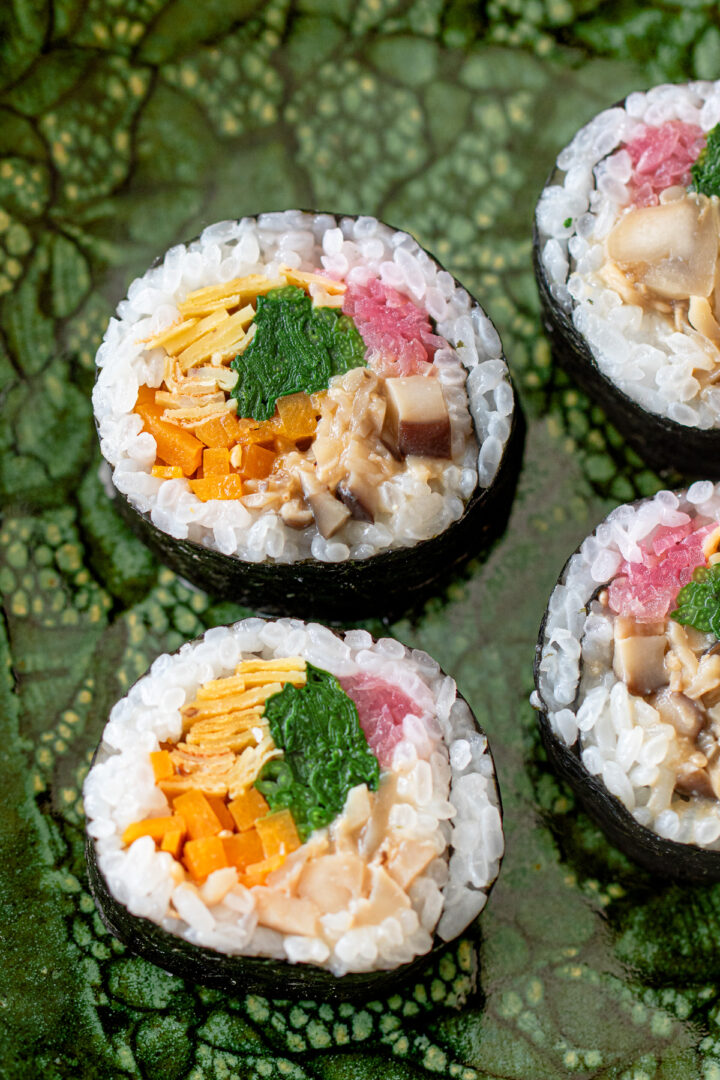
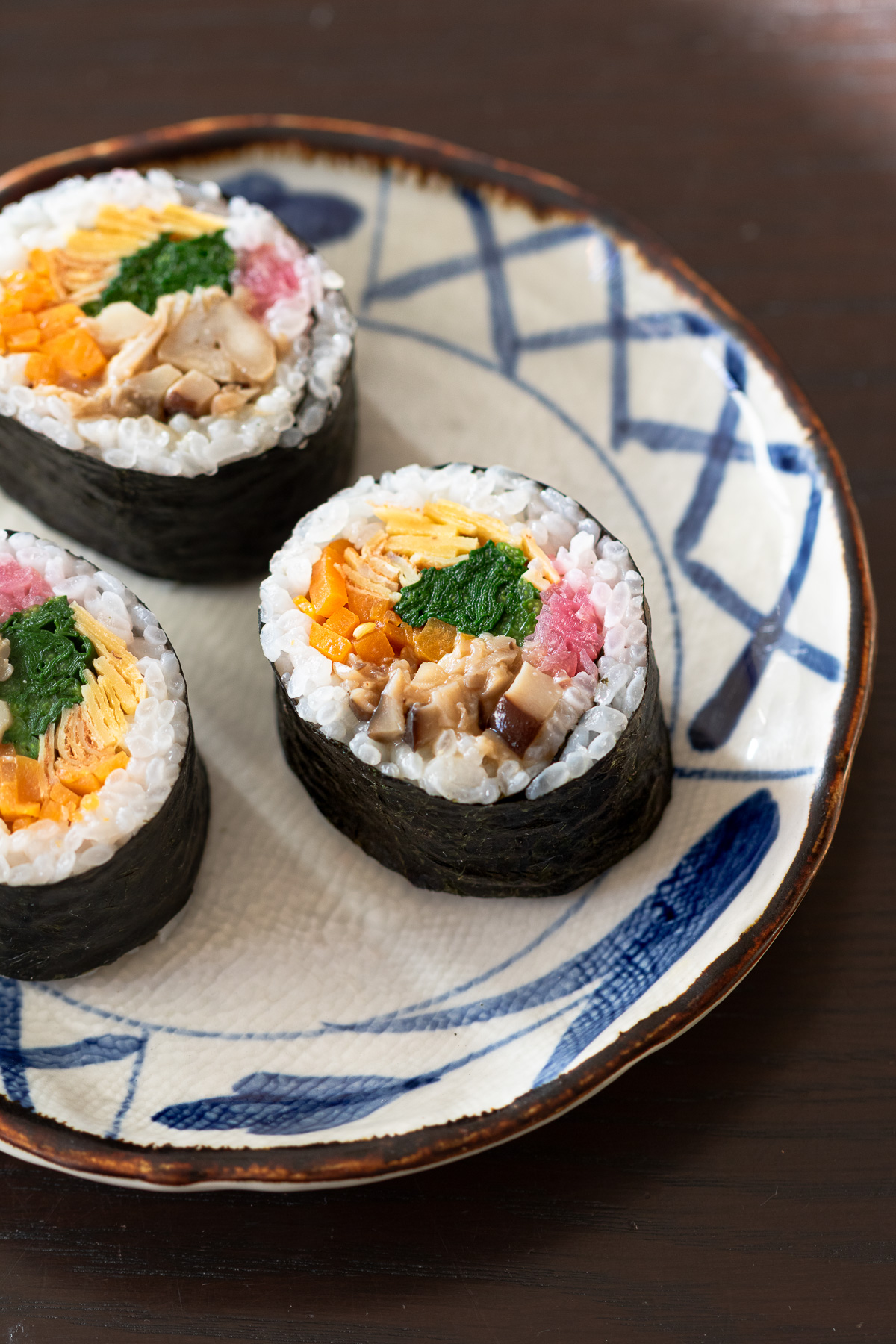
A satisfying plant-based Japanese sushi roll made with five different fillings, carefully chosen for both flavor and balance.
Sweetness, acidity, bitterness, saltiness, and umami
come together in one generous roll—
simple to prepare, yet deeply fulfilling to eat.
Well suited for gatherings and seasonal celebrations such as Setsubun, Hinamatsuri (Girls’ Day), and Tango no Sekku (Children’s Day).
Jump to:
- ⛄️ From the Winter Kitchen|About This Vegan Futomaki
- 🧺 Features of This Recipe
- 🍊 Ingredients
- 🥣 Tools
- 🌱 Small Preparations & Tips Before You Start
- 📖 Instructions
- 🫙 Storage & Make-Ahead Tips
- 📘 Kitchen Notes|A Futomaki Variation
- 📚 FAQ
- 🛷 Recipe ❶ Other Vegan Sushi Recipes
- 🐕 Recipe ❷ Suggested Pairings
- ✏️ Recipe Card|Summary
⛄️ From the Winter Kitchen|About This Vegan Futomaki
This is a vegan futomaki sushi I had wanted to make for a long time.
After thoughtfully choosing each filling,
it finally settled into a form that felt just right.
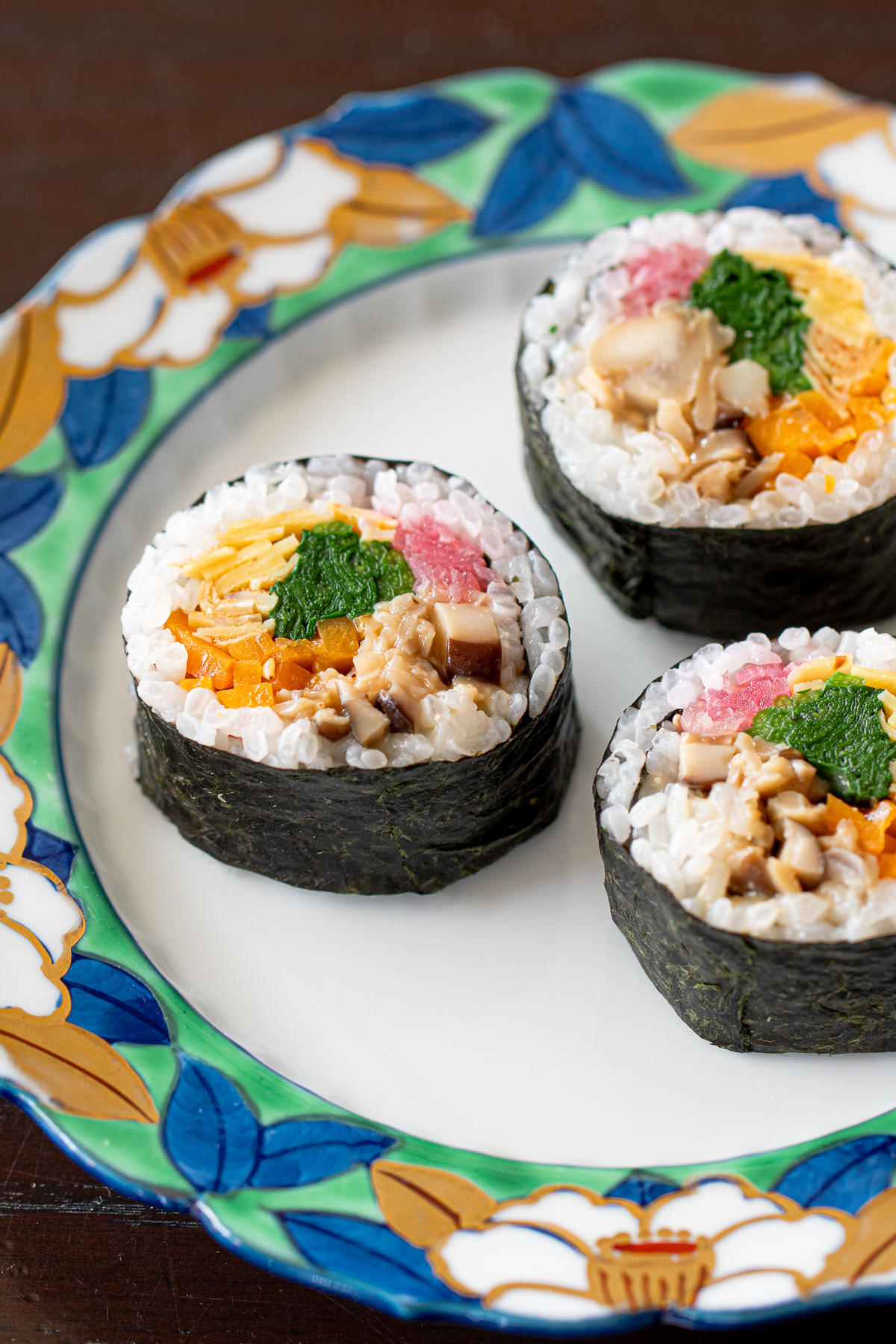
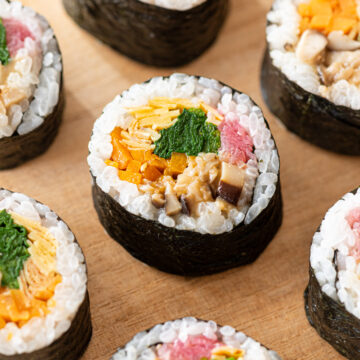
Soft yellow vegan kinshi tamago
(shredded vegan omelet)
Sweet-and-savory kinpira-style butternut squash (carrots work well too)
Vivid sweet pickled onion,
tinted naturally like cherry blossom petals
Miso-seasoned mushroom soboro,
rich with aroma and depth
And simply boiled spinach to finish.
Sweetness, acidity, bitterness, saltiness, and umami
overlap gently, becoming one harmonious futomaki sushi roll.
On Setsubun,
we traditionally face the year’s lucky direction (ehō)
and eat the sushi quietly, one bite at a time.
While wishing for good fortune in the year ahead.
🌿 Other Vegan Sushi Roll Recipes
You may also enjoy:
➤ Vegan Tuna Mayo Sushi Rolls
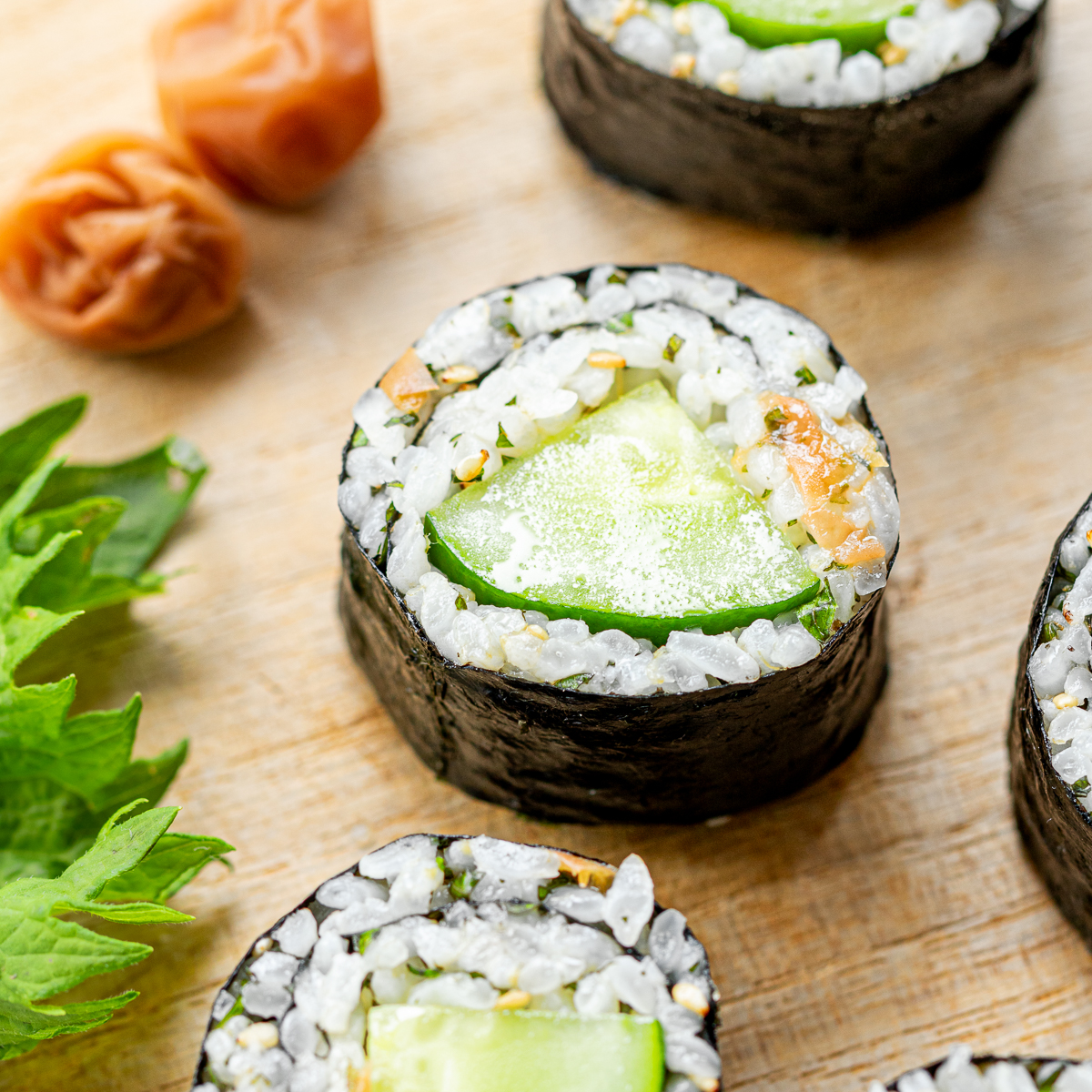
➤ Ume & Shiso Cucumber Rolls
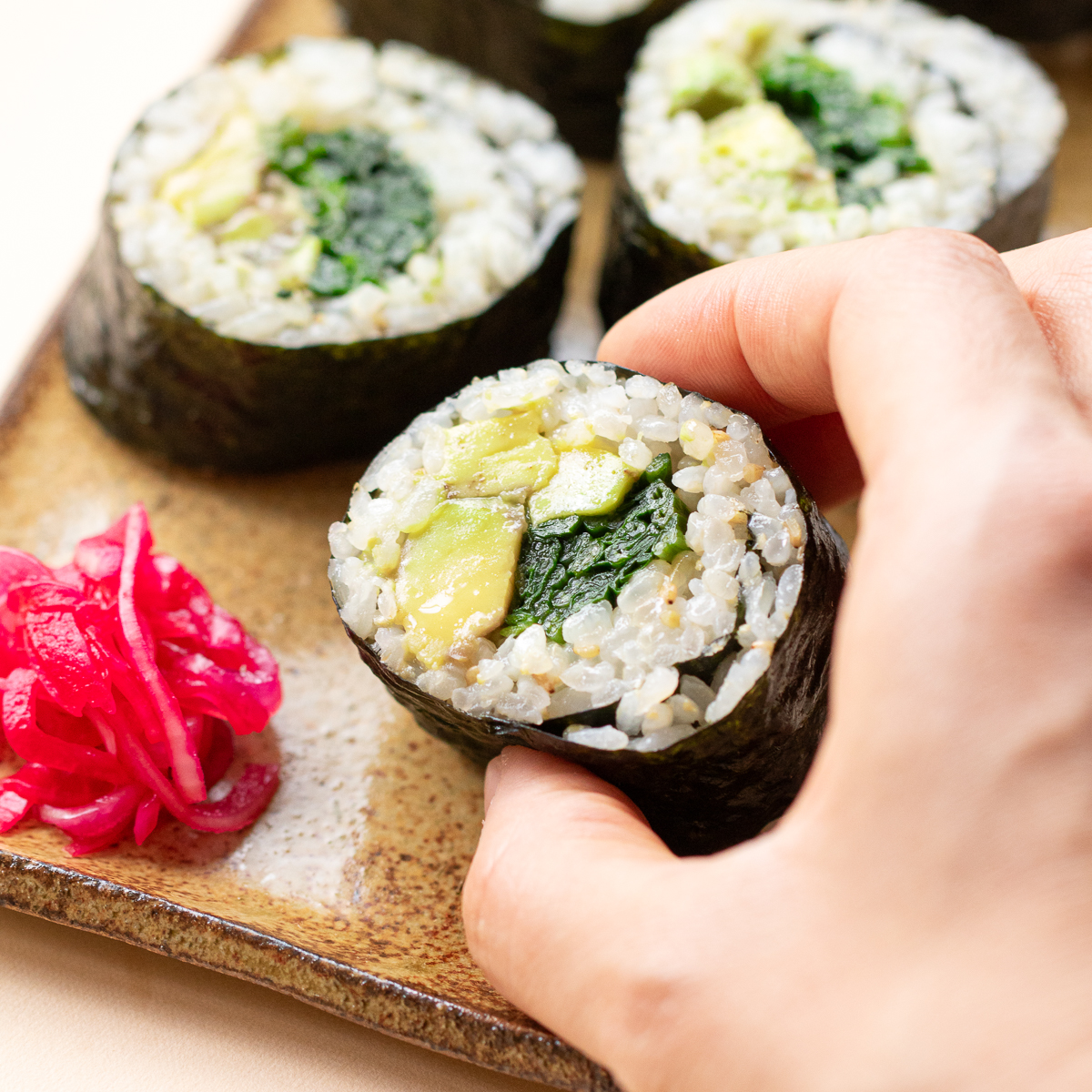
➤ Avocado Spinach Sushi Rolls
➤ Shio-Koji Eggplant Gunkan Sushi.
🧺 Features of This Recipe
- Plant-based: Made entirely with vegan ingredients
- For Setsubun: Ideal as a vegan ehomaki for 2026
- Celebratory & Colorful: Bright, inviting, and ideal for seasonal Japanese festivities
🍊 Ingredients
The essential fillings for vegan futomaki sushi.
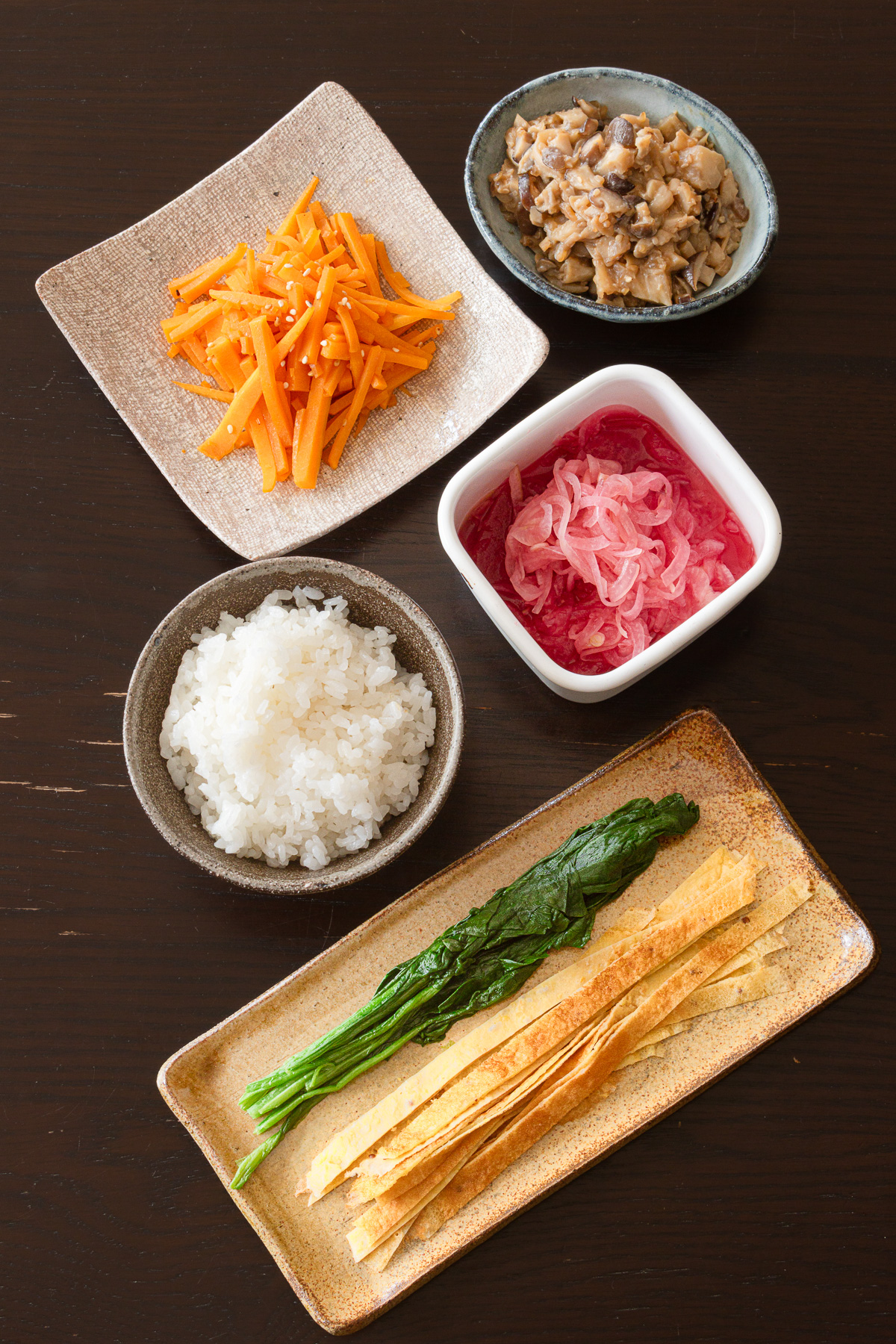
Each component is seasoned differently,
so that every bite feels balanced and complete.
● Miso-Seasoned Mushroom Soboro:
A coarsely chopped mushroom stir-fry seasoned with miso, soy sauce, and mirin.
Its deep umami adds warmth and richness to the sushi roll.
● Kinpira-Style Butternut Squash:
Bright orange butternut squash sautéed in a sweet-and-savory kinpira style.
Carrots can be used instead of butternut squash, prepared in the same kinpira style.
● Vegan Kinshi Tamago:
A plant-based “shredded egg” made from chickpea flour (besan).
For this recipe, cut into thin strips and layered to resemble a Japanese rolled omelet.
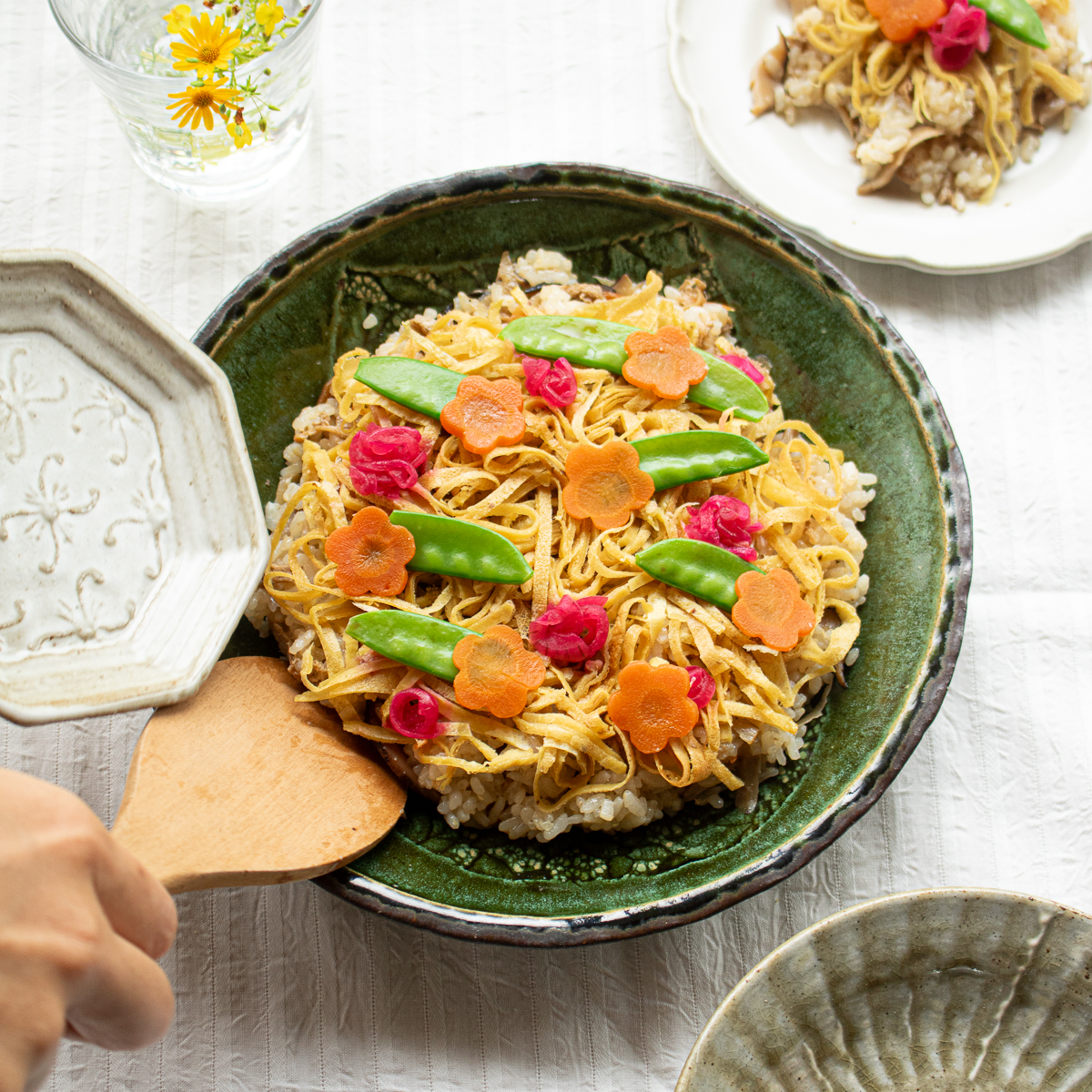
It also works beautifully as a topping for vegan chirashi sushi.
● Sweet-and-Sour Pickled Onion:
Thinly sliced onion pickled with beet slices for natural color.
Drain thoroughly with paper towels before using.
● Boiled Spinach:
Quickly blanched, drained well, lightly squeezed,
then patted dry to remove excess moisture.
● Sushi Rice:
Cook Japanese short-grain rice slightly firmer than usual for sushi, then season with homemade sushi vinegar (rice vinegar, sugar, and salt).
Use about 140 g (5 oz) of rice per nori sheet for easy rolling.
● Nori (Seaweed Sheets):
Use nori specifically made for sushi rolls.
👇 Full measurements in the recipe card at the bottom
🥣 Tools
Having the right tools makes rolling futomaki easier and more enjoyable.
A sharp knife is especially helpful—it lets you cut clean slices and reveals a beautiful cross-section, making each roll feel satisfying to serve.
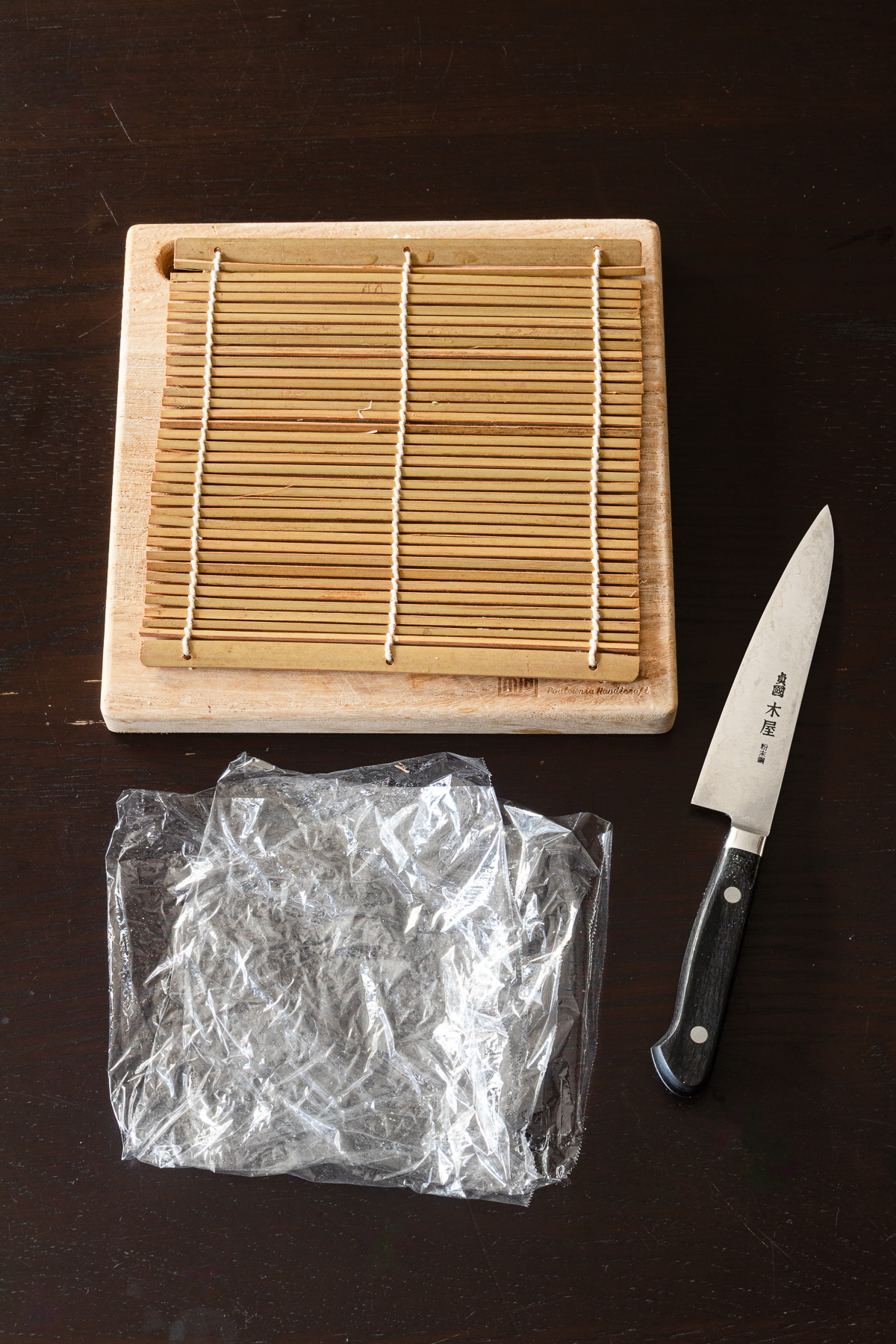
- Cutting board and knife
- Paper towels (for draining ingredients)
- Bamboo sushi mat (optional but helpful)
- Plastic wrap
- Rice paddle
- Mixing bowl
- Flat plate (to cool sushi rice)
- Damp cloth (to wipe the knife while cutting)
🌱 Small Preparations & Tips Before You Start
A few small steps will make rolling your futomaki easier—and more enjoyable🪴
Just two little things to keep in mind before you begin:
▶︎ Prepare the fillings ahead of time:
All fillings except the sushi rice and spinach can be prepared the day before, or earlier on the day you make the rolls.
If making the vegan kinshi tamago in advance, wrap it carefully and store it so it doesn’t dry out.
Once it loses moisture, it becomes crumbly and harder to work with.
As a guide:
- Pickled onion: best prepared the day before
- Mushroom soboro / butternut squash kinpira: can be made the day before or on the same day
Letting each component rest allows the flavors to settle and blend. The roll feels more balanced, and each bite tastes considered and harmonious.
▶︎ Remove excess moisture:
Gently press the pickled onion and spinach with paper towels before assembling.
Too much moisture can make the rice soggy and cause the roll to lose its shape.
For a futomaki that looks as good as it tastes, this step is essential.
🌿 These small touches help the rolling process go smoothly, so you can focus on the quiet pleasure of making sushi.
📖 Instructions
Once all the fillings are prepared, cook the rice and start assembling the futomaki🕊️
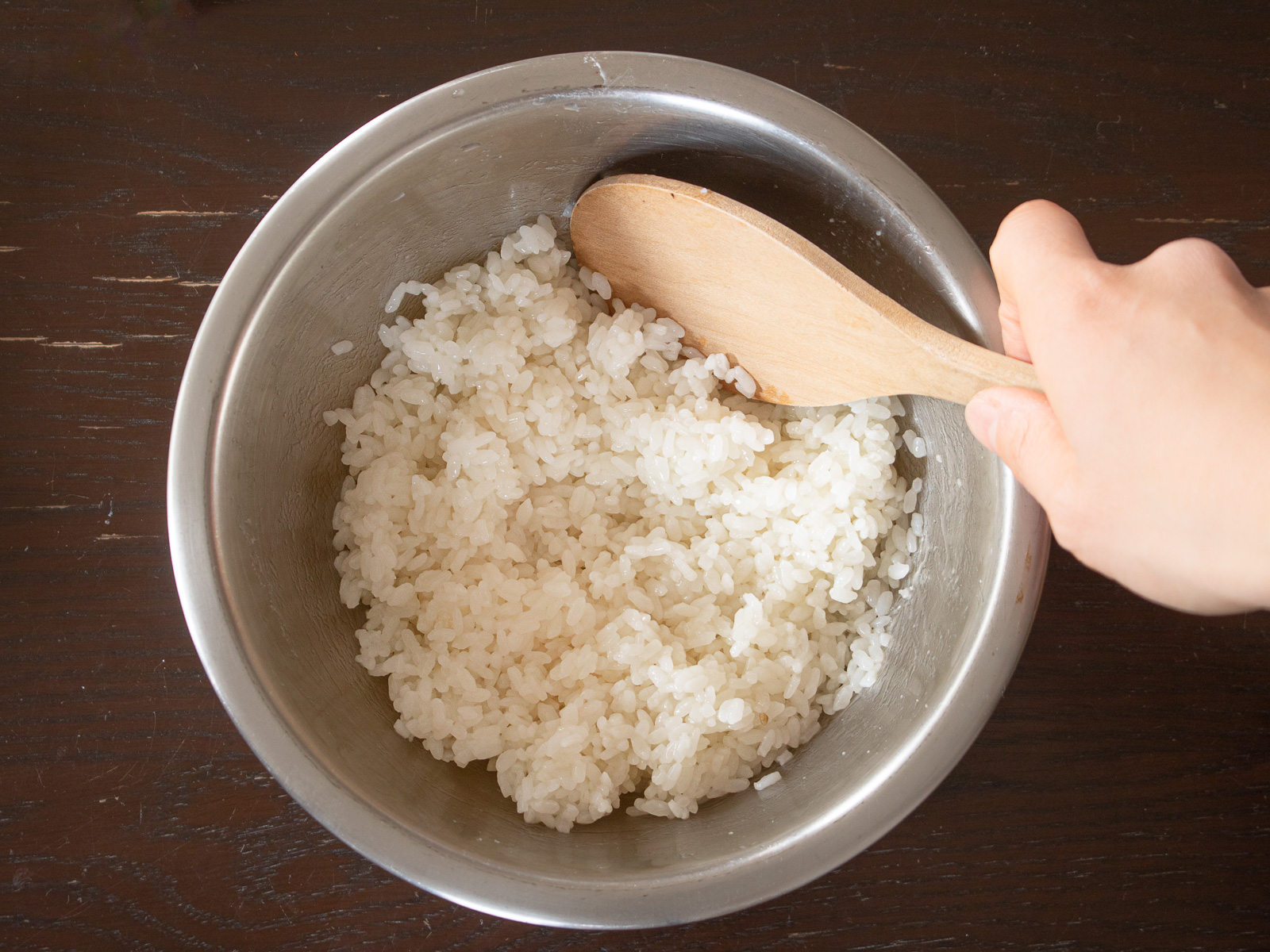
- Make the Sushi Rice
- Cook Japanese short-grain rice using the sushi rice setting on your rice cooker.
- While the rice is still hot, mix it with homemade sushi vinegar.
- Spread it out on a wide plate and let it cool until just warm to the touch.
🌿 If your cooker does not have a sushi rice setting, use the regular white rice mode with slightly less water than usual. The rice should be slightly firmer than everyday rice so it won’t become soggy once seasoned.
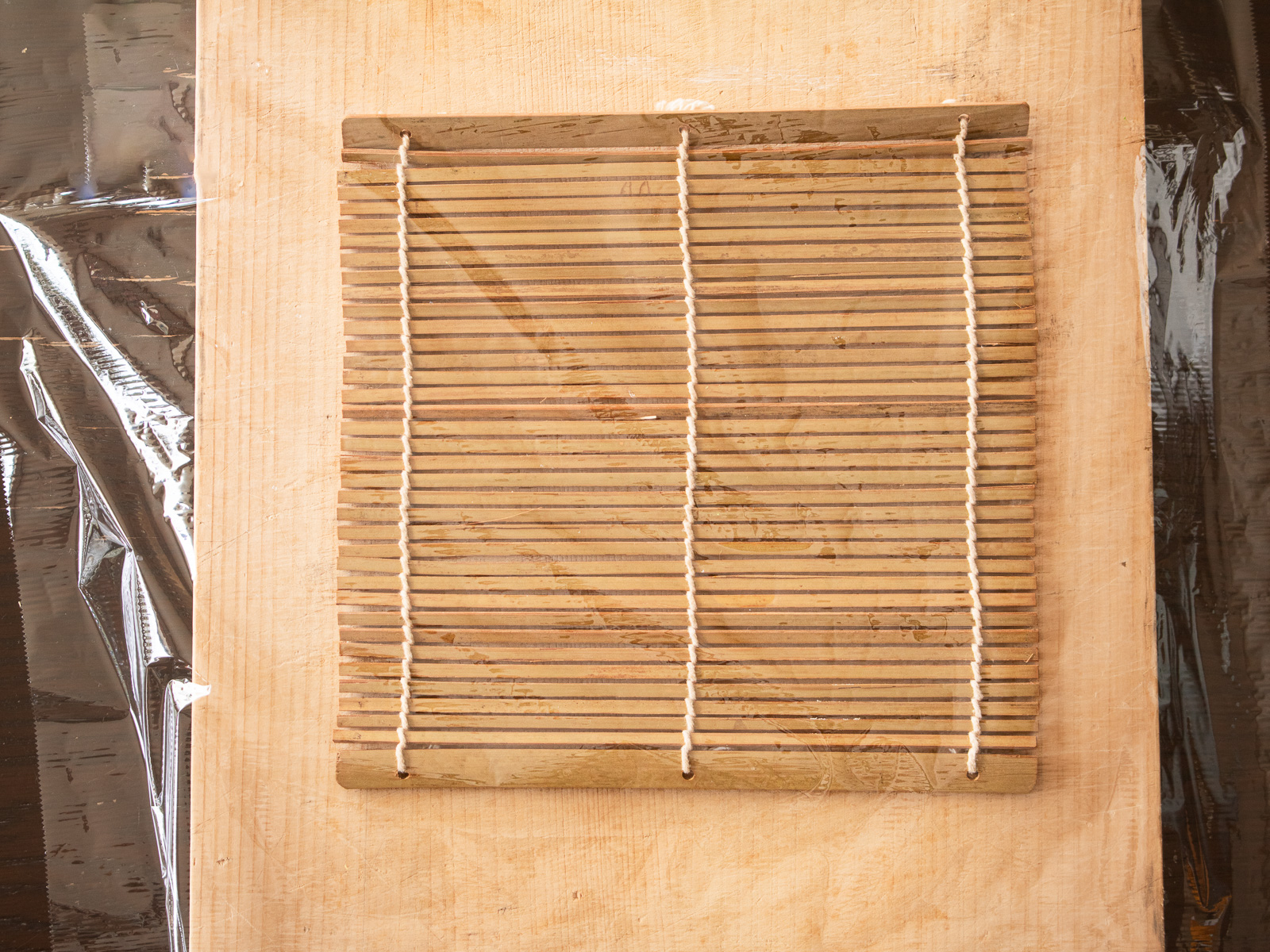
- Prepare the Tools
- Place a bamboo sushi mat on a cutting board and cover it with plastic wrap.
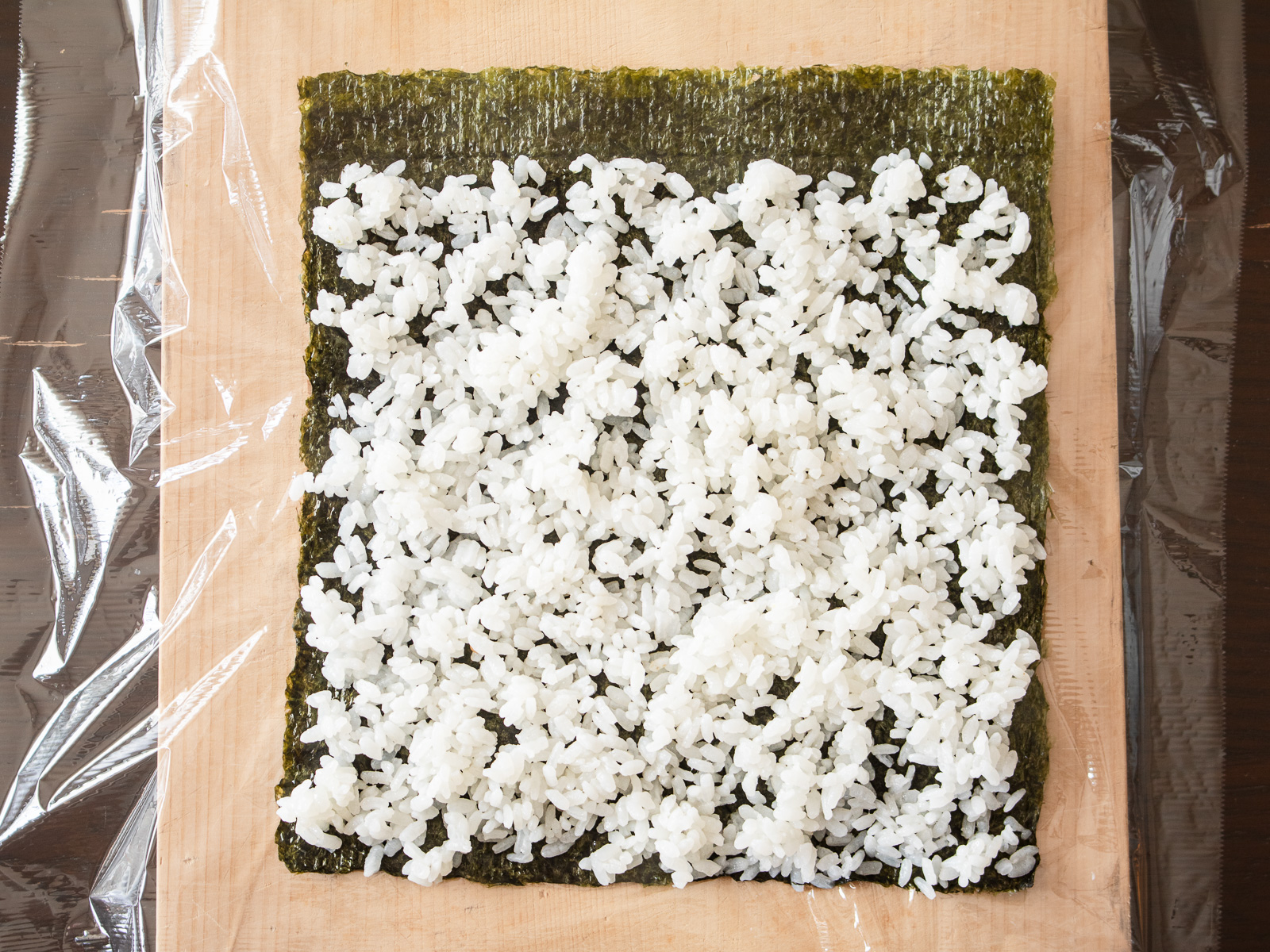
- Spread the rice
- Lay a sheet of nori on the mat, shiny side facing down.
- Spread half of the sushi rice evenly over the nori, leaving about 2 cm (¾ inch) uncovered at the top edge.
🌿 Lightly wet your hands or rice paddle to prevent sticking and help the rice spread more smoothly.
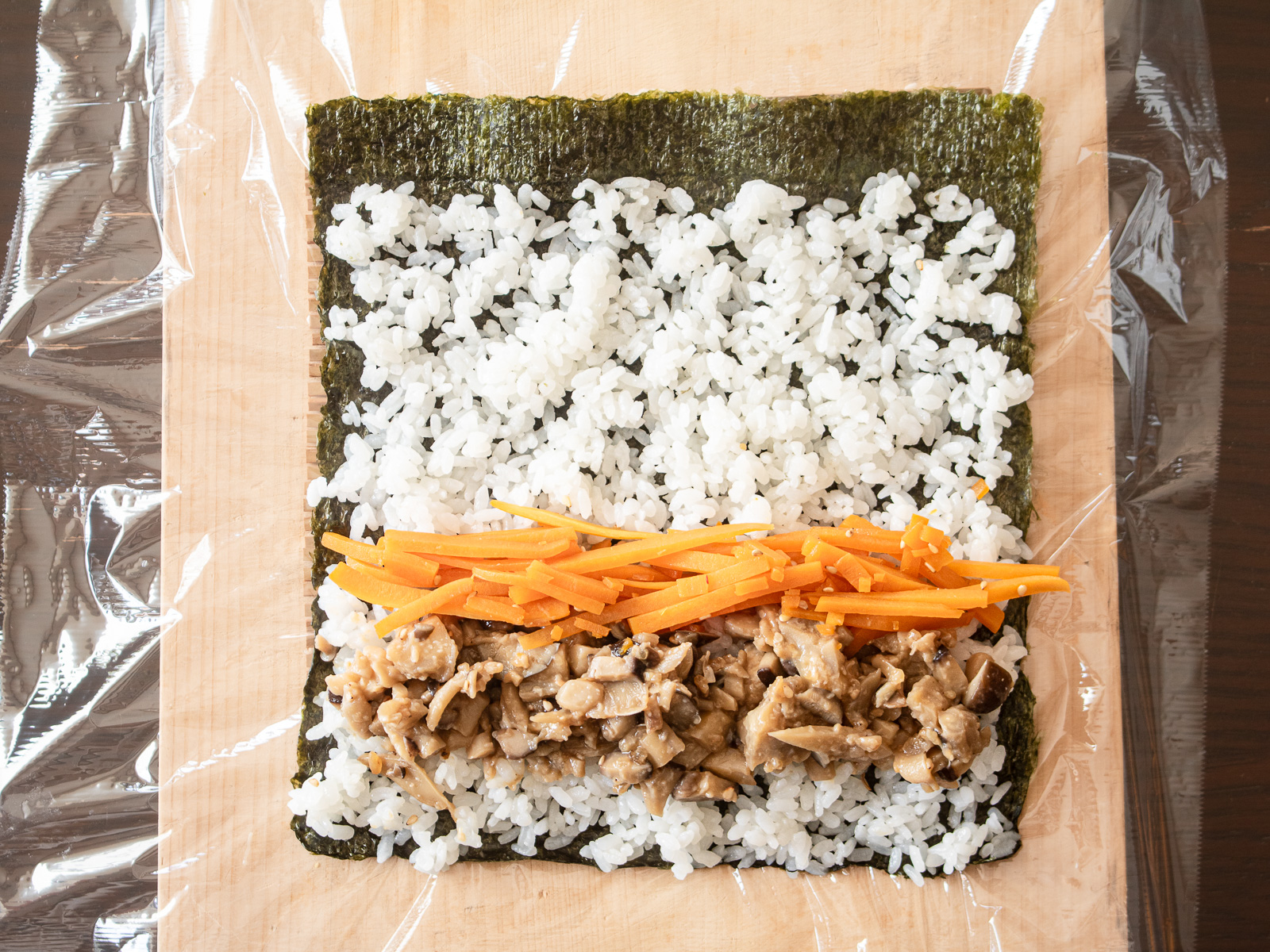
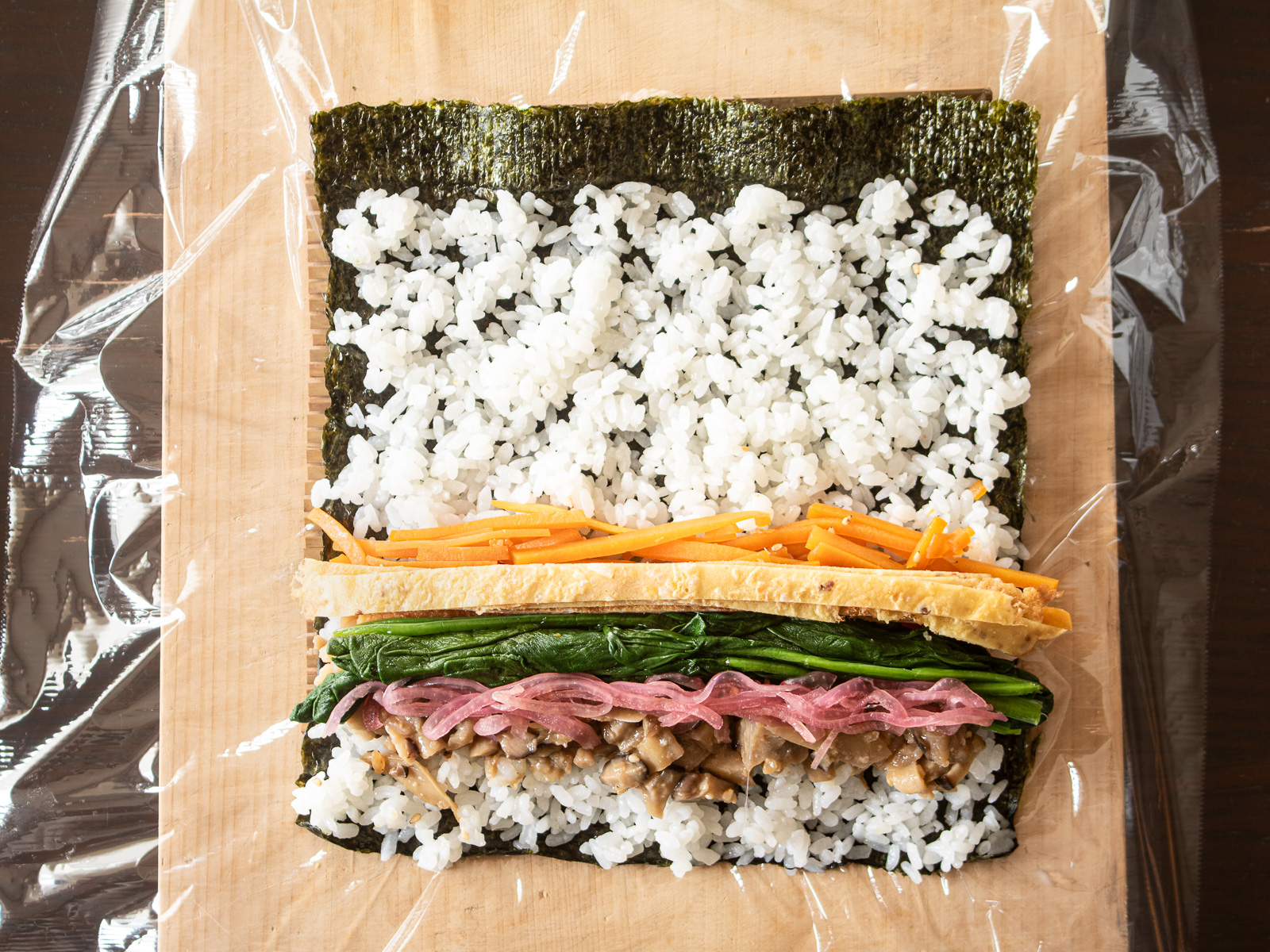
- Place the fillings ❶
- Arrange the fillings horizontally near the bottom edge of the nori.
- Place the mushroom soboro closest to you, then add the kinpira-style butternut squash beside it.
- Place the fillings ❷
- Lay the spinach along the seam between the two fillings.
- Place the sweet-and-sour pickled onion and vegan kinshi tamago on either side of the spinach.
- Roll ❶
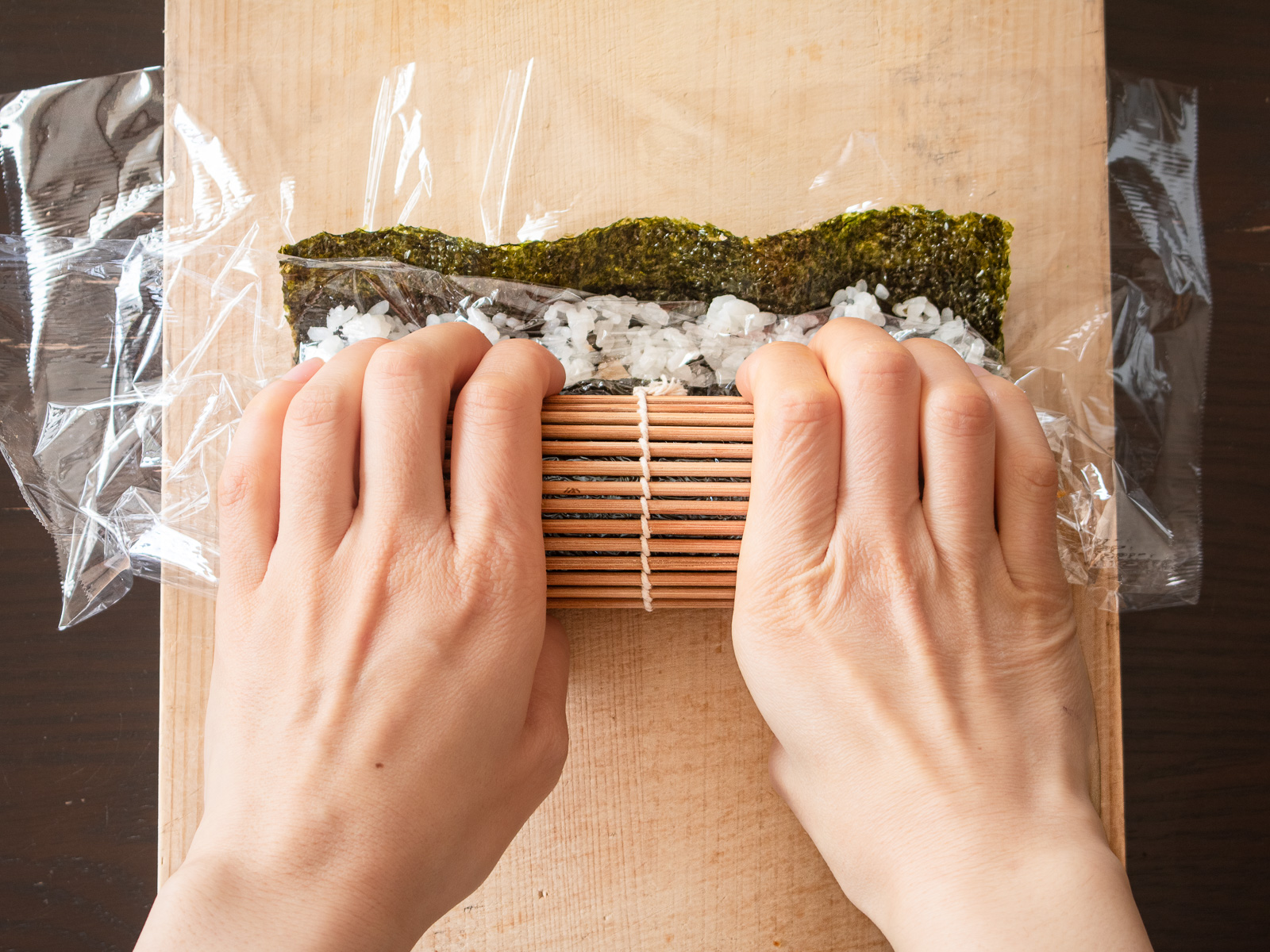
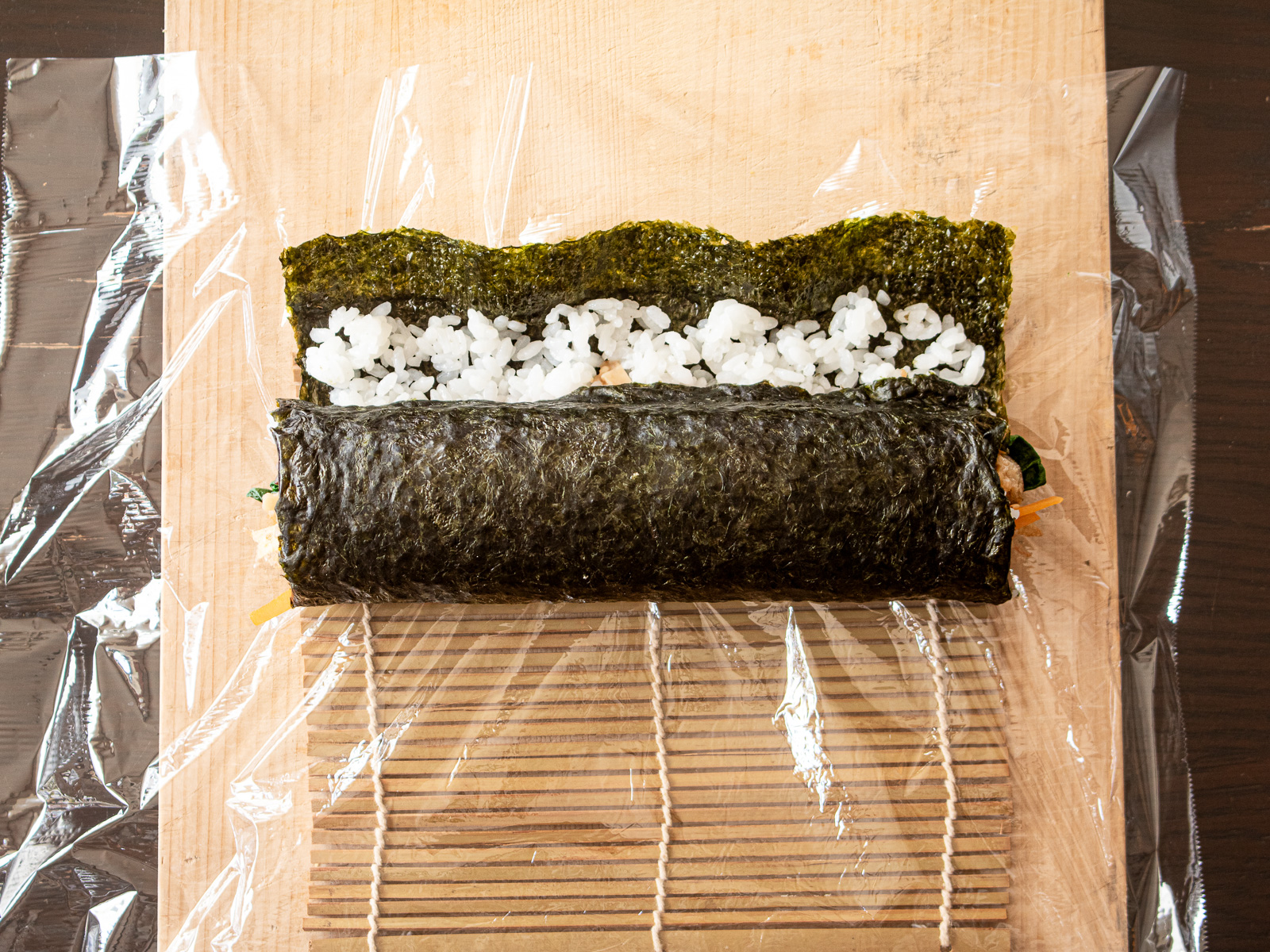
- Lift the bamboo mat and roll once to cover the fillings.
- Gently pull the roll toward you and press lightly to shape it.
- Roll ❷
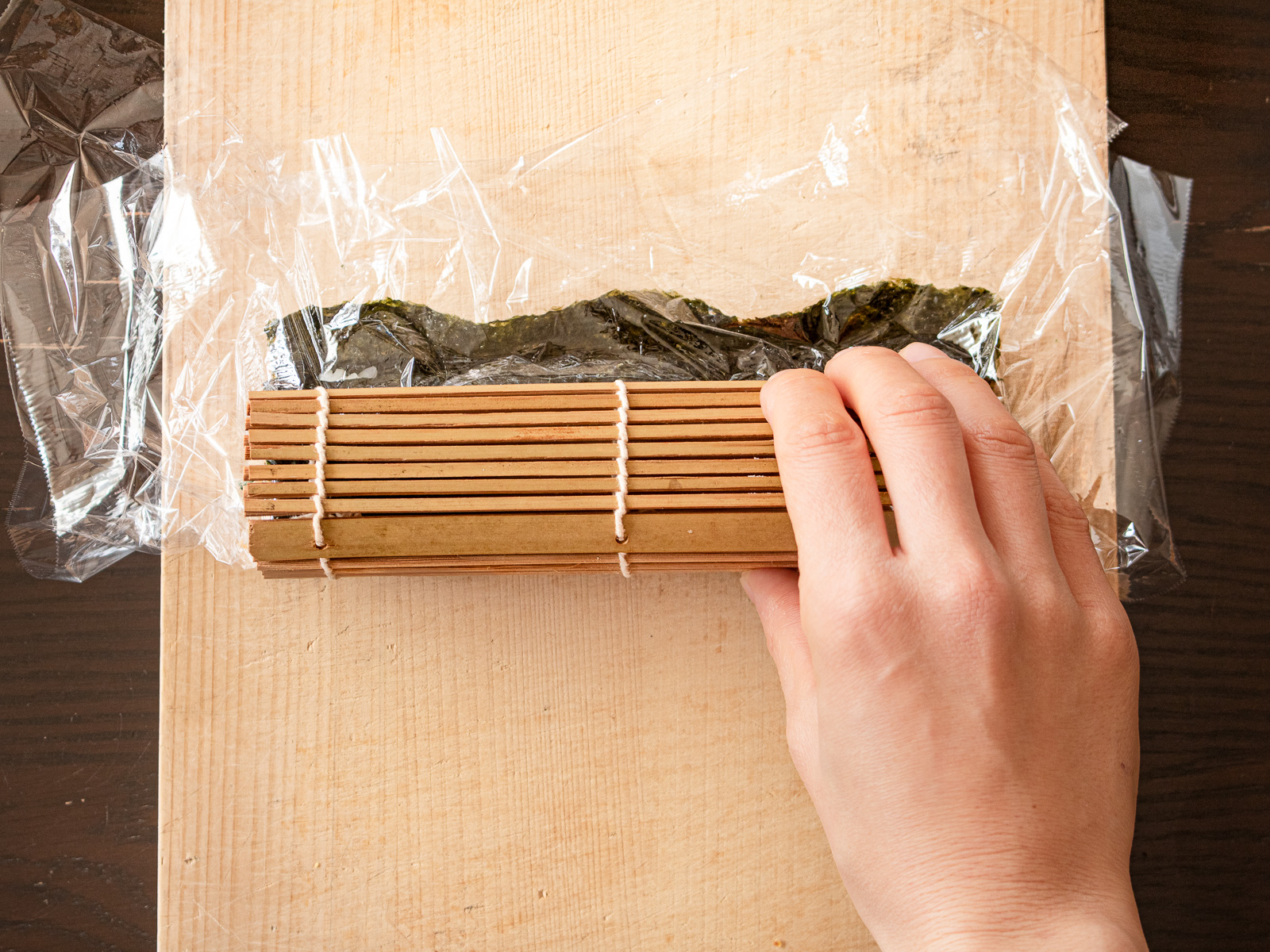
- Release the mat and continue rolling forward to the end.
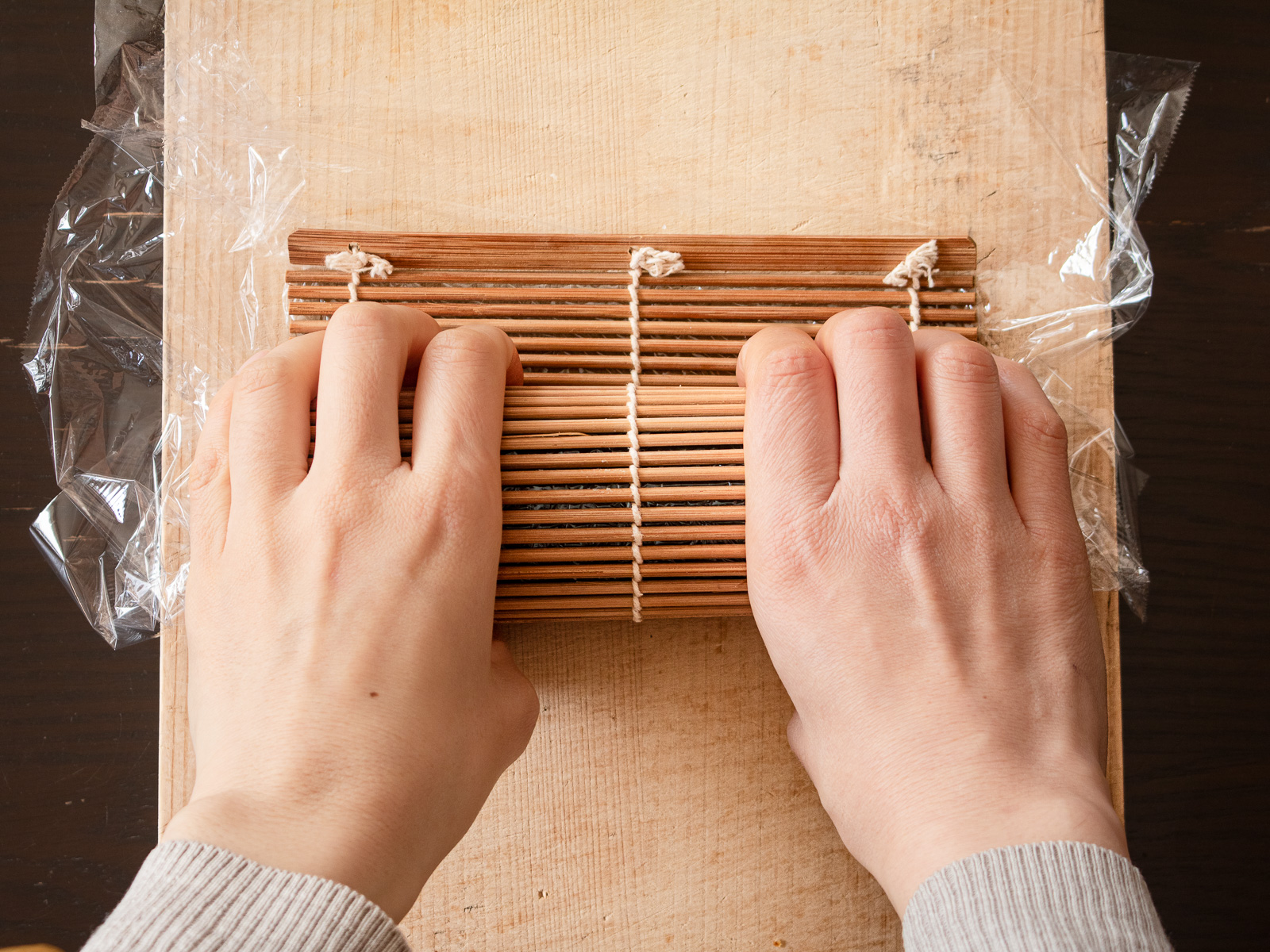
- Roll ❸
- Once the roll is complete, gently shape it through the bamboo mat.
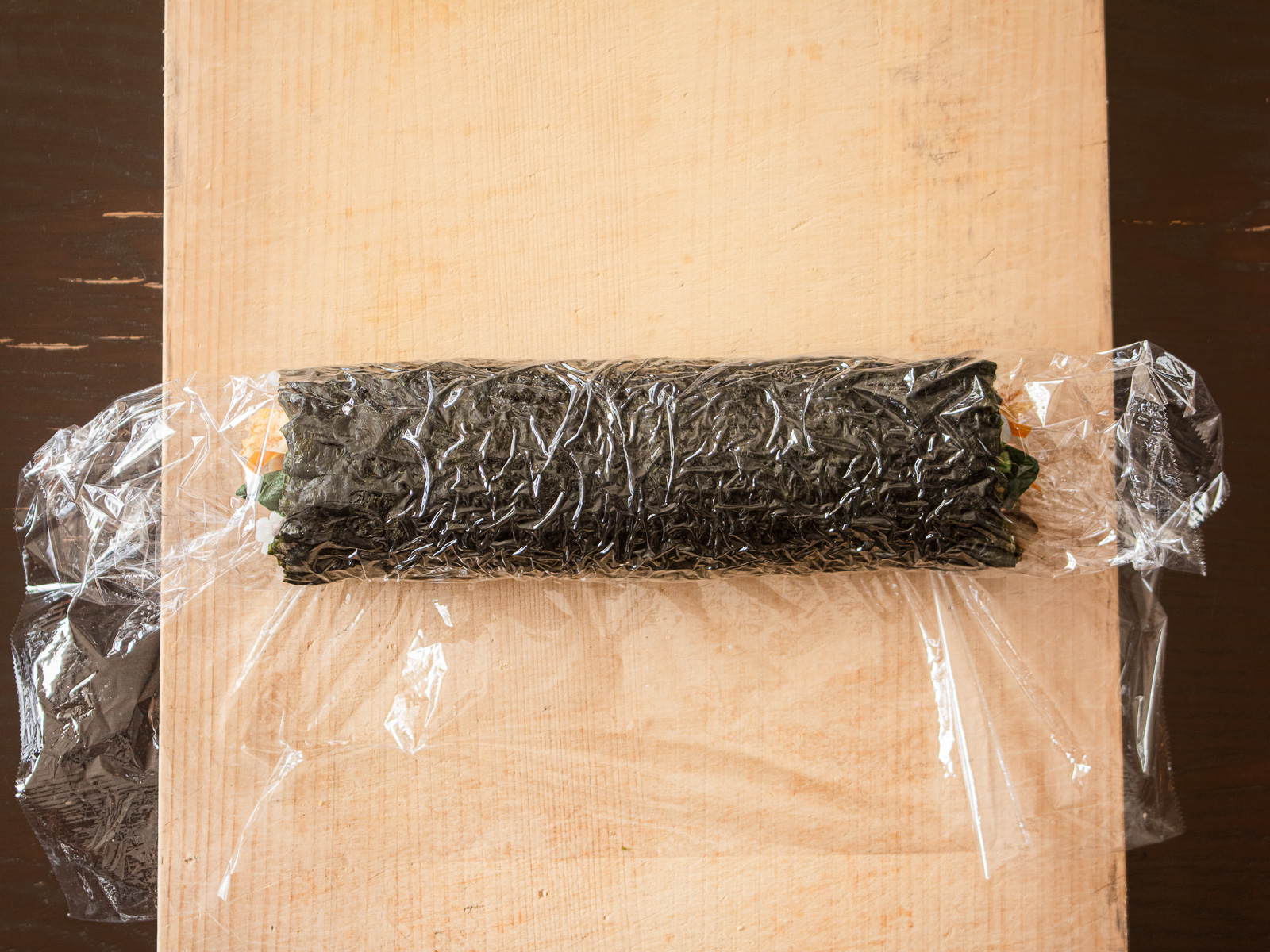
- Roll ❹
- Wrap the roll in plastic wrap and let it rest for a few minutes to help it settle into shape.
- Repeat with the remaining rice and fillings to make the second roll.
🌿 If you won’t be eating right away, keep the rolls wrapped and slice just before serving to prevent drying.
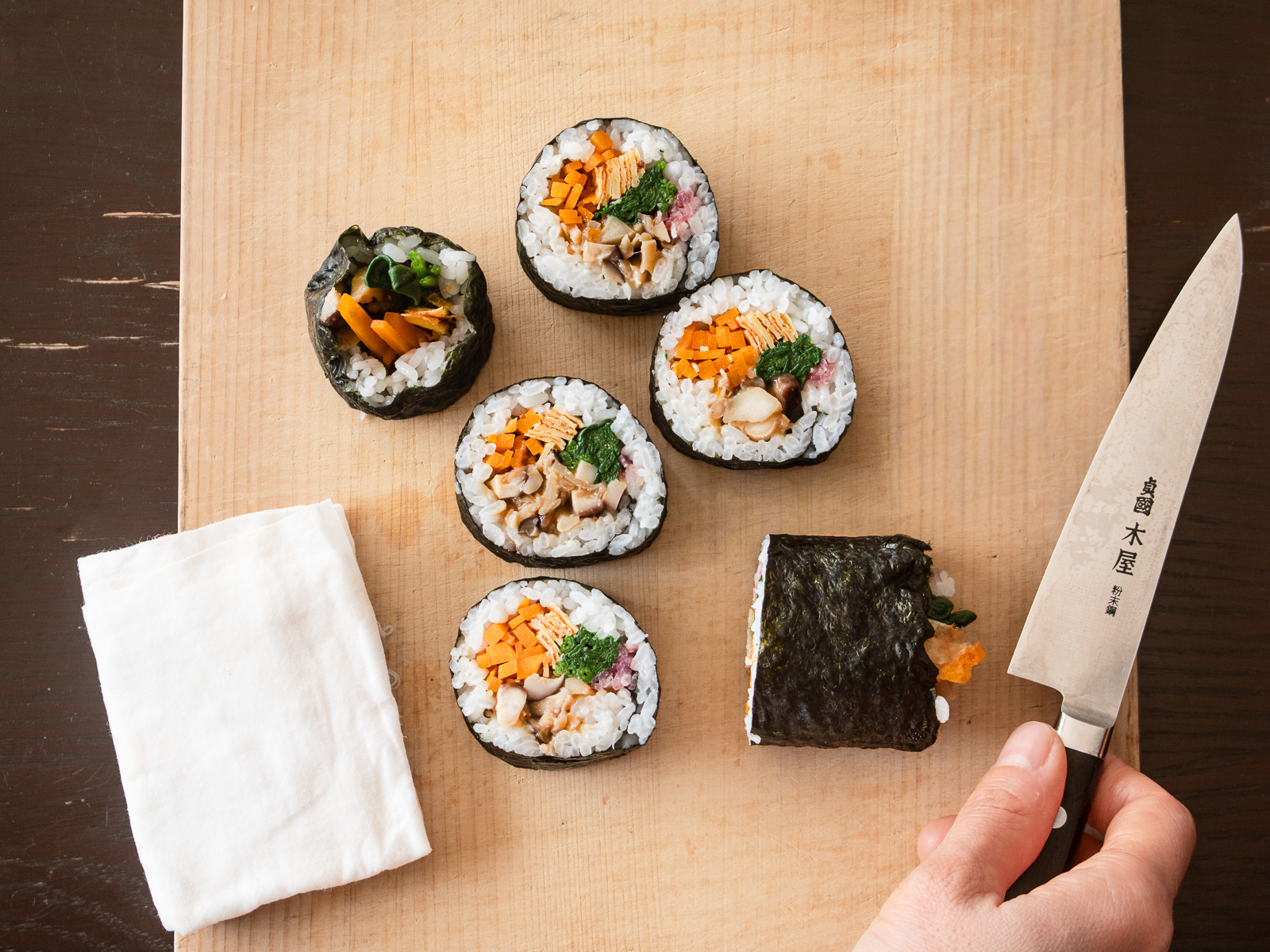
- Cut and Serve
- Remove the plastic wrap.
- Using a very sharp knife, slice each roll into even pieces.
🌿 Wipe the blade with a damp cloth between cuts for clean, beautiful cross-sections.
🫙 Storage & Make-Ahead Tips
Futomaki tastes best on the day it’s made,
when the rice is still soft and the overall texture and flavors feel gentle and well balanced.
Short-term storage
If there’s a little time before eating,
wrap the uncut rolls snugly in plastic wrap and keep them at room temperature.
🌿 Cutting just before serving helps keep the rice and fillings from drying out, and makes the cross-sections look cleaner and more beautiful.
About refrigeration
Futomaki doesn’t love the cold.
Chilling makes the rice firm and takes away some of its softness and aroma.
🌿 If refrigeration is unavoidable (for food safety reasons), let the rolls return to room temperature before eating.
The texture won’t be exactly the same, but the flavors will feel closer to their original balance.
Preparing ahead
While futomaki itself is best rolled fresh,
most of the fillings can be prepared ahead of time.
- Pickled onion:
best made the day before - Mushroom soboro & kinpira-style squash:
can be prepared the day before or earlier on the same day - Vegan kinshi tamago:
wrap well and store carefully to keep it soft and prevent drying out
Having the components ready lets you roll calmly, without rushing—so the process stays quiet and enjoyable.
📘 Kitchen Notes|A Futomaki Variation
This time, I tried something a little playful with futomaki.
I made extra vegan kinshi tamago and left it uncut, using it in place of nori to roll the sushi.
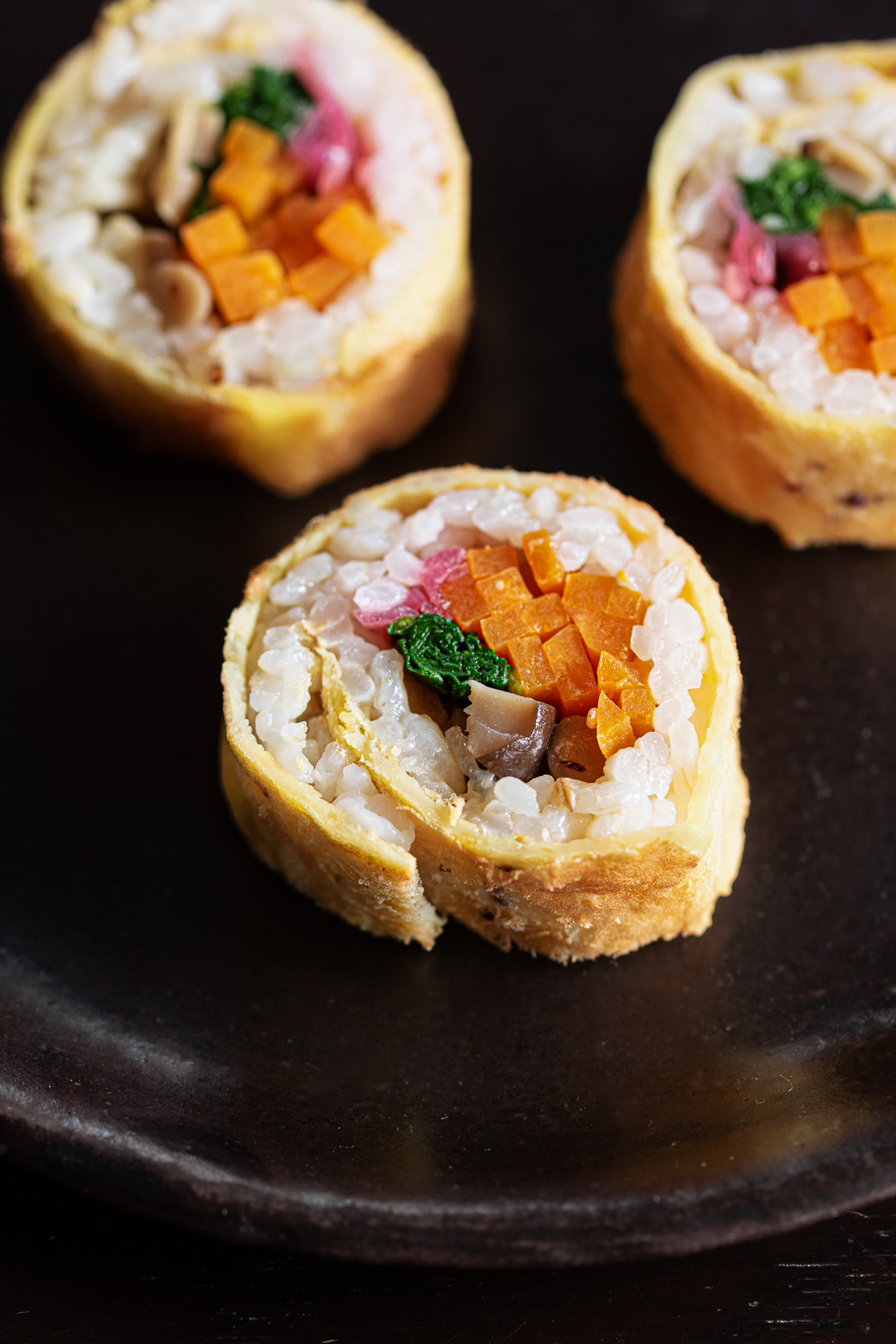
The vegan egg crepe is quite delicate and tears easily, so it may feel a little challenging if you’re making sushi rolls for the first time.
To keep it from tearing,
it helps to prepare the crepe on the same day and wrap the rolls while it is still warm and soft.
If you have a square Japanese omelet pan, even better.
It shapes the crepe closer to nori,
and makes rolling feel a bit more easier.
What I love about this variation
is the soft, egg-yellow color.
It reminds me of early spring,
when flowers of many colors bloom all at once, quietly filling the air with life.
As I made it,
I thought it would be perfect for Setsubun,
welcoming the coming of spring in a small, bright way.
📚 FAQ
This can happen if the rice layer is a little too thick, or if there are more fillings than the roll can comfortably hold.
Leaving a small margin at the far edge of the nori and spreading the rice in a thin, even layer makes rolling much easier.
Once the fillings are in place, roll once to cover them, then gently pull the roll toward you as you tighten it.
This small adjustment helps the roll come together more neatly.
Wrapping the finished roll in plastic wrap and letting it rest briefly can also help it settle into shape.
As a rough guideline, I use about 140 g of rice per sheet of nori.
It may feel a little on the light side, but this amount helps the roll come together cleanly and makes it easier to shape.
You can use the regular white rice setting and reduce the water slightly.
Rice that finishes just a touch firm works well, as it holds its texture after being seasoned.
I wouldn’t recommend making the rolls themselves ahead of time.
That said, the fillings can be prepared in advance. Cooking the rice and rolling on the same day makes a noticeable difference in both texture and flavor.
Yes. You can simply prepare the fillings and enjoy them as hand-rolled sushi instead.
Yes, it fits well with Setsubun.
Face the year’s lucky direction and enjoy it as a way of welcoming the new season.

If you feel like whispering a thought, asking a question, or simply saying hello — the comment section is always open 📮
🛷 Recipe ❶ Other Vegan Sushi Recipes
More vegan sushi recipes I enjoy making:
🐕 Recipe ❷ Suggested Pairings
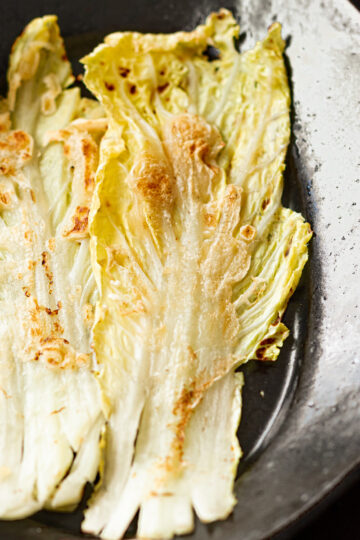
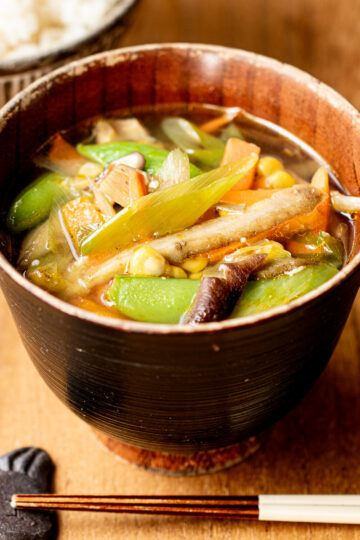
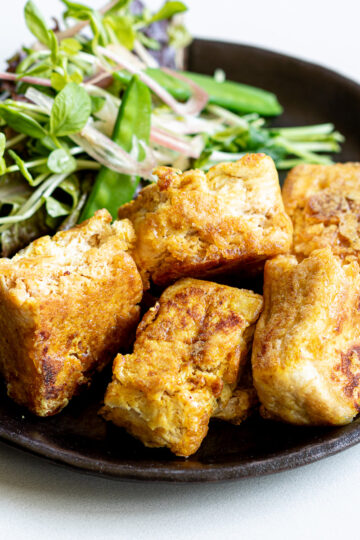
Simple vegan sides and soups I like to serve with sushi:

✏️ Recipe Card|Summary
Vegan Futomaki Sushi|Plant-Based Japanese Thick Sushi Rolls
Equipment
- Cutting board and knife
- Paper towels - (for draining ingredients)
- Mixing bowl
- Rice paddle
- plastic wrap
- Bamboo sushi mat - (optional but helpful)
- Flat plate - (to cool sushi rice)
- Damp cloth - (to wipe the knife while cutting)
Ingredients
Sushi Rice
- 280g freshly cooked Japanese short-grain rice (from 1 Japanese rice cup / 180 ml uncooked rice)
- 1 tablespoon rice vinegar
- 1 tablespoon sugar
- ½ teaspoon Salt
Fillings
- 1 batch mushroom soboro
- 1 batch butternut squash kinpira
- vegan kinshi tamago (thinly sliced, as needed)
- sweet pickled onion (well drained, as needed)
- boiled spinach (well squeezed, as needed)
Other
- 2 sheets nori sheets (for sushi)
Instructions
Prepare the fillings
- Prepare the mushroom soboro, kinpira butternut squash, vegan kinshi tamago, sweet pickled onion, and boiled spinach.
- For the onion and spinach, lightly press with paper towels to remove excess moisture.
Make the sushi rice
- Cook the rice (a sushi rice setting is ideal).
- Measure out 280 g of the freshly cooked rice.280g freshly cooked Japanese short-grain rice
- In a small bowl, mix the rice vinegar, sugar, and salt to make the sushi vinegar.1 tablespoon rice vinegar1 tablespoon sugar½ teaspoon Salt
- Pour the sushi vinegar evenly over the hot rice and mix gently, using a slicing motion with a rice paddle.
- Transfer the rice to a wide, shallow plate and let it cool until just warm to the touch.
Assemble and roll
- Place a bamboo sushi mat on a cutting board and cover it with plastic wrap.
- Place a sheet of nori on top, shiny side facing down.2 sheets nori sheets
- Spread half of the sushi rice (about 140 g) thinly over the nori, leaving about 2 cm (¾ inch) uncovered at the far edge.
- Arrange the fillings near the front edge:- Place the mushroom soboro closest to you.- Add the kinpira butternut squash next to it.- Lay the spinach along the seam between the mushroom and kinpira.- Place the sweet pickled onion and vegan kinshi tamago on either side of the spinach.1 batch mushroom soboro1 batch butternut squash kinpiravegan kinshi tamagosweet pickled onionboiled spinach
- Lift the mat from the near edge and roll once to cover the fillings.
- Gently pull the roll toward you while pressing lightly to tighten and shape it.
- Continue rolling to the end, then wrap the roll in plastic wrap. Let it rest briefly.
- Repeat with the remaining ingredients to make the second roll.
Slice
- Remove the plastic wrap.
- Wipe the knife with a damp, well-squeezed cloth between cuts to keep the slices clean.
Notes
▶︎ Storage
Futomaki is best enjoyed on the day it is made.Refrigeration is not recommended, as the rice tends to harden. If preparing ahead, make the fillings in advance and cook the rice and roll on the same day.
▶︎ Tips
- About 140 g of rice per sheet of nori is an easy-to-roll guideline.
- Removing moisture from the fillings—especially the pickled onion and spinach—helps the roll hold its shape.
- Sweet pickled onion develops better flavor and a deeper pink color when prepared the day before, though even a few hours makes a difference.
- If your rice cooker doesn’t have a sushi rice mode, use the regular white rice setting and reduce the water slightly to avoid sogginess.
▶︎ Filling Amount Guide (per roll)
- Mushroom soboro: ½ batch
- Butternut squash kinpira: ½ batch
- Vegan kinshi tamago: 12 g
- Sweet pickled onion: a small amount (for accent)
- Boiled spinach: 25 g

If this recipe made its way into your kitchen, and you'd like to share that moment, feel free to tag @veginveganvegun or use #vegin_vegan_vegun.
Your quiet stories inspire me deeply 🕊️

Comments
No Comments