
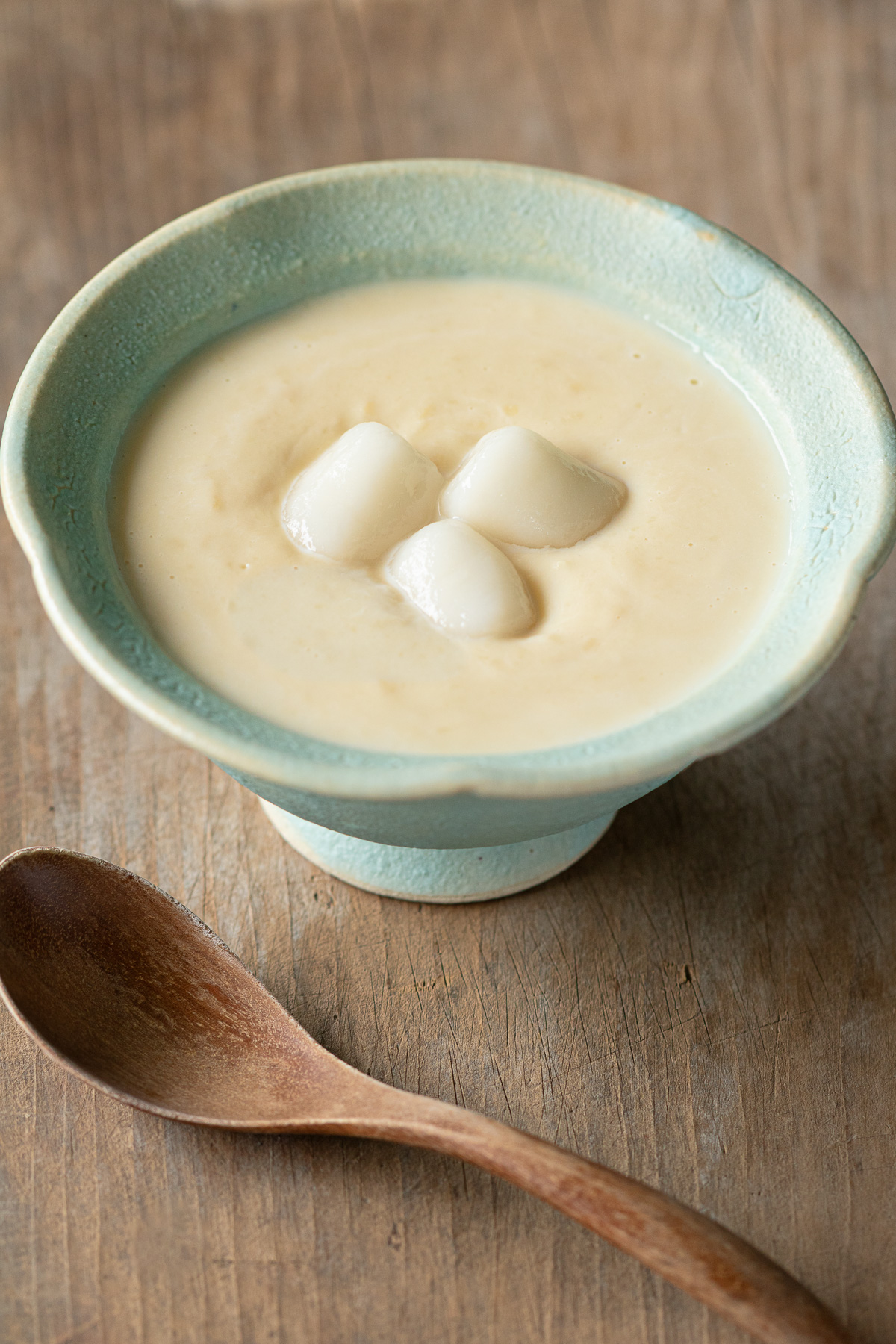
A creamy vegan, Southeast Asian twist on a classic Japanese sweet soup, oshiruko.
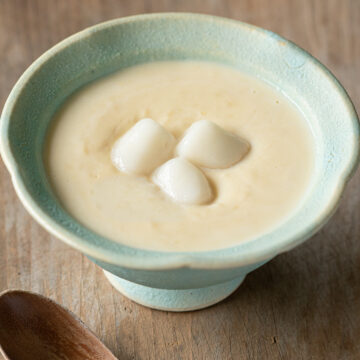
This mung bean oshiruko is made with homemade mung bean paste, coconut milk, and chewy shiratama (soft, chewy dumplings made from glutinous rice flour).
Coconut milk brings its own natural sweetness and richness, turning this bean soup creamy and satisfying with just a small amount of sugar.
Serve it warm, or chill it in the fridge for something cool on a hot day.
Jump to:
📖 Recipe Highlights
- Quick and simple — split yellow mung beans need no soaking, so this comes together in about 30 minutes
- Creamy but lightly sweet — coconut milk adds its own richness, so only a little sugar is needed
- Warm or chilled — a cozy dessert on a cool day, a refreshing one on a hot day
🫘 What Is Mung Bean Oshiruko?
Oshiruko(お汁粉) is a traditional Japanese sweet soup, most often made with adzuki (red bean) paste and served with chewy shiratama dumplings or toasted mochi. In my family, my mom only made it on special occasions. New Year, my father's birthday, or whenever she happened to be in the mood for it. A dish that looks simple, she always said, but actually takes a lot of steps, time, and patience.
As plant-based cooking became part of my everyday life, I found myself making oshiruko more often. And I realized oshiruko making isn't that big a deal. It's more about how you prepare it, and which tools and ingredients you reach for.
Over the years, I've made many kinds of oshiruko. Classic azuki. Sweet potato. Pumpkin. And now this mung bean version. Each one has its own character, but they all carry that same gentle warmth.
For this one, I use split yellow mung beans, pressure cooked until soft, then mashed into a smooth paste, close to how anko (sweet red bean paste) is made.
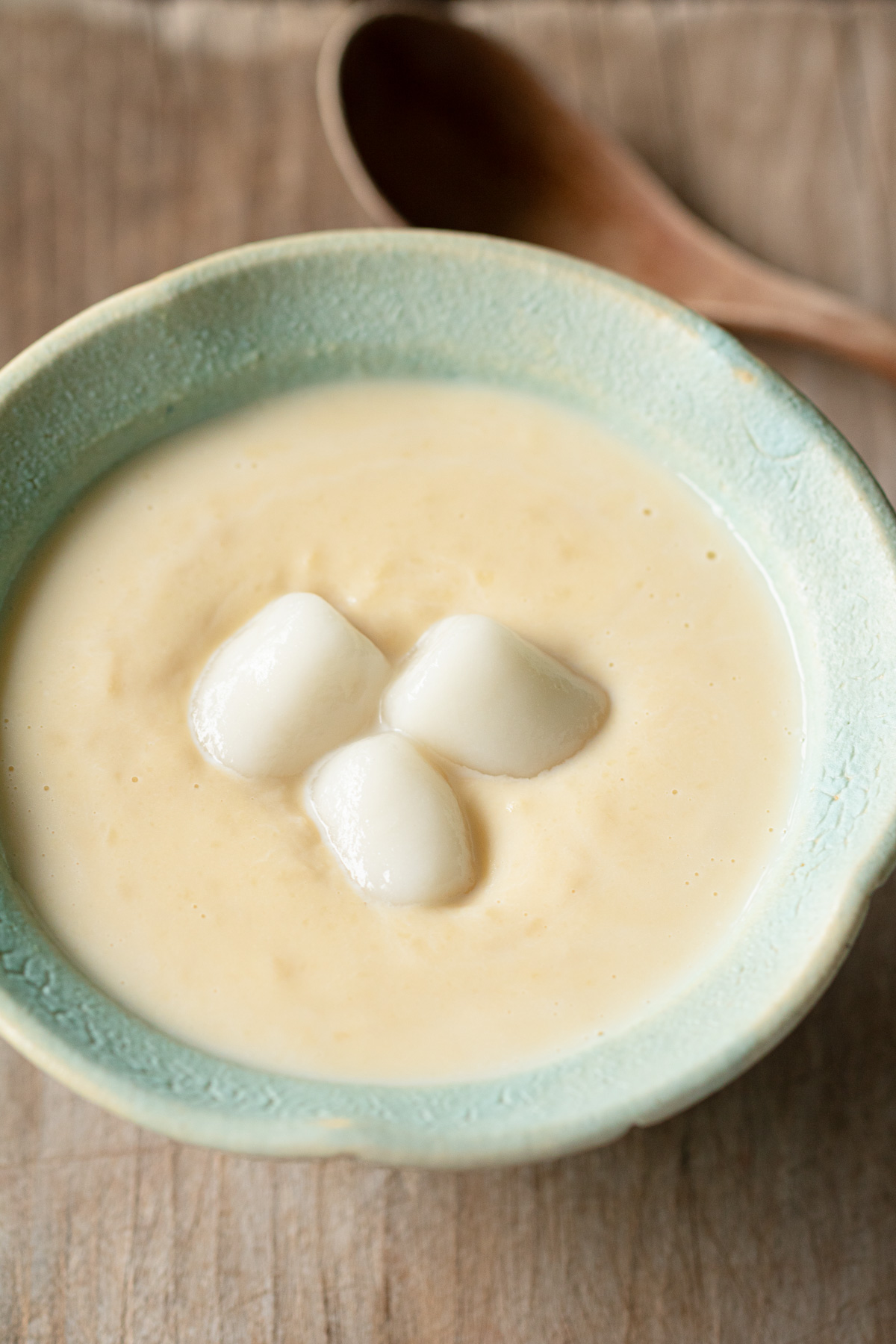
Instead of thinning it with water like a classic azuki oshiruko, I use coconut milk. Rich, creamy, and a little sweet on its own.
In Southeast Asian sweets, mung bean and coconut milk is a classic pairing, one you can never go wrong with. Add shiratama dumplings on top, a small, humble Japaneseness, and it becomes genuine oshiruko.
I enjoy it warm most of the time.
When I can't finish it all in one sitting, I keep the soup in the fridge and have it as hiyashi shiruko (chilled oshiruko). Mochi hardens in the fridge, though, so I always make it fresh, right before serving. That part is non-negotiable for me. I care about the chewy texture too much to let it go.
Of all the oshiruko I've made, this one feels a little different. The nostalgia is there, like it is in any oshiruko, but it also makes me feel like I'm on a short trip, somewhere far away in Southeast Asia.
Even now that the pandemic is behind us, I don't go abroad as often as I used to. When I want to feel the air outside of Japan, without flying, I quietly take out the mung beans and the coconut milk, and start making this soup.
🫘 Ingredients
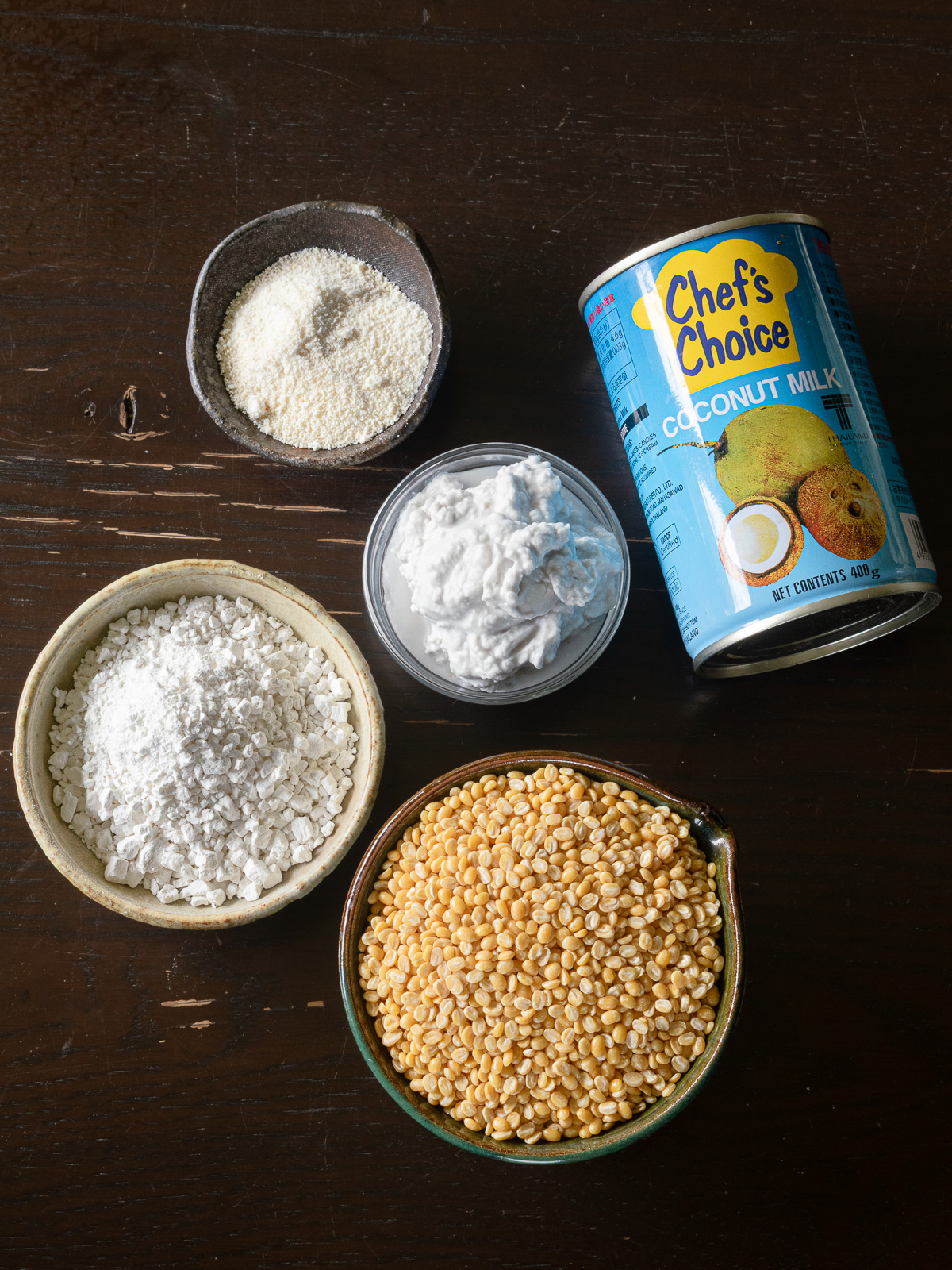
- Yellow split mung beans (mung dal): I use yellow split mung beans (moong dal) — the same ones I use for dal curry and kitchari. I always buy the ones from Ambika, an Indian brand also available in Japan.
- Coconut milk: Yuki Foods' coconut milk (Japanese brand) is the one I always reach for. The balance of flavor, sweetness, and creaminess suits me best.
- Beet sugar: For sweetness, I reach for beet sugar powder most of the time. It has a pale color and dissolves easily, so it helps the dish keep the mung beans' pale yellow color.
▶︎ Shiratama dumplings
- Shiratama-ko (glutinous rice flour): I usually reach for Tamamitsu shiratama-ko. Any brand would work here.
- Water
Full quantities and instructions are in the recipe card at the bottom of the post 👇
🥣 Tools I use
- Pressure cooker: I cook the mung beans in my Pearl Metal pressure cooker, switching it to high pressure (100 kPa). It has a low setting (60 kPa) too, which I use for vegetable stews, curries, and anything where I want the ingredients to hold their shape rather than fall apart. If your pressure cooker runs at a different kPa, adjust the cooking time accordingly.
- Spatula
- Bowl
- Pot
- Fine mesh strainer (optional)
🥄 How to Make
Making this oshiruko comes down to three simple steps: cook the mung beans, prepare the shiratama dumplings, and bring everything together in a bowl.
One of the reasons I make this version so often is that split yellow mung beans don't need soaking. From start to finish, it takes about 30 minutes, making it much quicker than traditional azuki bean oshiruko.
⒈ Make the mung bean soup
I cook the mung beans the same way I do for my Japanese-style sweet mung bean balls. Just enough water to cover the beans, nothing more.
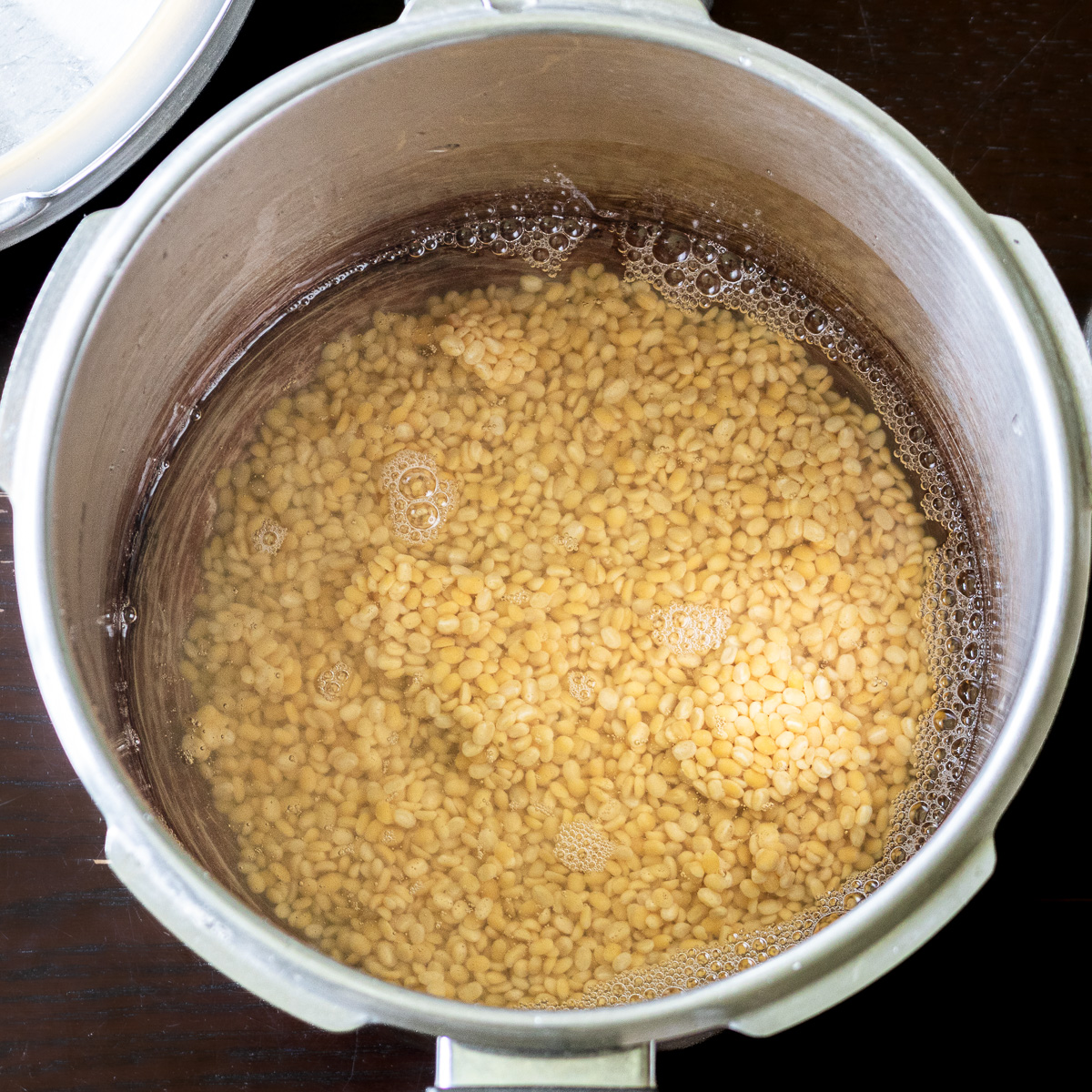
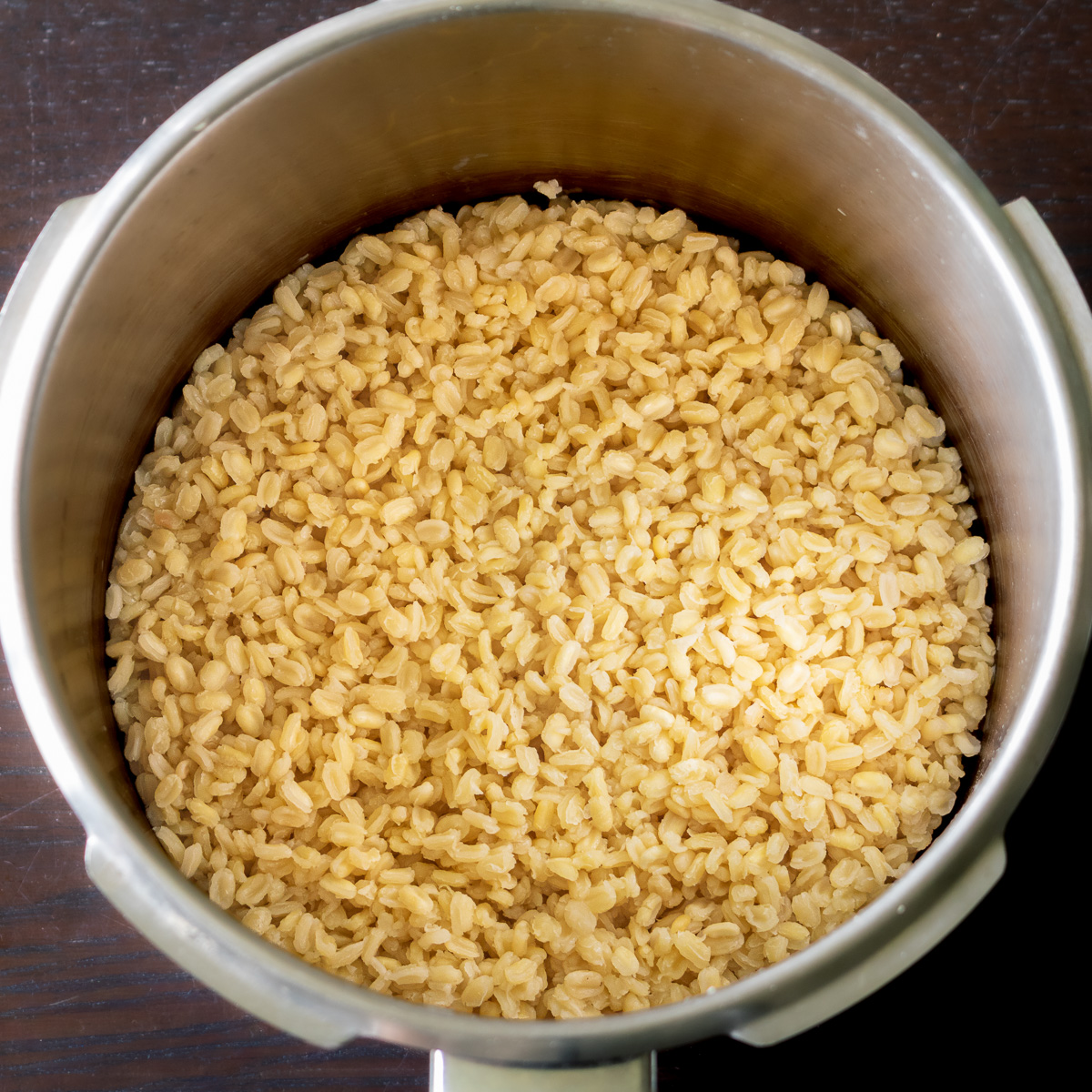
As soon as the pressure drops, I open the lid and start stirring with a spatula while the beans are still hot. They're soft enough to become a creamy, smooth paste without needing a blender or a potato masher. A spatula alone does the job.
A few pieces stay whole here and there, but I like that rustic touch and always leave it as it is. If you prefer an extra smooth texture, you can pass it through a fine mesh strainer.
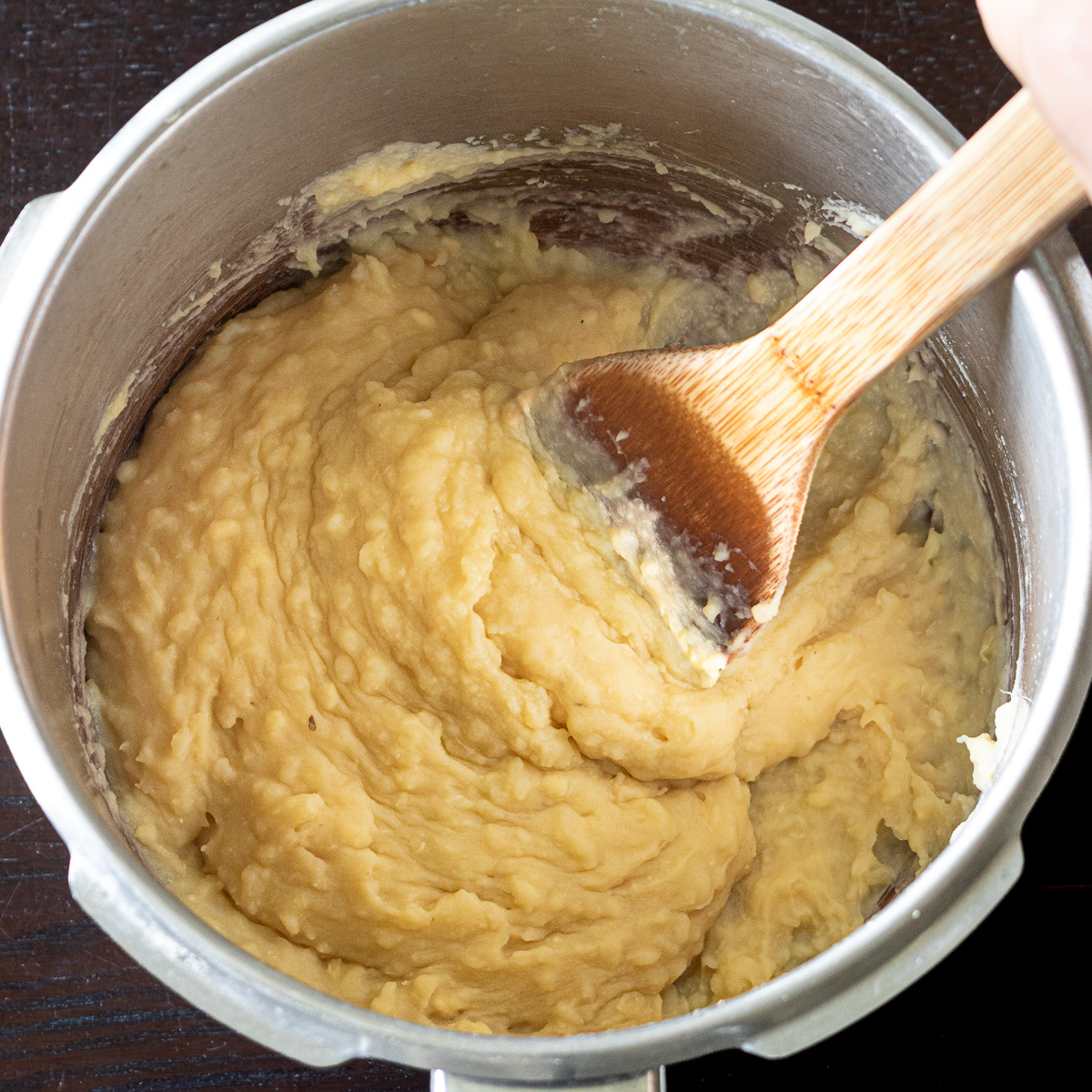
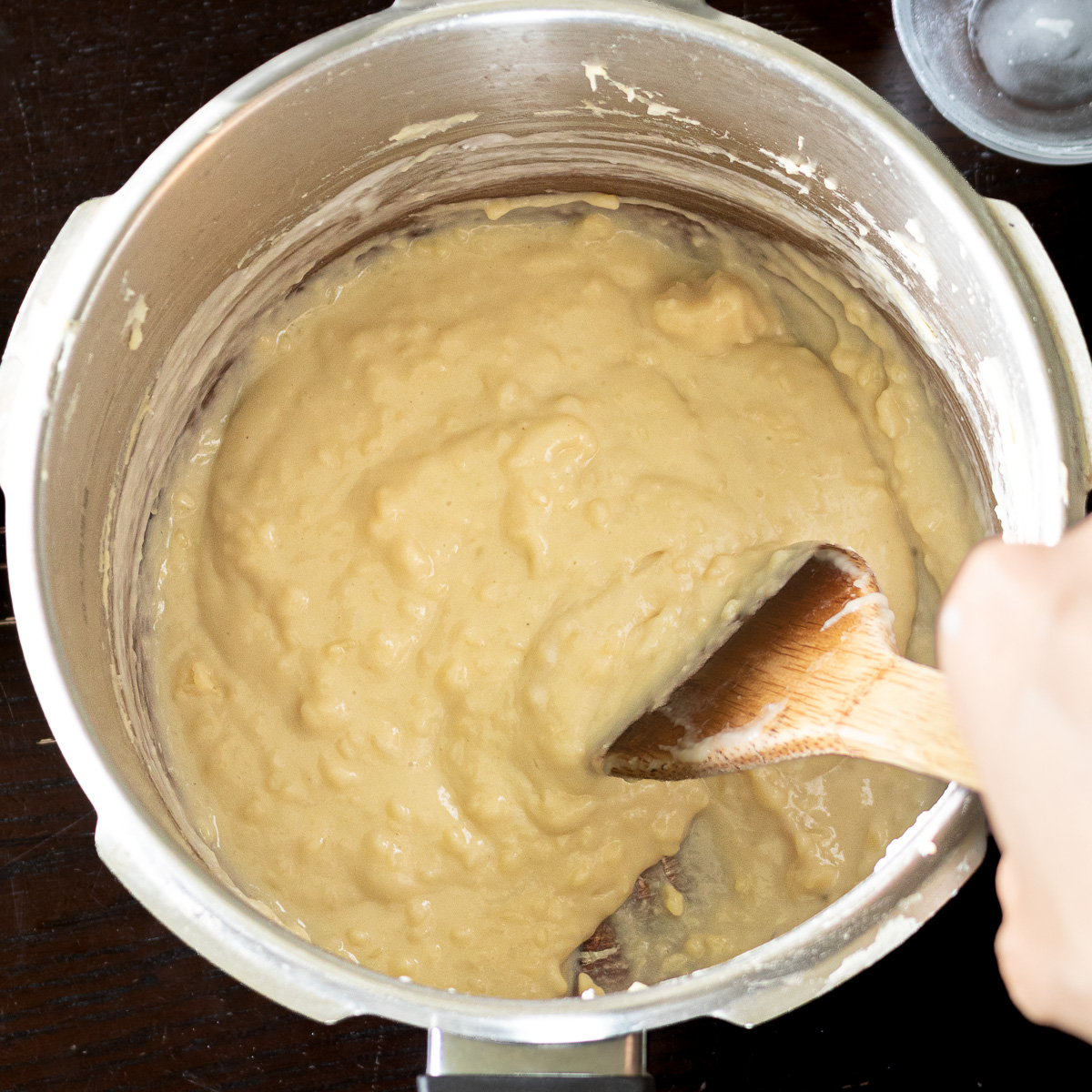
Once the paste is smooth, stir in the coconut milk and sugar. Adjust the consistency and sweetness with a little extra coconut milk and sugar if needed.
⒉ Make the shiratama dumplings
Shiratama making always follows the same method, like anmitsu and other oshiruko variations.
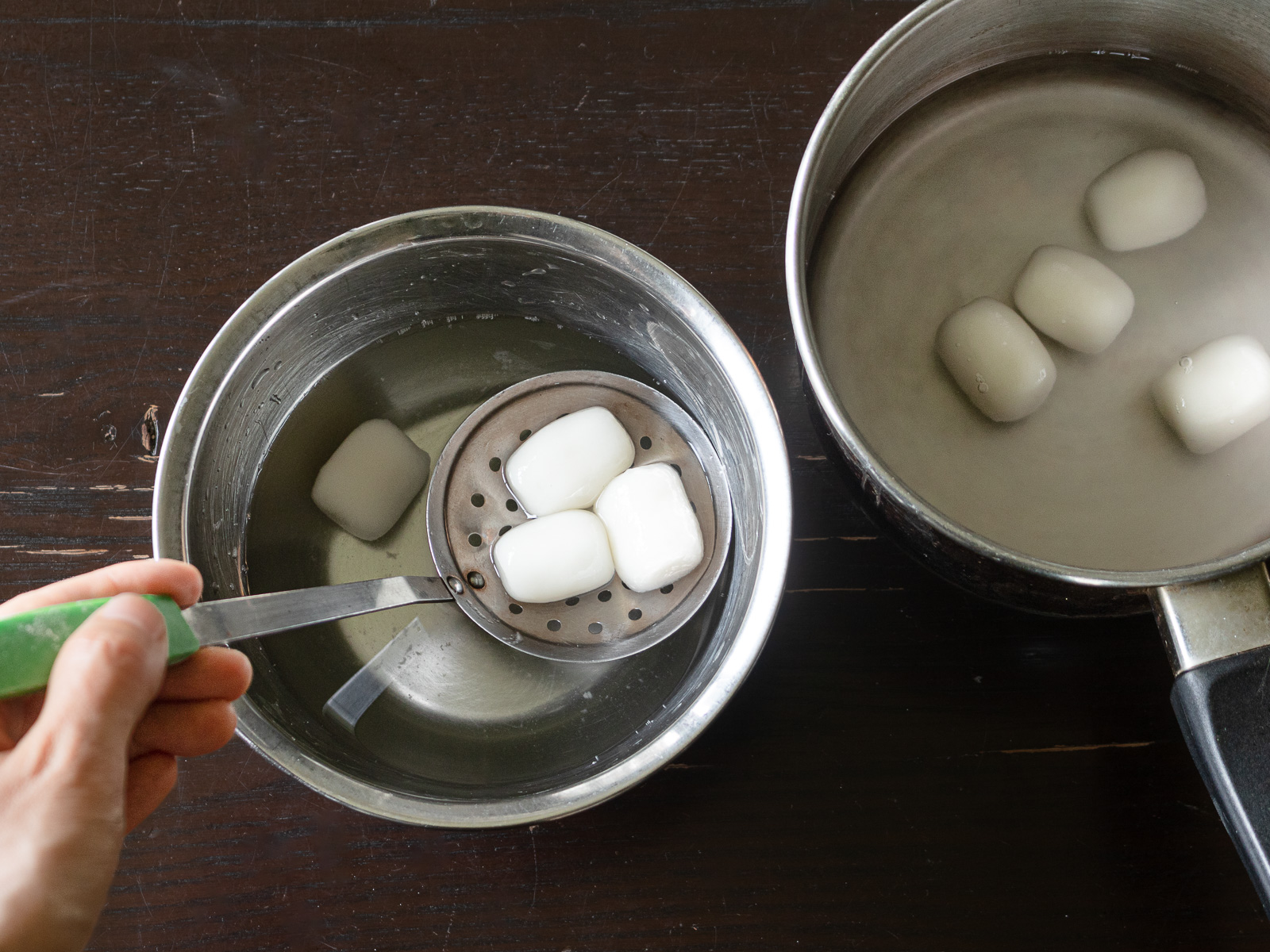
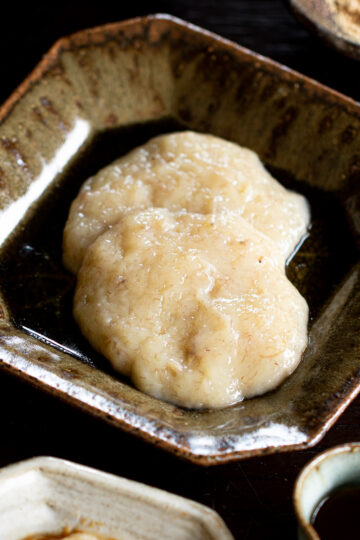
The difference is just the shape. For this recipe, I always roll the dumplings into little oval logs. There's no particular reason — I just think they somehow suit this oshiruko.
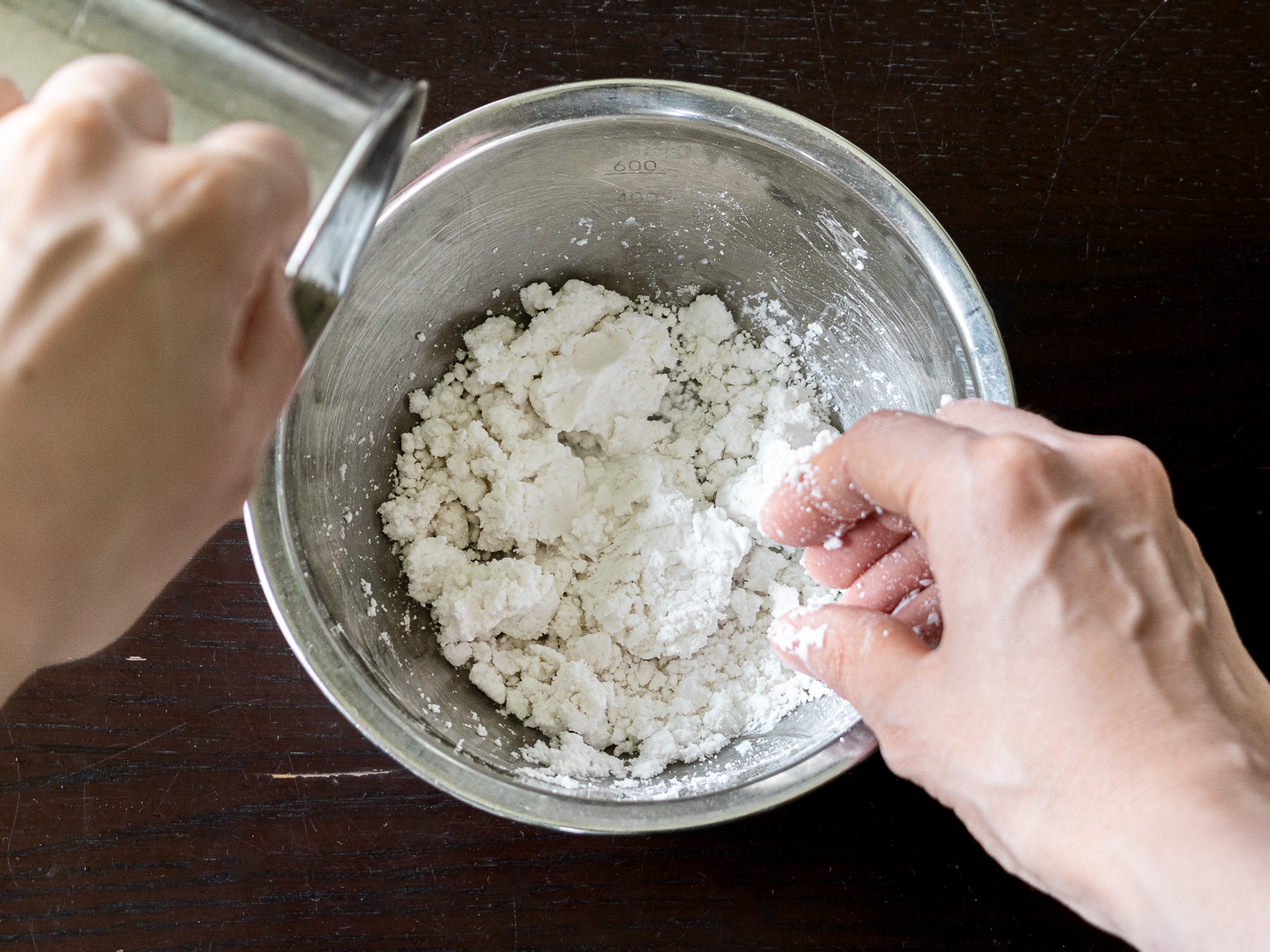
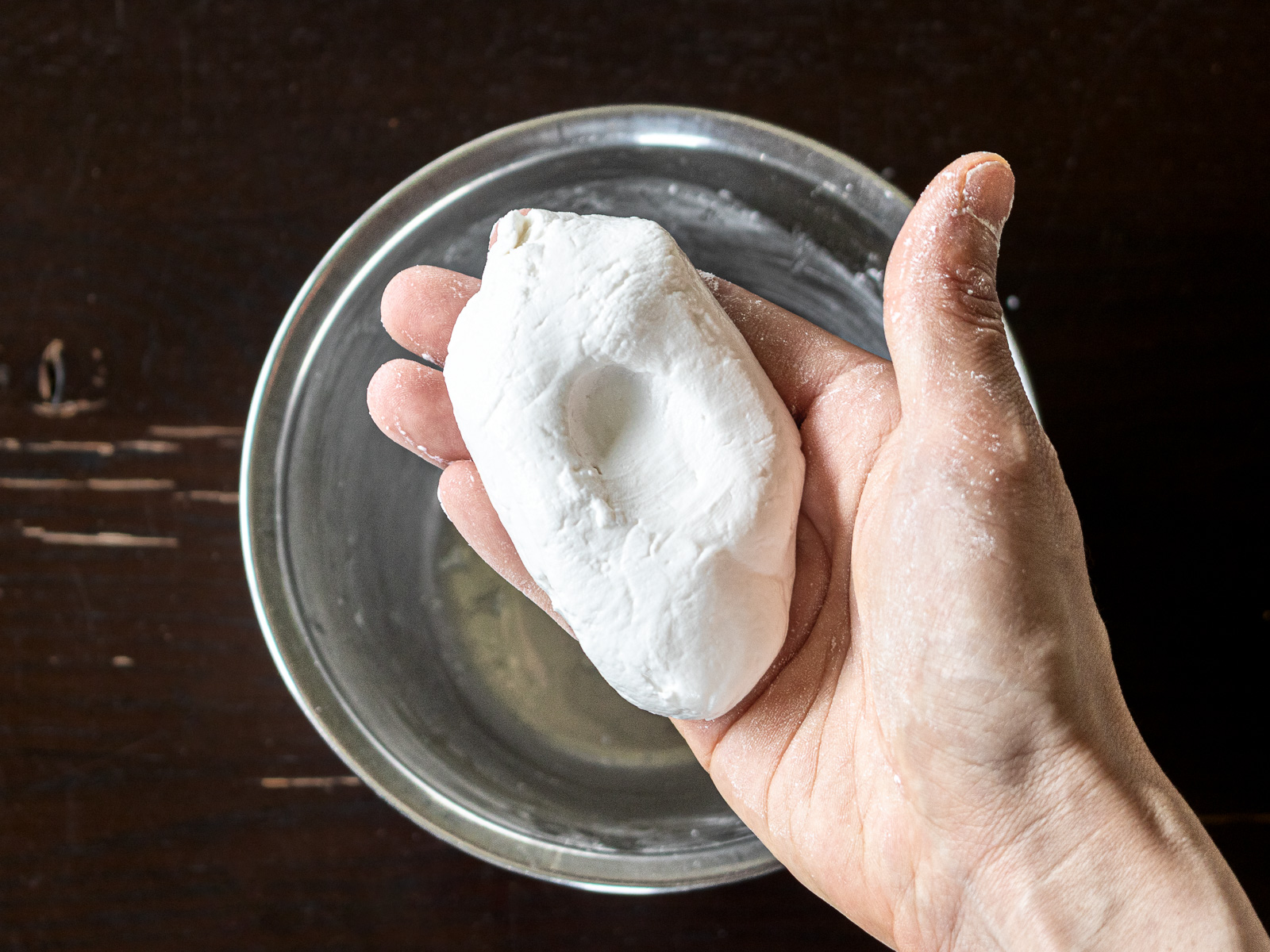
- Knead
- Put shiratama-ko in a bowl and add water little by little, kneading until smooth.
- Check the texture
- Once it reaches a softness about the same as an earlobe, it's time to shape.
🌿 If it becomes too soft, simply add more shiratama-ko. If it's too firm, add a little more water and adjust.

- Shape
- Roll the dough into any size and shape you like.
- Boil
- Drop the shaped dough into boiling water until they float. Let them cook for another minute before scooping them into cold water.
⒊ Assemble
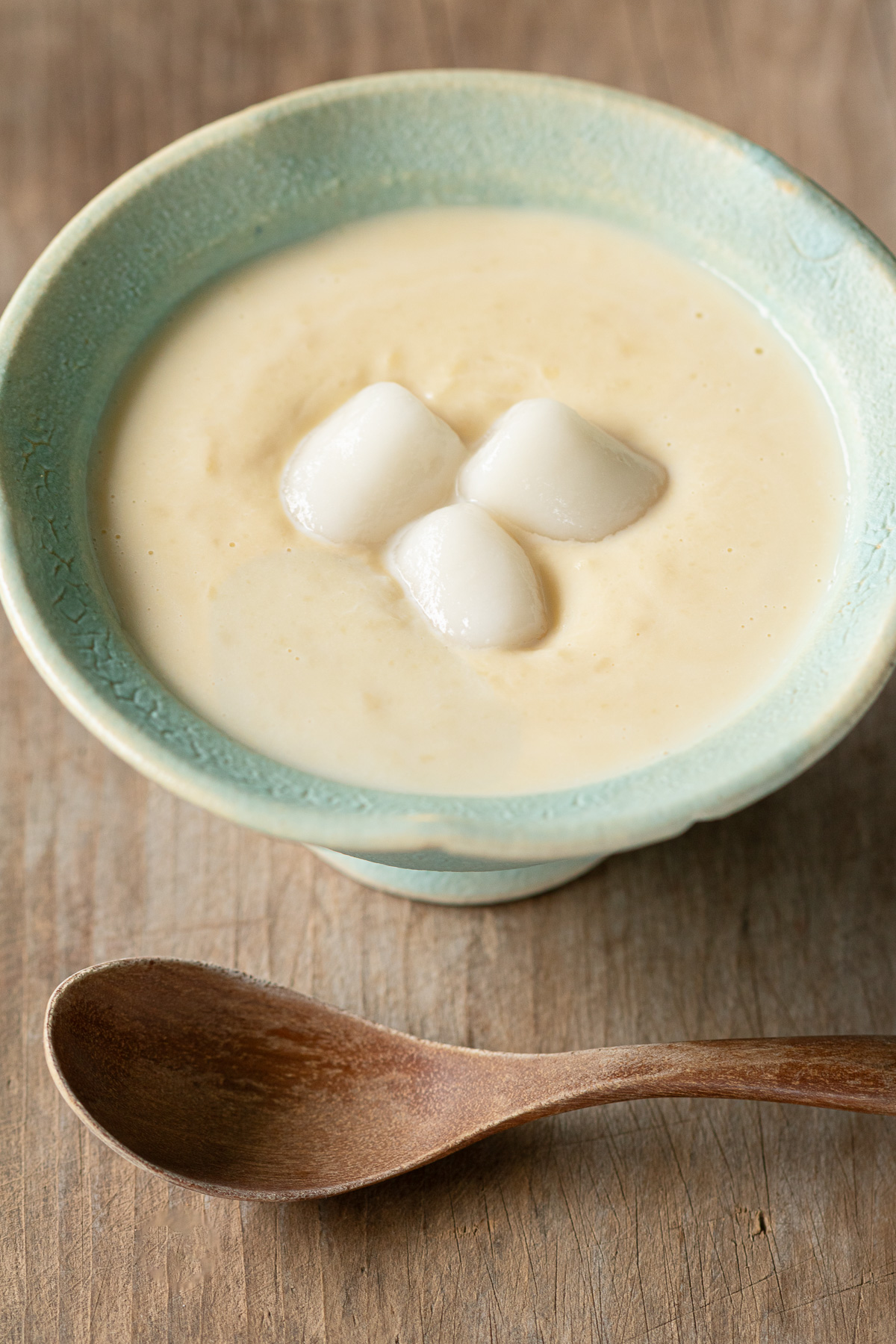
Pour the warm mung bean soup into bowls and add as many freshly cooked shiratama dumplings as you like.
Serve warm, or chill the soup and add them just before serving.
🫙 Storage
Any leftover sweet soup can go in an airtight container in the fridge.
Dumplings, on the other hand, get harder over time, and even faster in the fridge. So I only ever save the soup, and make just as many dumplings as I'll finish that day.
📚 FAQ
Whole mung beans cook differently, and the skins stay behind even after mashing. My mung bean banana cream is a better fit if you're using the skin-on variety.
You can, but the soup comes out much lighter, without the richness coconut milk brings.
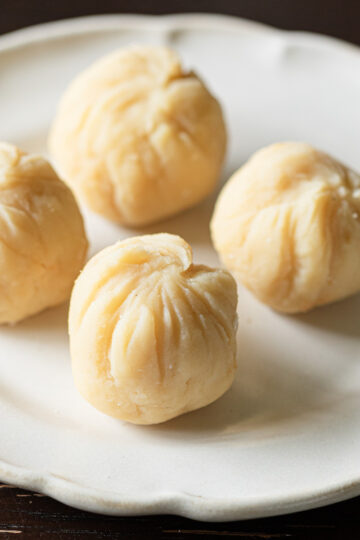
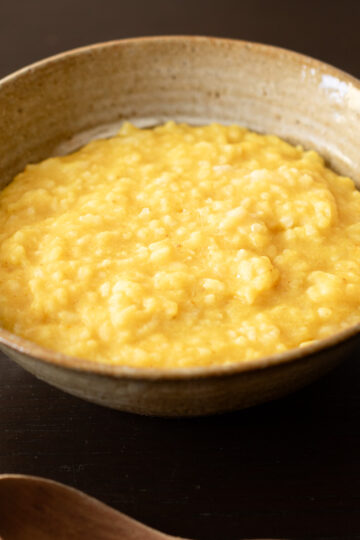
📔 Leftover Mung Beans?
From dessert to main dishes:
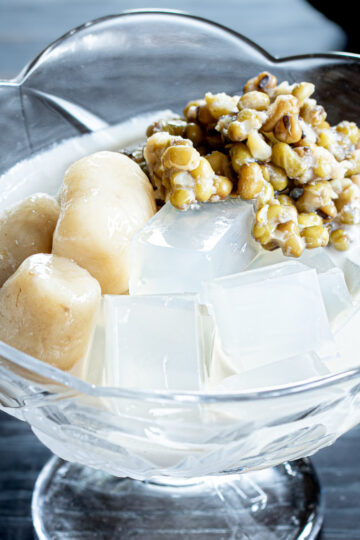
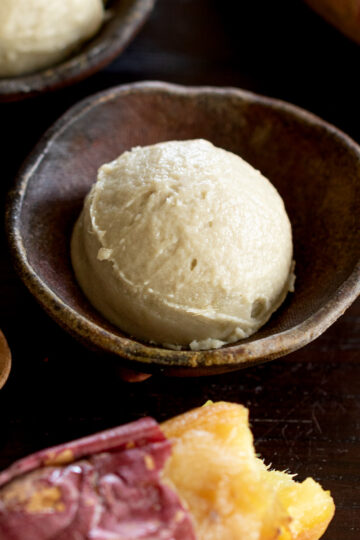
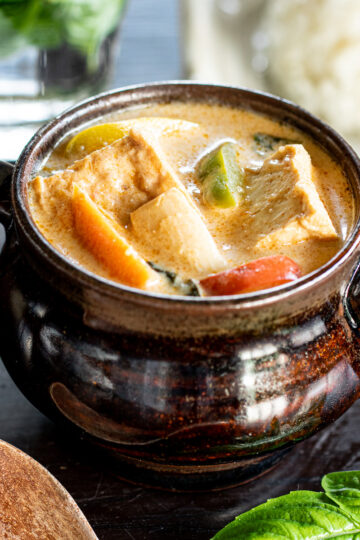
🥥 Leftover Coconut Milk?
Not just for dessert, but also soups, curries, and pasta:
🌱 More Oshiruko Recipes
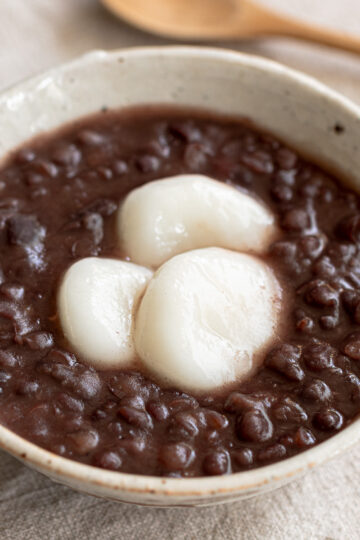
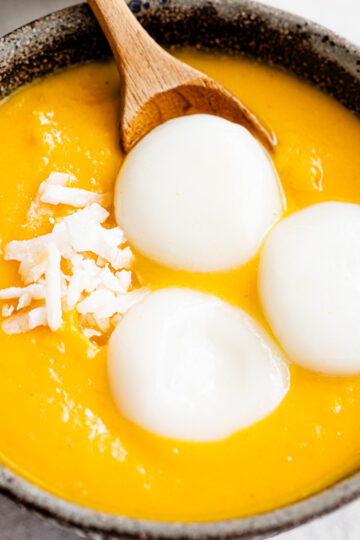
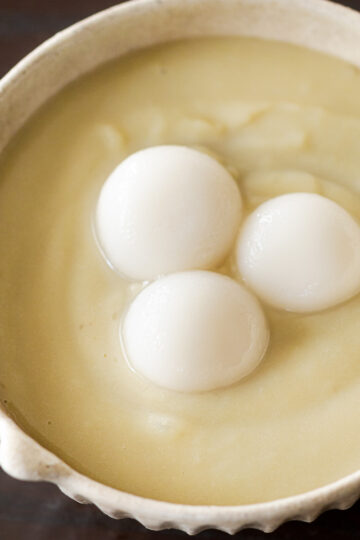
Japanese sweet soups with chewy shiratama dumplings:
✏️ Recipe Card
Mung Bean Oshiruko (Sweet Mung Bean Soup with Coconut Milk)
Ingredients
Mung bean soup
- 100 g yellow split mung beans (mung dal)
- 200 ml water
- 60 g coconut milk (adjust to taste)
- 20 g beet sugar powder (adjust to taste)
Shiratama dumplings
- 25 g shiratama-ko (glutinous rice flour)
- 20 ml water (as needed)
Instructions
Make the mung bean soup
- Add the washed mung beans and water to a pressure cooker and cook at high pressure for 5 minutes.100 g yellow split mung beans200 ml water
- Once the pressure drops, open the lid right away and stir well with a spatula while still hot, mashing as much as you can into a paste.
- Add the coconut milk and beet sugar and stir well. Adjust the sweetness and thickness to taste.60 g coconut milk20 g beet sugar powder
Make the shiratama dumplings
- Knead the shiratama-ko with water, adding it little by little, until it reaches the softness of an earlobe.25 g shiratama-ko20 ml water
- Roll into any size and shape you like.
- Drop into boiling water and cook until the dumplings float, then cook for another minute before transferring to cold water.
Assemble
- Ladle the soup into bowls and top with the shiratama dumplings. Enjoy warm, or chilled from the fridge.


Comments
No Comments