
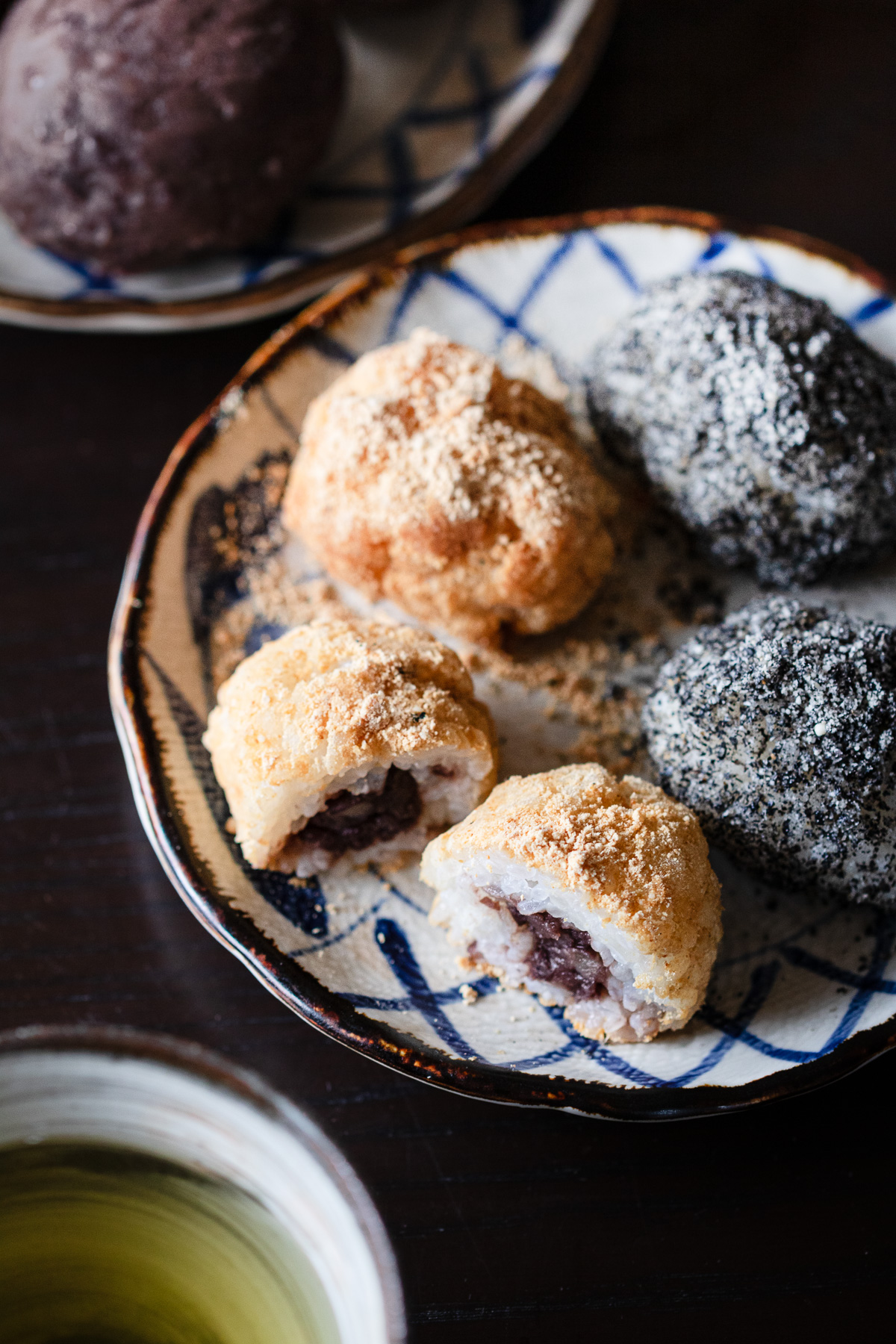
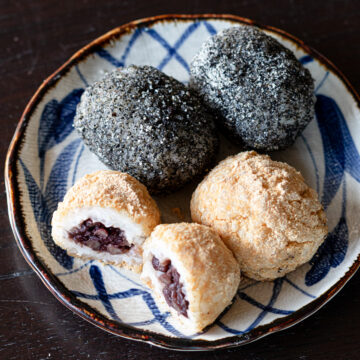
Kinako, ground black sesame seeds, and rice — that’s all you need to make this simple kinako & black sesame mochi, a traditional Japanese sweet rice ball (ohagi/おはぎ).
Unlike fully pounded smooth mochi, there’s no special equipment or technique required — just a simple, accessible way to make mochi at home.
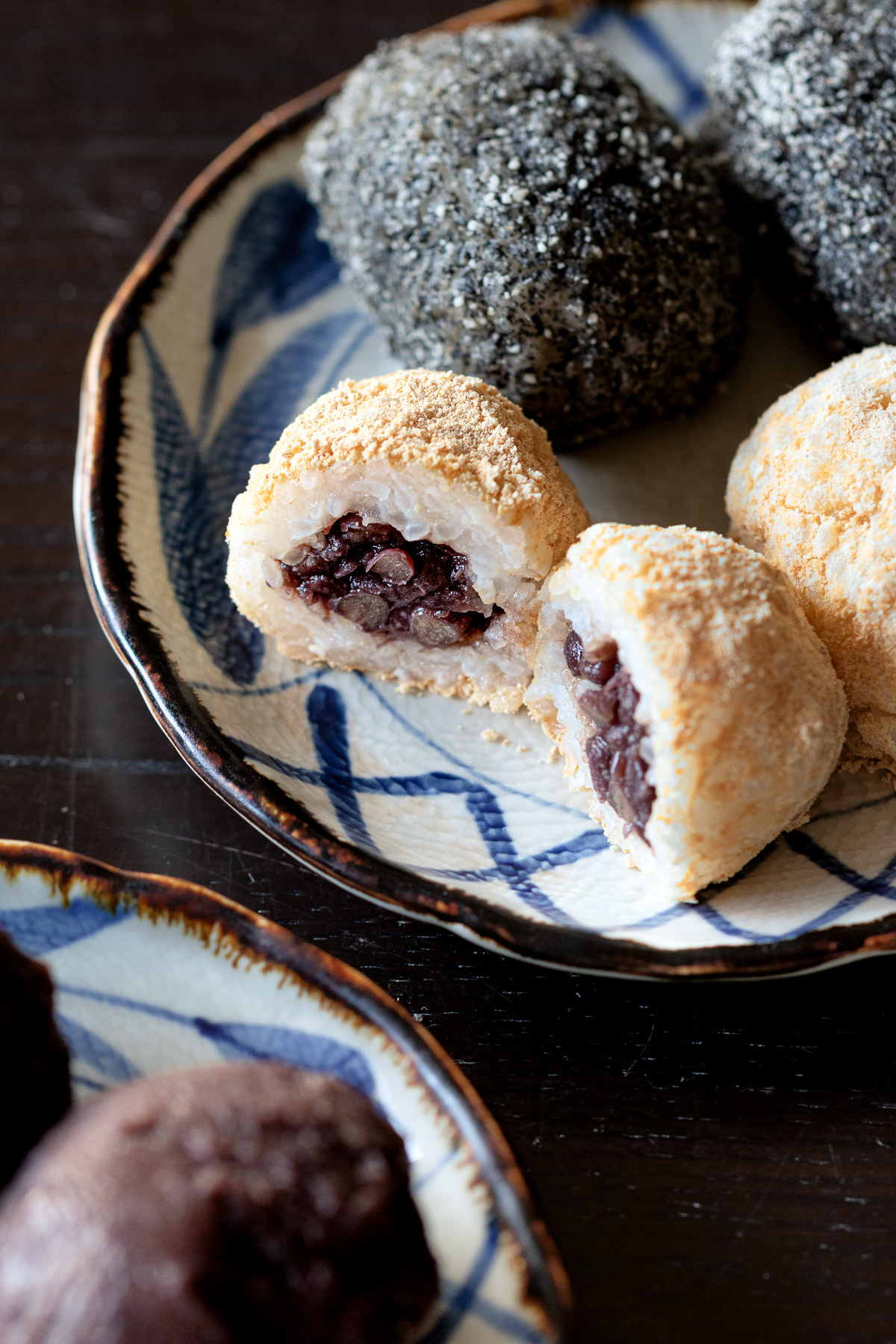
Cook the rice as usual, then mash it lightly, leaving some grains intact. Tuck in small balls of anko for a little surprise, then shape it gently in your hands.
The texture stays soft and chewy, with just enough grain to remind you it’s made from rice — less like a dessert, and more like part of simple, unhurried meal.
That slightly rustic, homemade feeling is what makes this ohagi feel right for everyday moments — easy to bring along for a picnic, share on a special day, or make just because you feel like it.
Jump to:
🌸 What Is Ohagi?
Ohagi is a Japanese sweet made from glutinous mochi rice — cooked, partially mashed, then shaped and coated in toppings like kinako (roasted soybean powder), black sesame, or anko (sweet red bean paste).
Is it mochi? ー In a sense, yes — but not quite.
Unlike fully pounded mochi, ohagi is hangoroshi — literally "half-killed" — where the rice is only partially mashed, leaving some grains intact. The result is chewier, with a soft, uneven texture that gives it a more home-style feel than smooth mochi.
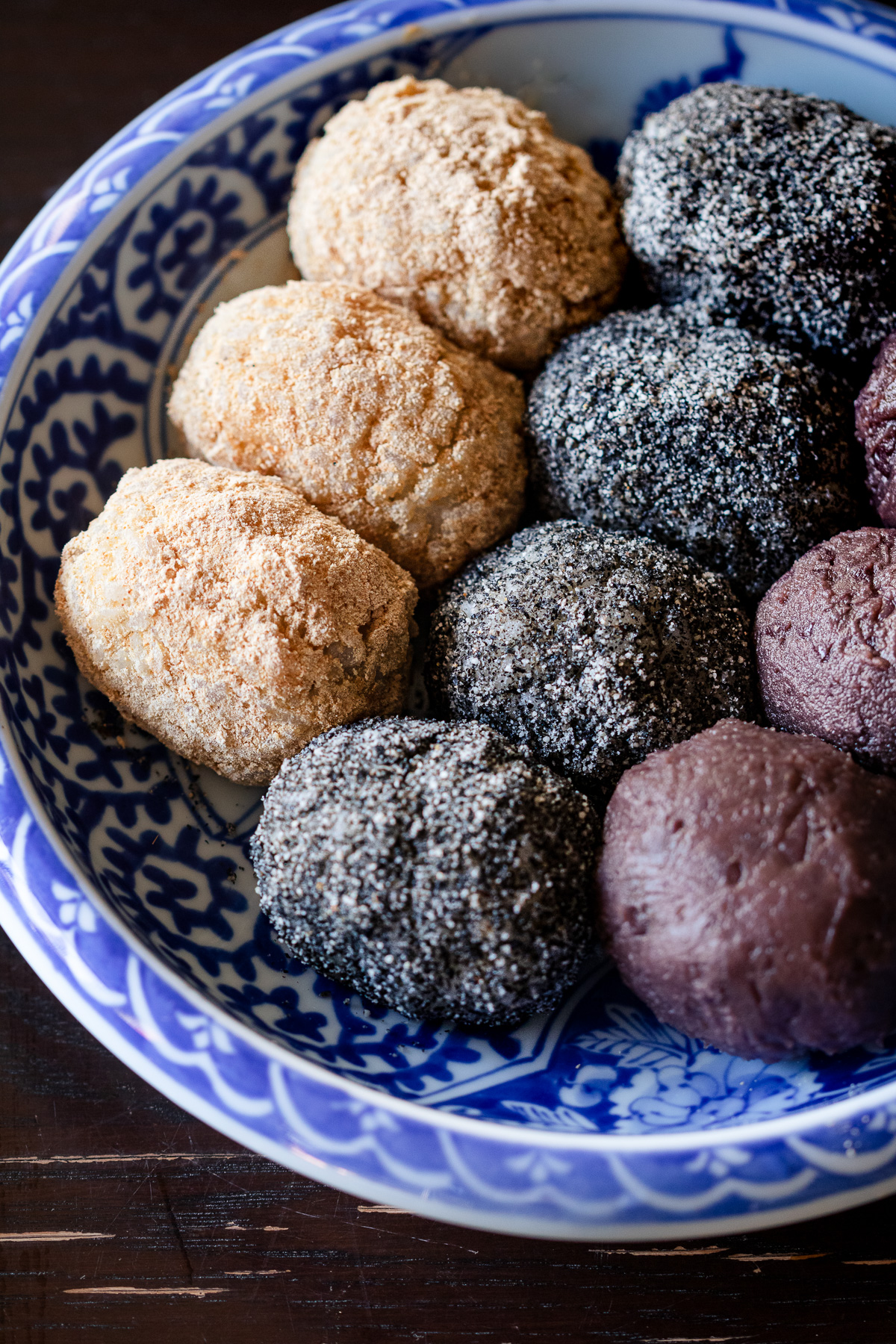
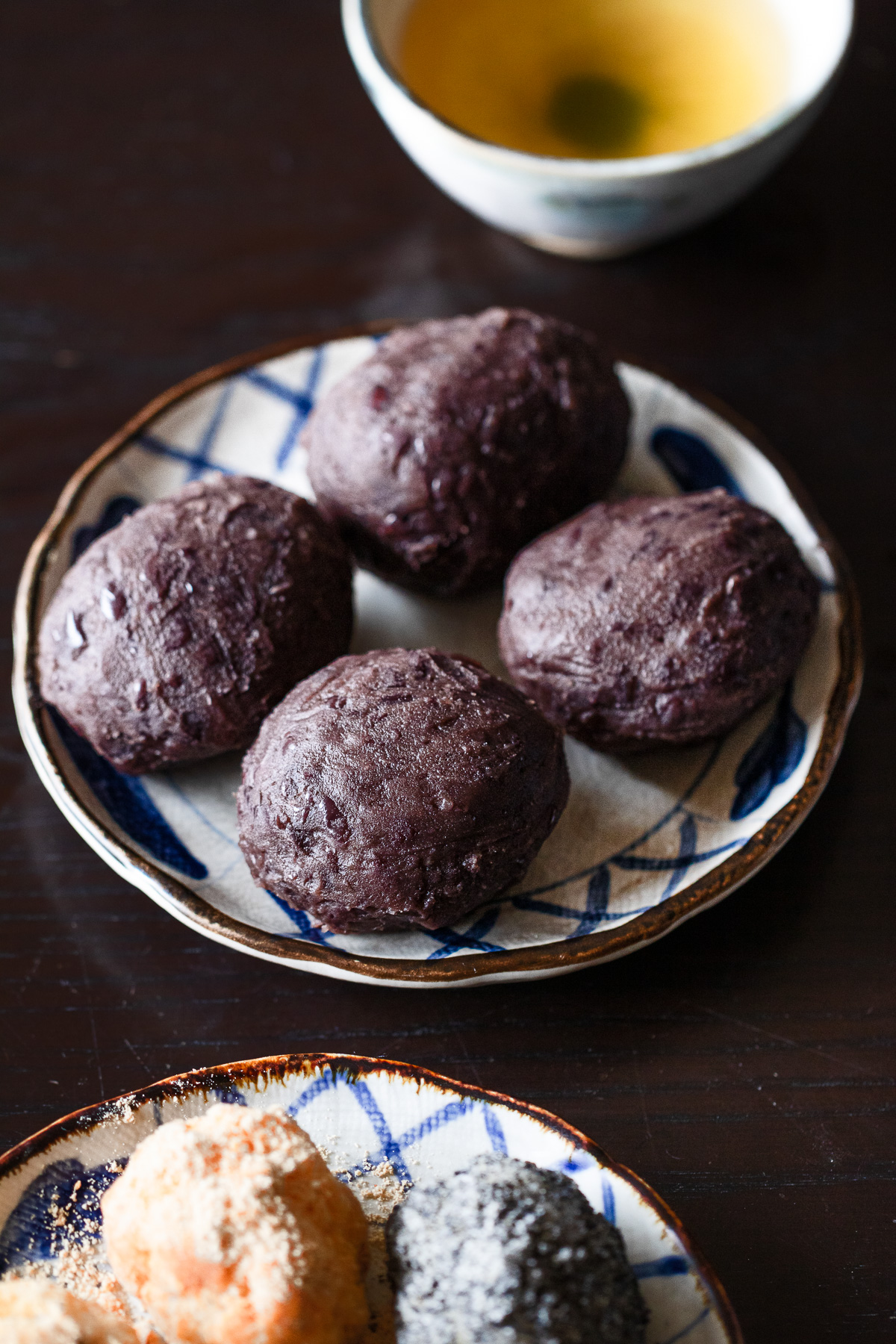
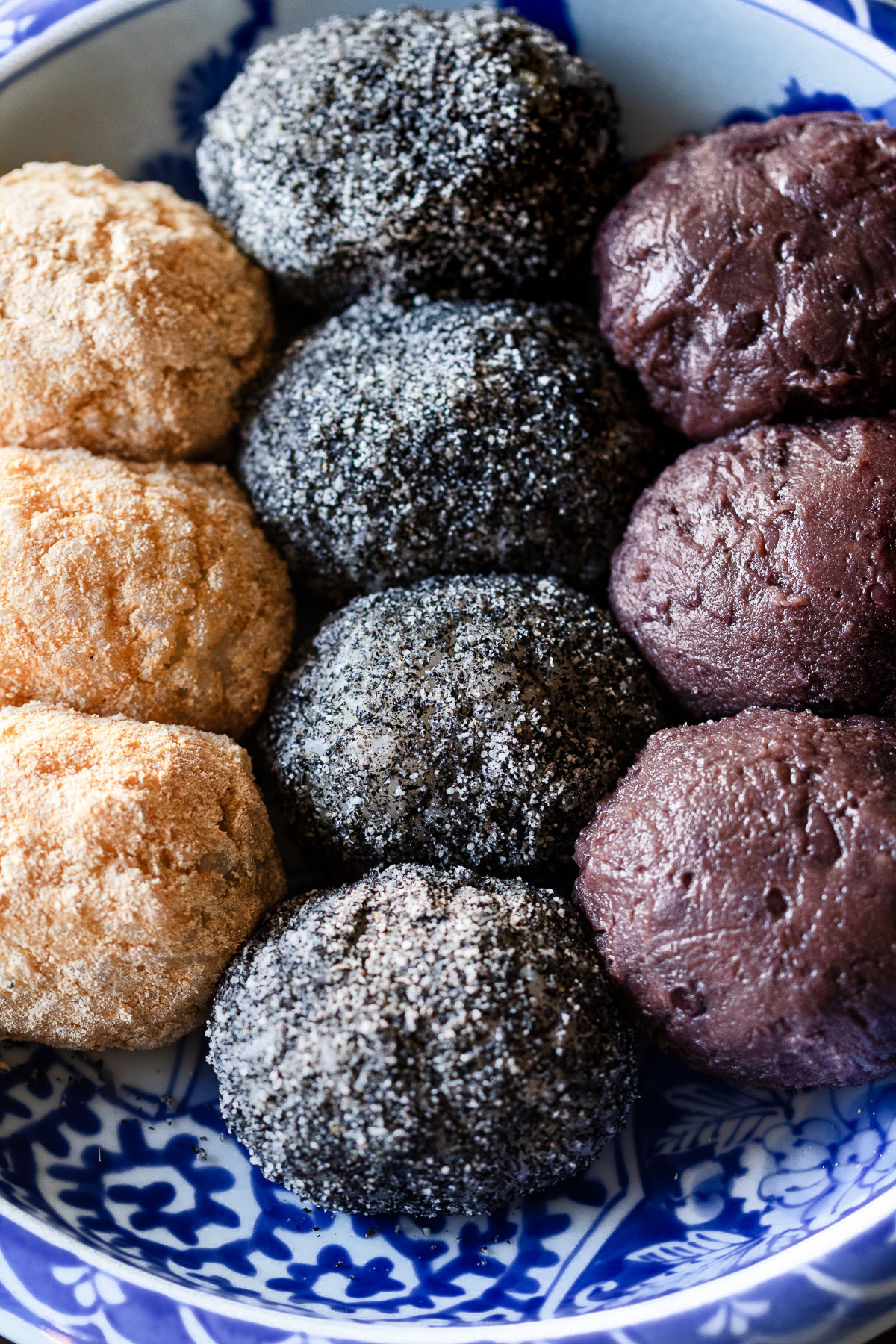
The classic version is coated in anko, a red bean paste dessert filling that's deeply rooted in Japanese sweets. When made at home, kinako and black sesame often come alongside — nutty, subtly sweet, and just as traditional. When all three are made together, the spread of colors alone makes it worth the effort.
🧺 Why You'll Love This Recipe
- Less sweet than most: Ohagi can be quite sweet — this version keeps the sugar lower in both the coating and the anko, so it works as something you can eat more casually as a light meal, not just as a dessert.
- Stays soft longer: A mix of glutinous and regular rice helps it stay soft, instead of firming up as quickly as 100% mochi rice
- Three varieties, one batch: Kinako, black sesame, and classic anko — simple, but the mix of colors looks good on a plate.
- Traditional method: Made the same way for generations, without anything complicated.
- Vegan and vegetarian Japanese sweet
🫘 Ingredients
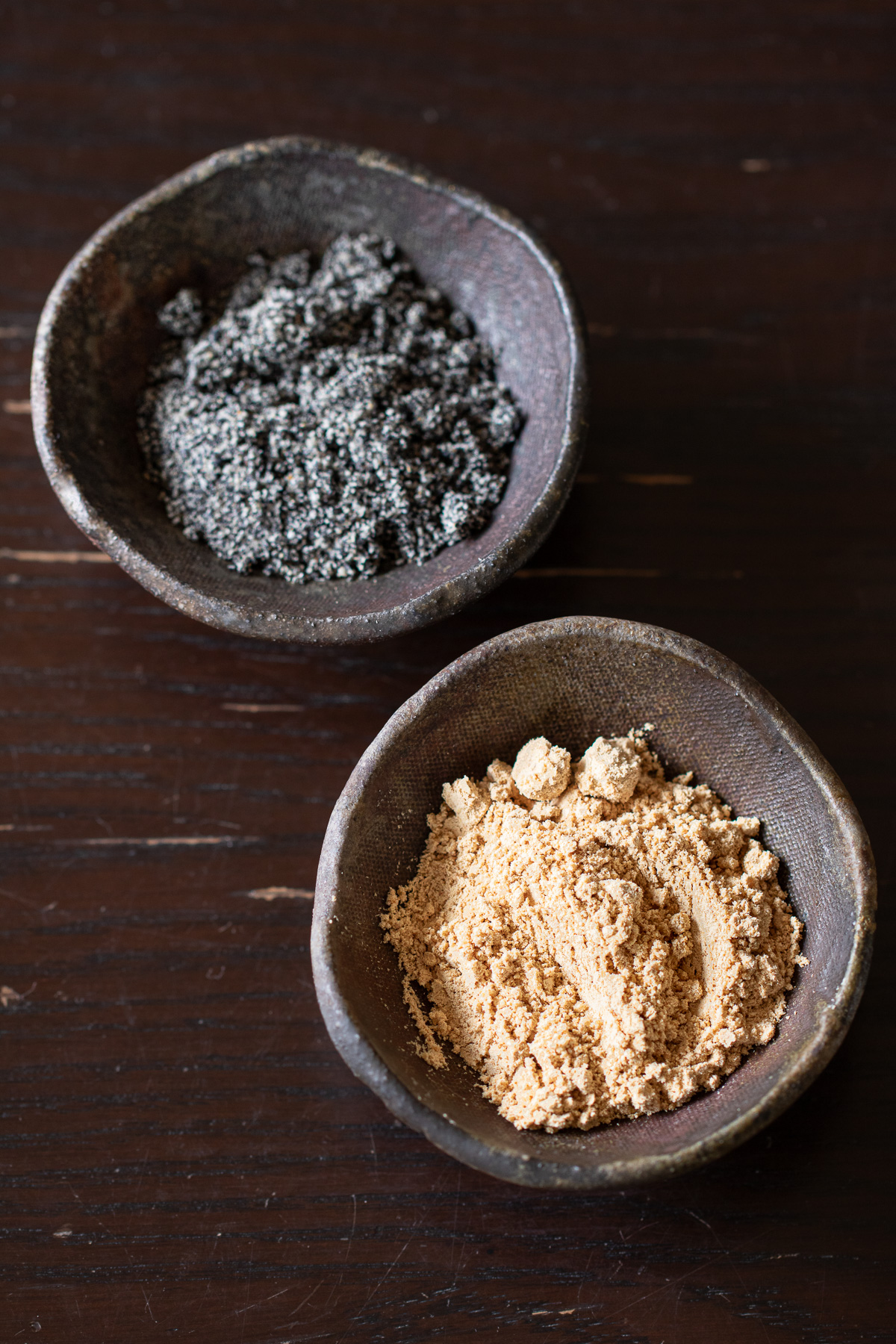
● Kinako and ground black sesame seeds: Each is mixed with a small amount of sugar — roughly 2 tablespoons of powder to 1 teaspoon of sugar. I use powdered beet sugar for its mild sweetness and how easily it blends into the powder. Any leftover coating can be sprinkled over the finished ohagi.
Both can be found at Asian grocery stores or online — more in FAQ.
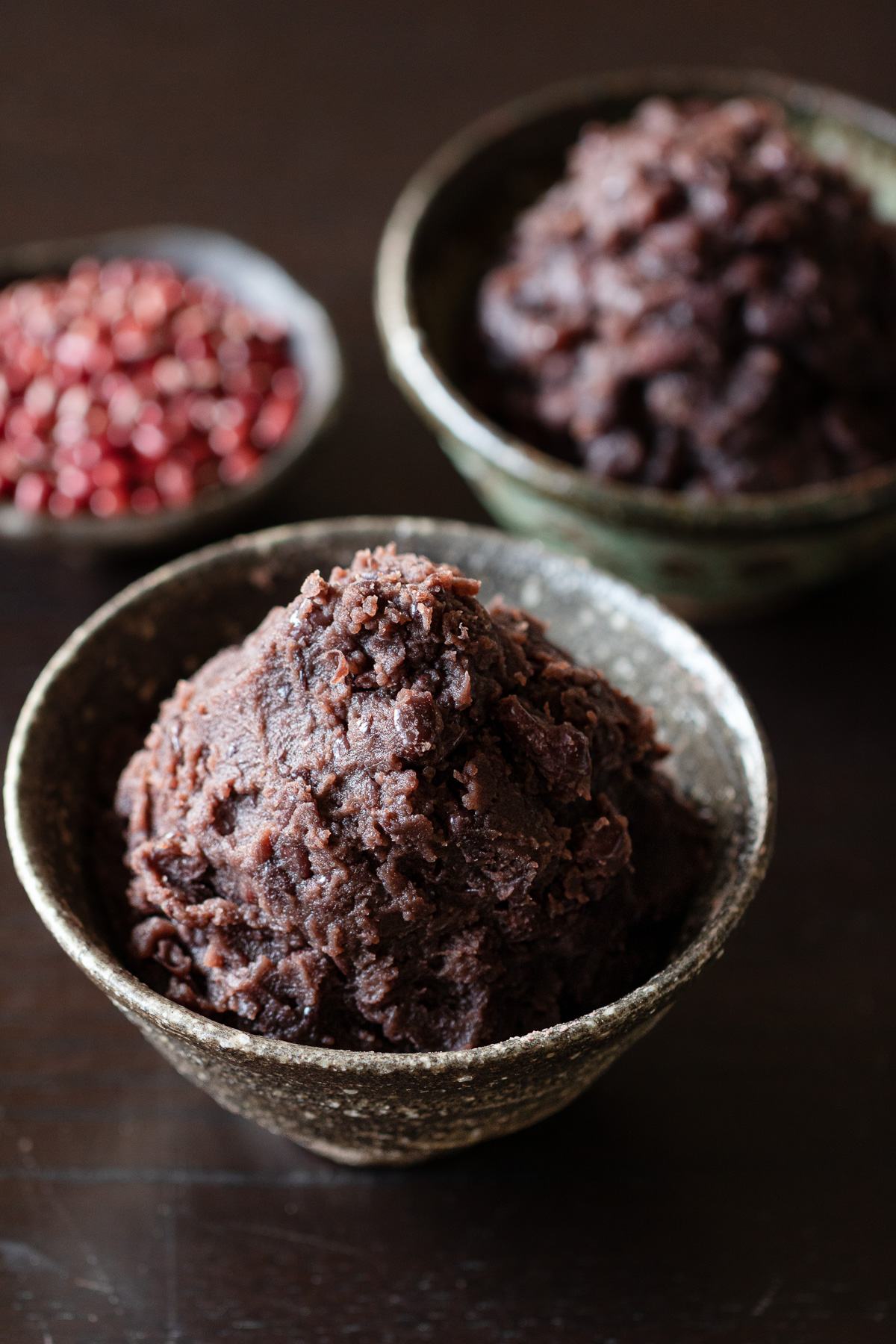
● Anko (sweet red bean paste): I use homemade tsubu-an — chunky red bean paste cooked with less sugar than usual. Store-bought works too. If it seems watery, simmer it down in a pan over low heat, stirring constantly, then cool completely before using. The texture matters here: firm enough to shape easily, and soft enough to melt as you eat it.
● Rice: Equal parts glutinous rice and regular Japanese short-grain rice, cooked together. The mix keeps the ohagi from becoming too heavy, and helps it stay softer after cooling.
Full quantities in the recipe card below👇
🥣 Tools
Having everything ready beforehand helps the process flow more smoothly.
- Rice cooker
- Bowl or flat plate
- Pestle or rolling pin — for mashing the rice
- Small bowl of water — for dampening your hands
- Spoons
- Plate or tray — for resting the finished ohagi
📖 How to Make
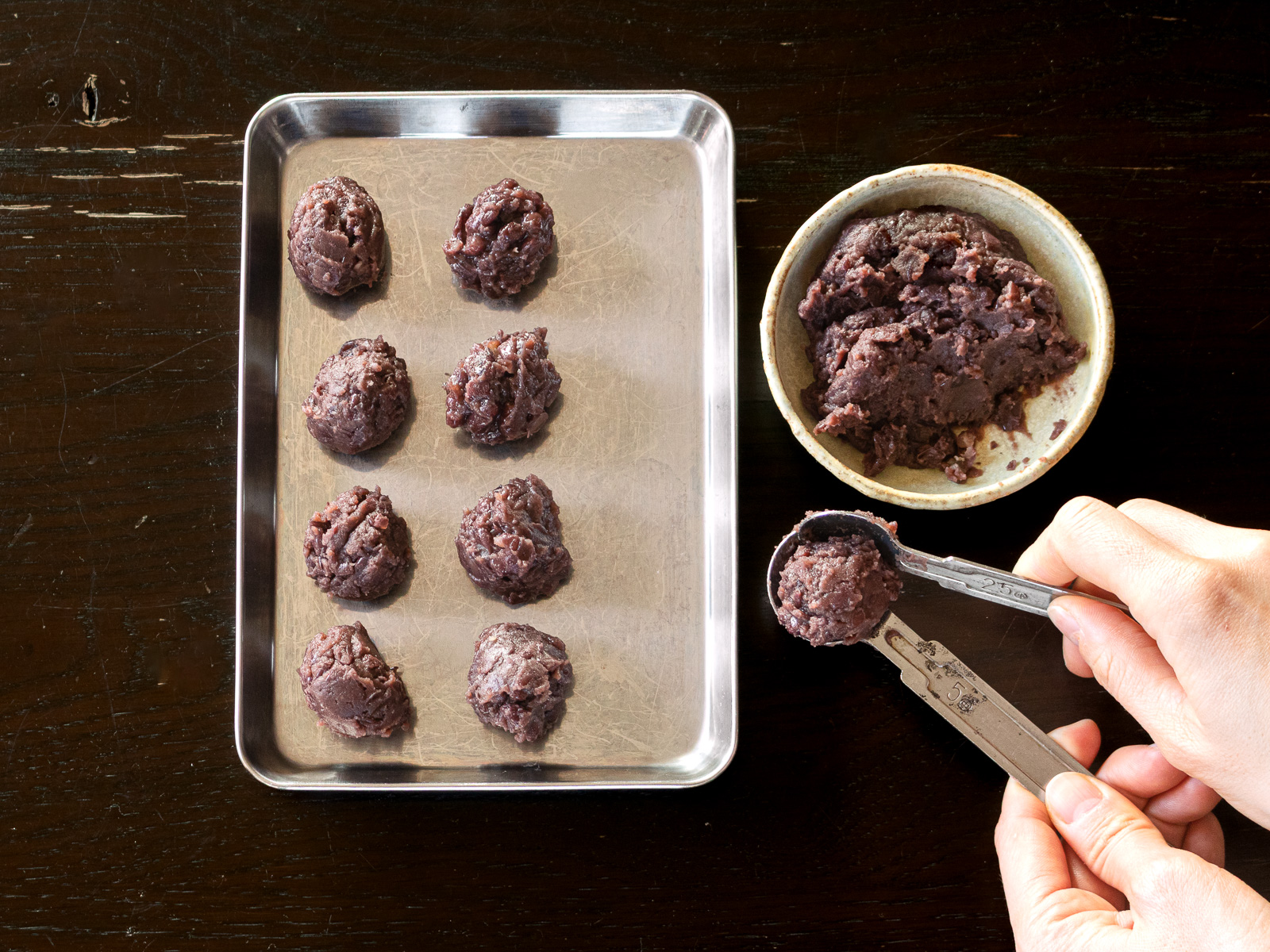
- Shape the anko balls(video)
- Scoop the anko with a teaspoon and use a second spoon to roll it into a ball.
- Repeat to make 8 balls total.
🌿 TIP: Using a teaspoon to scoop and a half-teaspoon to shape makes this easier.
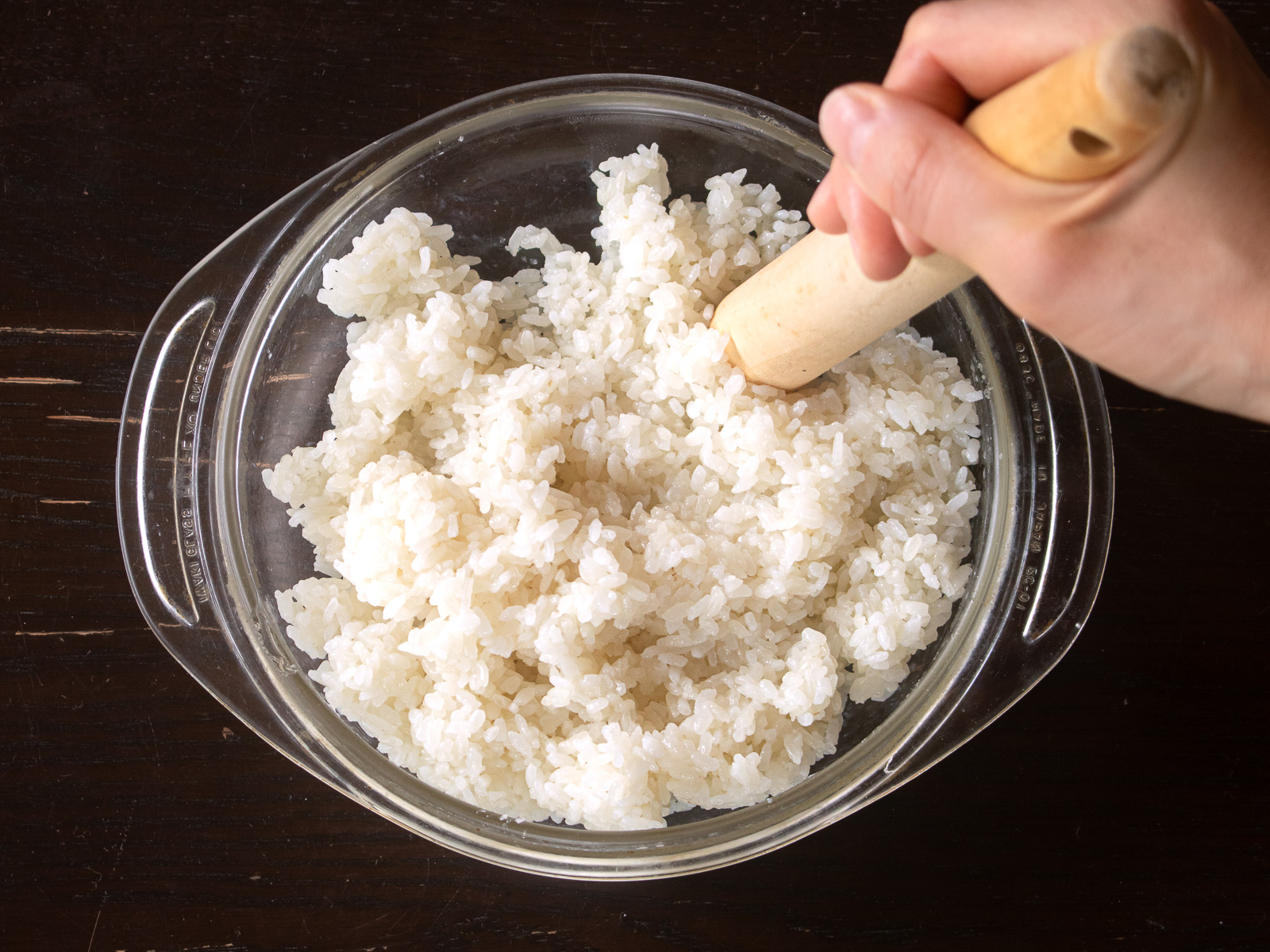
- Prepare the rice
- Wash the glutinous and regular rice together and cook as usual.
- Transfer to a bowl or flat plate and mash with a pestle or rolling pin until about half the grains are broken down — this is hangoroshi.
- Divide into 8 portions.
🌿 TIP: Work while the rice is still warm — it’s softer and easier to mash and shape
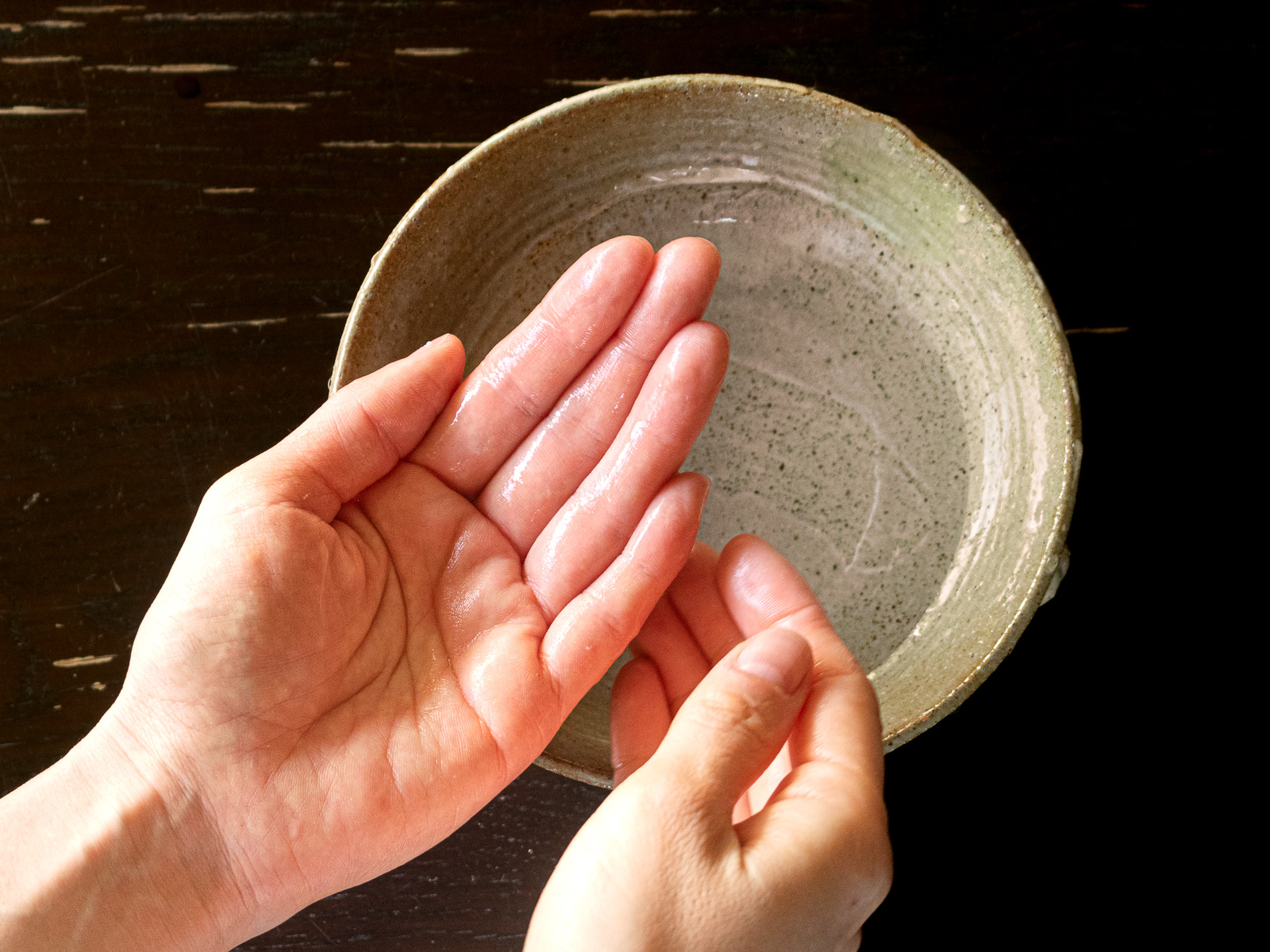
- Prepare your hands
- Before shaping the rice, fill a small bowl with water and dampen your palms lightly.
🌿 TIP: Re-wet your hands as needed to keep the rice from sticking.
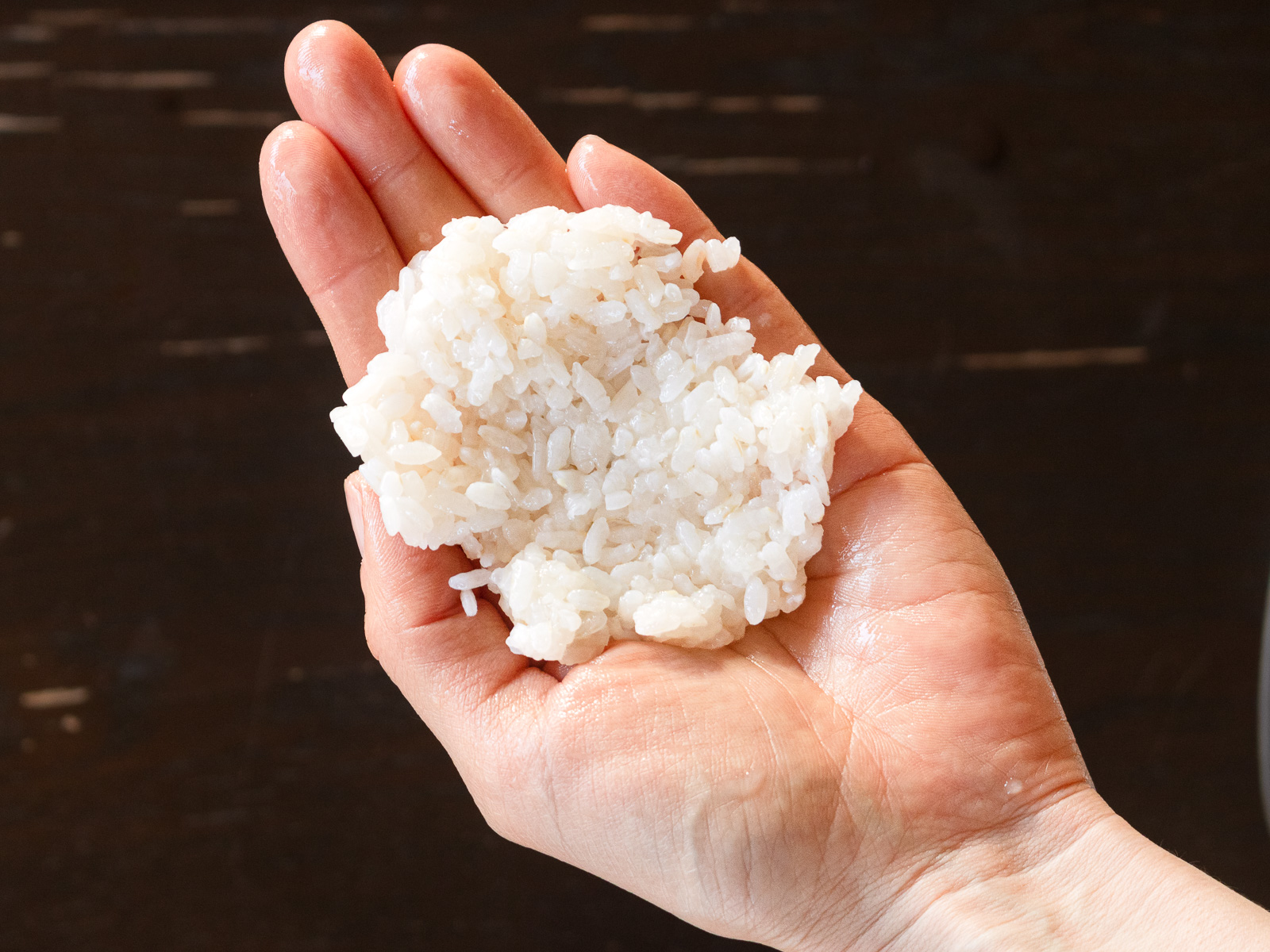
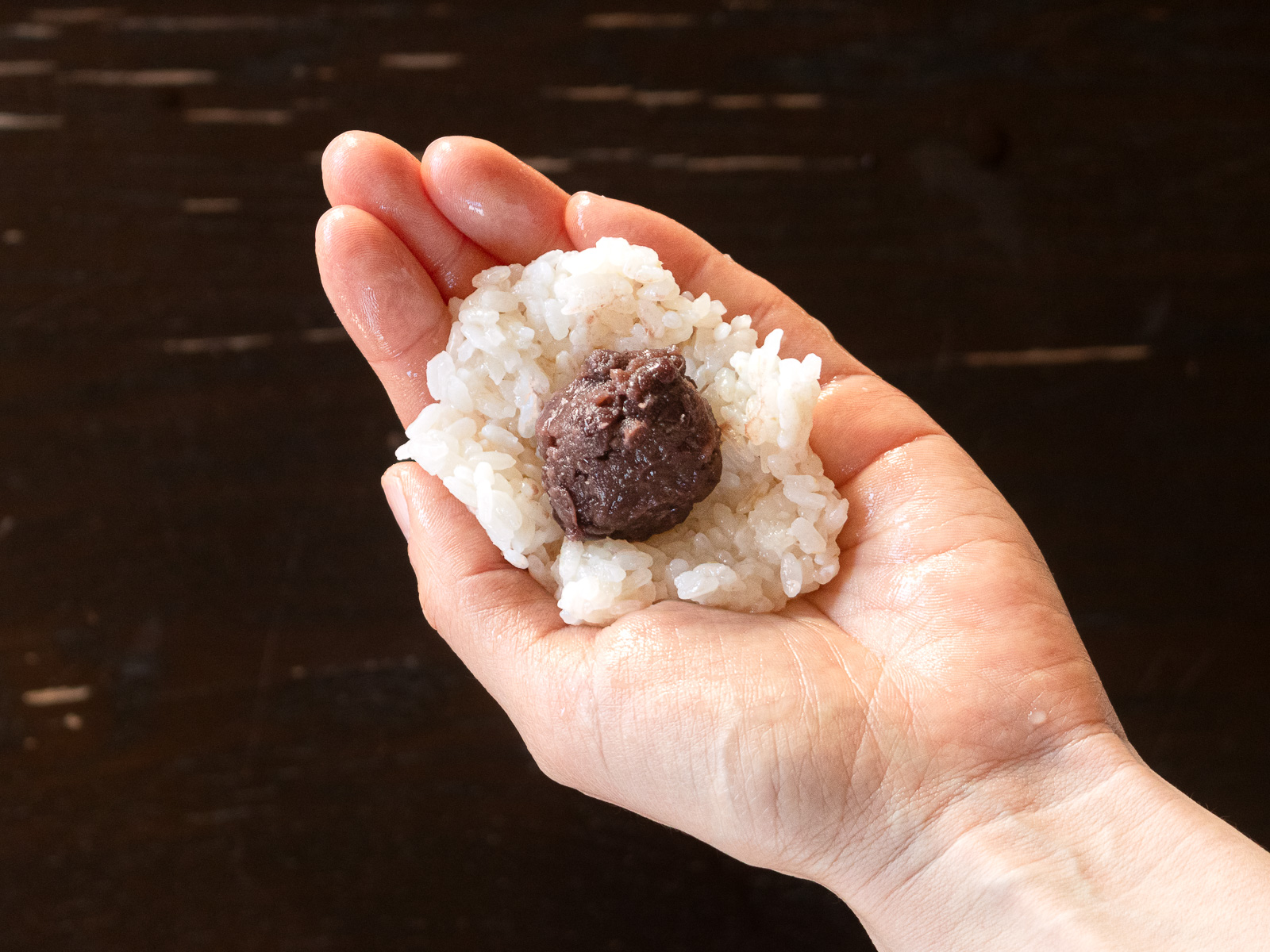
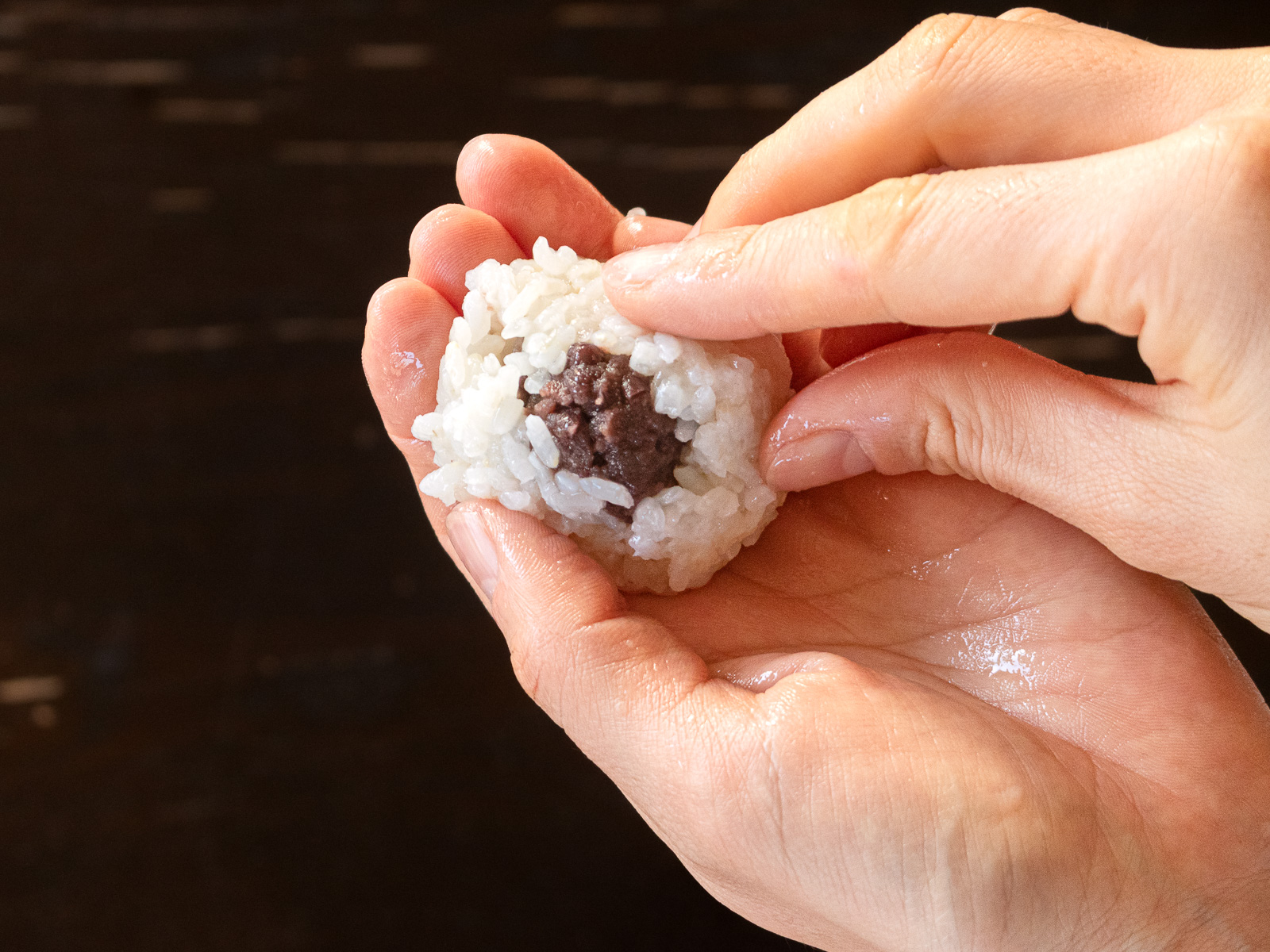
- Wrap
- Place one portion of rice on your palm and gently spread it out.
- Set an anko ball in the center, then lightly close your hand, gathering the rice up and around it to enclose.
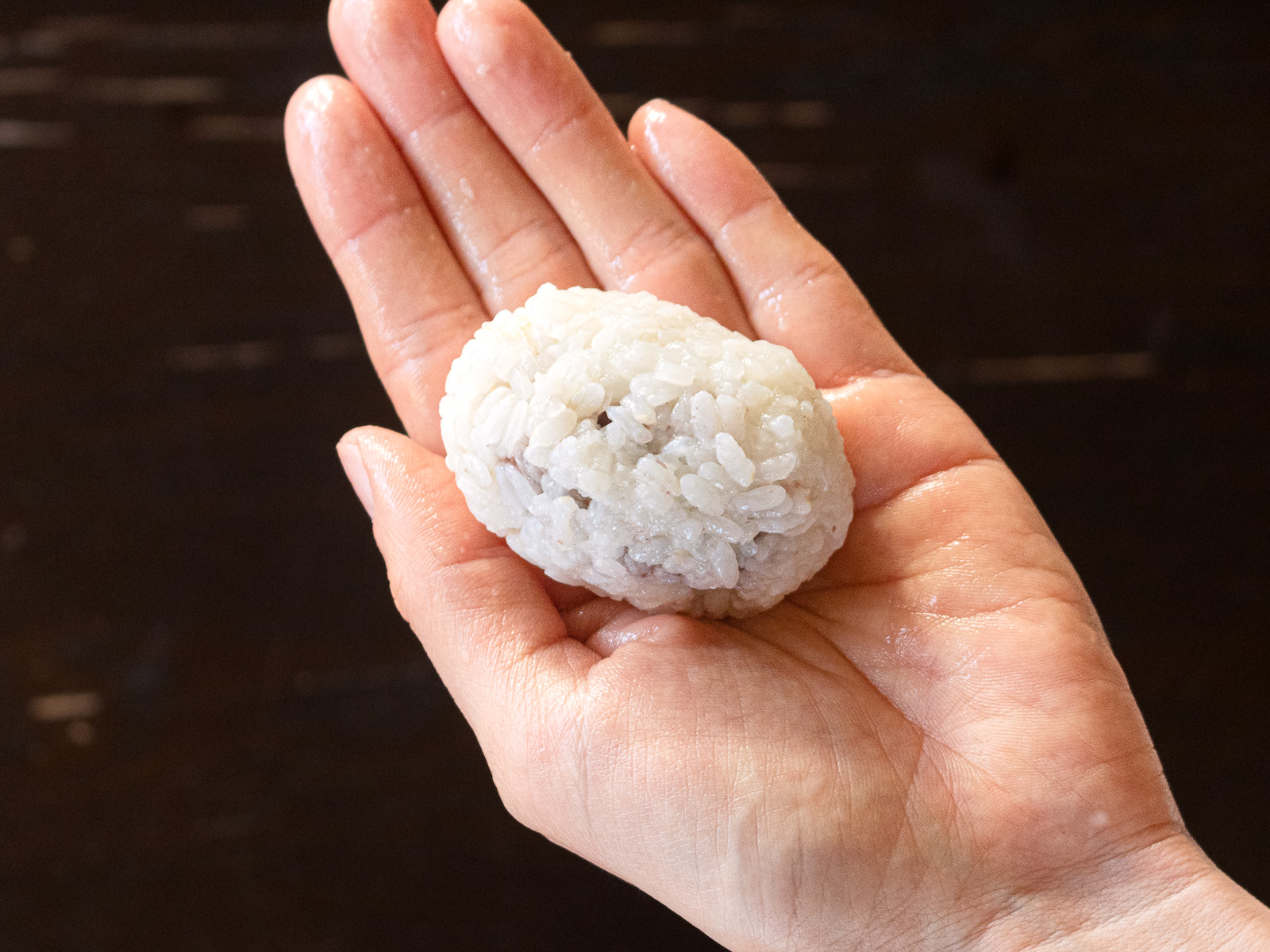
- Shape
- Gently press and spread the rice as you wrap it around the anko, shaping it into an oval log.
- Repeat with the remaining portions.
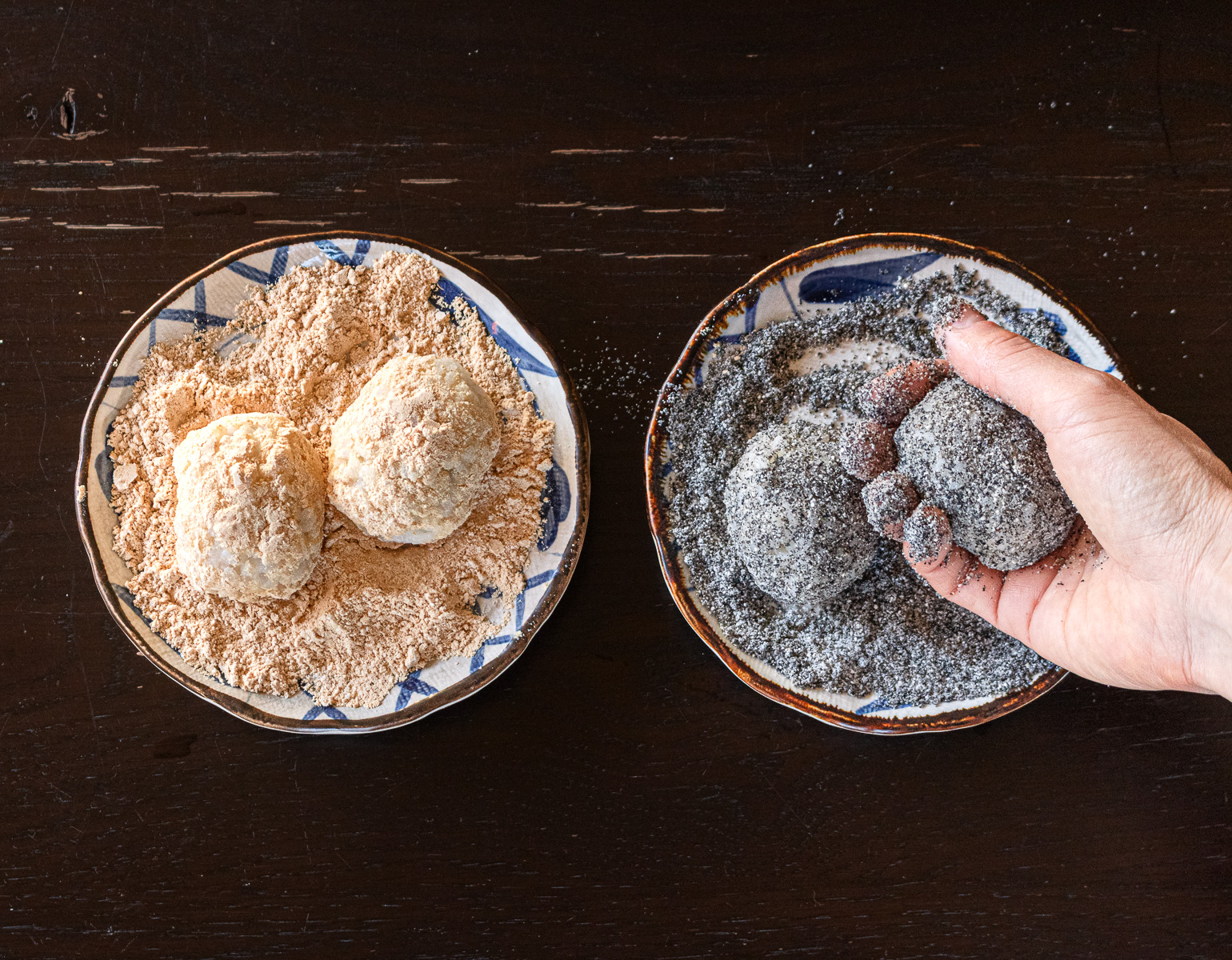
- Coat
- Mix the kinako and black sesame with sugar.
- Roll each ohagi to coat evenly.
🌿 Tip: After coating, gently press and shape it in one hand to help the powder settle and stick.
Any extra can be sprinkled over the top.
🫙 Storage
Ohagi is best eaten the day it's made, so try to enjoy it within the same day.
If you need to keep it for a few hours, cover with plastic wrap to prevent it from drying out.
➤ Refrigeration
Refrigeration is possible, but the rice tends to firm up in the cold, so it’s best to keep it brief. If it does firm up, a short microwave (10–20 seconds) can help soften it again, though it won’t be quite the same as when freshly made.
➤ Freezing
Freezing is also possible, but the anko may release some moisture after thawing. Wrap each ohagi individually and freeze. To serve, thaw at room temperature and eat the same day.
📘 Tips for Soft Ohagi
➤ Shape while the rice is warm.
Once the rice is mashed, shape it into oval logs while it’s still warm. The rice is more pliable and easier to work with, and holds together better around the anko.
After shaping, coat it right away before the surface dries — otherwise the kinako and black sesame won’t stick as well.
➤ Use a mix of glutinous and regular rice.
A 1:1 ratio helps keep the texture from becoming too dense. It also stays softer after cooling than ohagi made with 100% glutinous rice, with a lighter feel when you eat it.
🛷 Variation
If you have leftover anko, use it to make classic ohagi — coated in anko instead of kinako or black sesame.
📚 FAQ
Yes — the texture will be chewier and stickier, but it’s just as traditional. It depends on what you’re going for.
You can, but the texture will be different.
Without glutinous rice, the ohagi won’t have the same chewiness — it will be lighter and less sticky.
I make it this way sometimes too, when mochi rice isn’t available or I want something a bit lighter. It really comes down to what you prefer.
The surface of the rice is likely drying out. Move straight from shaping to coating without a pause, then gently shape once more in your hands to help the powder settle. If it still doesn’t stick, lightly dampen your hands and reshape the ohagi to moisten the surface, then coat again.
Yes — adjust the amount of sugar mixed into the kinako and black sesame. Start with less and add more if needed.
Yes. Without the anko inside, the ohagi will feel lighter, and the coating flavors come through more directly.
Kinako is available at Asian grocery stores and online. Look for unsweetened kinako (roasted soybean powder) if you want to control the sweetness yourself. Some brands add sugar, so it's worth checking the label.
Ground black sesame seeds are available at Asian grocery stores or online. You can also grind whole black sesame seeds yourself using a spice grinder or food processor — just pulse until you get a coarse powder.
🥄 Recipes with Kinako
🍡 Recipes with Black Sesame
🥮 Recipes with Anko
Recipes using leftover tsubu-an :

If you feel like whispering a thought, asking a question, or simply saying hello — the comment section is always open 📮
✏️ Recipe Card
Kinako & Black Sesame Mochi (Ohagi)
Equipment
- rice cooker
- Bowl or flat plate
- Pestle or rolling pin - for mashing the rice
- Small bowl of water - for dampening your hands
- Spoons
- Plate or tray - for resting the finished ohagi
Ingredients
- 90 ml glutinous rice (mochi rice)
- 90 ml regular Japanese short-grain rice
- about 200 ml water (rice to water ratio 1:1.1 by volume — or follow the water line on your rice cooker)
- 120 g anko (red bean paste, about 15g × 8 balls)
Kinako coating
- 2 tablespoon kinako (roasted soybean powder)
- 2 teaspoon powdered beet sugar
Black sesame coating
- 2 tablespoon ground black sesame
- 2 teaspoon powdered beet sugar
Instructions
Prep
- Cook the rice: Wash the glutinous and regular rice together and cook as usual.90 ml glutinous rice90 ml regular Japanese short-grain riceabout 200 ml water
- Shape the anko balls: Divide the tsubu-an into 8 portions and roll into balls using two spoons(video).120 g anko
- Mix the coatings: Combine the kinako with sugar in one bowl, and the black sesame with sugar in another.2 tablespoon kinako2 teaspoon powdered beet sugar2 tablespoon ground black sesame2 teaspoon powdered beet sugar
Shape
- Mash the rice (hangoroshi, partially mashed): Transfer the cooked rice to a bowl or flat plate and mash with a pestle or rolling pin until about half the grains are broken down.
- Divide: Divide into 8 portions.
- Wrap: Dampen your hands with water. Spread one portion of rice on your palm, place an anko ball in the center, and gather the rice around it to enclose. Shape into an oval shape.
Coat
- Roll: Roll each ohagi in the kinako or black sesame mixture until evenly coated.
- Shape: Gently shape it in one hand, pressing lightly to help the powder stick. Any extra can be sprinkled over the top.
Notes
- If using store-bought anko and it seems watery, simmer it down in a pan over low heat, stirring constantly, then cool completely before using.
- Note on measuring rice: In Japan, rice is traditionally measured in go (合). One go = 180ml, measured using the cup that comes with a Japanese rice cooker. This recipe uses ½ go (90ml) of each rice.

If this recipe made its way into your kitchen, and you'd like to share that moment, feel free to tag @veginveganvegun or use #vegin_vegan_vegun.
Your quiet stories inspire me deeply 🕊️

Comments
No Comments