
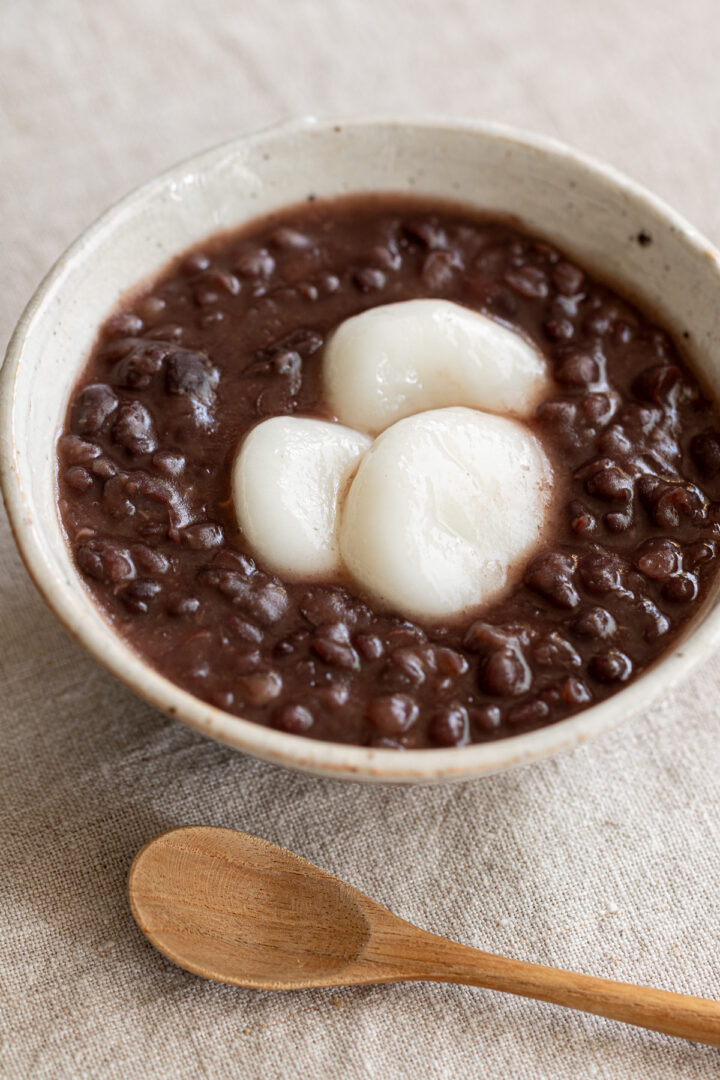
Oshiruko (お汁粉) is one of those desserts I always associate with winter — a warm bowl of sweet red bean soup with soft, chewy shiratama dumplings floating on top. Simple, comforting, and naturally vegan.
The key to a really good oshiruko is starting with unsweetened cooked adzuki beans instead of store-bought anko (sweet red bean paste). It makes a noticeable difference — thicker, more concentrated, and you can adjust the sweetness to suit your taste.
If you have a batch of cooked adzuki beans in the fridge or freezer, it comes together in about 20 minutes.
Jump to:
⛄️ What Is Oshiruko?
Oshiruko (お汁粉) is a traditional Japanese sweet soup made with adzuki beans (red beans) and mochi — either soft and chewy shiratama dumplings or stretchy grilled mochi.
It's often served warm in winter, though a chilled version called hiyashi-shiruko (冷やし汁粉) is enjoyed in summer as well.
Zenzai or Oshiruko?
You might also come across the word zenzai (ぜんざい), which refers to essentially the same thing.
The distinction is regional: in the Kanto region (Tokyo), any adzuki bean soup with mochi is called oshiruko, while a thick, soup-free adzuki dish served alongside mochi is called zenzai.
On the other hand, in Kansai (Osaka), zenzai refers to a chunky whole-bean soup, while oshiruko is made with smooth red bean paste.
Outside of Japan, the two names are often used interchangeably.
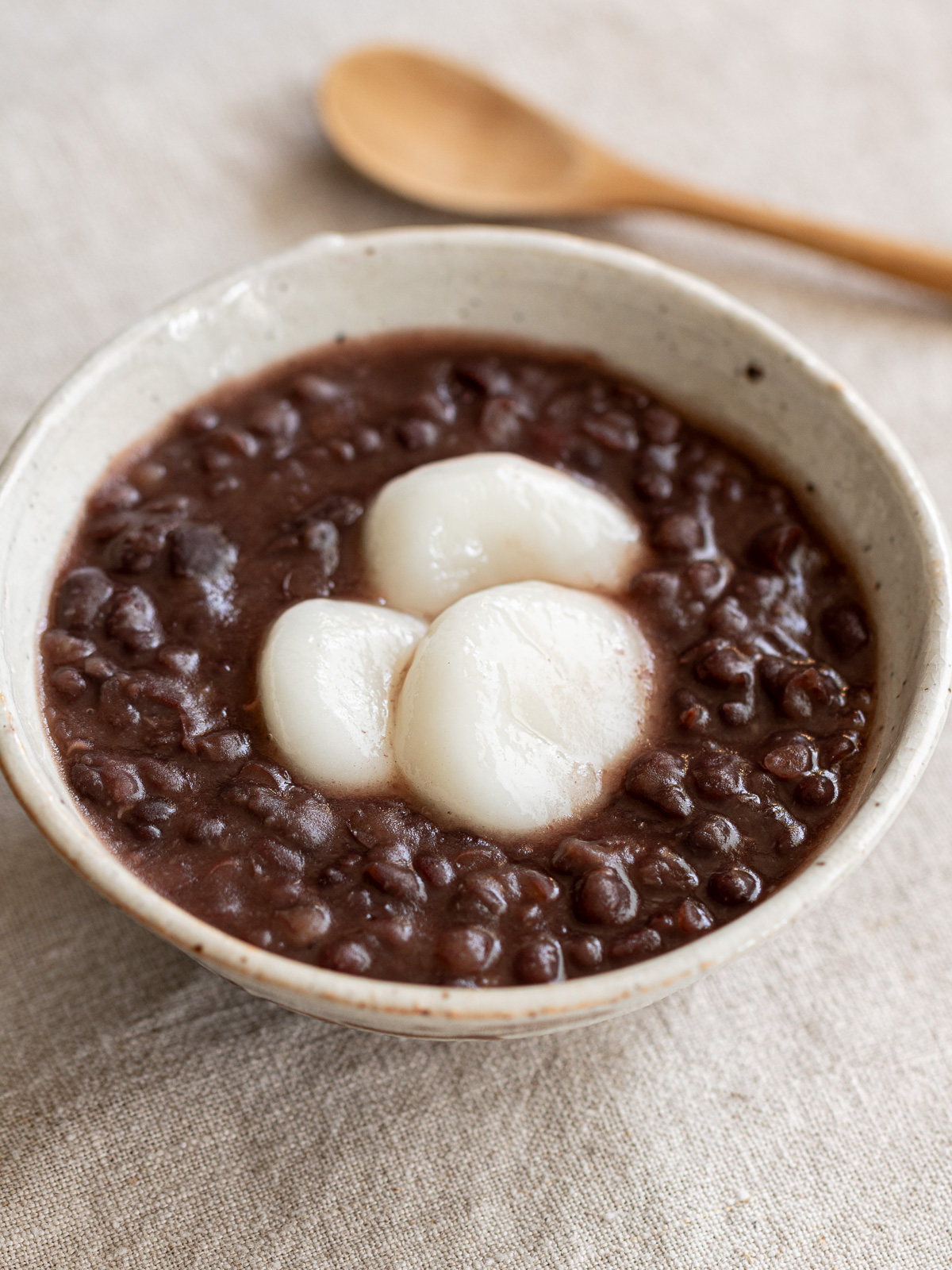
This version uses unsweetened cooked adzuki beans to create a thicker, more concentrated flavor — quite different from the thinner, sweeter versions you might find in cans from Japanese vending machines.
▼ More Oshiruko Recipes
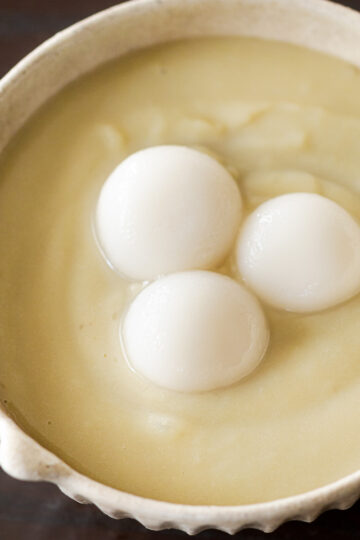
Other thick & creamy oshiruko recipes from my kitchen note:

🫘 Ingredients
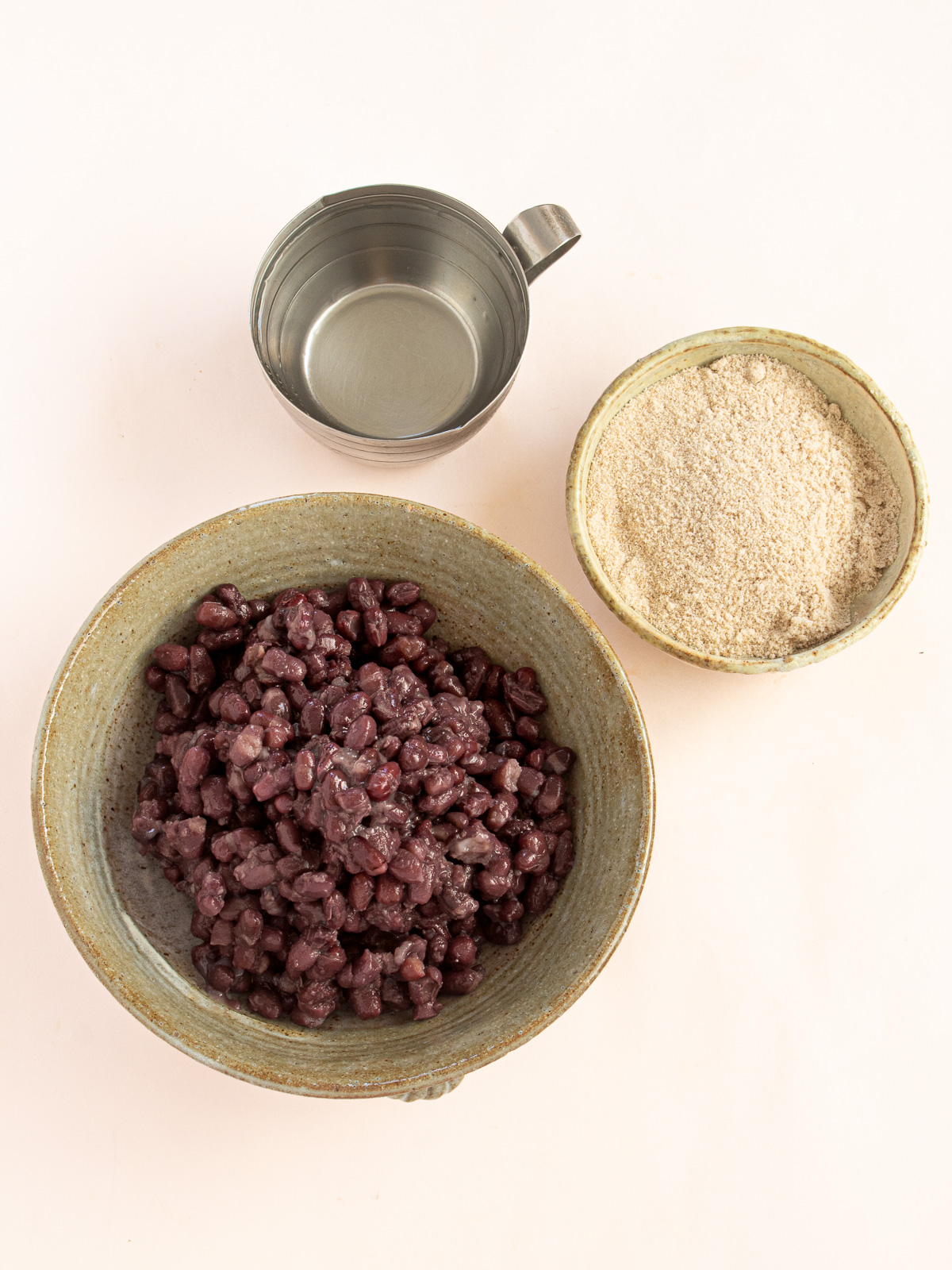
● For the oshiruko:
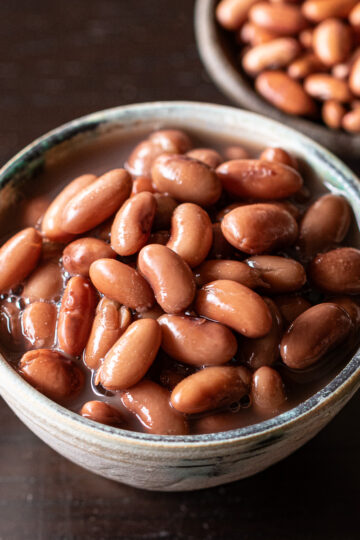
- Cooked adzuki beans (unsweetened) — homemade is best for a thicker, more flavorful result, but store-bought works too
- Water — or use the leftover cooking liquid from your adzuki beans for an even richer flavor
- Sugar — any sugar works; unrefined cane sugar or beet sugar gives a mellower sweetness
● For the shiratama dumplings:
- Shiratama-ko (白玉粉, glutinous rice flour) — found at Japanese grocery stores or online
- Water
● Optionals:
- Grilled mochi — sliced rice cakes work just as well if you prefer a stretchier texture
Full quantities in the recipe card below👇
🐈 Tips for a Rich, Thick Oshiruko
▶︎Use less water than you think.
The ratio of adzuki beans to water makes all the difference. This recipe uses a 2:1 ratio — two parts cooked beans to one part water — to keep the flavor concentrated. If you made your adzuki beans from scratch, use the leftover cooking liquid instead of plain water for an even deeper flavor.
▶︎ Go easy on the parboiling step when cooking adzuki beans.
Parboiling means briefly boiling the beans and discarding the water before the main cook (渋切り, shibukiri) . It removes some of the natural bitterness — but also some of the flavor and nutrients.
For oshiruko, zero to one parboil is ideal, so the beans' natural depth really comes through. → For more details, see how to cook adzuki beans.
🗻 How to Make Oshiruko
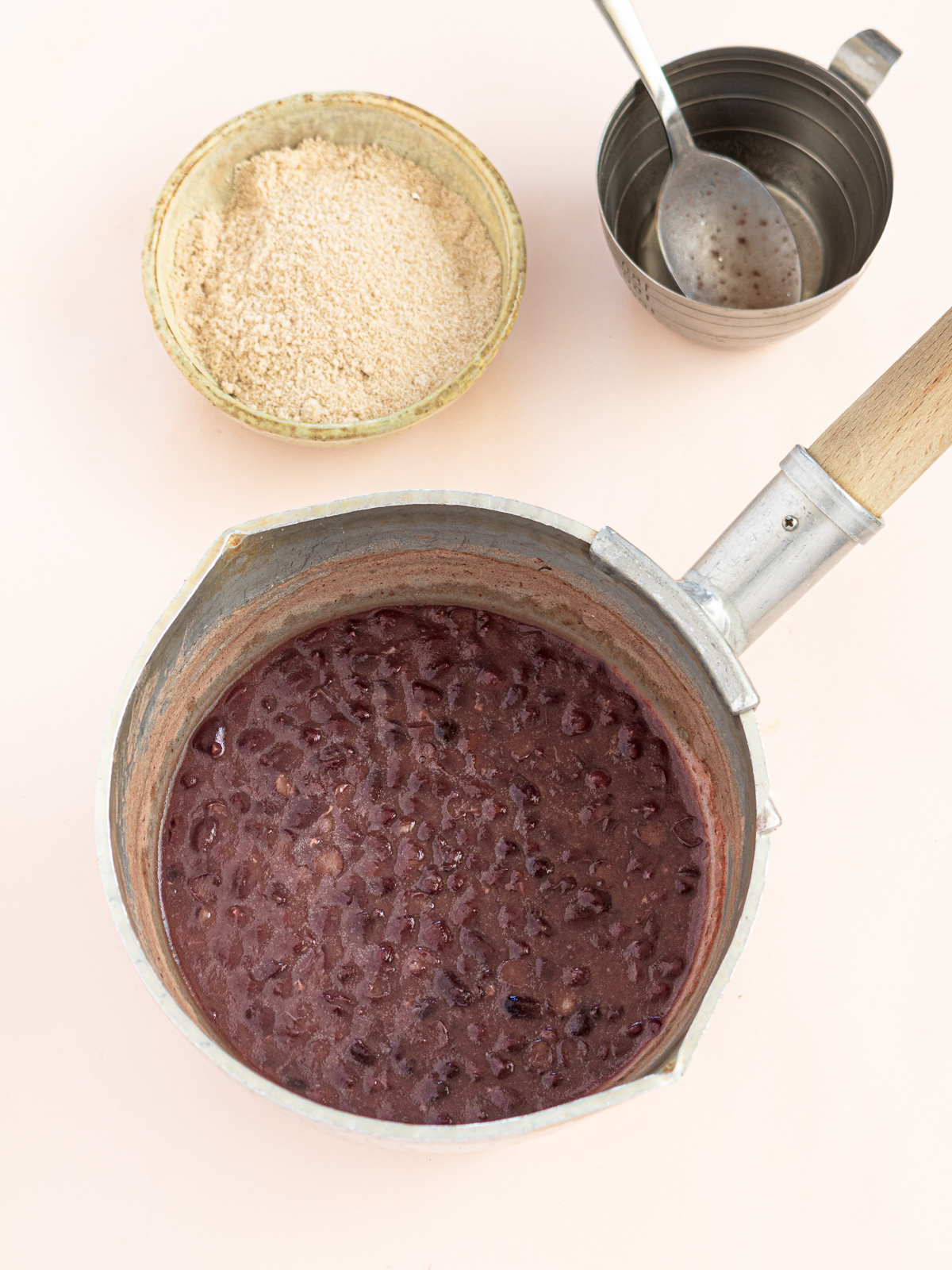
- Make the oshiruko
- Add the cooked adzuki beans and water (or cooking liquid) to a saucepan and heat over low-medium heat, stirring occasionally.
- Simmer until you reach your desired consistency, then add sugar to taste.
🌿 TIP: If you want to speed things up, use a masher to partially crush the beans — this thickens the soup quickly.
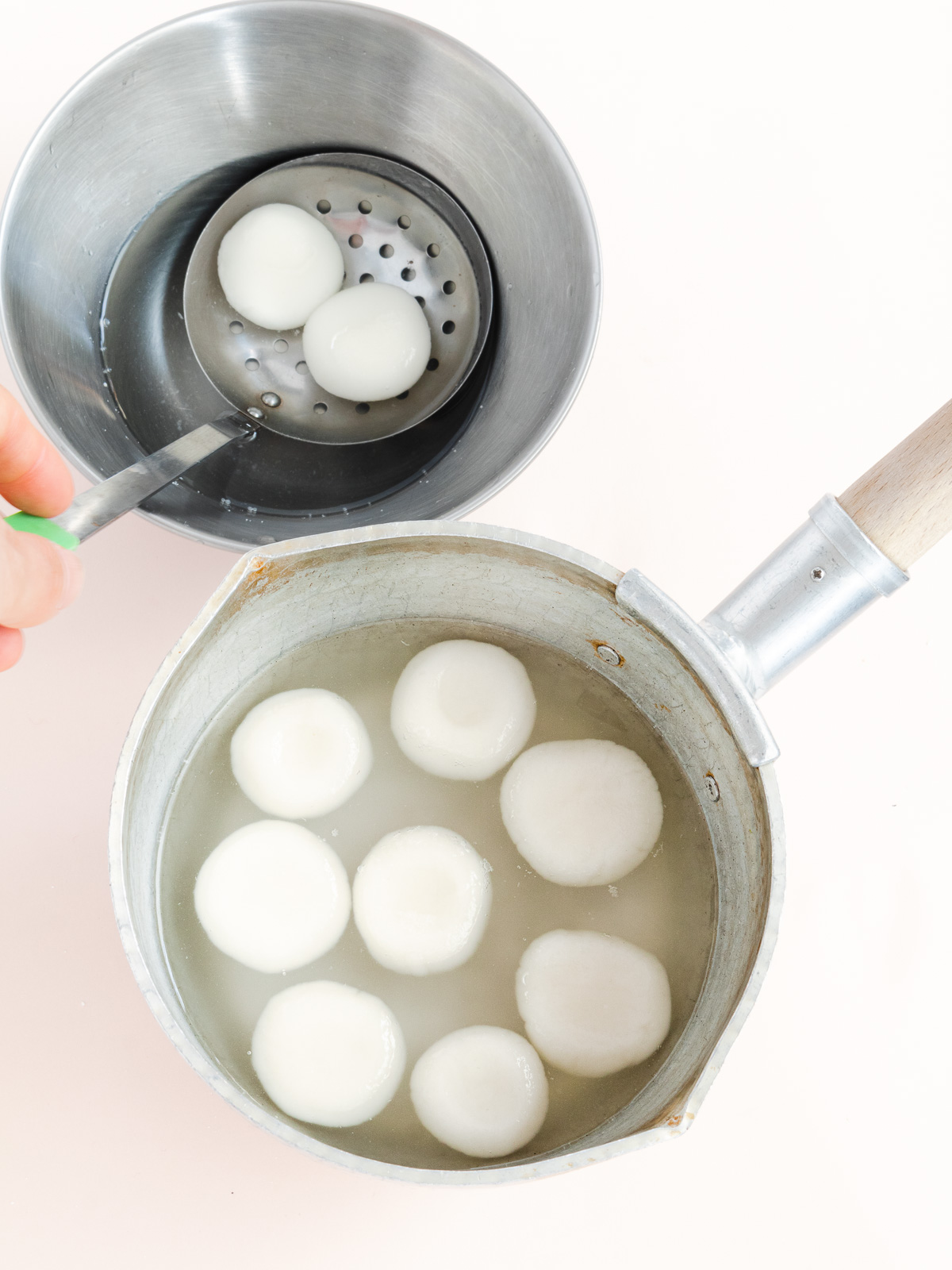
- Make the shiratama dumplings and assemble
- Add the shiratama-ko to a bowl and mix in water little by little, kneading until the dough feels like an earlobe — soft but not sticky.
- If the dough feels too wet, add a little more shiratama-ko to adjust.
- Shape into 4-5 even small rounds and drop into a pot of boiling water.
- Once they float to the surface, cook for one more minute, then transfer to a bowl of cold water.
- Ladle the warm oshiruko into bowls and add the shiratama dumplings to serve.
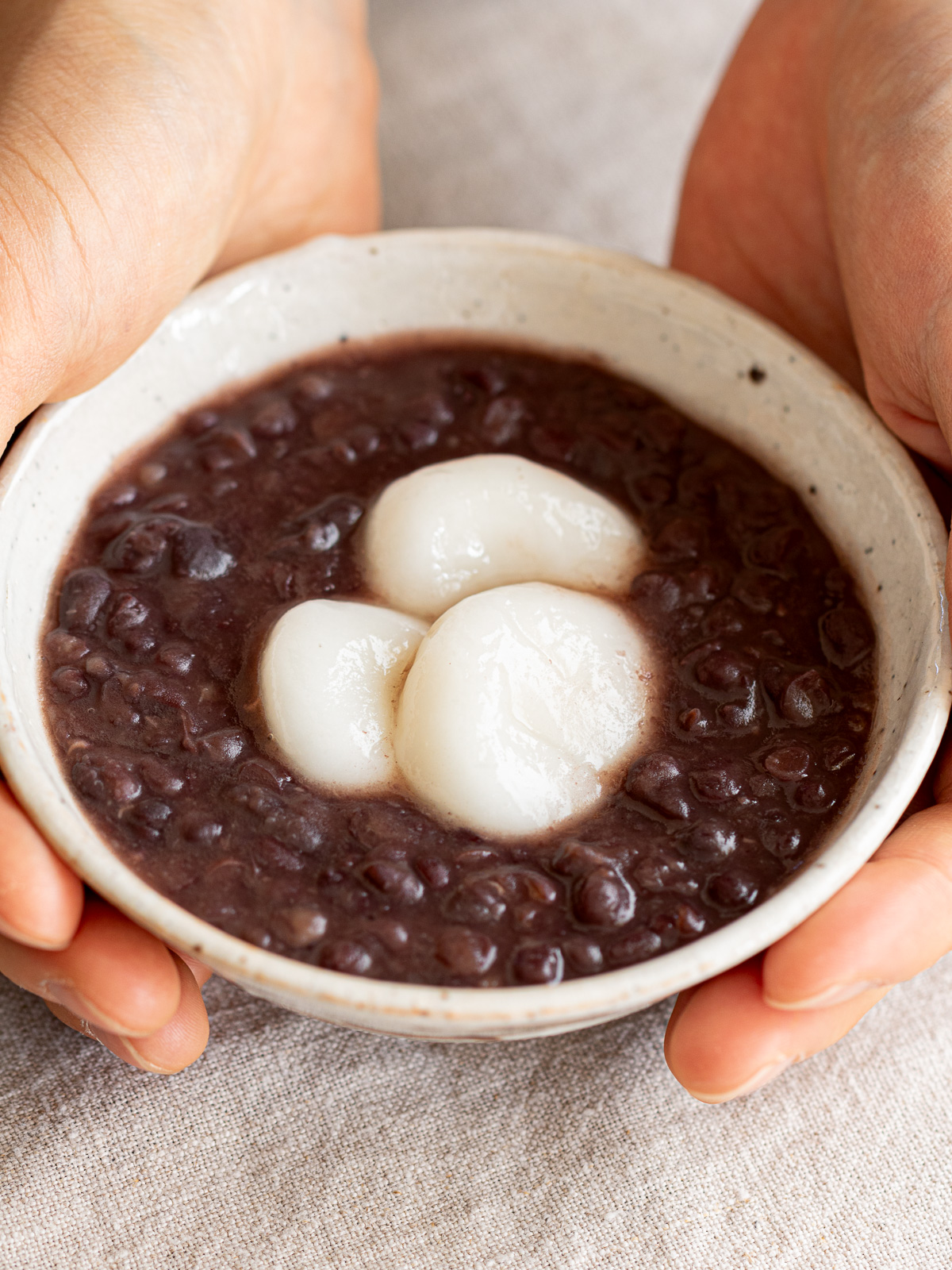
📘 Serving Suggestions
Oshiruko is traditionally served warm, making it a comforting winter dessert.
Shiratama or mochi? Both work well. Shiratama dumplings are soft and chewy straight out of the pot, while grilled mochi adds a stretchy, slightly crispy contrast. It's really down to personal preference — or simply whichever is easier to find
Hiyashi-shiruko (chilled oshiruko) In warmer months, oshiruko is also enjoyed cold. Just let it cool to room temperature, then refrigerate until chilled. Serve with freshly made shiratama dumplings on the side.
🫙 Storage
Store the oshiruko in an airtight container in the refrigerator for up to a few days. The flavor of the adzuki beans fades over time, so it’s best enjoyed while fresh.
Note that shiratama dumplings and mochi become firm as they sit, so it's best to make them fresh just before serving. The oshiruko itself keeps well on its own.
📚 FAQ
Yes! If you have homemade anko, it works beautifully. Just add water or adzuki bean cooking liquid to loosen it to your desired consistency, then adjust the sweetness to taste.
You can also use store-bought anko, though the result will be sweeter and less concentrated.
The terms are used differently depending on the region. In Kanto (Tokyo), oshiruko refers to any adzuki bean soup served with mochi, while zenzai is a thicker, soup-free version.
In Kansai (Osaka), zenzai is the chunky whole-bean soup, and oshiruko is made with smooth bean paste. Outside Japan, the two are often used interchangeably.
Oh-she-roo-koh. The emphasis is fairly even across all four syllables.
It's both, depending on how you look at it. Oshiruko is served in a bowl like a soup, but it's sweet and typically eaten as a dessert or snack, though it can also be served as part of a meal.
Try adding a very small pinch of salt. It won't make the oshiruko taste salty — it's the contrast that makes the sweetness pop and keeps the flavor from feeling one-dimensional.

If you feel like whispering a thought, asking a question, or simply saying hello — the comment section is always open 📮
🧤 More Adzuki Bean Recipes
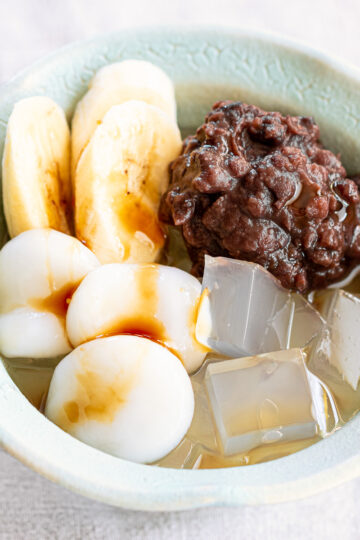
With leftover cooked adzuki beans:



🎍 More Shiratama Mochi Recipes
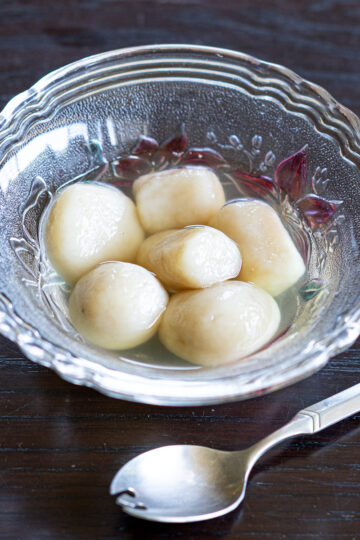
With chewy shiratama dumplings:
✏️ Recipe Card
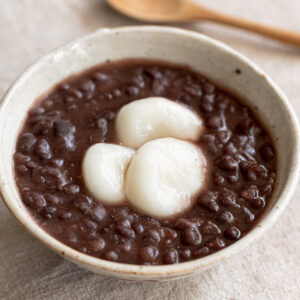
Oshiruko (Japanese Sweet Red Bean Soup)
Equipment
- Spatula
- potato masher
- Saucepan
- Mixing bowl
- Slotted spoon
- Spoon
Ingredients
Oshiruko
- 200 g cooked adzuki beans (unsweetened)
- 100 ml water or adzuki bean cooking liquid
- sugar (to taste)
Shiratama dumplings
- 25 g shiratamako (glutinous rice flour)
- 20 ml water (add more as needed)
Instructions
Make the oshiruko
- Add the cooked adzuki beans and water (or cooking liquid) to a saucepan and simmer until you reach your desired consistency.200 g cooked adzuki beans100 ml water or adzuki bean cooking liquid
- Add sugar to taste.sugar
Make the shiratama dumplings
- Add the shiratama-ko to a bowl and mix in water little by little, kneading until the dough feels like an earlobe — soft but not sticky.25 g shiratamako20 ml water
- Shape into 4–5 even small rounds and drop into a pot of boiling water.
- Once all the dumplings float to the surface, cook for one more minute, then transfer to a bowl of cold water.
Assemble
- Ladle the warm oshiruko into bowls and top with the shiratama dumplings.

If this recipe made its way into your kitchen, and you'd like to share that moment, feel free to tag @veginveganvegun or use #vegin_vegan_vegun.
Your quiet stories inspire me deeply 🕊️

Vegin Vegan Vegun! says
質問やコメントお待ちしています♪