
A simple vegetable-forward Korean pancake made with butternut squash.
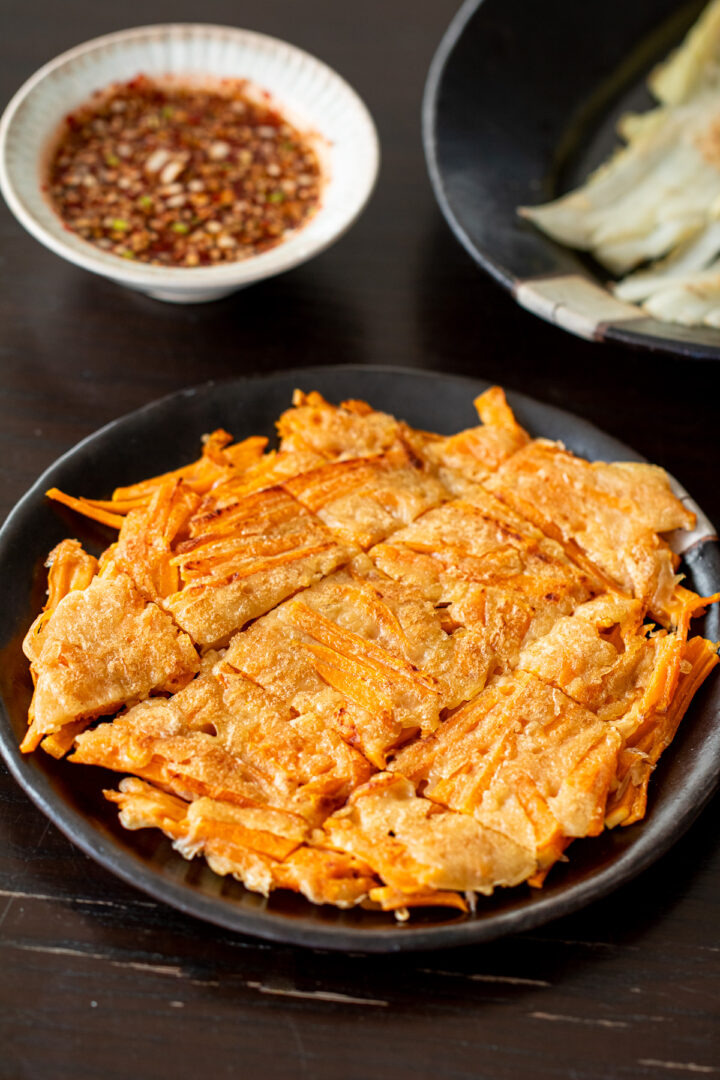
This easy butternut squash recipe reimagines jeon—Korean vegetable pancakes—in a gentle, seasonal way, with simple tips for bringing out the squash’s natural sweetness.
Serve with a light yangnyeom dipping sauce and enjoy it as a quiet winter meal.
Jump to:
- ☃️ From a Winter Kitchen|Rethinking Butternut Squash
- 🧺 Why I Love This Recipe
- 🍊 Ingredients
- 🥣 Equipment
- 📖 Instructions
- 🌿 About the texture
- 🫙 Storage
- 🥄 Letting Butternut Squash Turn Sweet
- 📘 Kitchen Notes|Using Up Extra Batter
- 📚 Q&A
- 🛷 More Butternut Squash Recipes
- 🧣 More Korean Food Recipes
- ✏️ Recipe Card|Printable
☃️ From a Winter Kitchen|Rethinking Butternut Squash
This winter, our garden gave us a generous harvest of butternut squash.
Having grown up with Japanese kabocha
—soft, fluffy, and gently sweet—
I always found butternut squash a little difficult to deal with.
Unlike Japanese pumpkin,
it has much more moisture, with a crisp, almost watery bite.
On top of that, there is a faint, floral aroma.
This kind of squash simply never goes well with the traditional Japanese method of simmered kabocha (kabocha no nimono).
Everyone I shared the butternut squash with
—friends and family alike—felt the same way.
We all found ourselves wondering what to do with it.
After much thought, I decided to accept butternut squash as butternut squash.
Not to compare it with Japanese kabocha.
Not to be disappointed by what it wasn’t.
Just to meet it as it is.
And then, a quiet idea came to me.
What if I treated it like zucchini?
I sliced it as thinly as possible,
coated it in a light batter,
and cooked it slowly over low heat—
allowing its hidden sweetness to emerge.
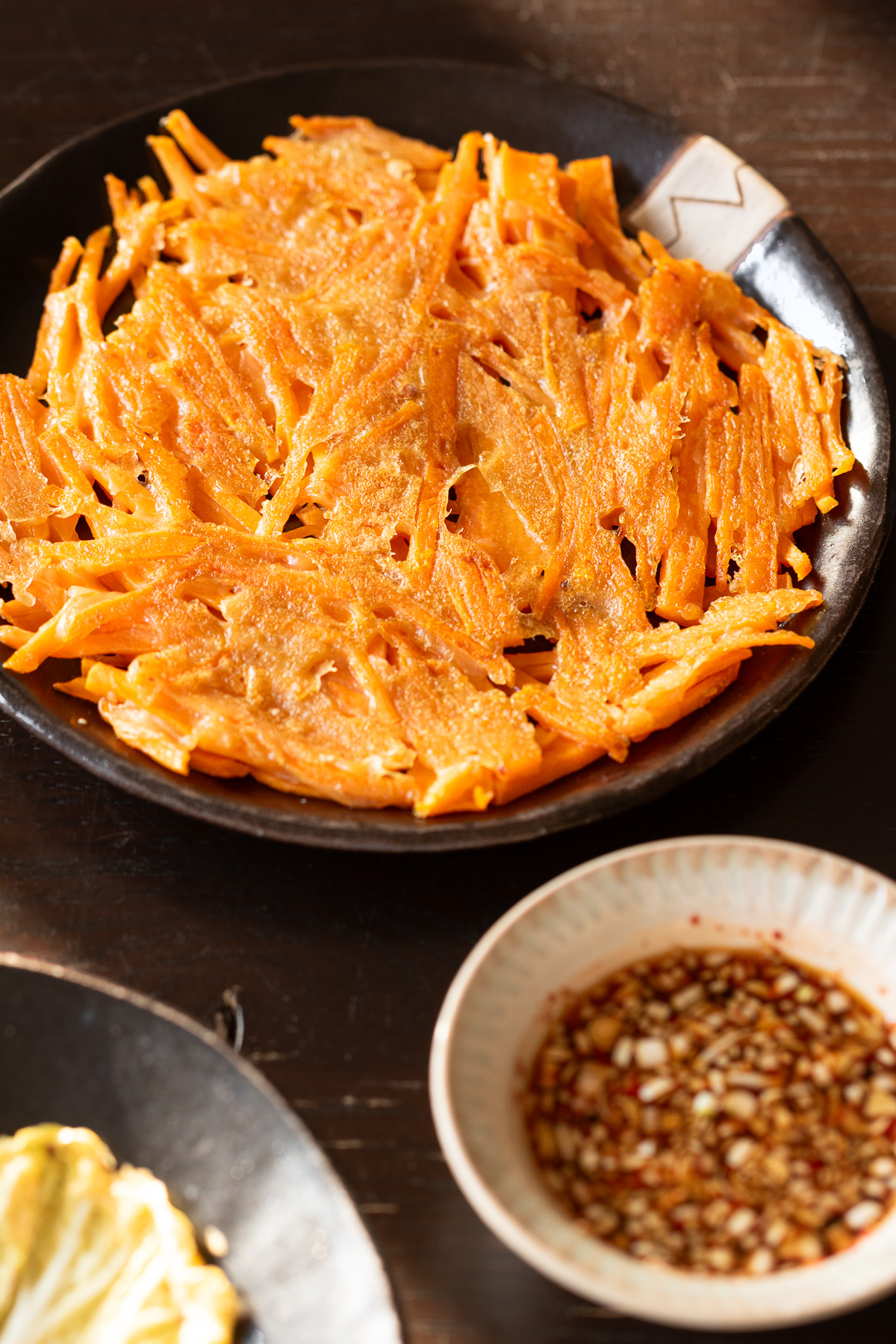
That was the moment this butternut squash Korean pancake (jeon) was born.
When I served it to my family during the New Year holidays,
they were surprised—
“I didn’t know butternut squash could be this good.”
They especially loved the dipping sauce:
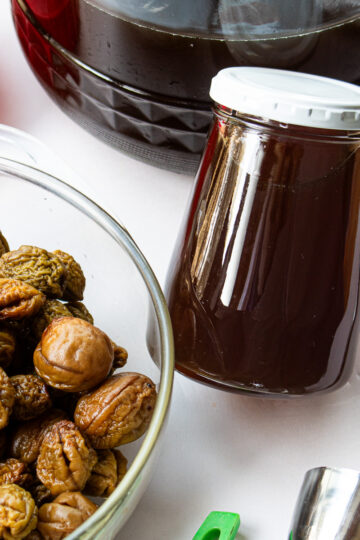
a gently sweet yangnyeom sauce made with Korean plum syrup I had prepared the year before.
They liked it so much that, when they left,
I sent them home with the recipe, along with jars of that same plum syrup.
It made me quietly happy.
Standing there, waving until their car disappeared from view,
I had the feeling—
this year might hold something gentle and hopeful.
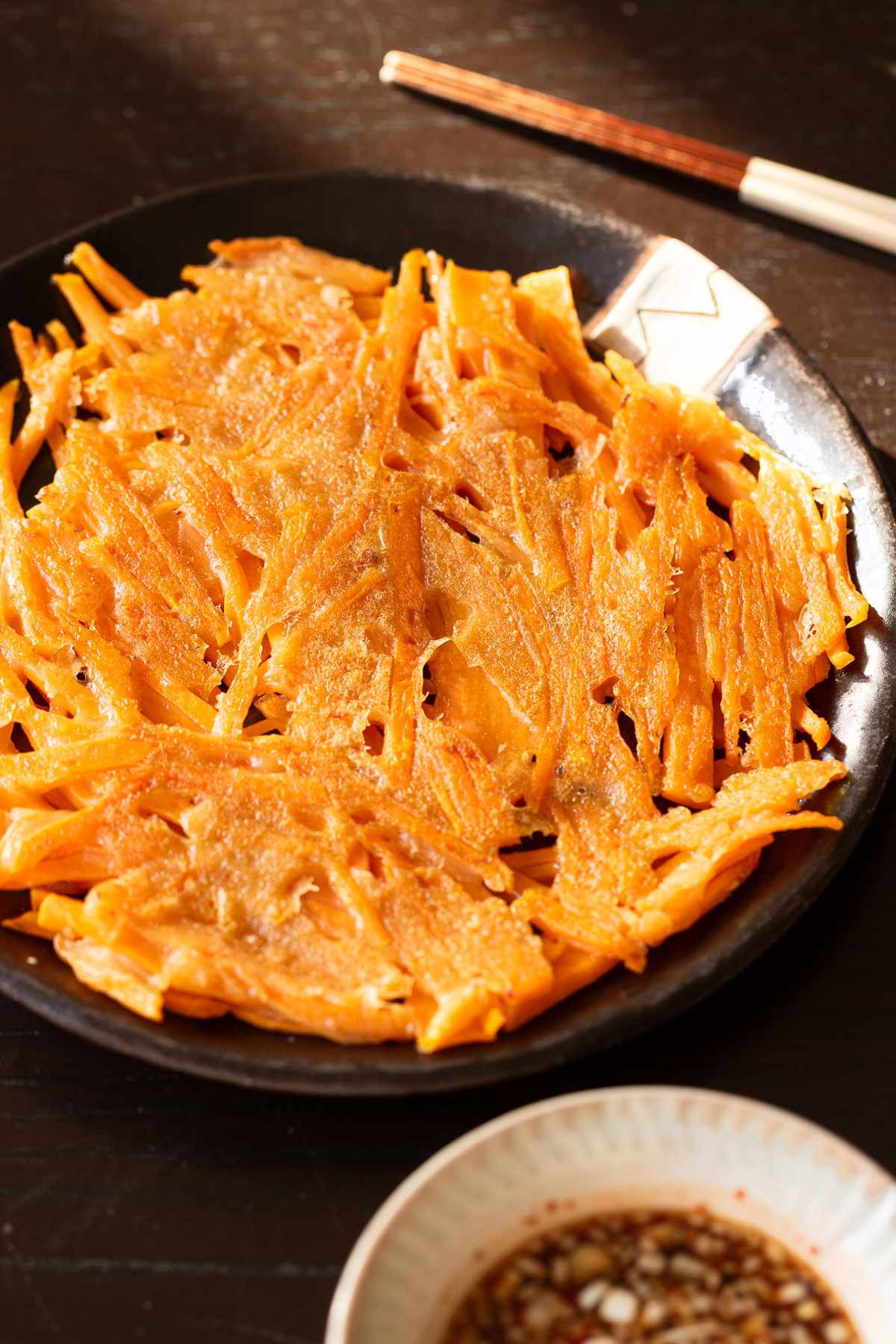
🌿 You might also like my Korean cabbage jeon recipe.
🧺 Why I Love This Recipe
- Simple & quick: The only prep is slicing the butternut squash into thin strips
- An easy vegetable jeon: A great way to use up plenty of butternut squash
- Egg-free: Naturally vegan and vegetarian-friendly
- Beautiful on the table: Make a generous batch and serve it on a large platter as the centerpiece of the meal
- With a simple dipping sauce: Enjoy it with a lightly sweetened yangnyeom sauce, which also pairs well with chilled tofu or vegetable side dishes
🍊 Ingredients
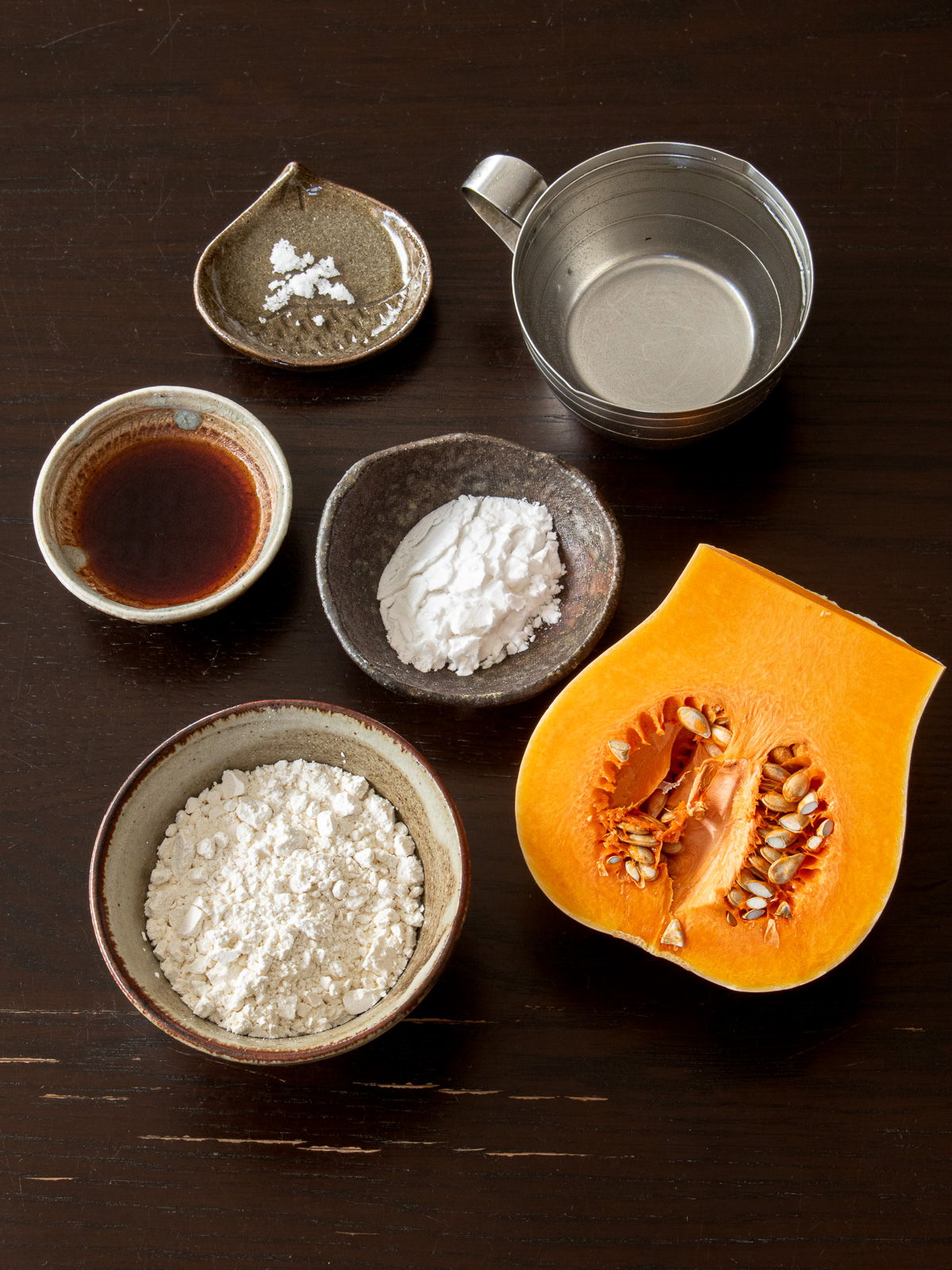
- Butternut squash:
Peeled and sliced into fine julienne.
Cutting it thin helps excess moisture evaporate and allows its natural sweetness to come through. - Oil:
Use a small amount at a time for cooking.
Adding too much at once can make the pancake feel heavy or greasy.
▶︎ Batter
- Cake flour
- Potato starch
- Soy sauce
- Salt
- Water
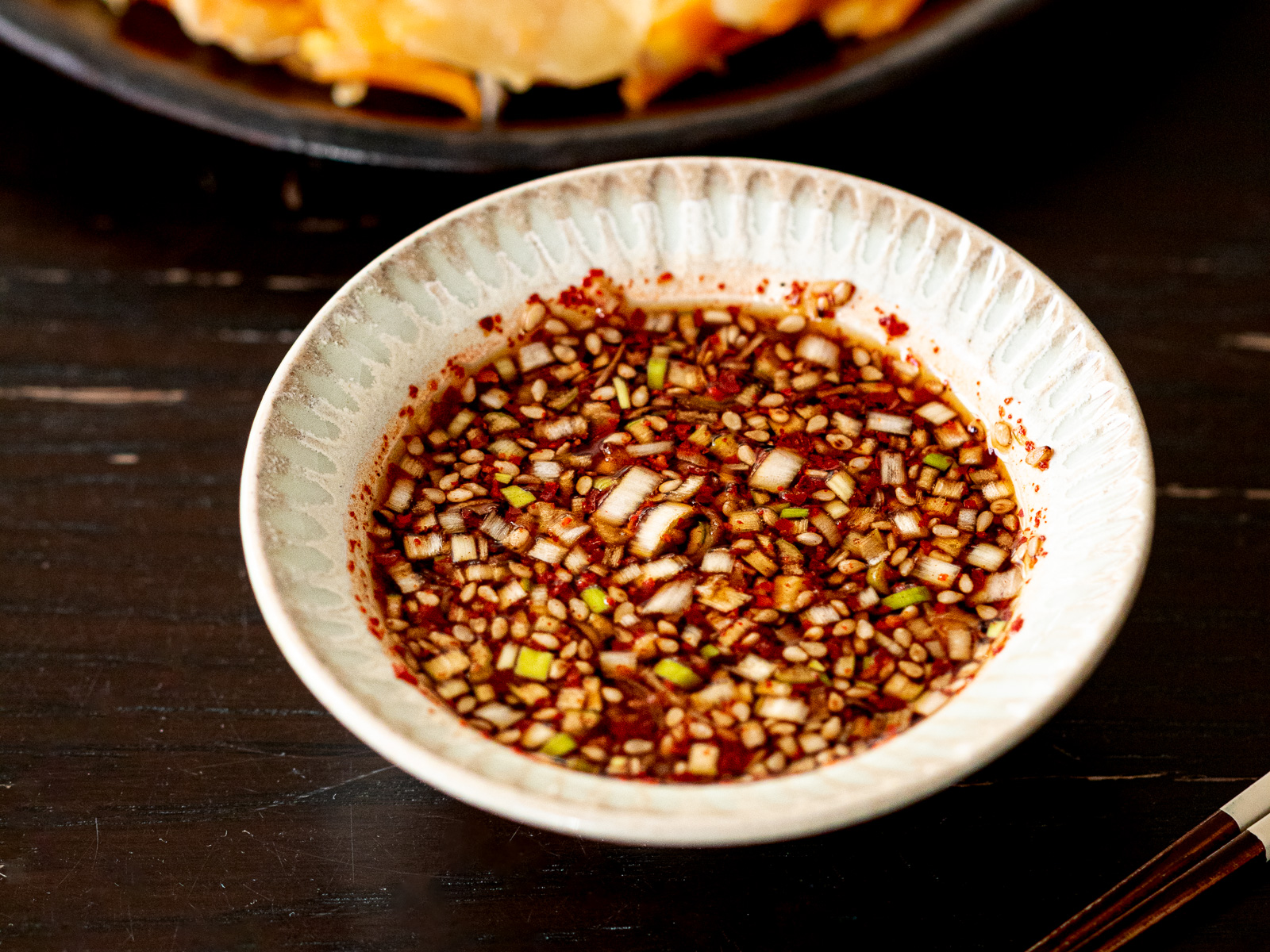
▶︎ Yangnyeom Dipping Sauce:A simple Korean-style dipping sauce that pairs beautifully with this pancake. It also works well with chilled tofu, vegetable sides, or steamed tofu dumplings.
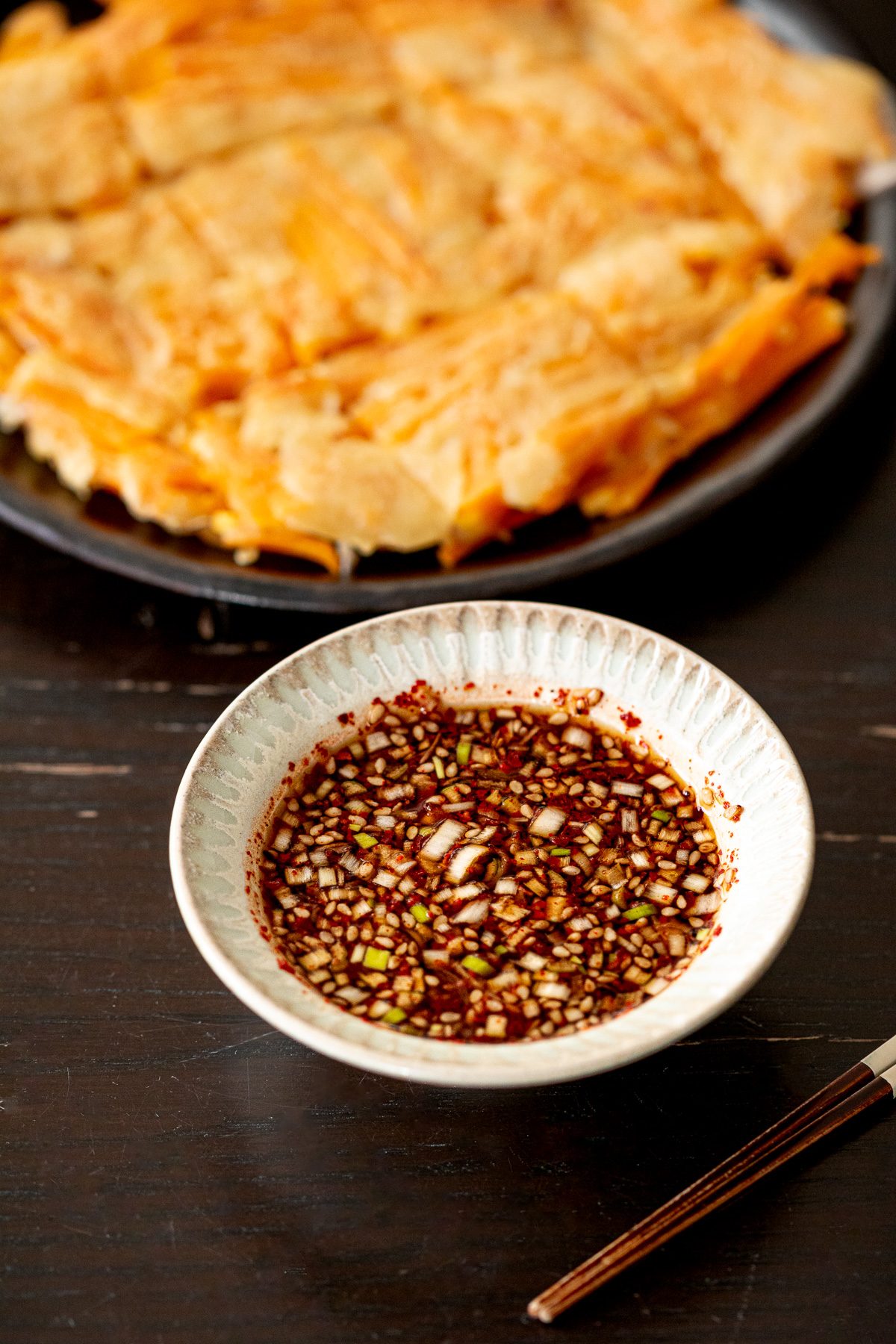
👇 Exact measurements are listed in the recipe card below.
🥣 Equipment
- Frying pan
- Mixing bowl
- Whisk
- Knife and cutting board
- Spatula
📖 Instructions
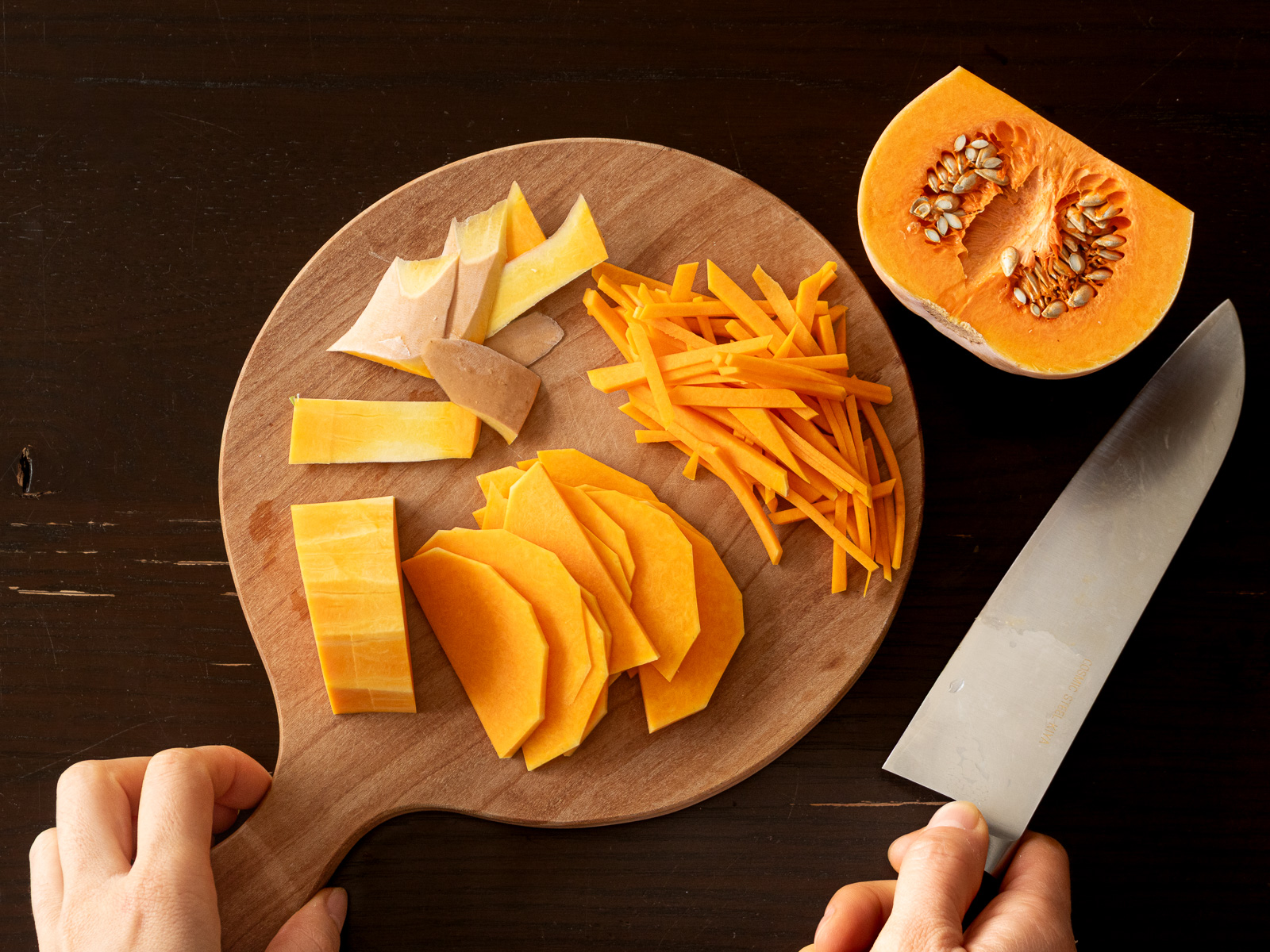
- Prepare the butternut squash
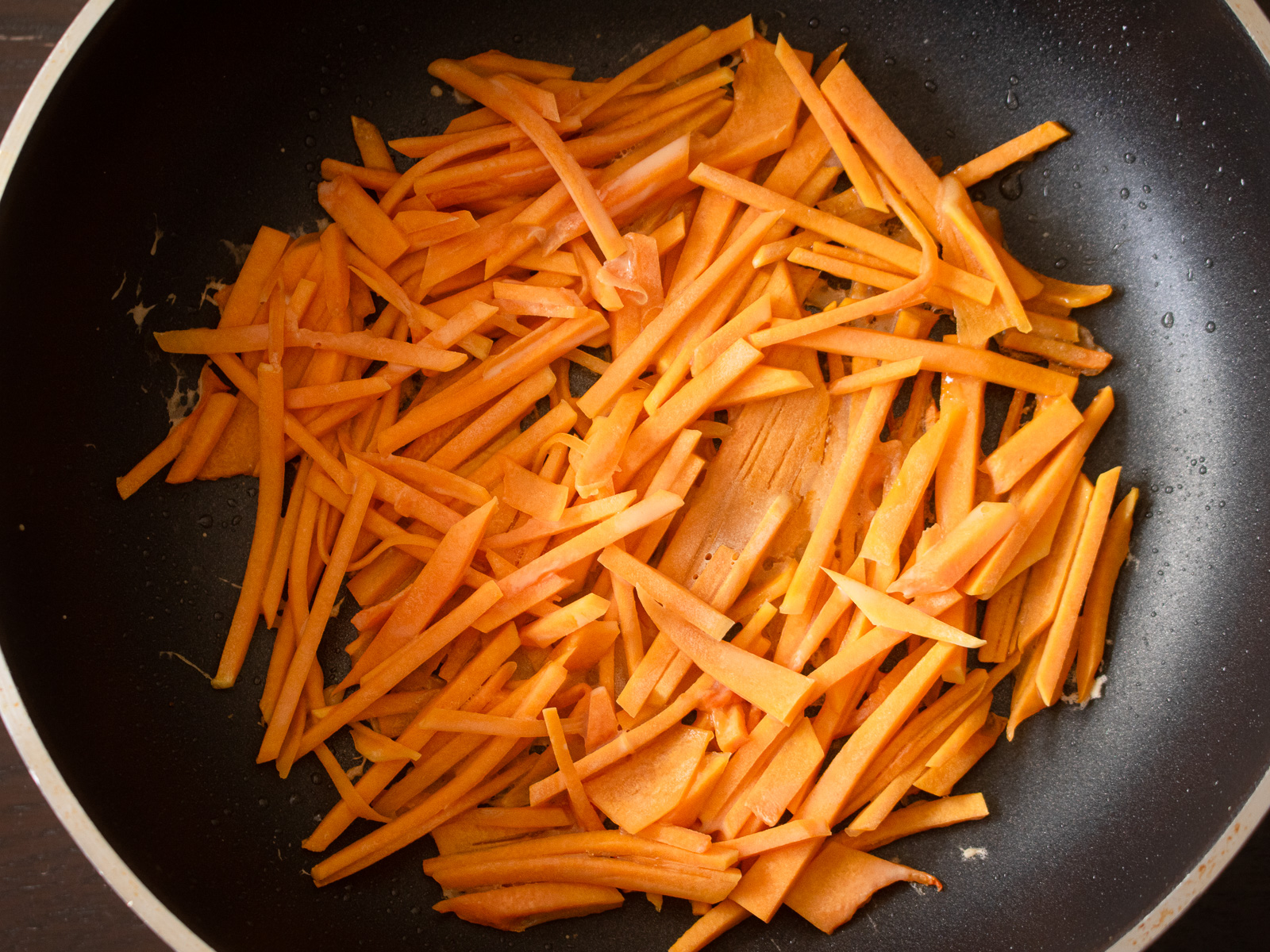
- Peel the butternut squash and cut it into fine julienne.
🌿 Thin slices help it cook evenly and bring out its natural sweetness.
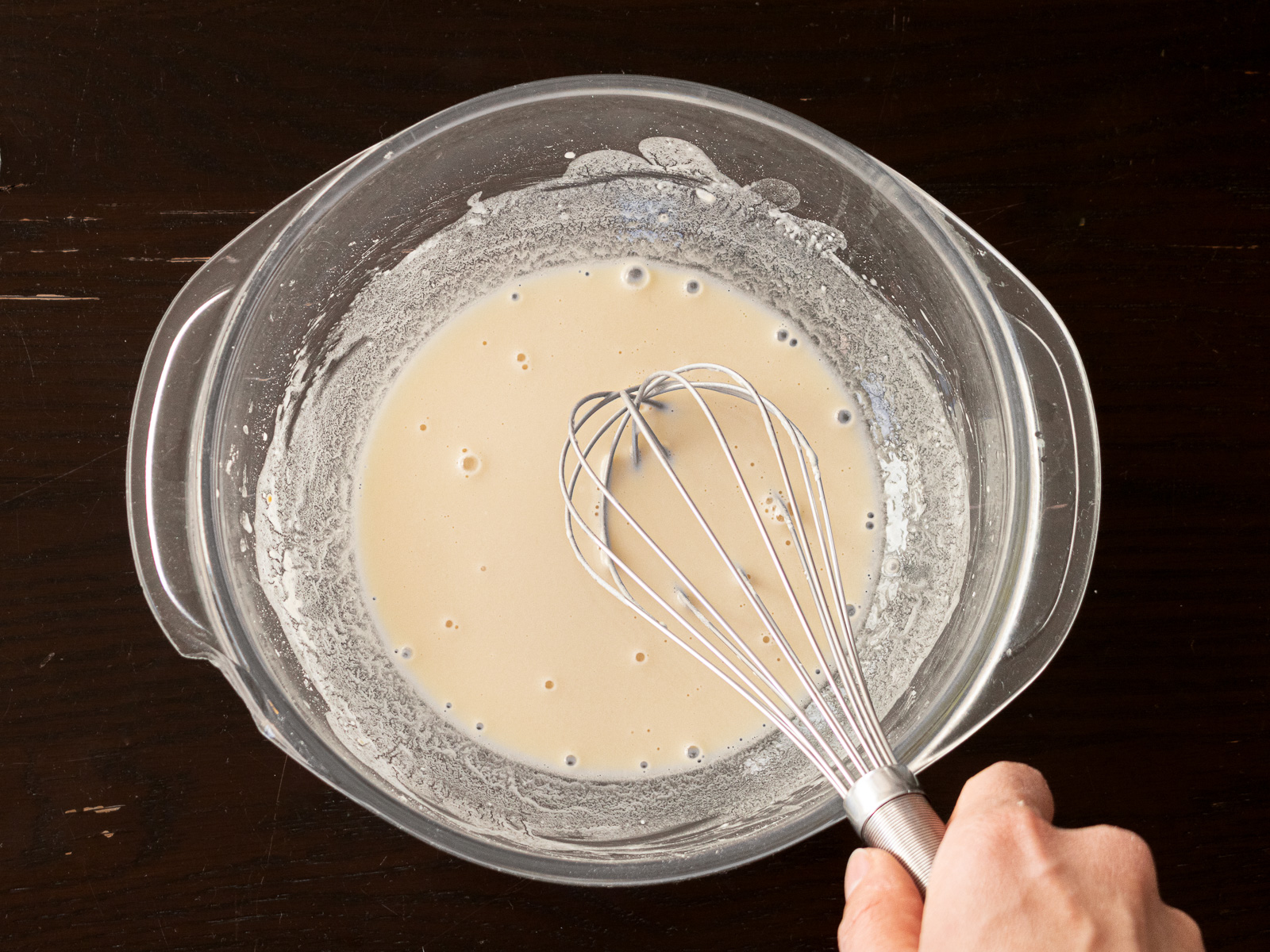
- Make the batter
- In a bowl, combine the flour and potato starch.
Add the water, soy sauce, and salt, and whisk until smooth with no lumps.
- In a bowl, combine the flour and potato starch.
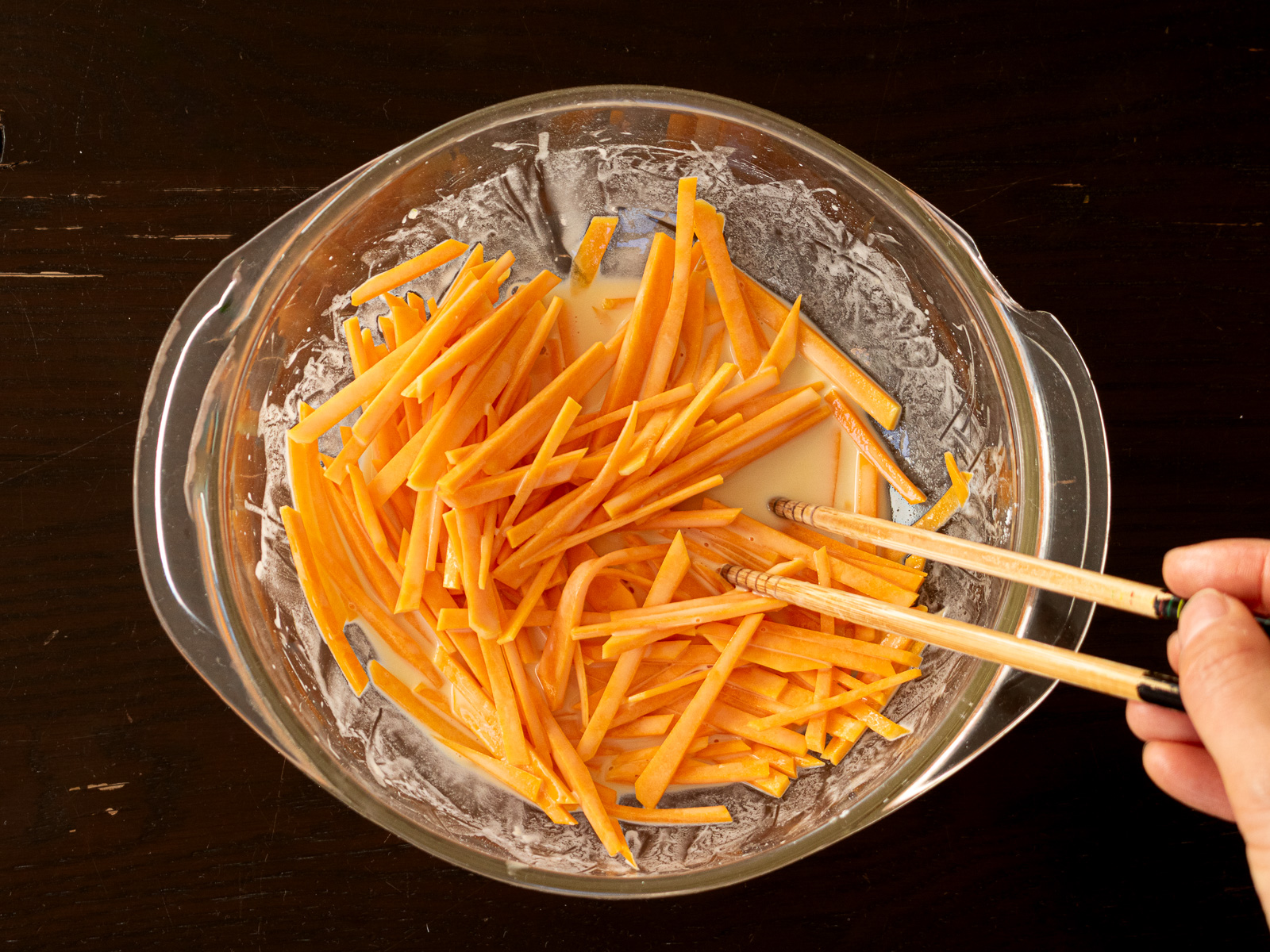
- Coat the squash lightly
- Add the sliced butternut squash to the bowl and gently toss, just until the surface is lightly coated with batter.
🌿 The squash should be barely covered, not soaked.
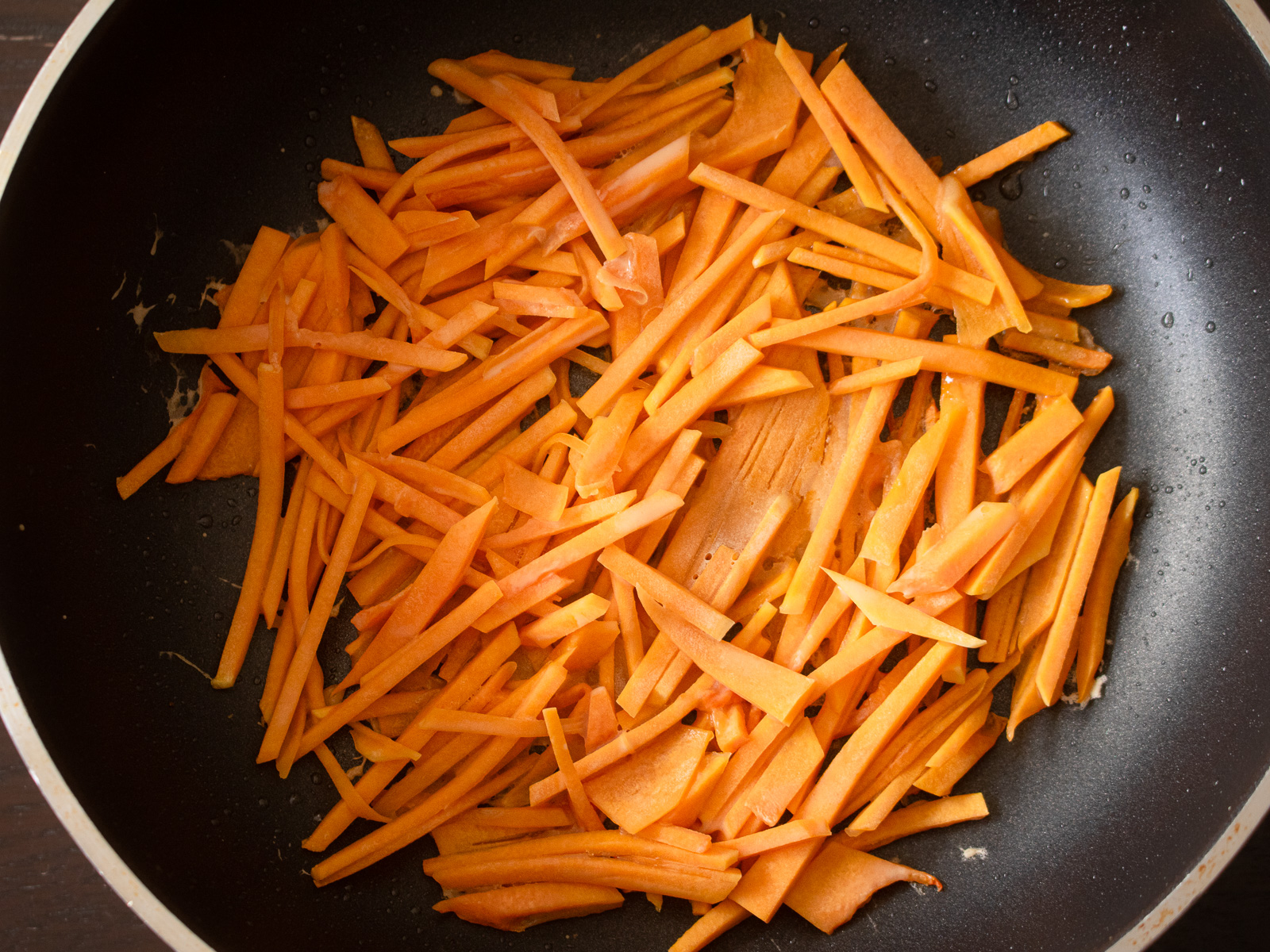
- Cook the pancake
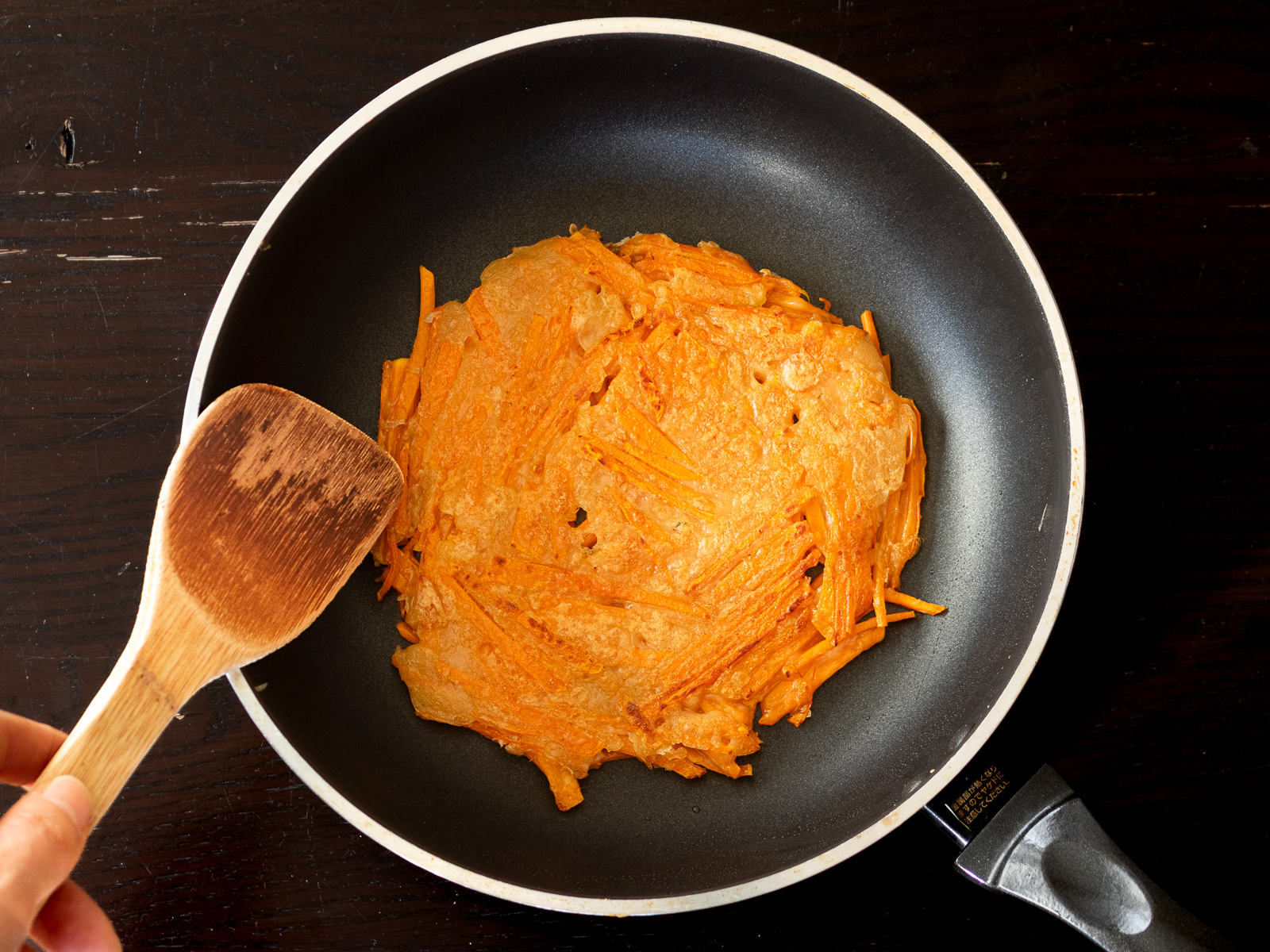
- Heat a frying pan over medium heat, then lightly coat it with oil.
- Spread the coated butternut squash thinly in the pan, lowering the heat to low.
🌿 For a lighter, delicate finish, do not pour in the batter left at the bottom of the bowl.

For a more filling, tender texture, gently pour the remaining batter over the squash.

👉 For more detail, see 🥄 Letting Butternut Squash Turn Sweet.
- Flip and finish
- Cook slowly until the bottom is golden, then flip and cook the other side until crisp and fragrant.
🌿 About the oil:
Add oil a little at a time if needed.
Using too much at once can make the pancake feel heavy rather than crisp.
- Serve
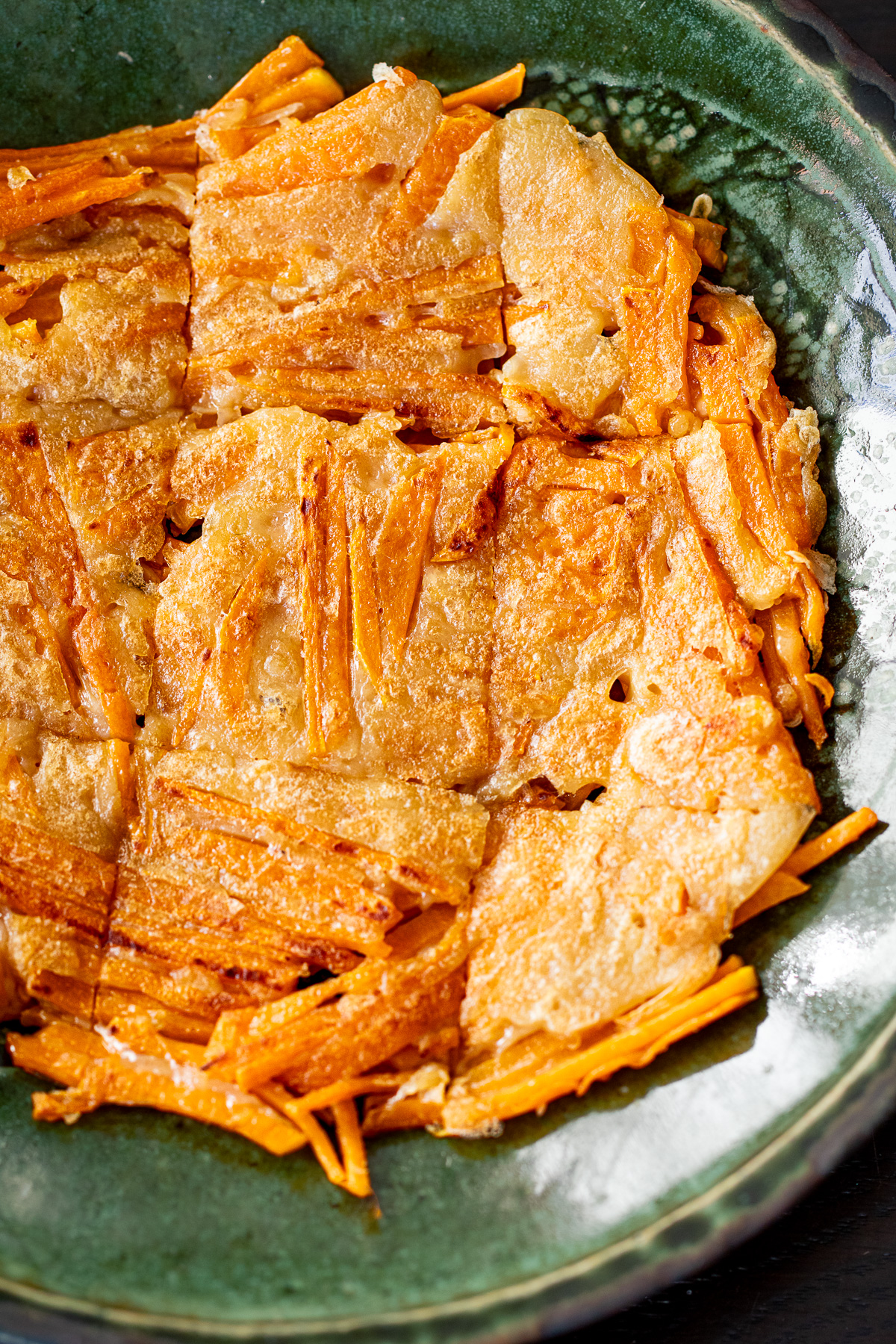
- Transfer to a plate and serve warm with the yangnyeom dipping sauce.
🌿 About the texture
Whether you pour in the remaining batter or not makes a quiet but noticeable difference.
Both ways are delicious—one highlights the sweetness of the squash, the other offers a more comforting, substantial bite.
🫙 Storage
- Best enjoyed freshly made, while the edges are crisp and the inside is still soft.
- Avoid preparing the batter ahead of time. As it rests, the texture tends to become heavier and less delicate.
- If you need to keep leftovers, store the cooked pancake in the refrigerator and reheat gently in a pan to restore some crispness.
🥄 Letting Butternut Squash Turn Sweet
A few small choices make a noticeable difference.
❶ Slice as thinly as possible
Thin cuts help excess moisture escape and allow the sweetness to concentrate.
❷ Use just a light coating of batter
The batter should barely cling to the surface of the squash.
❸ Decide whether to pour in the remaining batter
Leaving it out highlights the squash’s sweetness.
Pouring it in creates a softer, more filling pancake.
❹ Cook slowly over low heat
Gentle heat draws out the sweetness little by little.
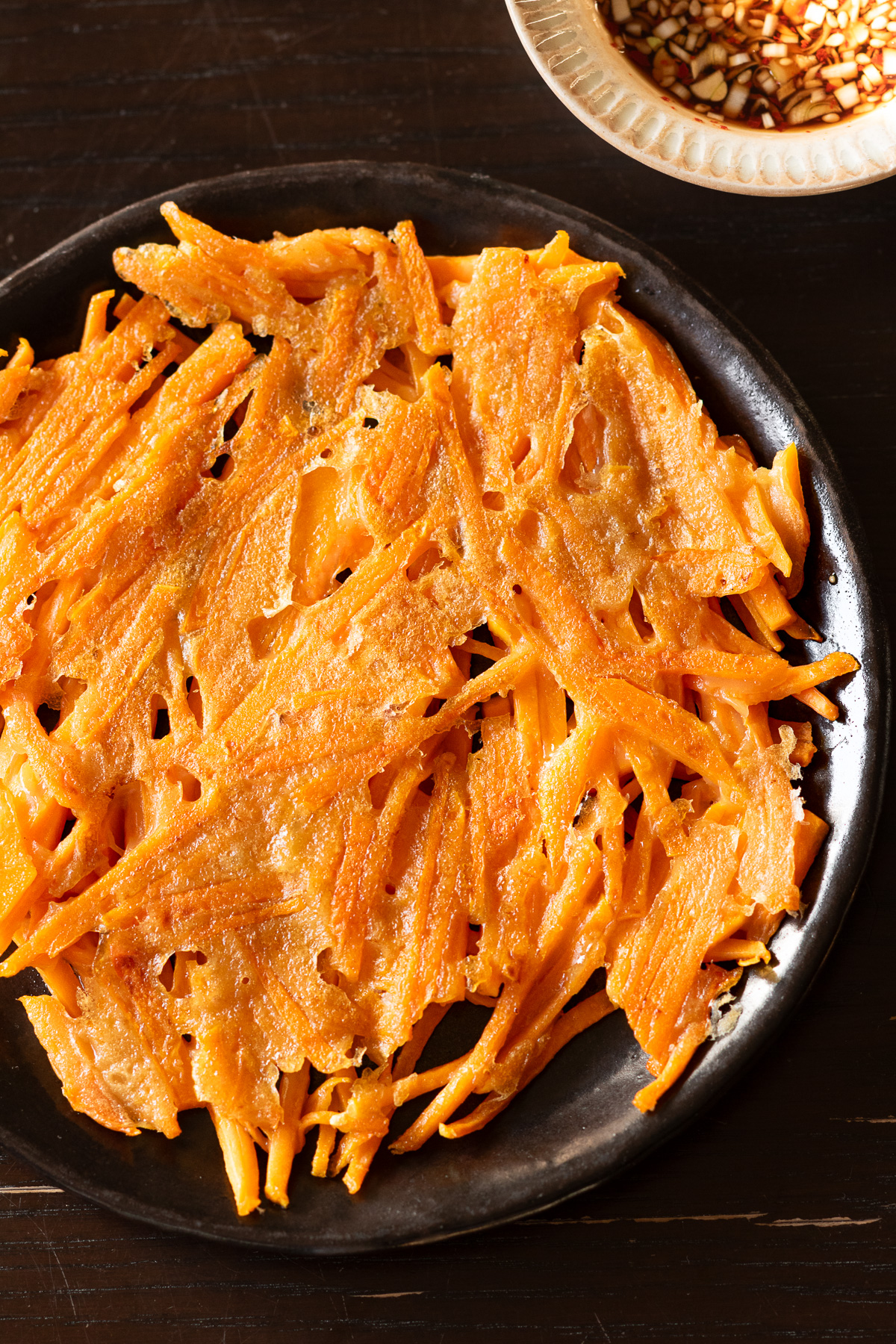
With just these points in mind, the flavor shifts quietly but clearly.
🌿 Try making a double batch and taste both versions.
Each has its own character.

📘 Kitchen Notes|Using Up Extra Batter
If a little batter remains,
it’s easily turned into another small jeon with leftover vegetables.
➤ Vegetable ideas
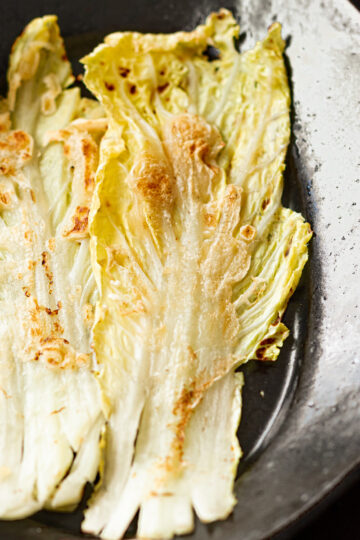
- Napa cabbage (see Napa Cabbage Jeon recipe)
- Julienned carrot
- Scallions
- Cabbage
- Thinly sliced onion
- Garlic chives
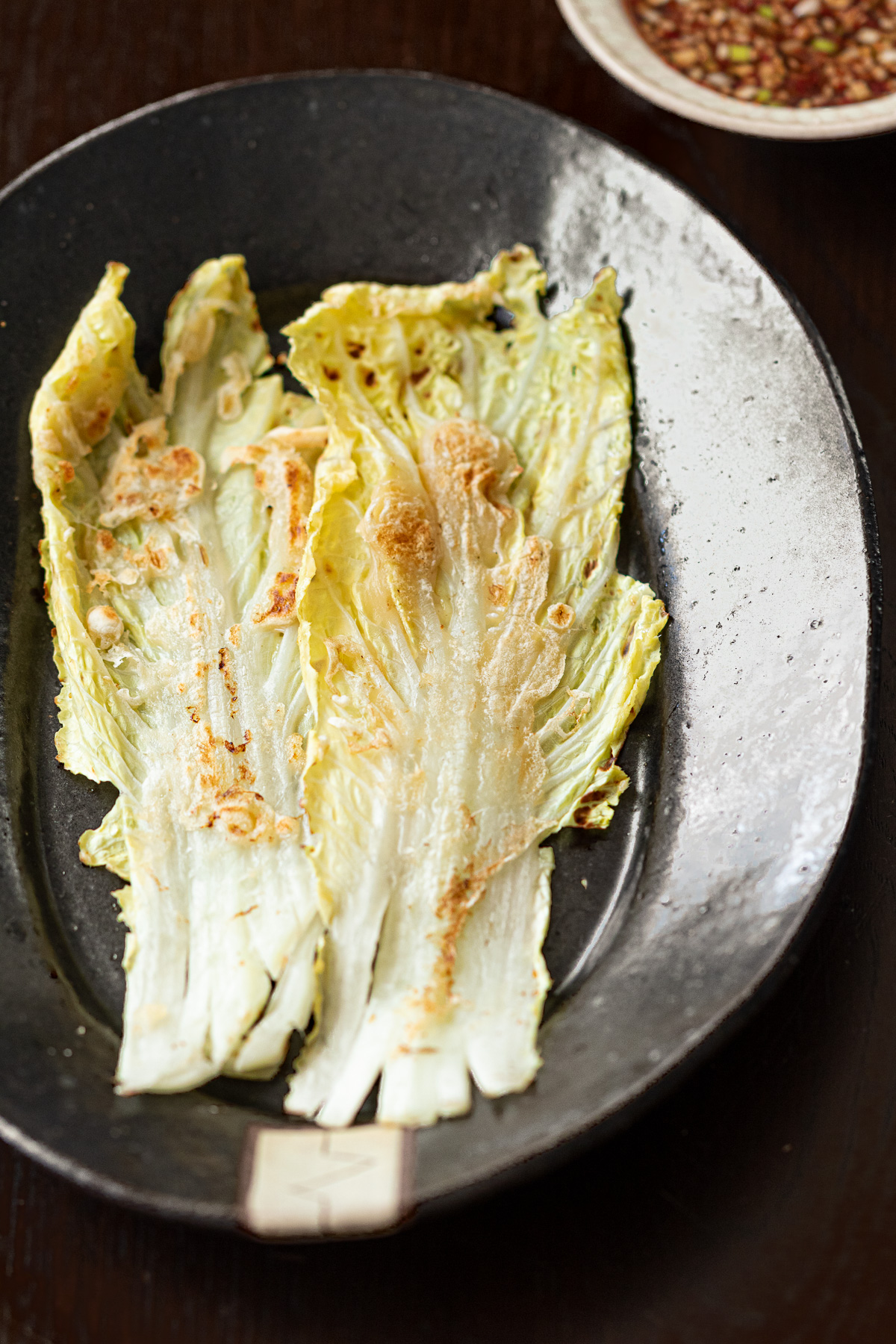
🌿 Vegetables with lower moisture work best.
Cooking with a light amount of oil helps prevent sogginess.
📚 Q&A
Butternut squash is a variety that can be eaten raw.
As long as the batter is cooked through, it’s safe to eat.
Slicing it as thinly as possible helps it cook quickly and results in a soft, gently tender texture rather than a sharp crunch.
Instead of the dipping sauce, try a small pinch of salt,
or a light dip in soy sauce.
The natural sweetness of the butternut squash comes through gently, making it easy for children to enjoy.
This usually happens when the heat is too low or there isn’t enough oil.
Rather than adding a lot at once, add oil little by little as needed.
When the pancake begins to move easily with a spatula, it’s ready to flip.
Cook slowly over low heat, without rushing.
Spreading the mixture thinly allows excess moisture to evaporate,
making the natural sweetness of the butternut squash more noticeable.
Yes, you can use all-purpose flour, but the texture will be slightly different.
Cake flour is lower in protein, so it creates a lighter, more tender pancake.
Using all-purpose flour will give a slightly firmer, chewier result, which is still delicious.

If you feel like whispering a thought, asking a question, or simply saying hello — the comment section is always open 📮
🛷 More Butternut Squash Recipes
Favorites from my kitchen:
🧣 More Korean Food Recipes
All made with simple, plant-based ingredients:
- Korean Sweet Potato Latte (Goguma Latte)
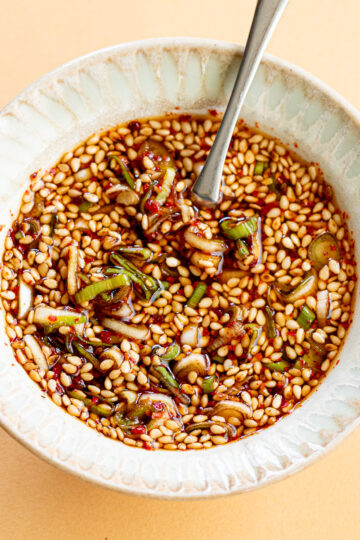
- Yangnyeomjang (양념장) — Refreshing Korean Dipping Sauce
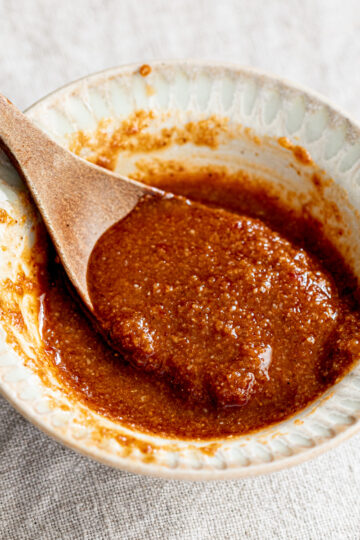
- Mild Gochujang Bibimbap Sauce Recipe (Korean-Style, Vegan)
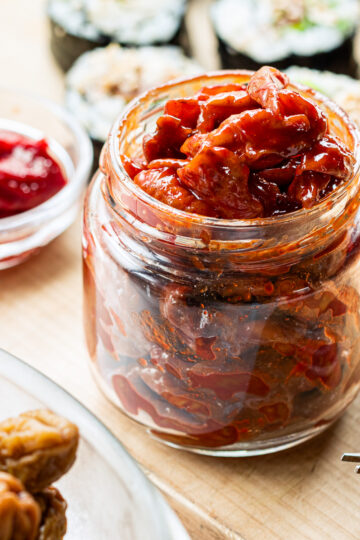
- Maesil Jangajji (Korean Pickled Green Plums) – Sweet, Spicy, and Crunchy!
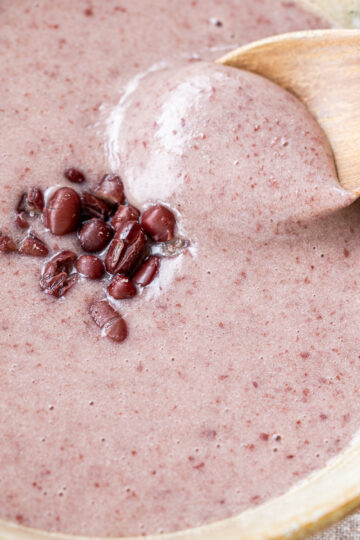
- Patjuk (Korean Red Bean Porridge) – Easy Rice Cooker Recipe
- Korean Green Plum Syrup (Maesil-cheong)
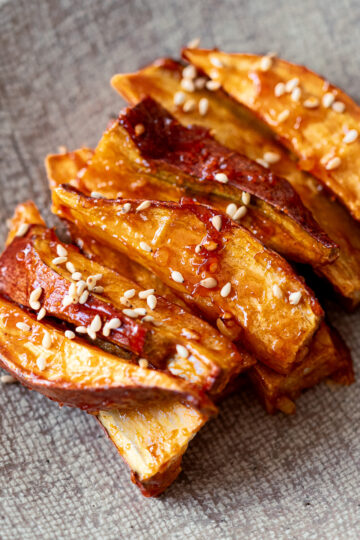
- Yangnyeom Sweet Potato Sticks|Easy Toaster Oven Recipe

✏️ Recipe Card|Printable
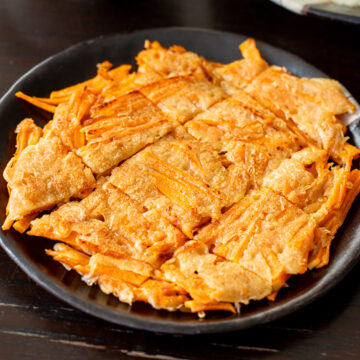
Butternut Squash Jeon (Korean Pancake)
Equipment
- frying pan
- Mixing bowl
- whisk
- Knife and cutting board
- Spatula
Ingredients
▶︎ Pancake
- 100 g butternut squash (peeled)
- 20 g cake flour
- ½ tablespoon potato starch
- 50 ml water
- ½ teaspoon soy sauce
- a pinch of salt
- neutral oil (for frying (as needed))
Instructions
Prepare the butternut squash
- Peel the butternut squash and cut it into fine julienne.Tip: Thin slices help it cook evenly and bring out its natural sweetness.100 g butternut squash
Make the batter
- In a bowl, combine the flour and potato starch.20 g cake flour½ tbsp potato starch
- Add the water, soy sauce, and salt, and whisk until smooth with no lumps.50 ml water½ tsp soy saucea pinch of salt
Coat the squash lightly
- Add the sliced butternut squash to the bowl and gently toss, just until the surface is lightly coated with batter.Tip: The squash should be barely covered, not soaked.
Cook the pancake
- Heat a frying pan over medium heat, then lightly coat it with oil.neutral oil
- Spread the coated butternut squash thinly in the pan, then lower the heat to low.For a lighter, delicate finish, do not pour in the batter left at the bottom of the bowl.For a slightly more substantial, tender texture, gently pour the remaining batter over the squash.Note: See Letting Butternut Squash Turn Sweet for more detail.
Flip and finish
- Cook slowly until the bottom is golden, then flip and cook the other side until fragrant.Tip: Add oil gradually as needed. Too much oil at once can make the pancake greasy.
Serve
- Transfer to a plate and serve warm with the yangnyeomjang (Korean dipping sauce).
Notes
- Adjust the amount of batter depending on whether you prefer a lighter or more filling texture.
- Cooking slowly over low heat helps the natural sweetness of the squash emerge.

If this recipe made its way into your kitchen, and you'd like to share that moment, feel free to tag @veginveganvegun or use #vegin_vegan_vegun.
Your quiet stories inspire me deeply 🕊️

Comments
No Comments