
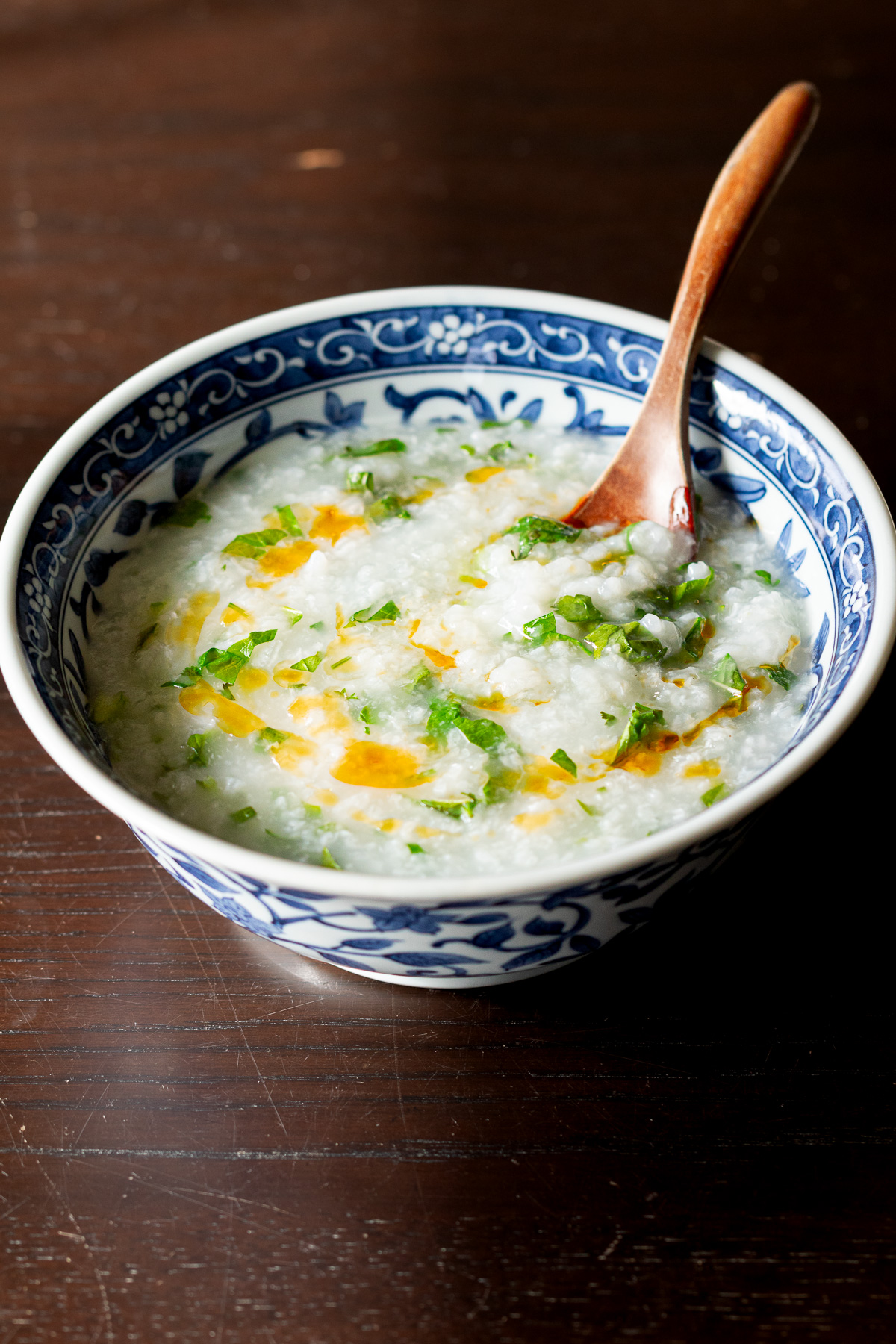
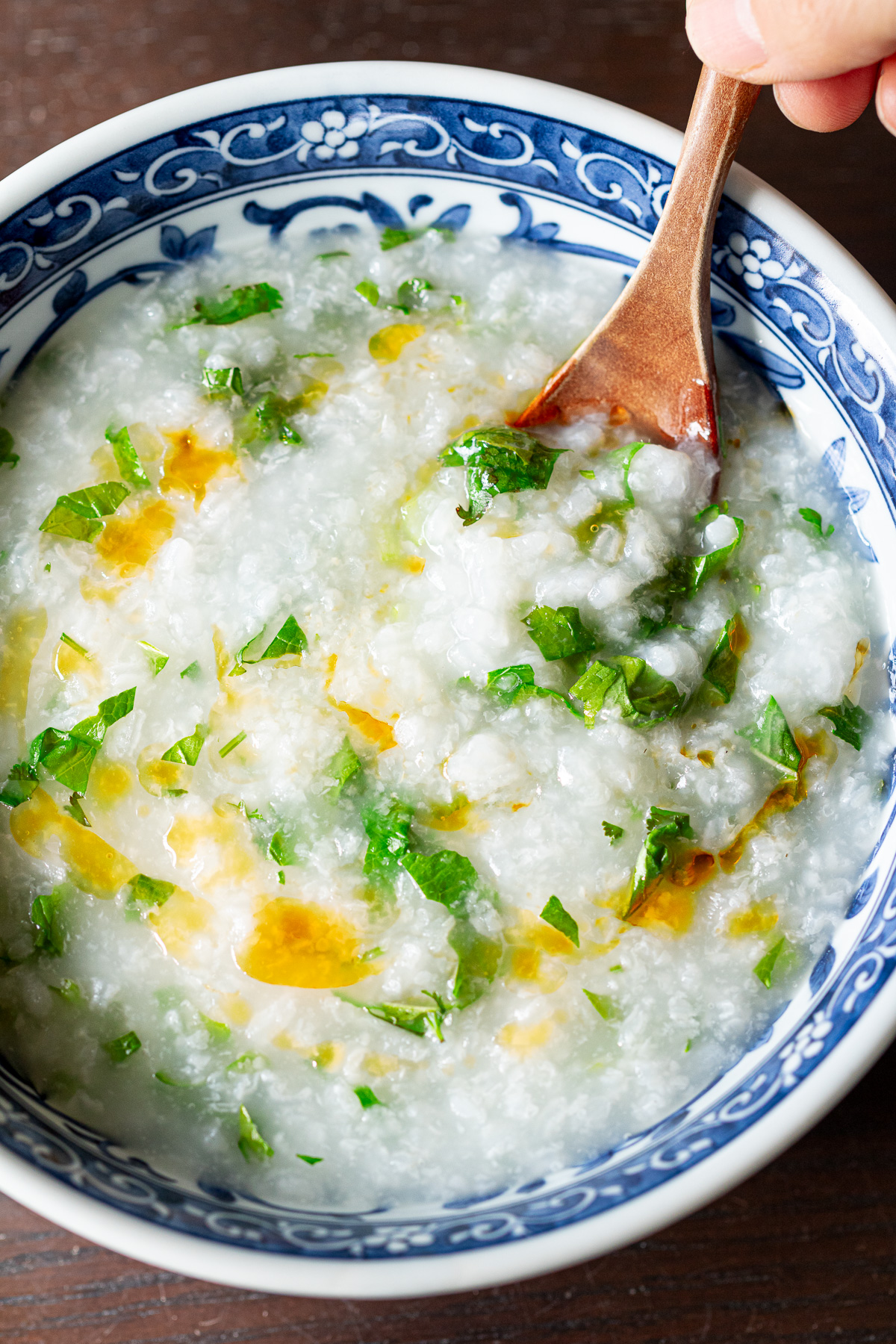
A light, nourishing vegan rice porridge (congee) made effortlessly in a rice cooker.
Simmered with fresh cilantro, seasonal greens, finished with a drizzle of Japanese chili oil for a gentle warmth.
A simple, healthy Asian breakfast that feels good on quiet mornings.
🍁 From the Autumn Kitchen|About Congee
Rice porridge looks simple, but getting the texture just right is not always easy.
Some mornings, I want it smooth and soft.
On other days, I prefer it lighter, more broth-like.
When I wake up, I listen to my body and decide which one to make, gazing as the sun rises higher.
This Asian-style breakfast congee is on the lighter side.
In the dry autumn air, a watery bowl feels perfect for my empty stomach.
With just one bite, I feel my body slowly rehydrating from deep inside.
I add vibrant radish and turnip greens,
with a touch of fragrant cilantro,
simmering them just enough to keep their color and texture.
Their gentle crunch
softly wakes my brain and mind.
As their fresh energy flows through my body,
I feel fully charged from the very start of my day.

Jump to:
🧺 Recipe Features
- Easy, nourishing vegan breakfast porridge
- Asian-inspired flavors with cilantro & Japanese chili oil
- Rice cooker method — simple, foolproof, and time-saving
- Radish & turnip greens for gentle nutrition
- A modern take on Nanakusa-gayu/七草粥, the traditional seven-herb rice porridge enjoyed after New Year’s
🌾 Ingredients
Basic Ingredients
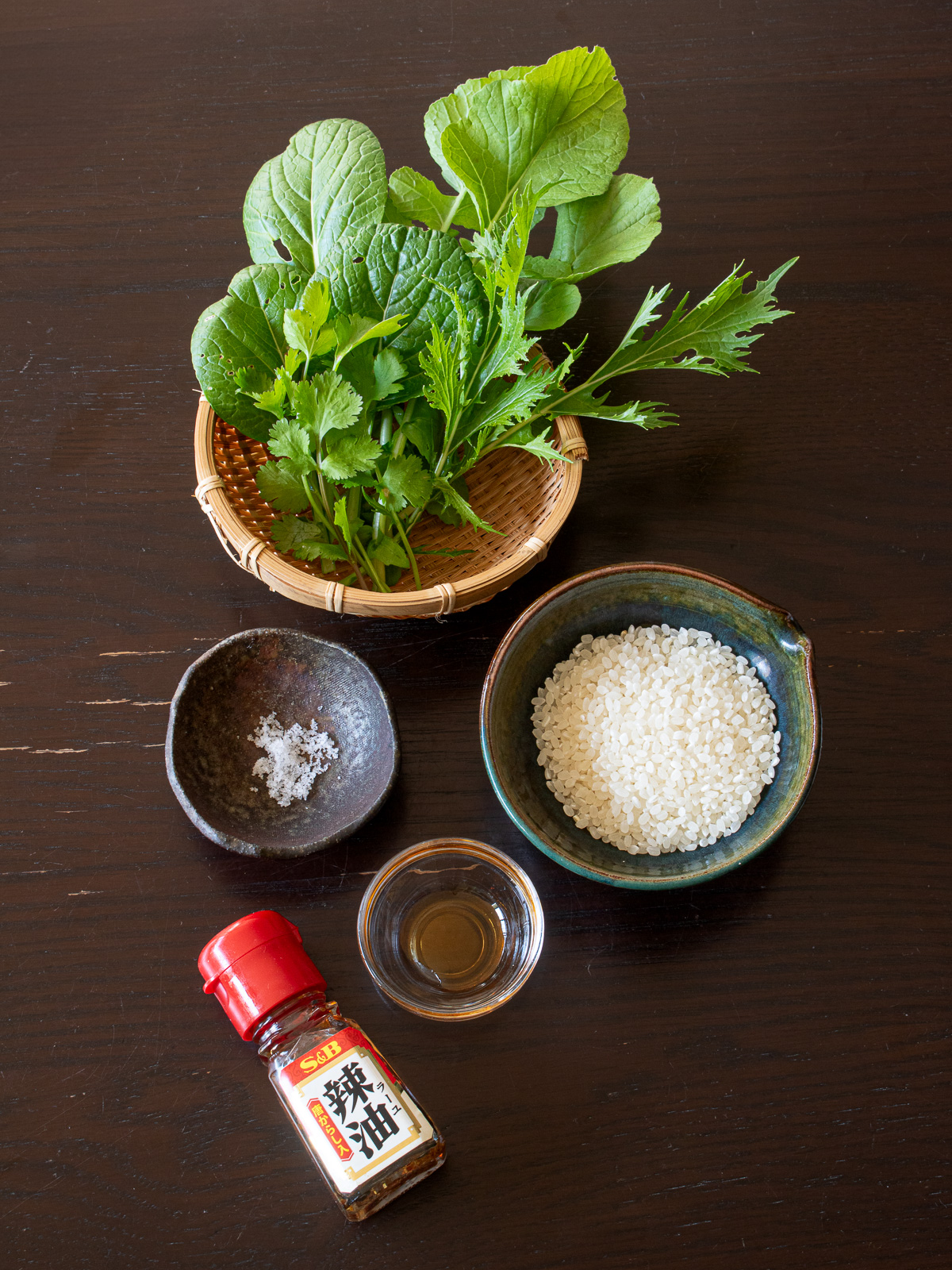
- White rice (0.5 Japanese rice cup / 90ml): Cooked with extra water to make watery congee
- Salt: Coarse sea salt recommended
- Japanese Chili oil (La-yu): Just a drizzle adds depth and Asian character (I used S&B this time)
- Cilantro (Coriander): Tear the leaves; finely chop the stems—use every bit
Seasonal Leafy Greens
Choose what’s in season and feels right.
For this pot, I reached for:
- Radish greens
- Turnip greens
- Mizuna (potherb mustard)
- Komatsuna (Japanese mustard spinach)
🌿 Use leftover greens from your fridge or fresh pickings from your garden—just a small handful works perfectly.
See the full recipe card at the bottom for exact measurements 👇

🥣 Tools
- Rice cooker with measuring cup
- Knife and cutting board
- Small pot
- Spatula and ladle
- Strainer
🌿 Note: Use the measuring cup that came with your rice cooker (usually 180ml for Japanese rice cookers)
📖 Instructions
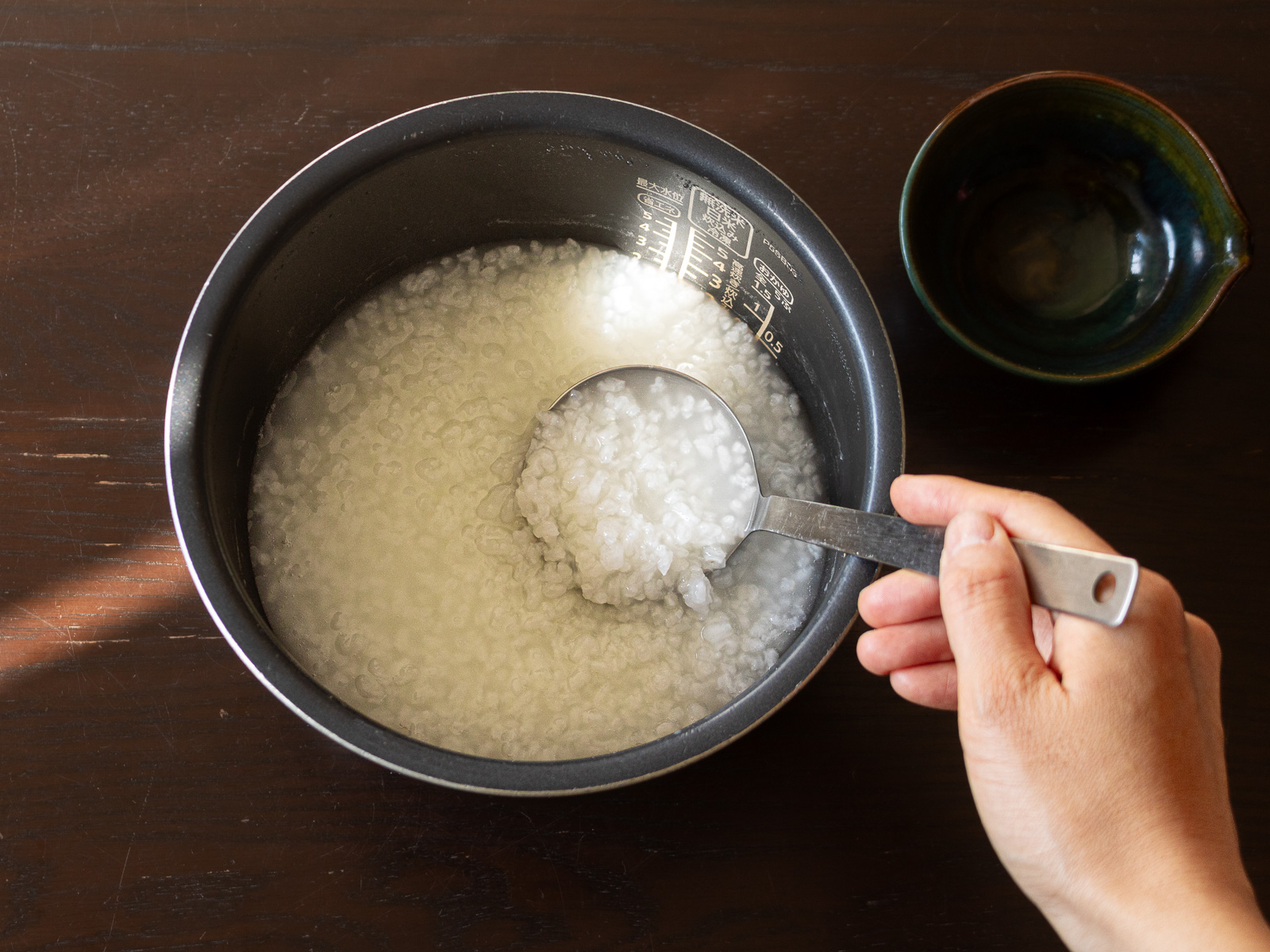
- Cook the Rice Porridge in Rice Cooker
- Rinse the rice until water runs clear, then drain
- Add the rice and water to your rice cooker following the porridge water level markings.
- Select the porridge mode and cook
🌿 A slightly looser, more watery consistency is recommended (watery/thin porridge).

If your rice cooker only has a thick porridge setting, use that and add extra water in Step 3.
(👉 See Kitchen Note for more details )

- Prep the Leafy Greens
- Finely chop the stems of leafy greens and cilantro.
- Cut the leaves into bite-sized pieces
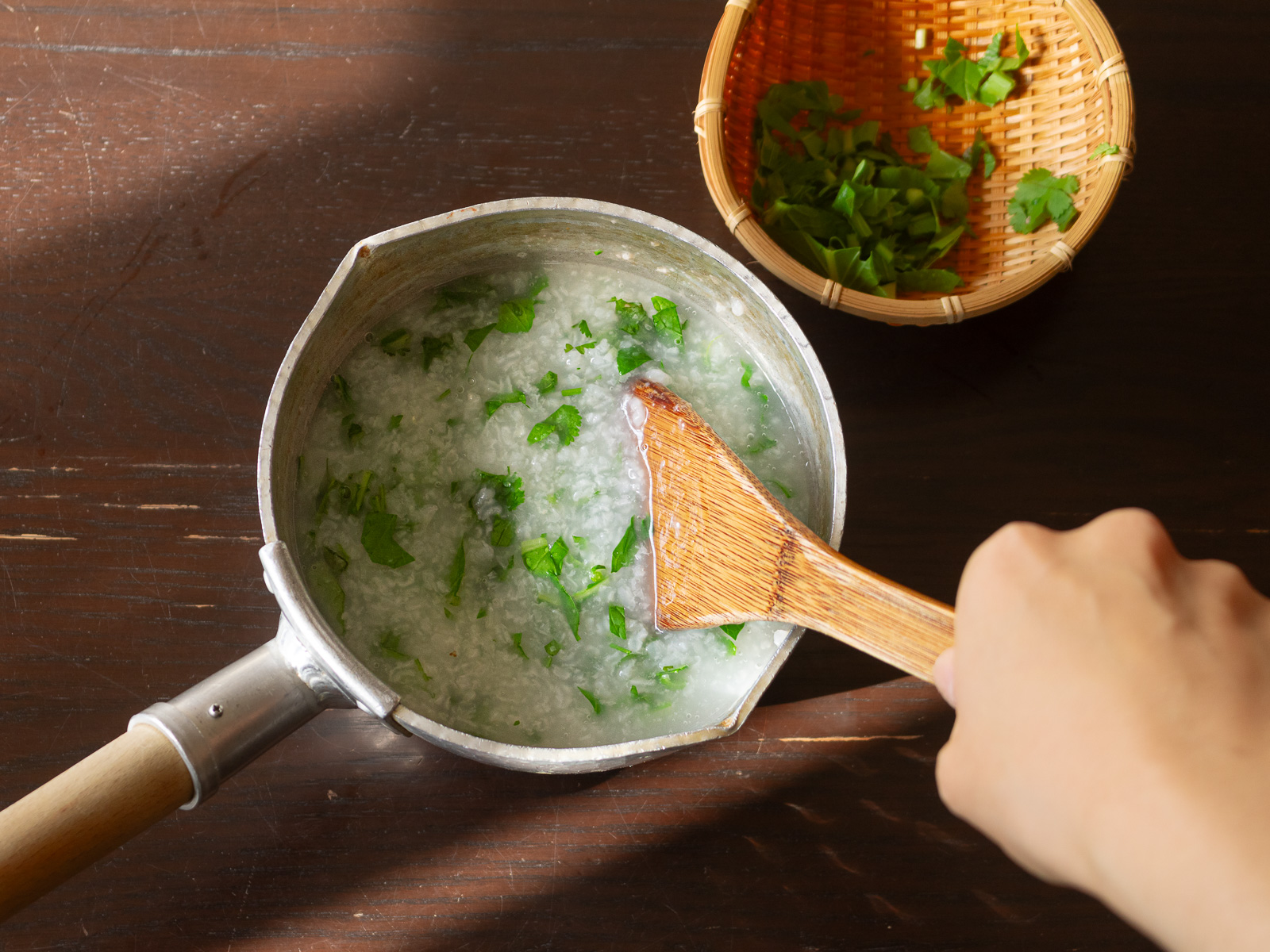
- Simmer Gently
- Transfer the cooked rice porridge to a pot
- Add the chopped stems and bring to a gentle simmer
- Once stems reach your preferred tenderness, add the leaves
- Stir briefly and turn off heat
🌿 Don't overcook—you want to preserve the nutrients in the leafy greens

🌿 Add water as needed to adjust consistency to your preference

- Finish & Serve
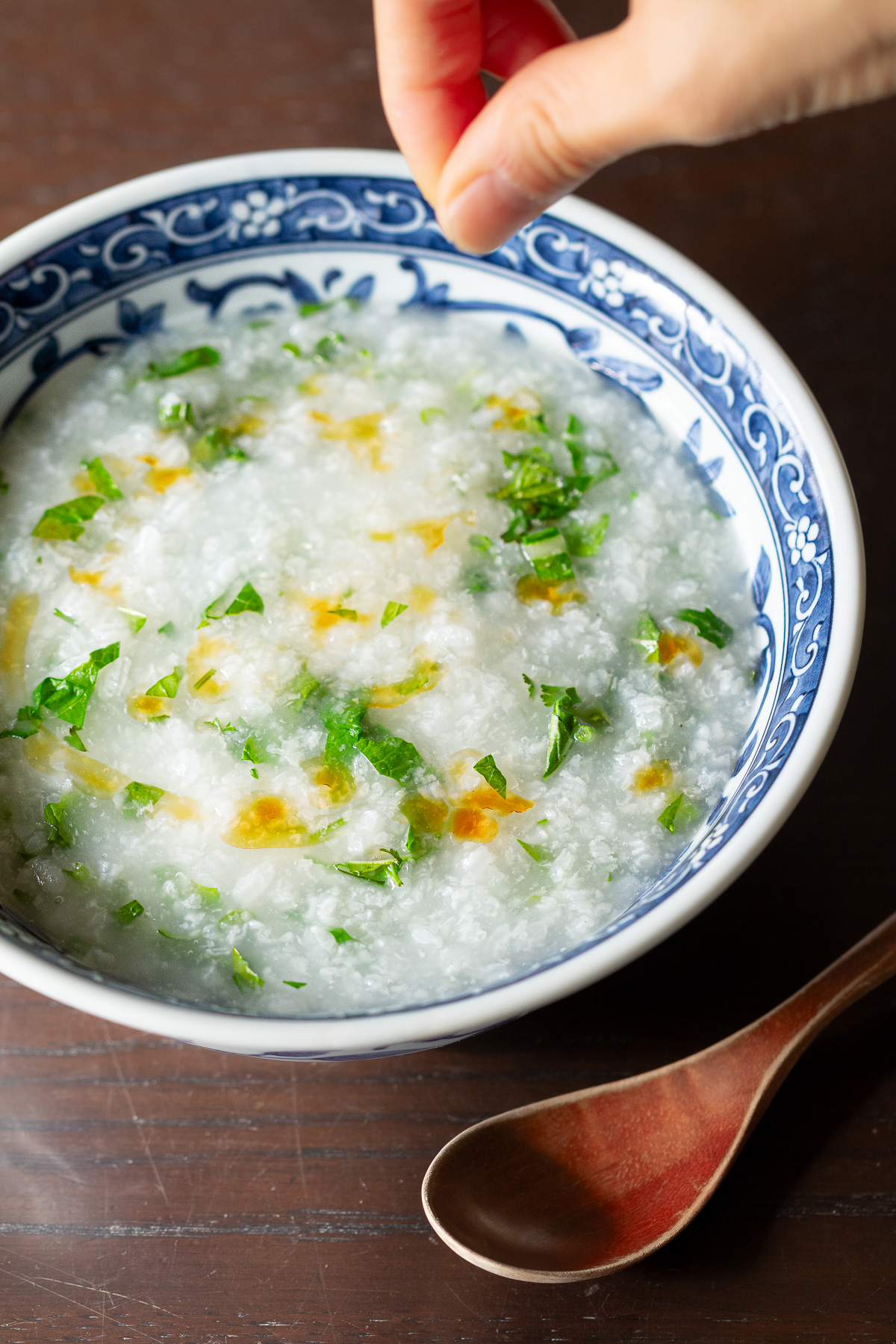
- Ladle into bowls
- Drizzle with chili oil and season with salt to taste
📘 Kitchen Notes | Tips
➤ About Congee Consistency (Watery vs. Thick Porridge)
Japanese rice cookers usually have two porridge settings:
- watery porridge(gobugayu/五分粥)
- thick porridge (zengayu/全粥).
Watery porridge (go-bu-gayu) has more liquid and flows smoothly.
It is light and easy to eat.
The basic ratio is about 1 part rice to 10 parts water.
Thick porridge (zengayu) has less liquid.
It is heavier, more filling, and feels hearty.
The basic ratio is about 1 part rice to 5-6 parts water.
I personally prefer the watery style,
and this recipe uses the watery porridge setting on my rice cooker.
If your rice cooker has both options, choose the one that feels right for you.
🌿 Note: Watery rice porridge feels very light when freshly made, but it thickens quickly as it sits.
If you like it more broth-like, serve it right away or add a little water to thin it out.
➤ Choosing Leafy Greens
The parts of radish and turnip greens closest to the root have the best crunch.
Trim away any yellowed leaves.
You can substitute with mizuna, komatsuna, chrysanthemum greens, spinach, or any leafy greens you have on hand.
➤ Chili Oil Amount
Adjust to taste. Even a small amount adds wonderful fragrance and satisfaction.
If you prefer less heat, substitute with sesame oil.
➤ Make-Ahead & Storage
Rice porridge keeps in the fridge for about 1-2 days, or in the freezer for about 1 week.
Leafy greens discolor easily,
so it’s best to add them fresh right before serving.
📚 FAQ
Use the regular “porridge” mode and add extra water to thin it out.
You can also cook it on the stovetop using a 1:10 rice-to-water ratio.
Substitute with mitsuba (Japanese parsley), scallions, or shiso (perilla).
The Asian flavor will be milder, or you can leave it out entirely.
Add mushrooms, fried tofu, or crispy toasted aburaage (thin fried tofu).
Adding protein makes the bowl more satisfying.
Spinach, komatsuna, mizuna, or chrysanthemum greens all work well.
This recipe is perfect for using whatever leafy greens you have in the fridge.
Yes. Skip the chili oil and season with sesame oil and a little salt for a mild, gentle flavor.
Yes. Cook the rice porridge ahead of time and refrigerate.
In the morning, reheat it in a pot and add fresh greens.
Adjust the water as needed.
Top with fried shallots, crushed peanuts, or crispy wonton strips for extra texture and flavor.

If you feel like whispering a thought, asking a question, or simply saying hello — the comment section is always open 📮
🌿 More Ways to Use Leftover Cilantro...



🍲 Craving More Vegan Porridge Recipes?
Explore congee and rice porridge recipes from around the world:



✏️ Recipe Card | Full Measurements & Instructions

Asian-Style Vegan Congee (Rice Cooker Recipe)
Equipment
- rice cooker
- Rice cooker cup
- Knife and cutting board
- small pot
- Spatula and ladle
- strainer
Ingredients
- 90 ml white rice (short-grain, 0.5 Japanese rice cooker cup)
- water (follow your rice cooker's “watery porridge” marking; roughly 10 times the volume of rice)
- mixed leafy greens ((radish greens, turnip greens, mizuna, komatsuna, etc.), to taste)
- fresh cilantro ((stems and leaves separated), to taste)
- Japanese chili oil (la-yu, to taste)
- salt (to taste)
Instructions
Cook the Rice Porridge
- Rinse and drain the rice.90 ml white rice
- Add rice and water to rice cooker following the watery porridge water level marking. * If your rice cooker only has a thick porridge setting, use that and add extra water later when simmering.water
- Select porridge mode and cook (about 45-50 minutes).
Prepare the Greens
- While rice cooks, finely chop the stems of leafy greens and cilantro.mixed leafy greensfresh cilantro
- Cut leaves into bite-sized pieces.
Simmer the Stems
- Transfer cooked rice porridge to a small pot.
- Add chopped stems and simmer over medium heat for 2-3 minutes until tender.* Add water if needed to reach desired consistency.
Add Greens
- Add leafy greens and cilantro leaves, and stir briefly for about 1 minute.
- Turn off heat.
Serve
- Ladle into bowls.
- Drizzle with Japanese chili oil and season with salt to taste.Japanese chili oilsalt
Notes
- Watery porridge (go-bu-gayu / 五分粥) uses a rice-to-water ratio of about 1:10. Thick porridge (zen-gayu / 全粥) uses a ratio of about 1:5–6.
- For a mild, child-friendly version, replace the chili oil with sesame oil.
-
Store plain rice porridge in the refrigerator for 1–2 days.
Add fresh leafy greens right before serving to preserve color and texture.

If this recipe made its way into your kitchen, and you'd like to share that moment, feel free to tag @veginveganvegun or use #vegin_vegan_vegun.
Your quiet stories inspire me deeply 🕊️
☕️ Final Thoughts
A small thought came to me.
After New Year’s, I could add mochi (rice cakes) to this rice porridge
and make my own version of Nanakusa-gayu, the traditional seven-herb porridge.
After days of extra-sweet osechi (New Year's dishes),
the gentle heat of Japanese chili oil
and the fresh brightness of cilantro
would feel especially comforting.


Comments
No Comments