
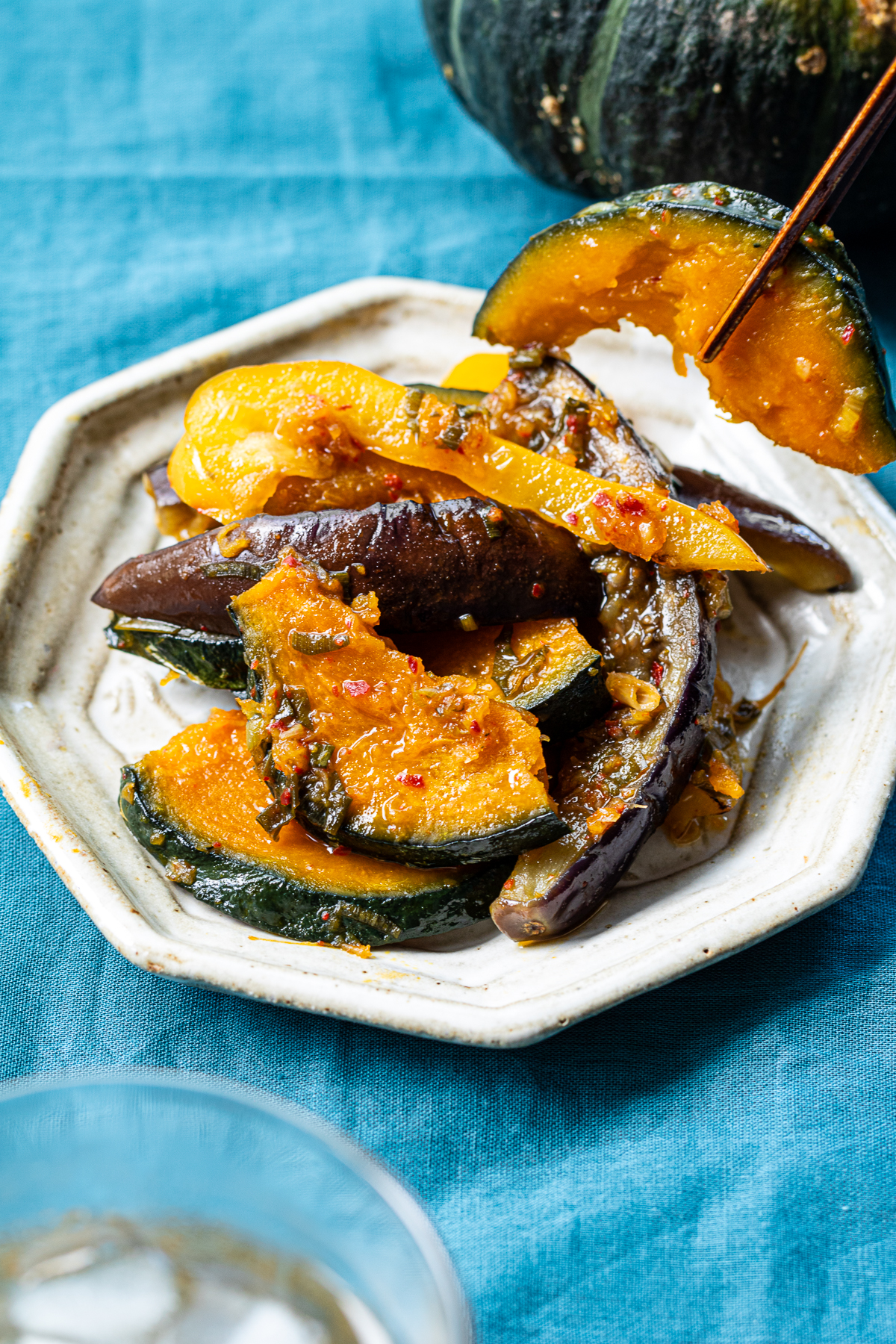
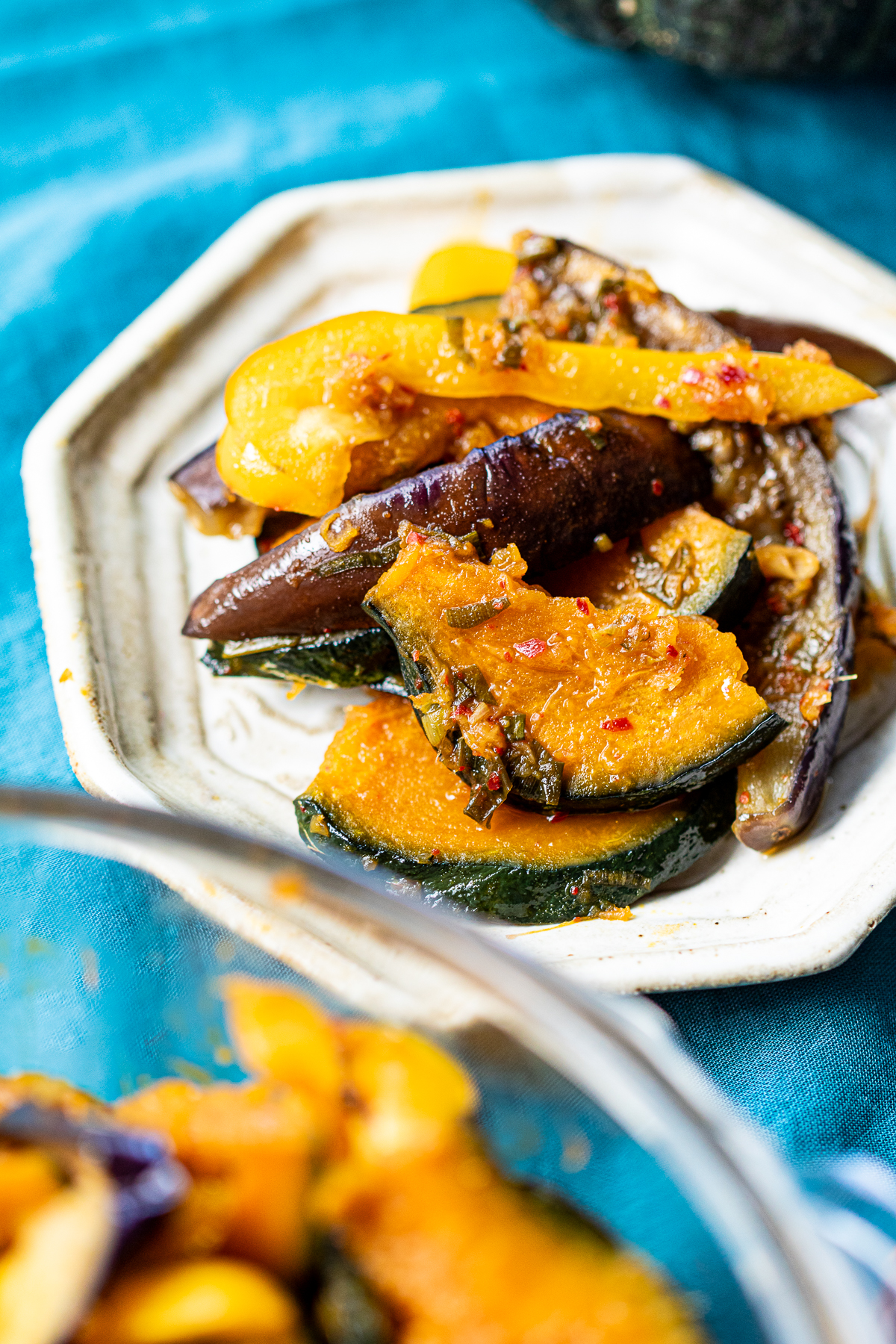
This vegan yakibitashi is a Japanese summer dish with Southeast Asian-inspired flavors. Roasted kabocha, eggplant, and bell peppers are soaked in a sweet-savory ginger soy marinade with a gentle kick of spice.
Jump to:
🎐 What is Yakibitashi?
When the heat settles in, yakibitashi(焼き浸し) is one of the dishes I love making during Japan’s humid summer months. This traditional Japanese cooking method — where grilled or pan-fried vegetables are soaked in a seasoned marinade — is especially refreshing and comforting on hot days.
This vegan version features roasted kabocha, eggplant, and bell peppers with a Southeast Asian-inspired twist. The vegetables soak up a sweet-savory ginger soy marinade with garlic, scallions, and chili, creating a dish that is full of flavor.
I often make a big batch and keep it in the fridge to enjoy cold with rice or chilled noodles. The flavor becomes even richer as the vegetables absorb the marinade.
It’s perfect for meal prep and is the kind of simple dish that makes hot summer days a little easier.
🌱 Why This Recipe Is Special
- A Japanese summer classic with a twist — inspired by yakibitashi with Southeast Asian-inspired flavors
- Sweet-savory ginger soy marinade — infused with garlic, scallions, and chili for a deeper, aromatic flavor
- No dashi or mentsuyu* needed — made with simple pantry ingredients
- Roasted vegetables that absorb flavor — kabocha, eggplant, and bell peppers become even more delicious as they marinate
- Perfect for make-ahead meals — enjoy chilled or at room temperature with rice, noodles, or as a summer side dish
* Mentsuyu (めんつゆ) is a Japanese soup base commonly used for noodle dishes like soba and udon. Beyond noodles, it is also used in everyday Japanese cooking, from seasoning rice and simmered dishes to marinades and Japanese-style fried chicken.
🍆 Ingredients
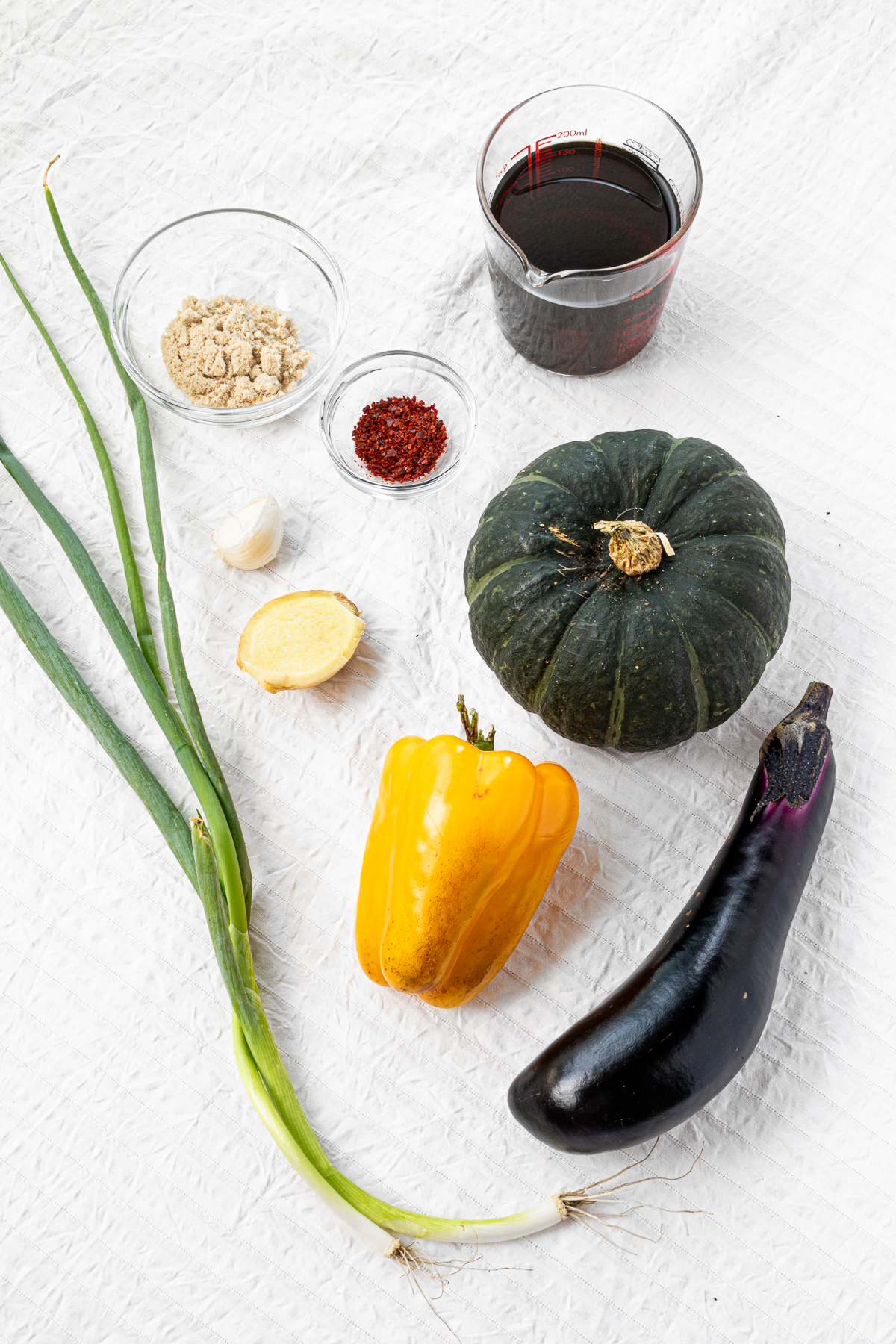
Vegetables
Kabocha Squash — Choose a sweet, dense-fleshed variety rather than a watery squash like butternut squash. Japanese kabocha works especially well in this recipe because it is naturally sweet, less fibrous, and has a dense, slightly fluffy texture that pairs beautifully with the marinade.
Japanese eggplant — Cut into wedges and slowly pan-fry with just enough oil until tender. When eggplant is cooked this way, it absorbs the marinade well, creating a rich, tender texture.
▶︎ How to Cut Eggplant into Wedges
I like to cut eggplant this way because it helps maintain its texture.
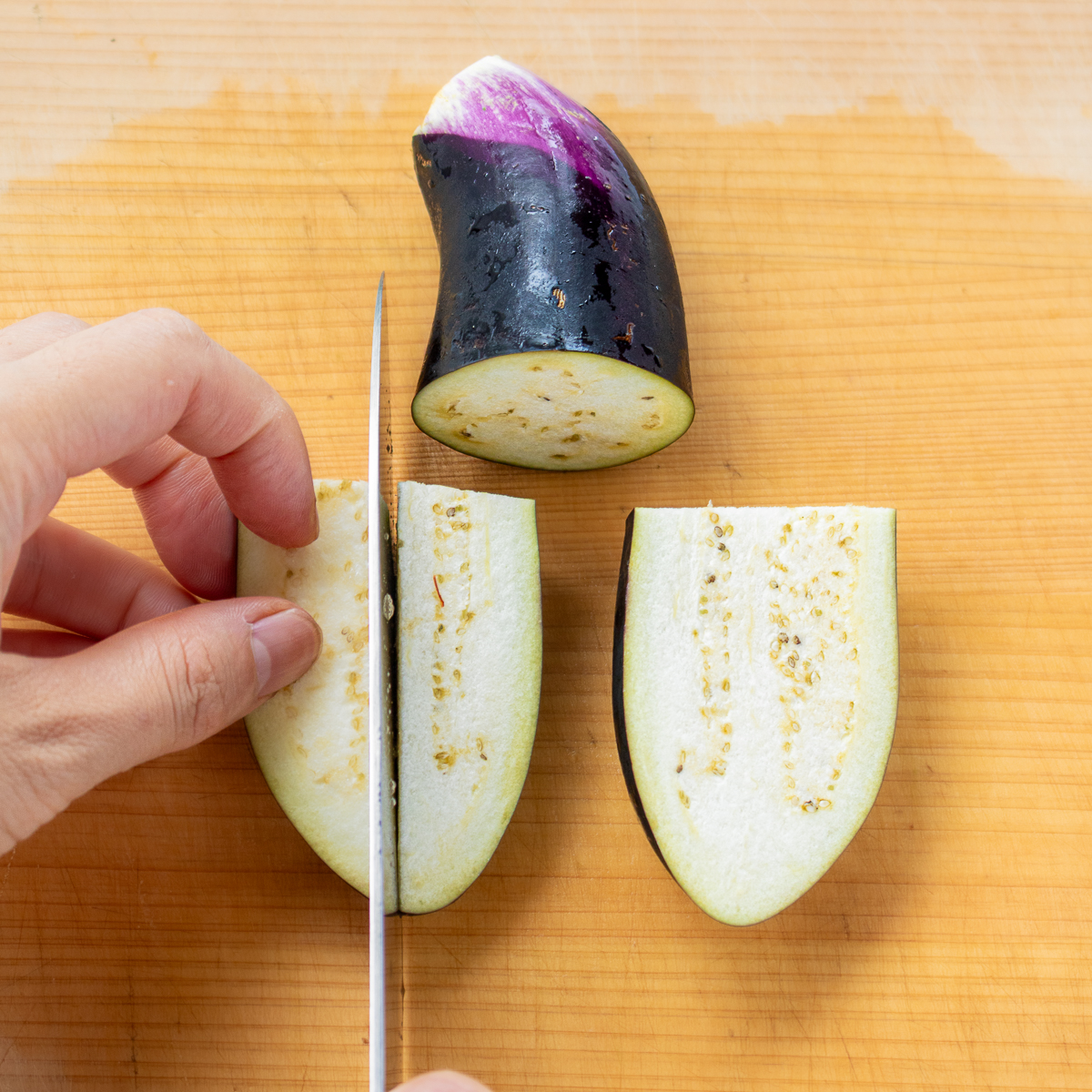
① Cut the eggplant in half crosswise
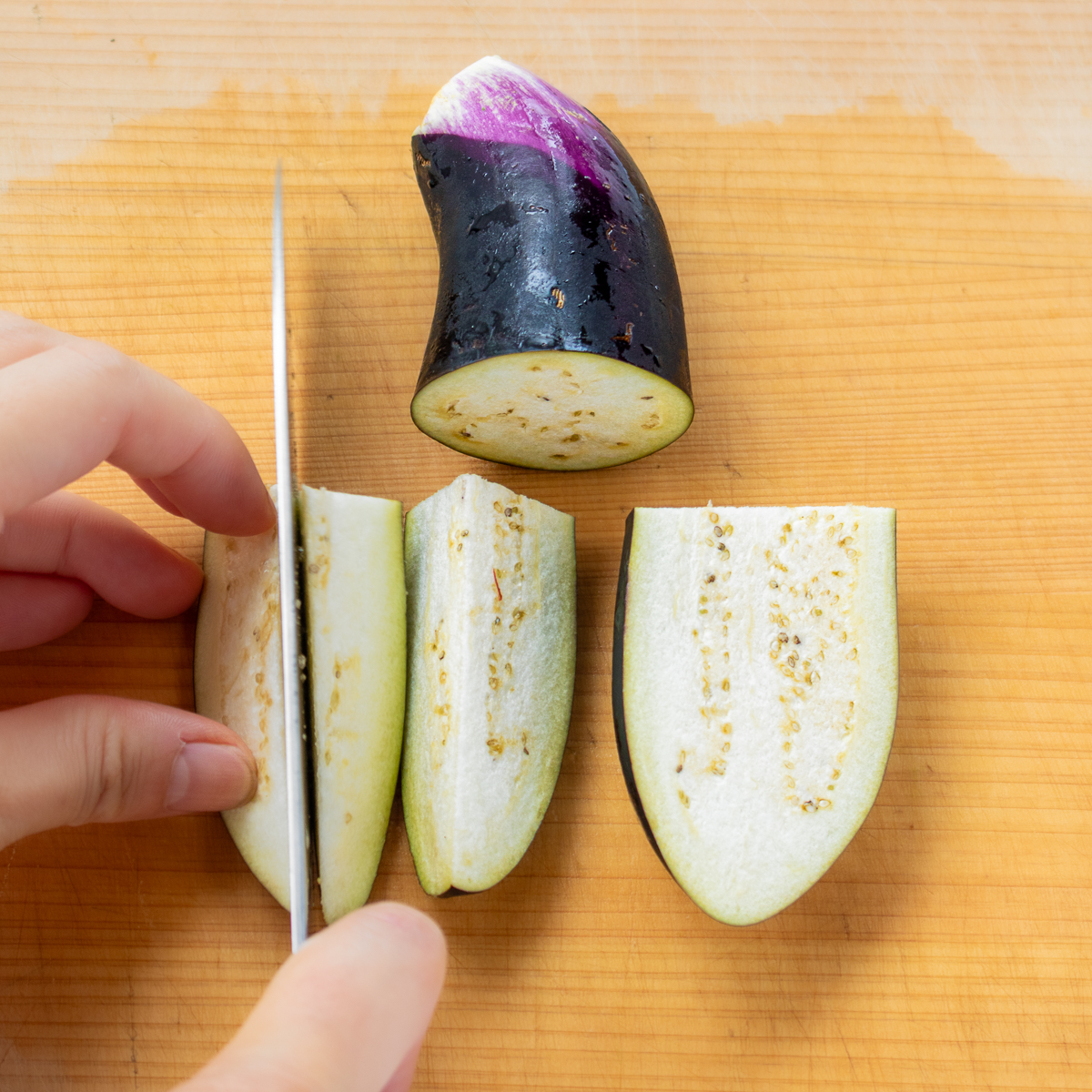
② Halve each piece lengthwise
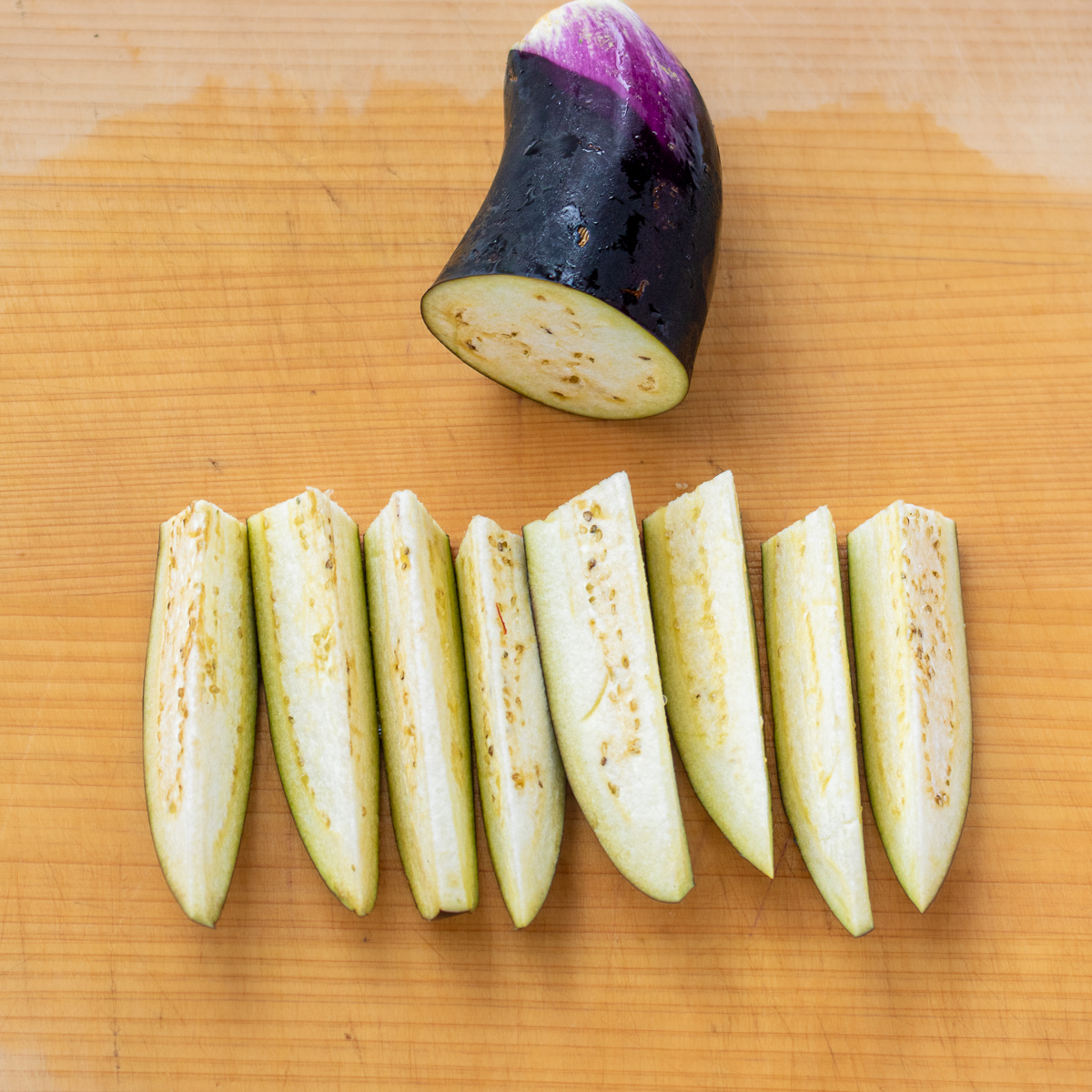
③ Slice each quarter in half again to form wedges
Bell Pepper — Choose your favorite color. Bell peppers add natural sweetness and a crisp texture that contrasts nicely with the soft kabocha and eggplant. Just a quick sauté is enough to keep their crisp texture.
Marinade
Fresh Ginger & Garlic — Grated fresh ginger and garlic create the aromatic base of this marinade. In Japan, tube-style ginger and garlic are commonly used for convenience, but I personally prefer fresh ones for this recipe. The difference in flavor is noticeable, especially because fresh ginger and garlic play an important role in creating the Southeast Asian-inspired flavor of this dish.
Finely chopped scallions add freshness and enhance the Southeast Asian-inspired flavors of this yakibitashi.
Soy Sauce, Sake, Rice Vinegar & Mirin — This simple 1:1:1:1 ratio creates a balanced sweet-savory marinade. Once you remember this ratio, it is easy to scale up when making a larger batch of yakibitashi.
Sugar — Start with the amount listed in the recipe, then adjust to your preferred sweetness. The ideal amount can vary depending on the sweetness of your kabocha and personal taste.
Korean Chili Flakes (Gochugaru) — I use the type used for making kimchi. Compared with regular chili flakes often used for pasta, gochugaru has a milder heat and adds subtle sweetness and umami depth to the dish.
Other
Neutral Oil — I usually use rice bran oil because it has a light flavor that does not overpower the marinade. I don’t recommend strongly flavored oils like olive oil or coconut oil here, as they can change the overall taste of the dish.
See full measurements in the recipe card below 👇
🥢 Instructions
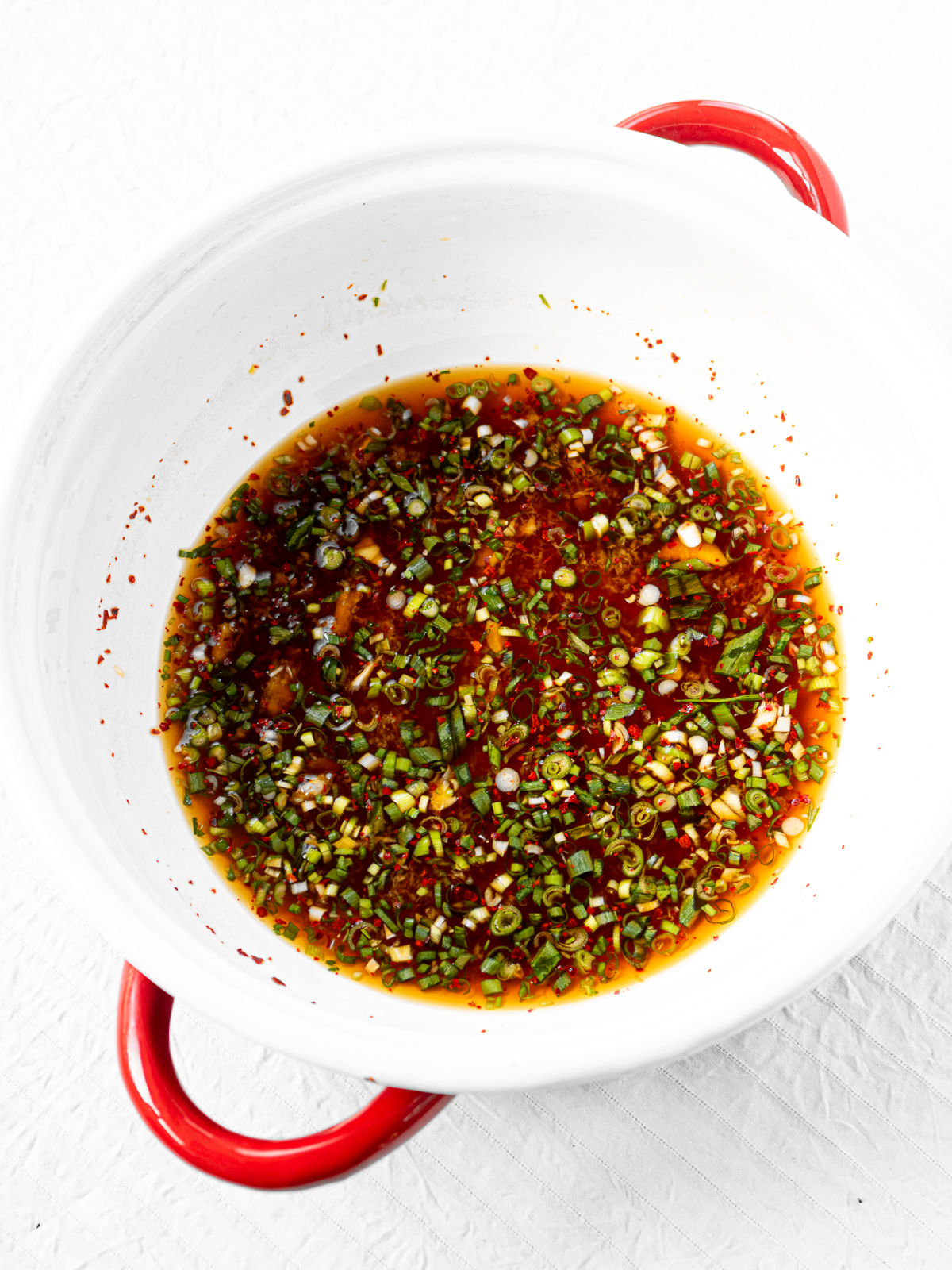
- Make the Marinade:
- Combine chopped scallions, grated ginger and garlic, and all marinade ingredients in a saucepan.
- Heat over medium heat until simmering, then cook for 1–2 minutes to cook off the alcohol from the sake.
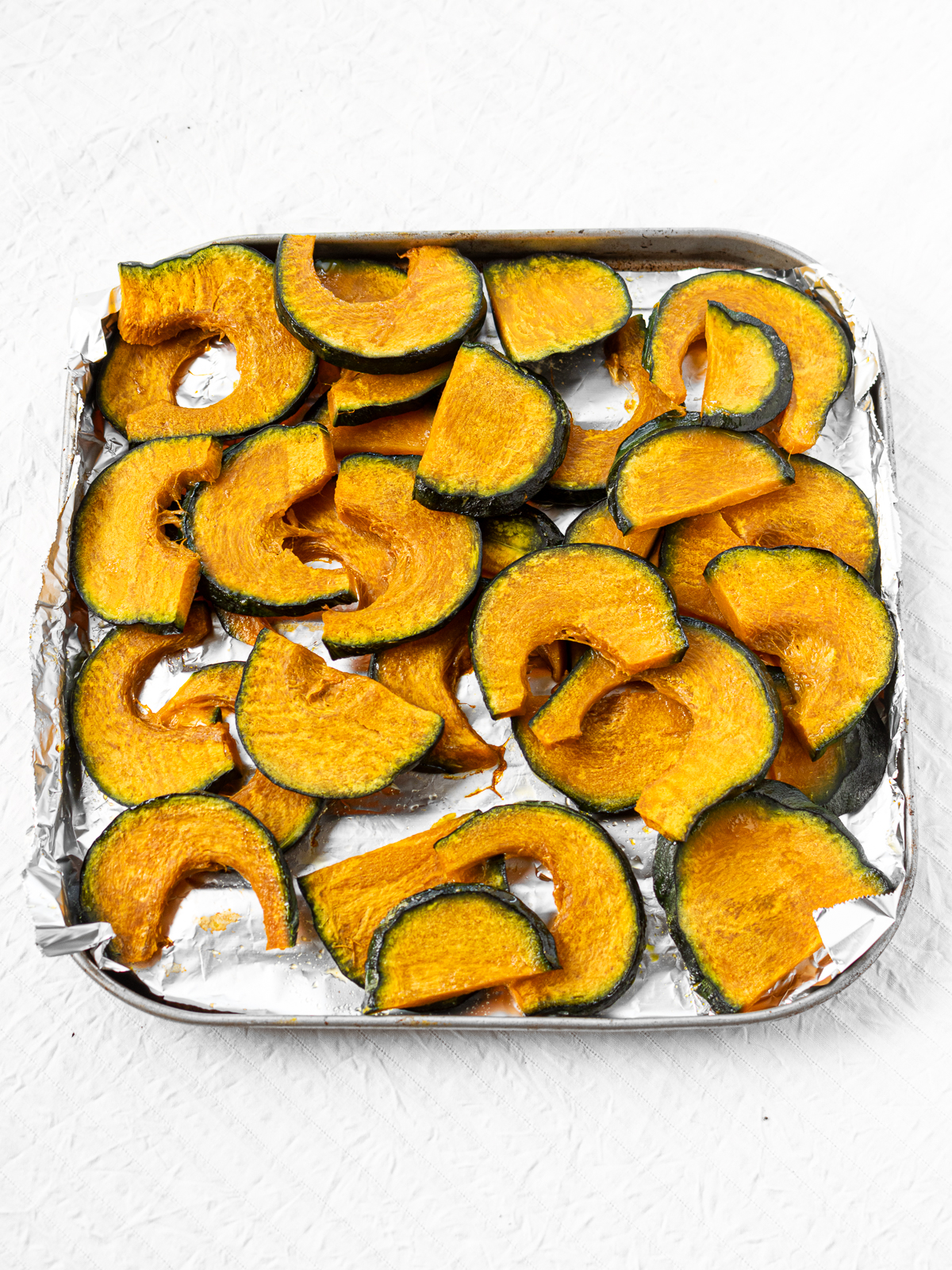
- Roast the Kabocha:
- Slice the kabocha into about 8mm thick pieces.
- Toss with ½–1 tablespoon oil and arrange on a foil-lined tray.
- Roast in a toaster oven at 250°C (480°F) for about 15 minutes until tender and lightly golden. (No preheating needed.)
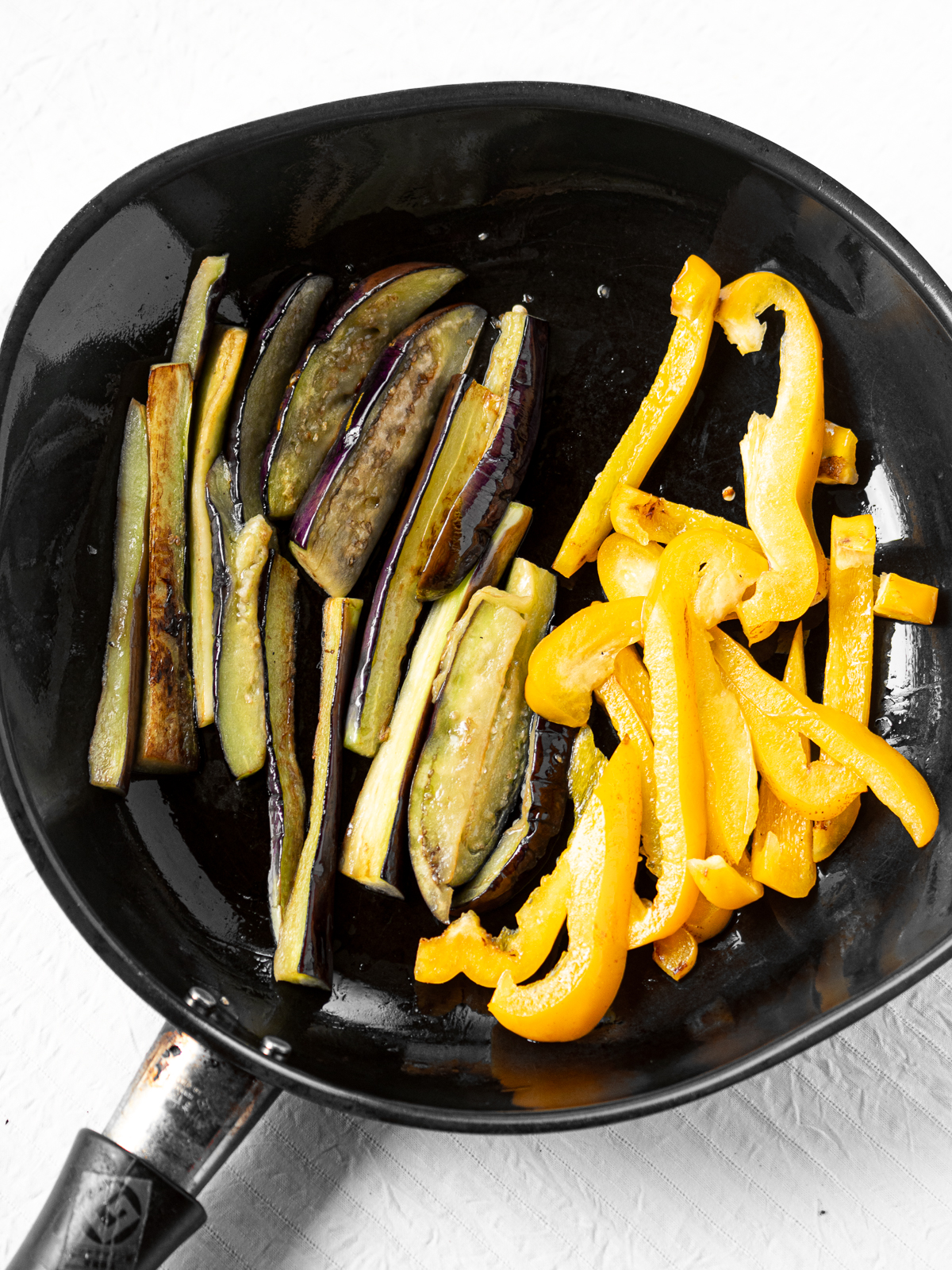
- Sauté the Eggplant & Bell Pepper:
- Cut the eggplant into wedges and the bell pepper into strips.
- Heat oil in a pan and cook the eggplant until tender.
- Add the bell pepper and sauté briefly to keep its crisp texture.
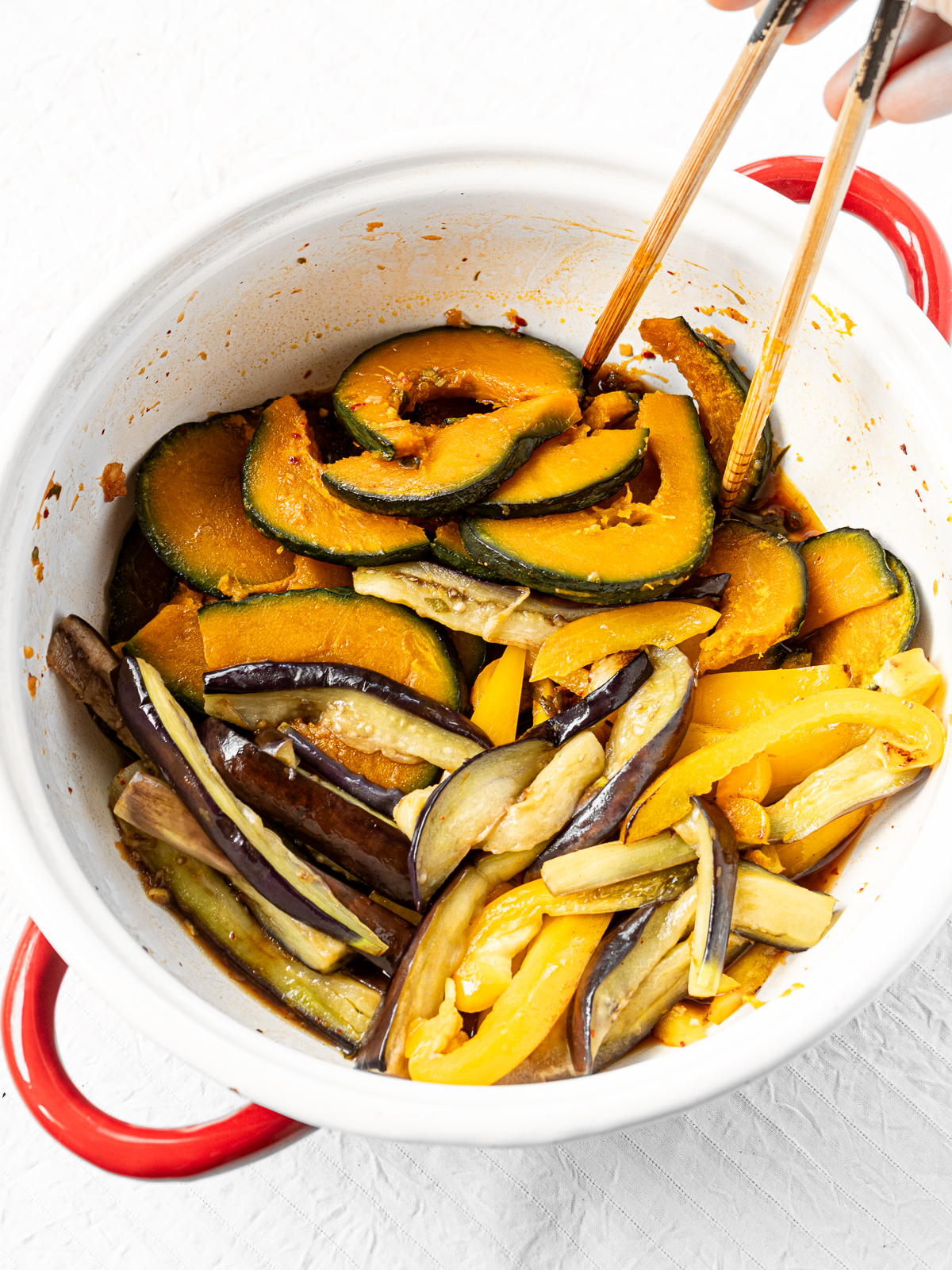
- Combine:
- Add the vegetables to the warm marinade.
- Be gentle with the kabocha, as it can break apart easily.
- Once cooled, store in an airtight container in the fridge.
🕊 Tip: The flavor deepens as the vegetables soak in the marinade. Serve chilled or at room temperature.
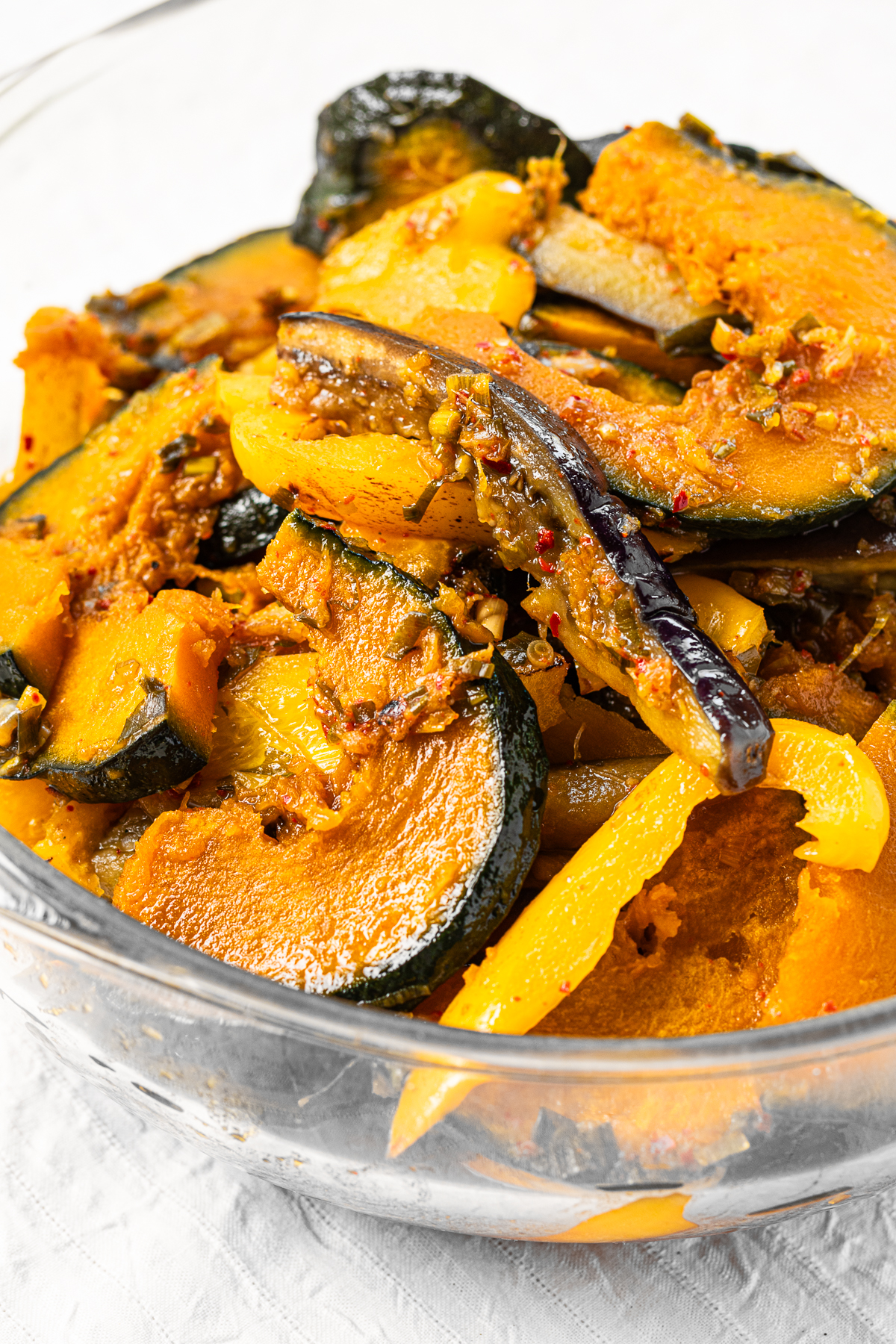
🫙 Storage
Store in an airtight container in the fridge for up to 4 days.
The flavor deepens as the vegetables continue to absorb the marinade, so it is often even better the next day. During the hot summer months, I recommend enjoying it within 2–3 days.
📘 Tips
▶︎ Kabocha roasting tip:
I usually slice kabocha about 8mm thick and roast it in a toaster oven at 250°C (480°F) for 15 minutes without preheating. If you prefer a fluffier texture, slice it slightly thicker and roast it a little longer. Check occasionally while roasting to prevent it from over-browning and becoming too soft to hold its shape.
▶︎ Marinade temperature tip:
Let the marinade cool slightly before adding the vegetables. If it has cooled completely, warm it gently first. A slightly warm marinade helps the flavors soak in, but avoid using it while it is hot, as the kabocha can easily break apart.
▶︎ Eggplant oil tip:
Heat the pan and oil well before adding the eggplant. This helps prevent the eggplant from absorbing too much oil. If the eggplant starts sticking to the pan while cooking, simply add a little more oil and continue cooking until tender.
🌻 FAQs
No need! The skin becomes tender when roasted and adds beautiful color and extra fiber. Just scrub it well before slicing, and remove any rough or damaged parts.
You could, but this recipe is designed to be vegan and pantry-friendly without using dashi or mentsuyu. The ginger, garlic, scallions, and gochugaru create a flavorful marinade with a Southeast Asian-inspired twist.
You can roast the kabocha in a regular oven at 425°F (220°C) for about 15–20 minutes, or air-fry at 200°C (390°F) for 12–15 minutes.
📔 Latest Vegan Recipes
Here are a few more vegan recipes you might enjoy:

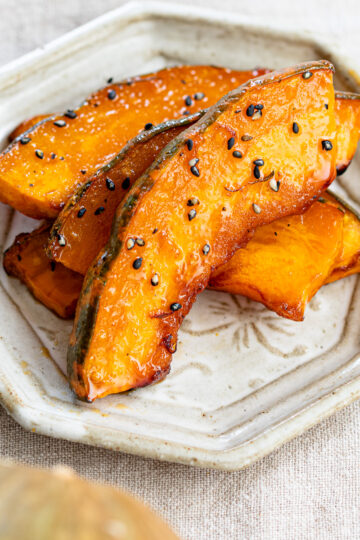
☀️ More Recipes with Kabocha

🍆 More Eggplant Recipes

📖 Recipe Card
Yakibitashi with Kabocha & Eggplant | Sweet-Savory Ginger Soy Marinade
Equipment
- tongs or chopsticks
- kitchen knife
- cutting board
- pot
- frying pan
- toaster oven
- aluminum foil
- food container with lid
Ingredients
For the marinade:
- 3 tablespoon soy sauce
- 3 tablespoon sake
- 3 tablespoon rice vinegar
- 3 tablespoon mirin
- 1~ tablespoon sugar (adjust to taste)
- 1½ tablespoon finely chopped scallions
- 1 tablespoon grated ginger
- 1 teaspoon grated garlic
- ½ teaspoon coarse Korean chili powder (gochugaru, optional)
Ingredients:
- 1 small kabocha squash (or ¼ large kabocha, about 500g / 1.1 lbs, sliced into 8mm pieces)
- 2 Japanese eggplants (150g / 0.3lbs, cut into wedges)
- 1 bell pepper (sliced into thin strips)
- 1~ tablespoon neutral oil (for roasting and pan-frying)
Instructions
- Prepare the marinade: In a small saucepan, combine soy sauce, sake, rice vinegar, mirin, sugar, scallions, ginger, and garlic. Bring to a boil, then reduce heat and simmer for 1–2 minutes to cook off the alcohol. Remove from heat and set aside.3 tbsp soy sauce3 tbsp sake3 tbsp rice vinegar3 tbsp mirin1~ tbsp sugar1½ tbsp finely chopped scallions1 tbsp grated ginger1 tsp grated garlic½ tsp coarse Korean chili powder
- Roast the kabocha: Toss sliced kabocha with ½–1 tablespoon oil and arrange on a foil-lined tray. Roast in a toaster oven at 250°C (480°F) for about 15 minutes until tender and lightly golden. (No preheating needed.)1 small kabocha squash1~ tbsp neutral oil
- Cook the eggplant and bell pepper: Heat ½–1 tablespoon oil in a pan. Cook eggplant wedges until tender and lightly browned. Add bell pepper strips and sauté briefly to keep their crisp texture.2 Japanese eggplants1 bell pepper1~ tbsp neutral oil
- Combine & marinate: Gently combine all vegetables with the warm marinade. Be careful not to break the kabocha. Let cool to room temperature, then refrigerate for at least 2–3 hours. The flavor deepens as the vegetables absorb the marinade.
🍧 Related Recipes|Perfect for Summer
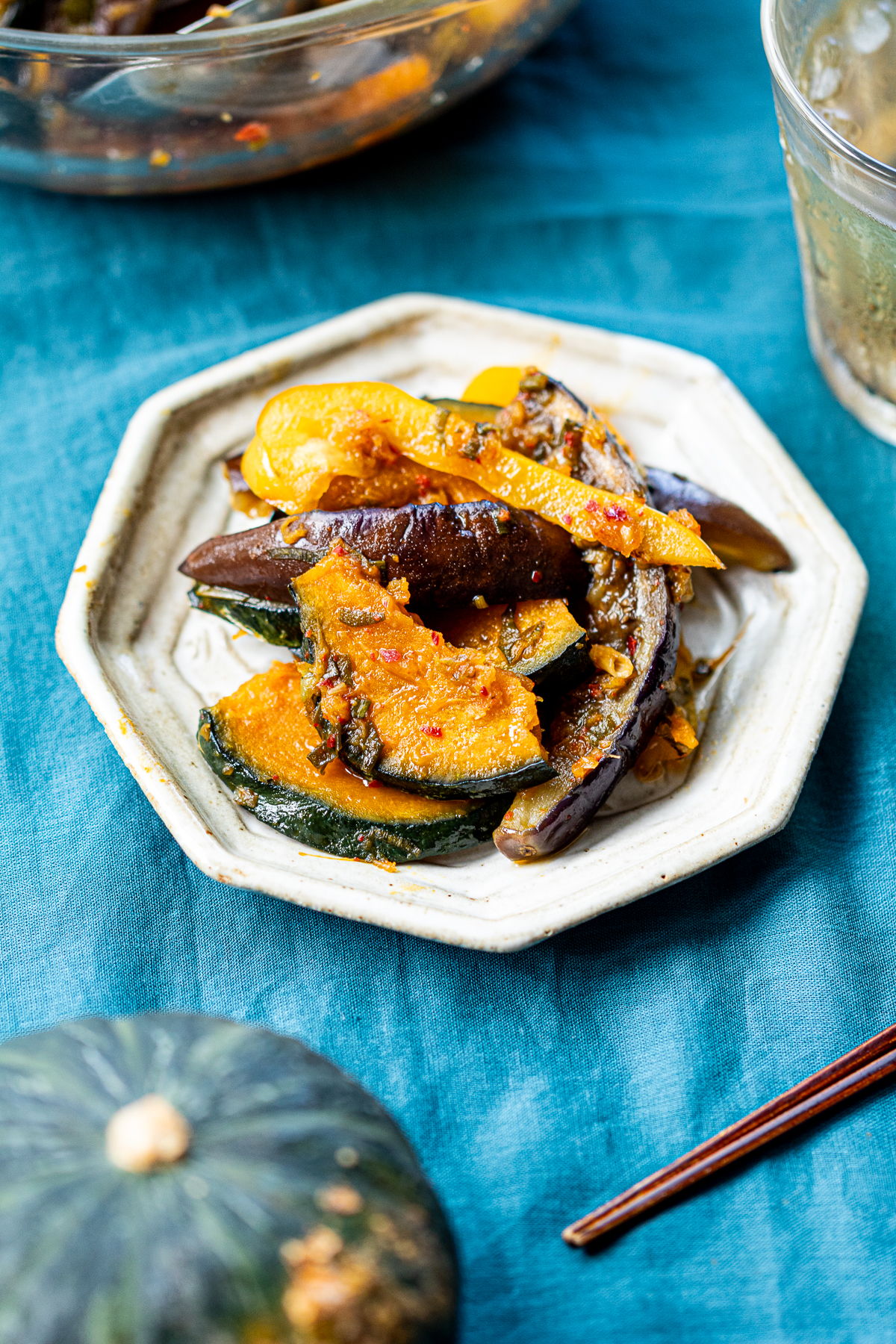
I hope this colorful bowl brings a bit of summer to your table 🐚

Toko says
I've been waiting for a recipe like this!
The taste lingers! I'll definitely make it again!