
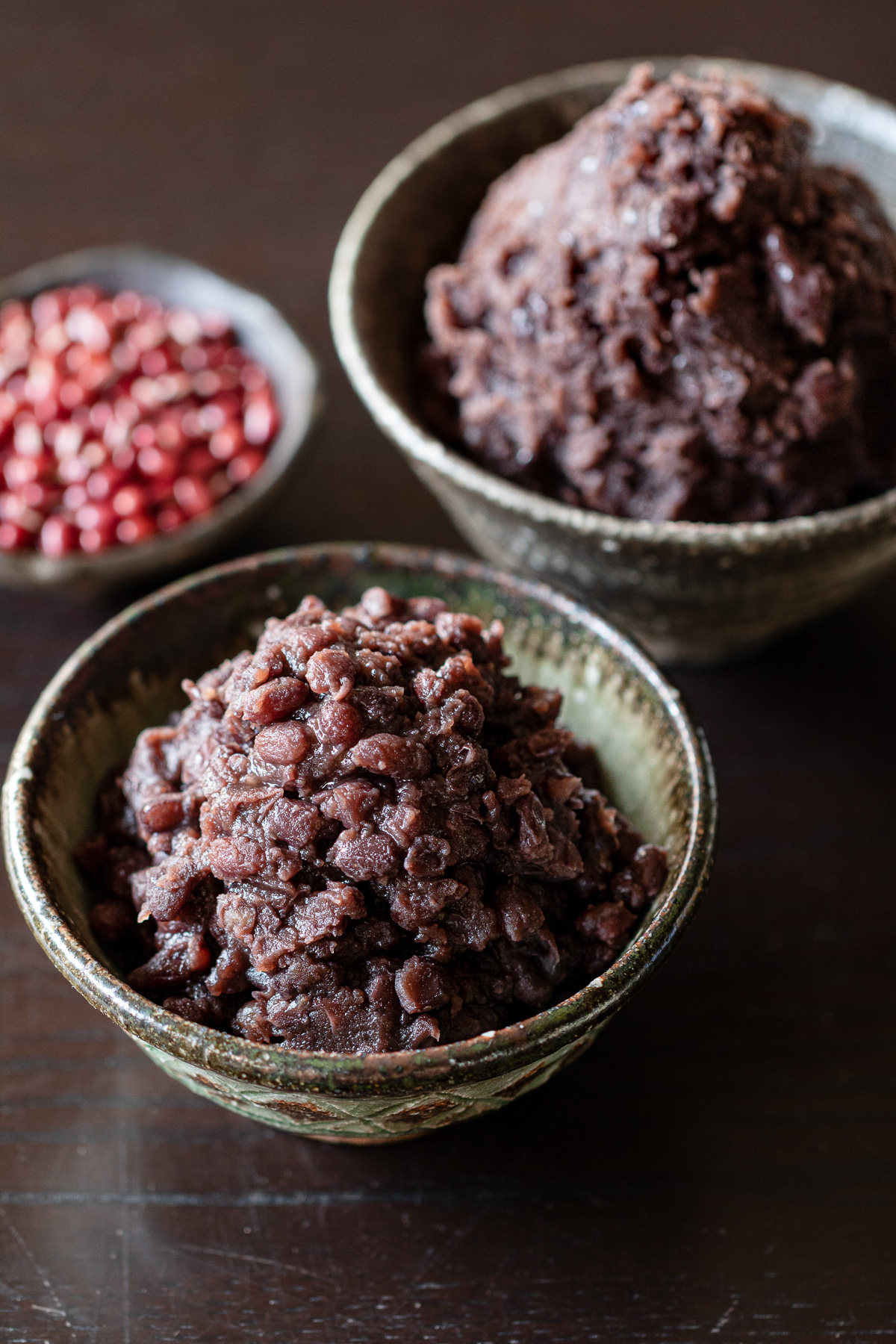
A simple adzuki bean paste recipe for homemade anko— lightly sweet, and entirely adjustable to your taste. Made with just cooked adzuki beans and sugar, it comes together quickly once you have the beans ready.
This recipe includes two styles: a chunky tsubu-an with the beans mostly intact, and a smoother cheat koshian made by mashing the beans as they cook — no straining required. Use my adzuki bean recipe for the best results, or store-bought unsweetened cooked beans work just as well.
The real joy of making anko at home is dialing in your own sweetness. This recipe is a starting point — the more you make it, the closer you'll get to a ratio that's entirely yours.
Jump to:
🐈 What Is Anko?
Anko (あんこ) is a sweet red bean paste made from adzuki beans and sugar — one of the most fundamental ingredients in Japanese sweets.
It fills dorayaki and taiyaki, wraps around ohagi (Japanese sweet rice balls), and forms the base of oshiruko (a warm soup served with mochi). If Japanese wagashi has ever crossed your path, you've certainly had anko.
There are two main types.
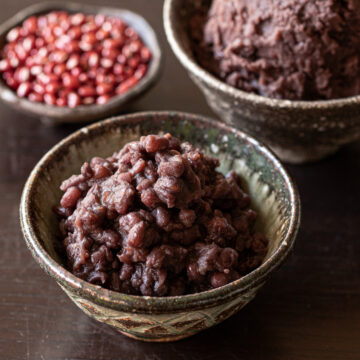
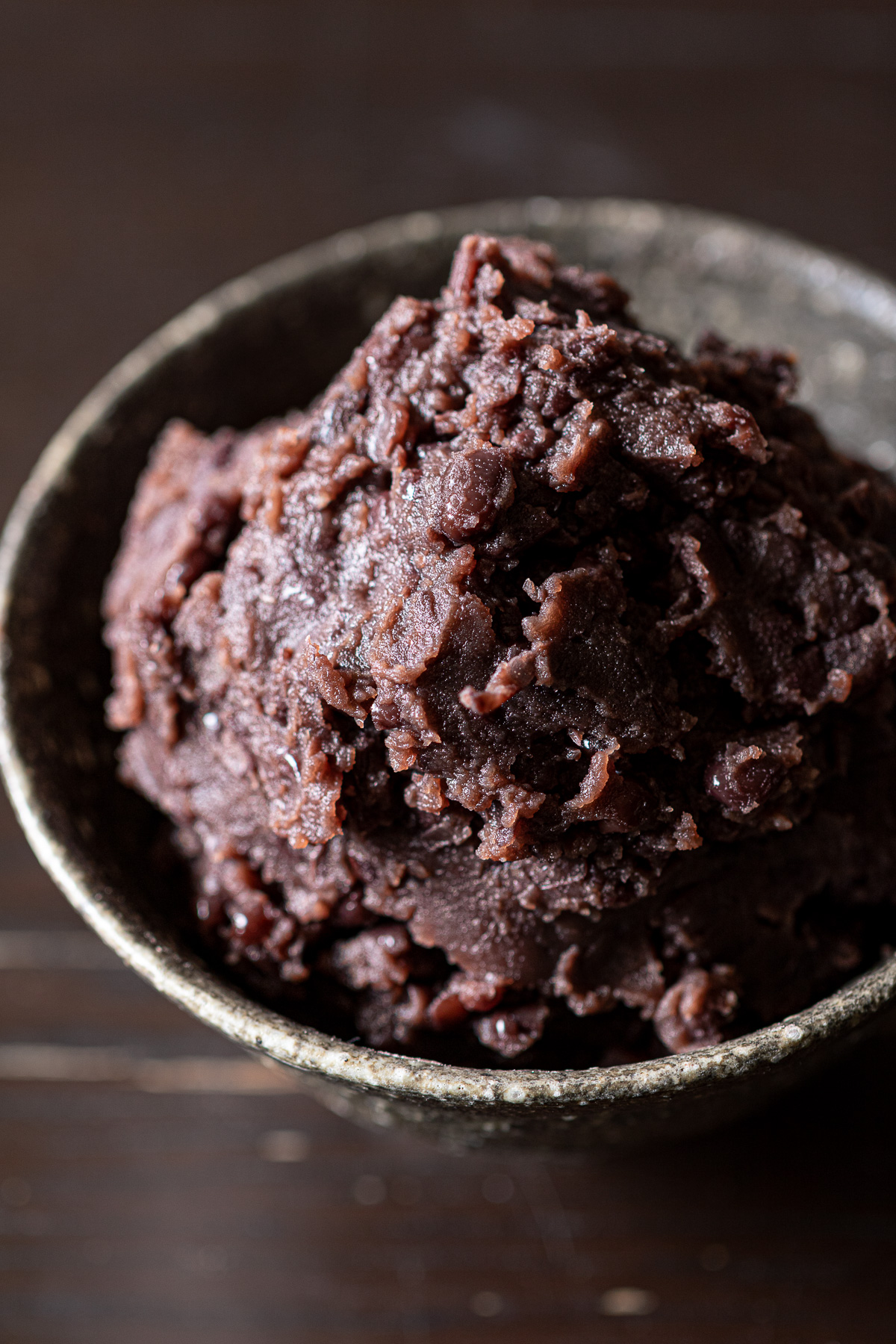
Tsubu-an (つぶあん) keeps the beans whole (or mostly whole), with a rustic texture and a more pronounced adzuki flavour.
Koshian (こしあん) is strained to remove the skins entirely, producing a smooth, silky paste. Both start the same way — adzuki beans simmered until soft, then cooked down with sugar — but the technique and texture are quite different.
This recipe covers tsubu-an, with two approaches.
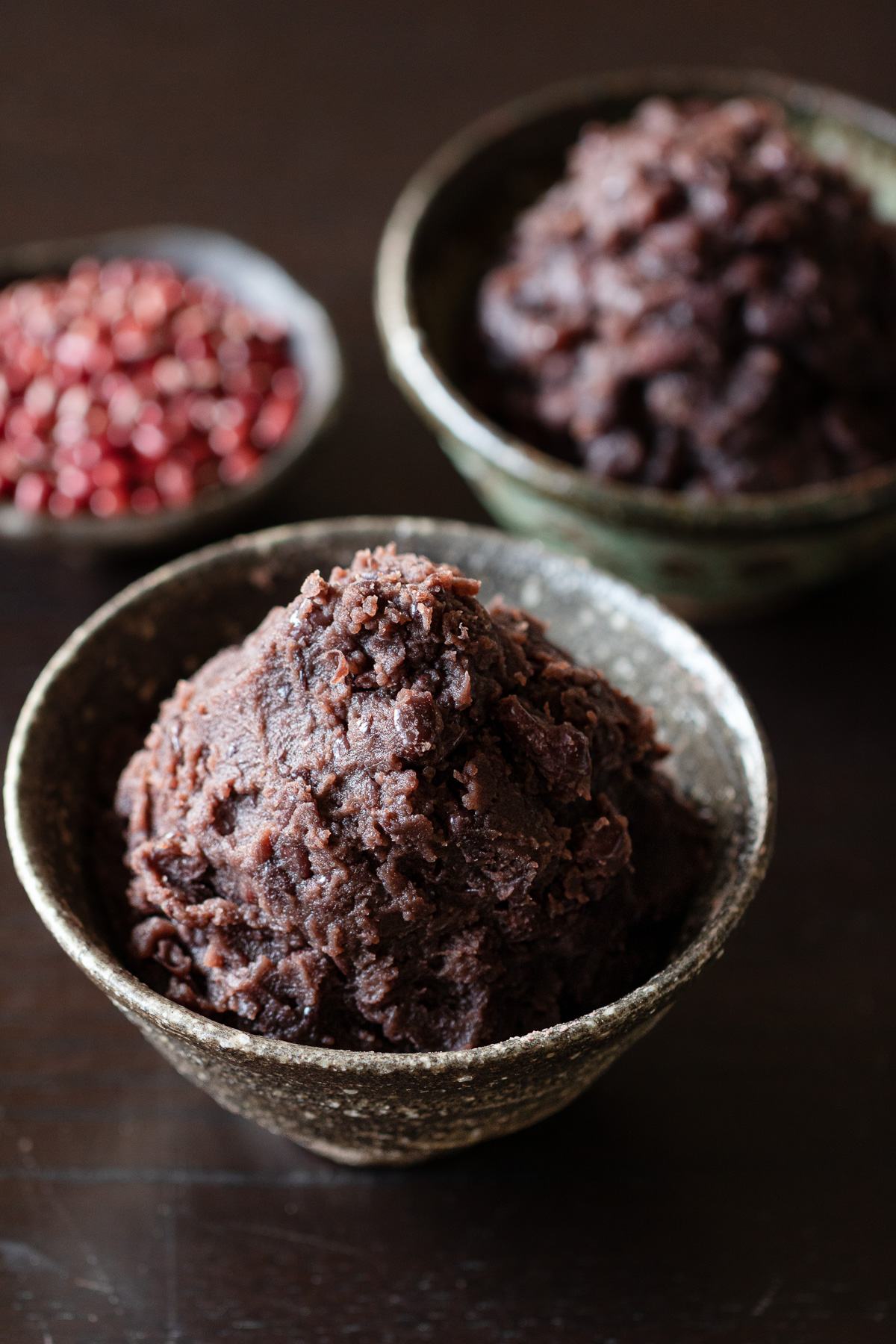
The first is a cheat koshian: no straining required — because in my adzuki beans method, the beans are cooked until very soft, they mash naturally as you stir, giving you a smooth, spreadable paste without the extra step.
The second keeps the beans mostly whole for a chunkier, more traditional tsubu-an.
📕 Cheat Koshian or Tsubu-an?
A small guide to help you choose which style to make:
| Pattern A: Cheat Koshian | Pattern B: Chunky Tsubu-an | |
|---|---|---|
| Texture | smooth, spreadable | whole beans, glossy |
| Best for | ohagi, mochi, red bean jelly, sweet bun | anmitsu, crepes, toppings |
| Effort | beginner-friendly | a little more care needed |
🫘 Ingredients
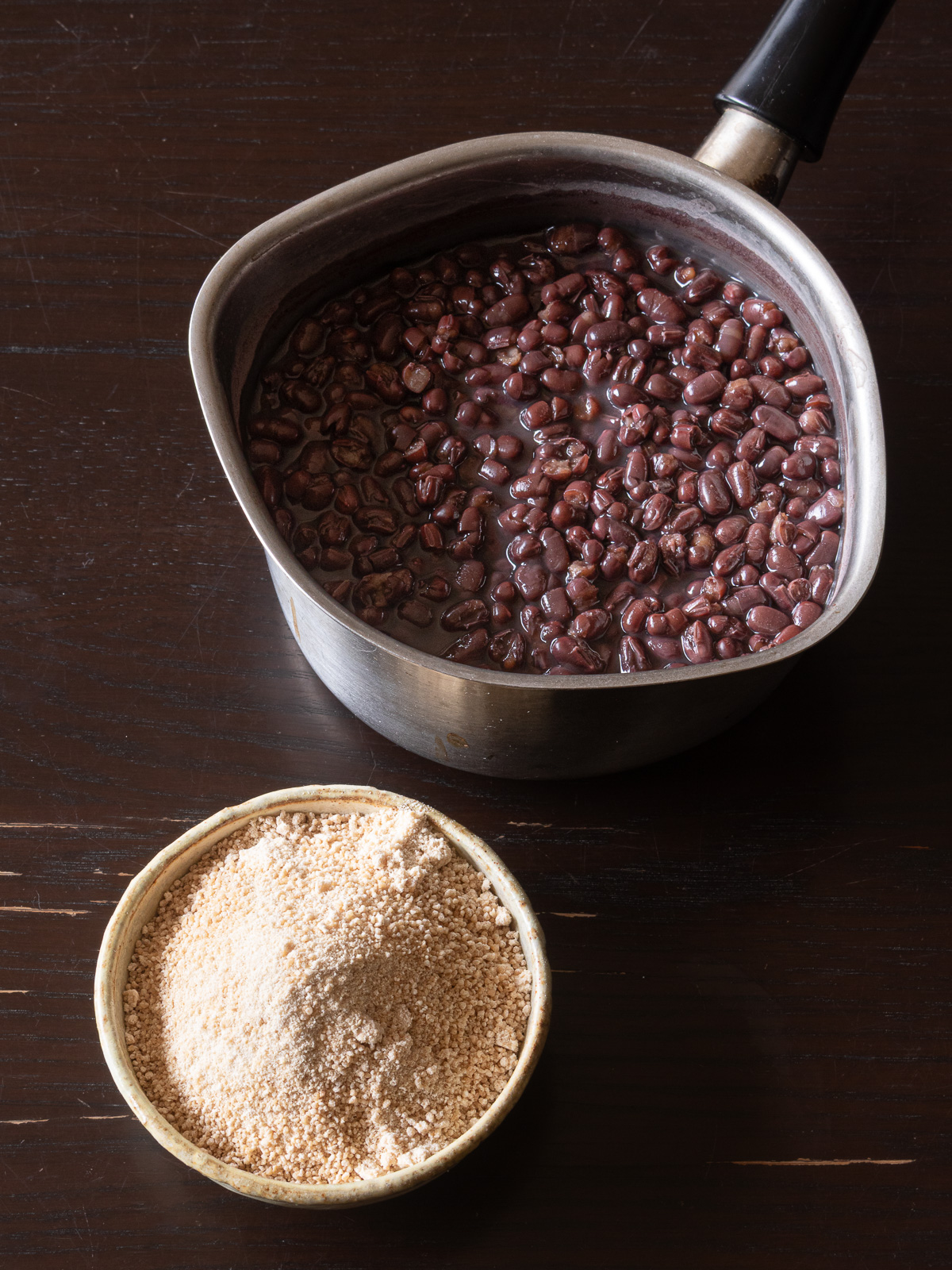
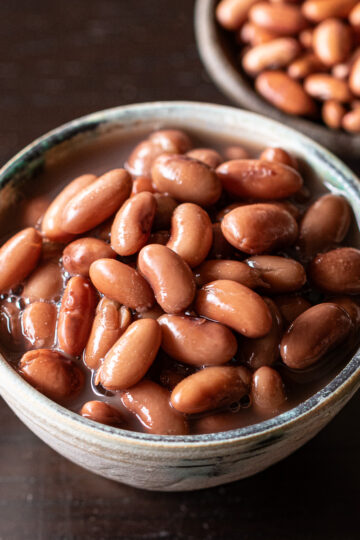
- Unsweetened cooked adzuki beans — homemade or store-bought. If making your own, my adzuki bean recipe cooks them until very soft, which works perfectly for both styles.
- Cooking liquid or water — using the bean cooking liquid adds a deeper adzuki flavour to the finished paste.
- Sugar — I use beet sugar or raw cane sugar. See A Note on Sugar below for details.
❄️ A Note on Sugar
Most traditional anko recipes use white sugar, which keeps the flavour clean and lets the adzuki beans take centre stage. I use beet sugar or raw cane sugar instead — both have a rounder, more mellow sweetness that adds a little depth to the finished paste without overpowering the beans.
Even so, any sugar works here. Granulated white sugar, brown sugar, or even black sugar will each give a slightly different result — you can also blend two types for a more complex flavour. Experimenting is part of making anko your own.
As for quantity, traditional anko is often made with 70–100% sugar relative to the weight of dried adzuki beans.
This recipe uses 100g of sugar for every 200g of dried adzuki beans (about 50%), which gives a more lightly sweet paste.
If you're using store-bought cooked beans, start with around 15% of the drained weight and adjust from there.
Keep in mind that the sweetness mellows as the paste cools, so aim for slightly sweeter than your desired final taste.
I find it helpful to jot down the details each time —bean variety, how they were cooked, sugar type and amount. After a few batches, you'll land on a ratio that's entirely your own.
Exact quantities are in the recipe card at the bottom of this page 👇
🍊 Before You Start — Check the Beans
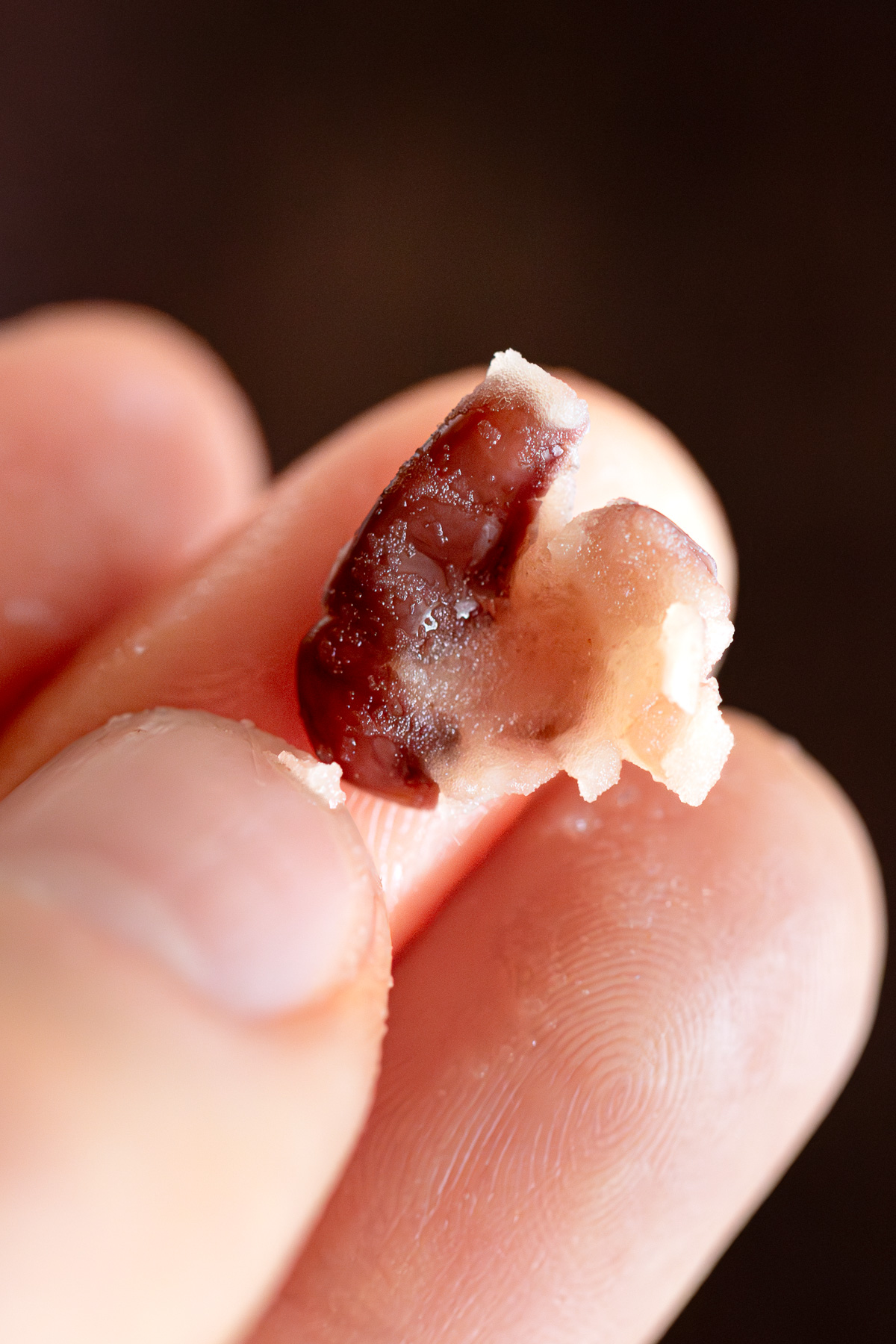
Before adding any sugar, check that your adzuki beans are fully cooked. Press one between your fingers — it should mash without any resistance.
This step really matters because once sugar is added, the beans will not soften further, no matter how long you cook them. If they're still firm at this stage, add some water or cooking liquid and simmer until tender before moving on.
🍴 Instructions
Once the adzuki beans are fully cooked, you’re ready to make the paste.
Choose between a smooth, koshian-style version or a chunkier tsubu-an with whole beans.
➤ Pattern A: Cheat Koshian
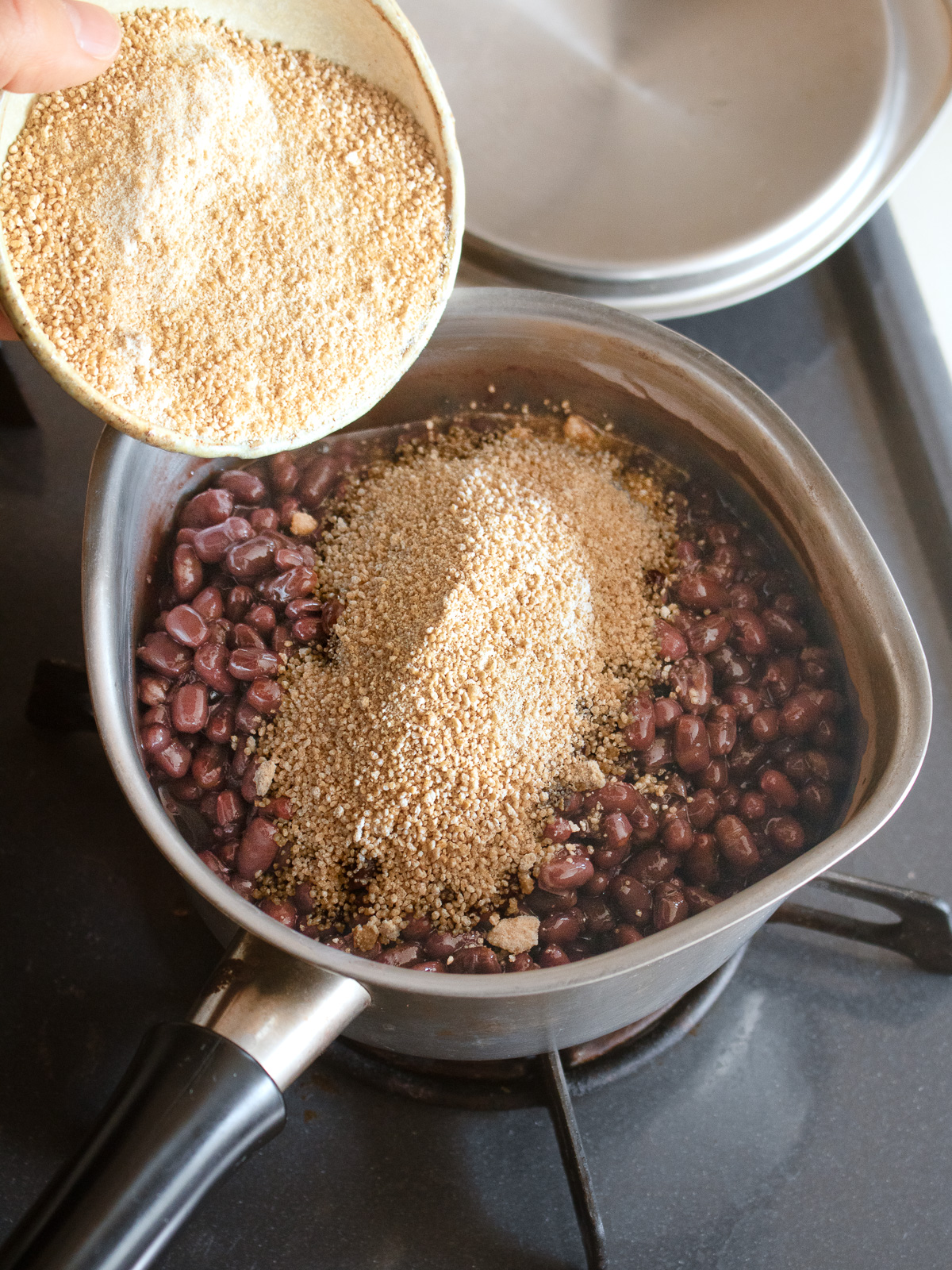
- Combine the beans and sugar
- Add the cooked adzuki beans to a saucepan.
- Add the sugar and gently stir to combine.
🌿 Tip: To fine-tune the sweetness, add the sugar in two or three additions.

Start with a smaller amount, taste once it has dissolved over heat, then add more as needed. The sweetness will mellow as the paste cools, so slightly sweeter than you want is the right spot.
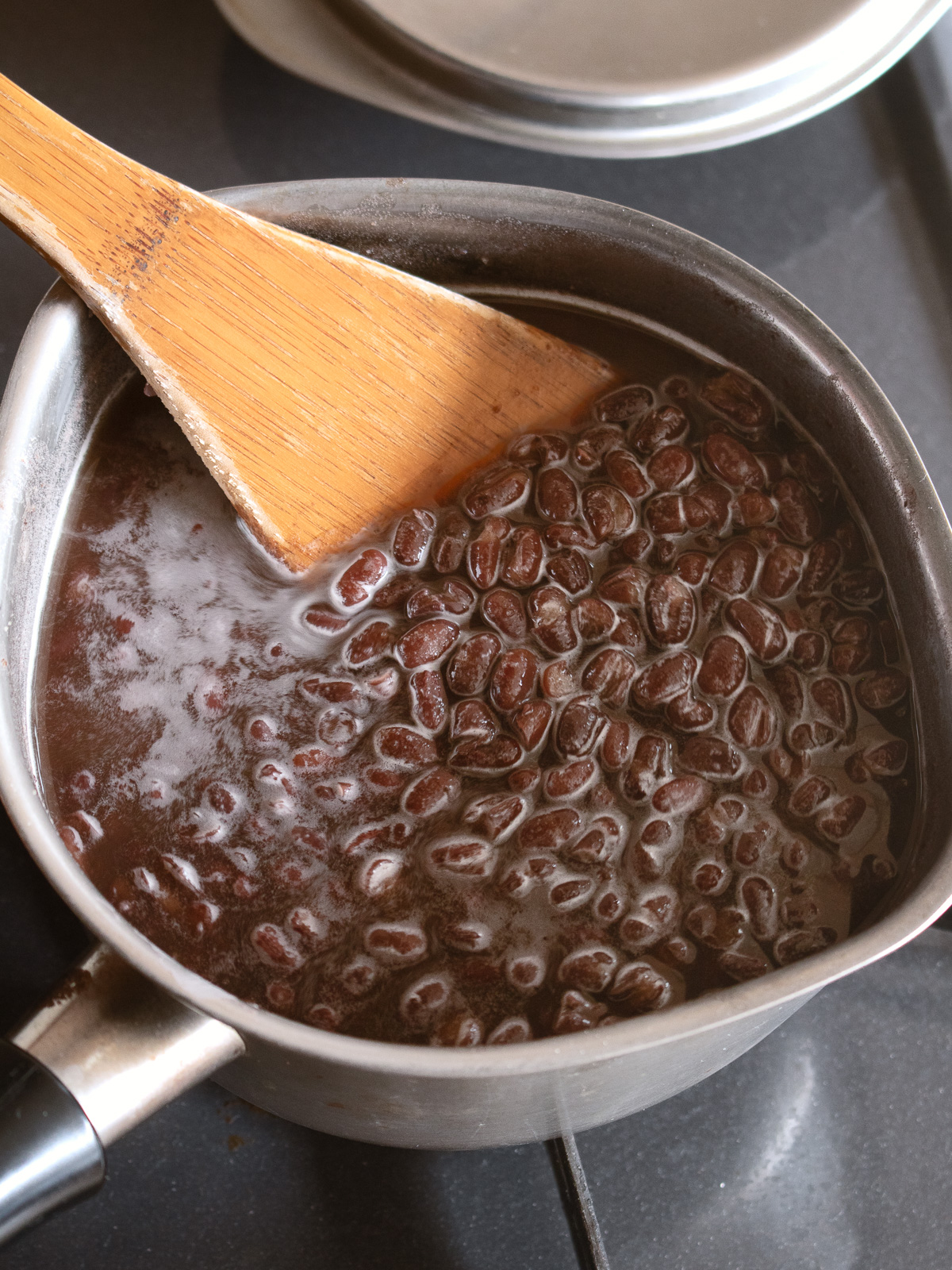
- Dissolve the sugar
- Place over high heat, stirring until the sugar dissolves.
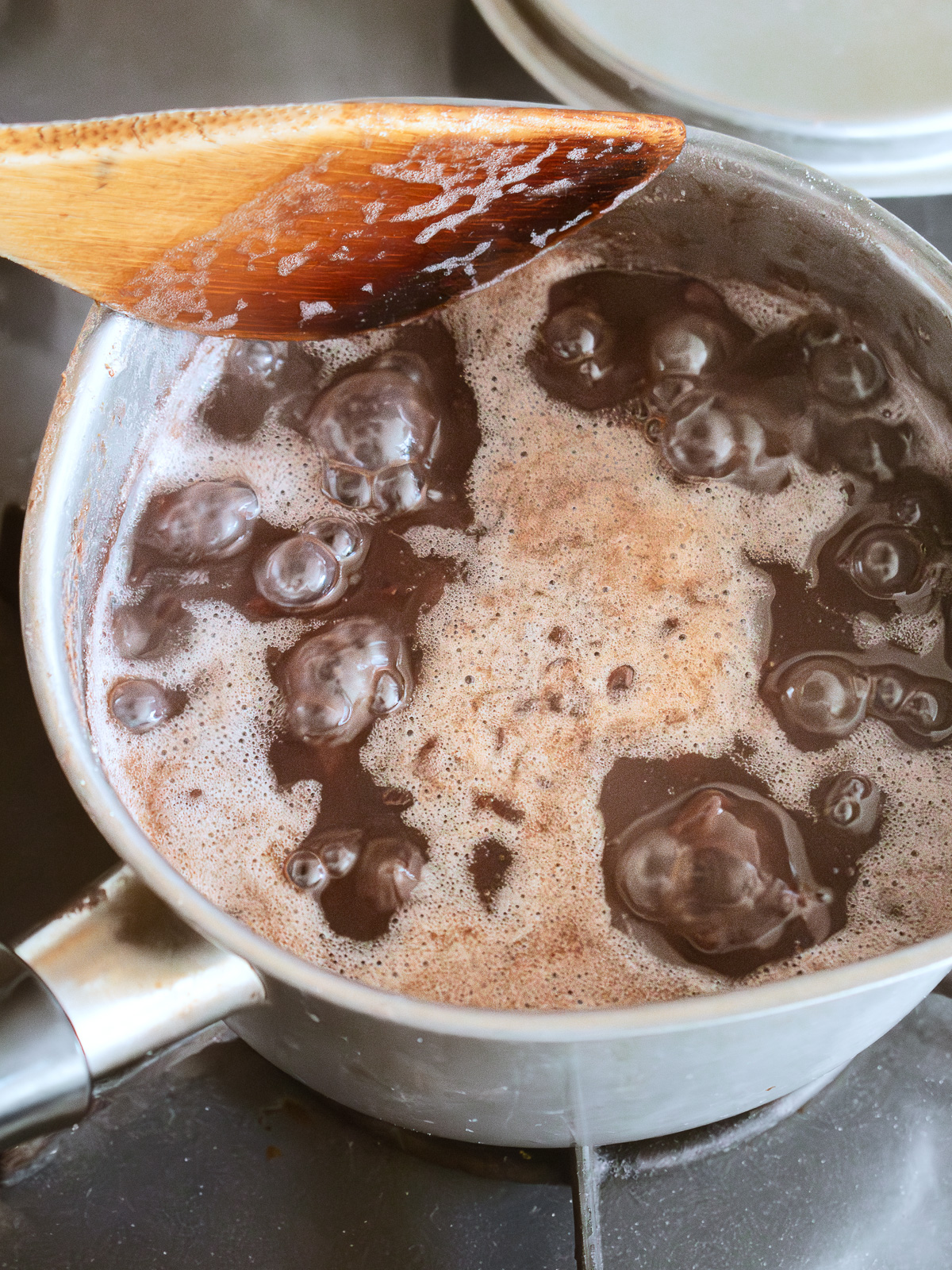
- Reduce the heat
- Once the mixture begins to bubble, reduce to medium heat.
- Keep stirring, running the spatula along the bottom of the pan to prevent scorching.
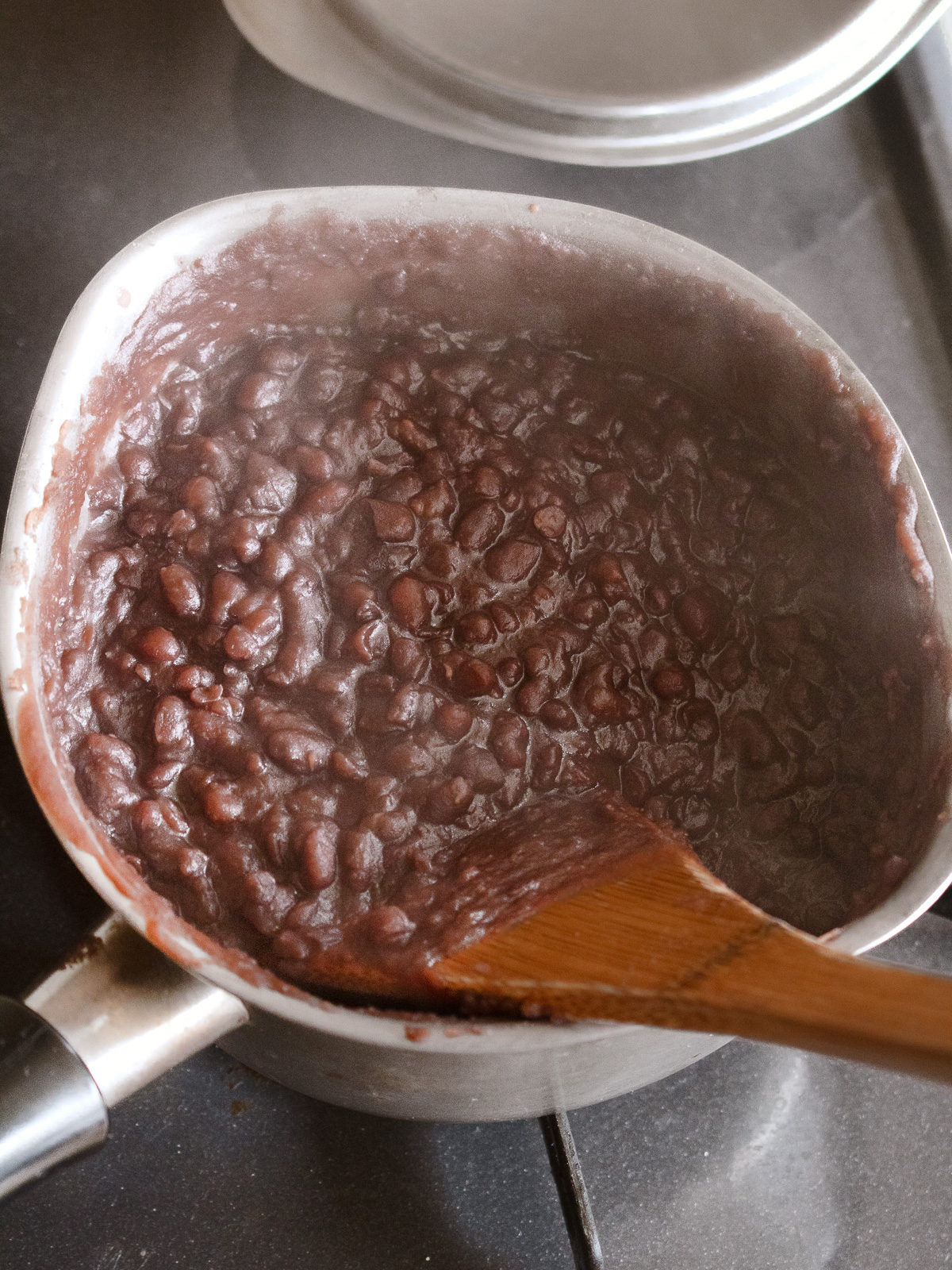
- Simmer down
- When the paste starts to splatter, lower the heat to reduce splattering.
- Continue stirring constantly. The beans will mash naturally as you go.
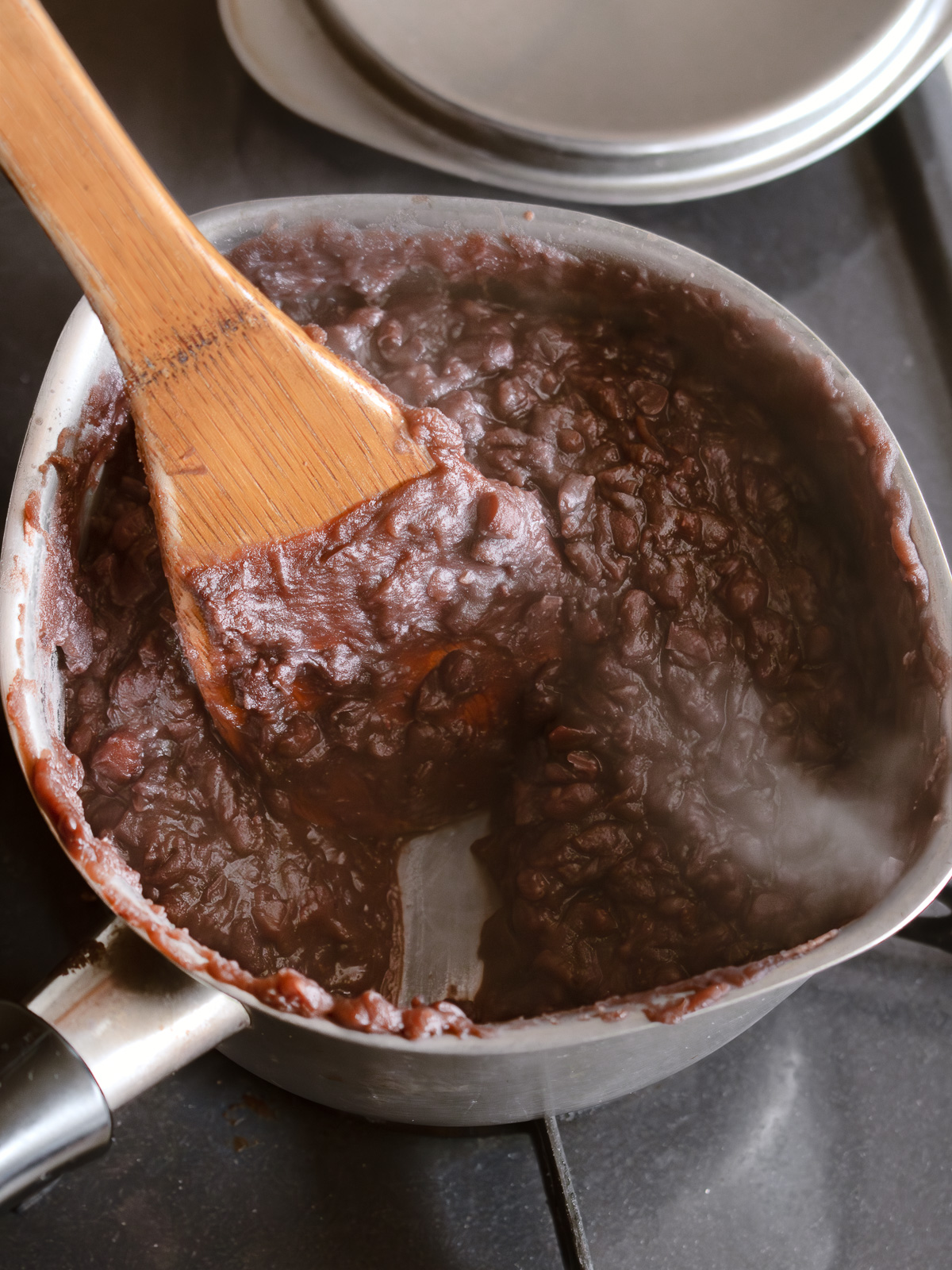
- Check the consistency
- When the spatula leaves a clear trail through the paste, remove from heat.
🌿 The paste will firm up as it cools, so stop a little earlier than you think.
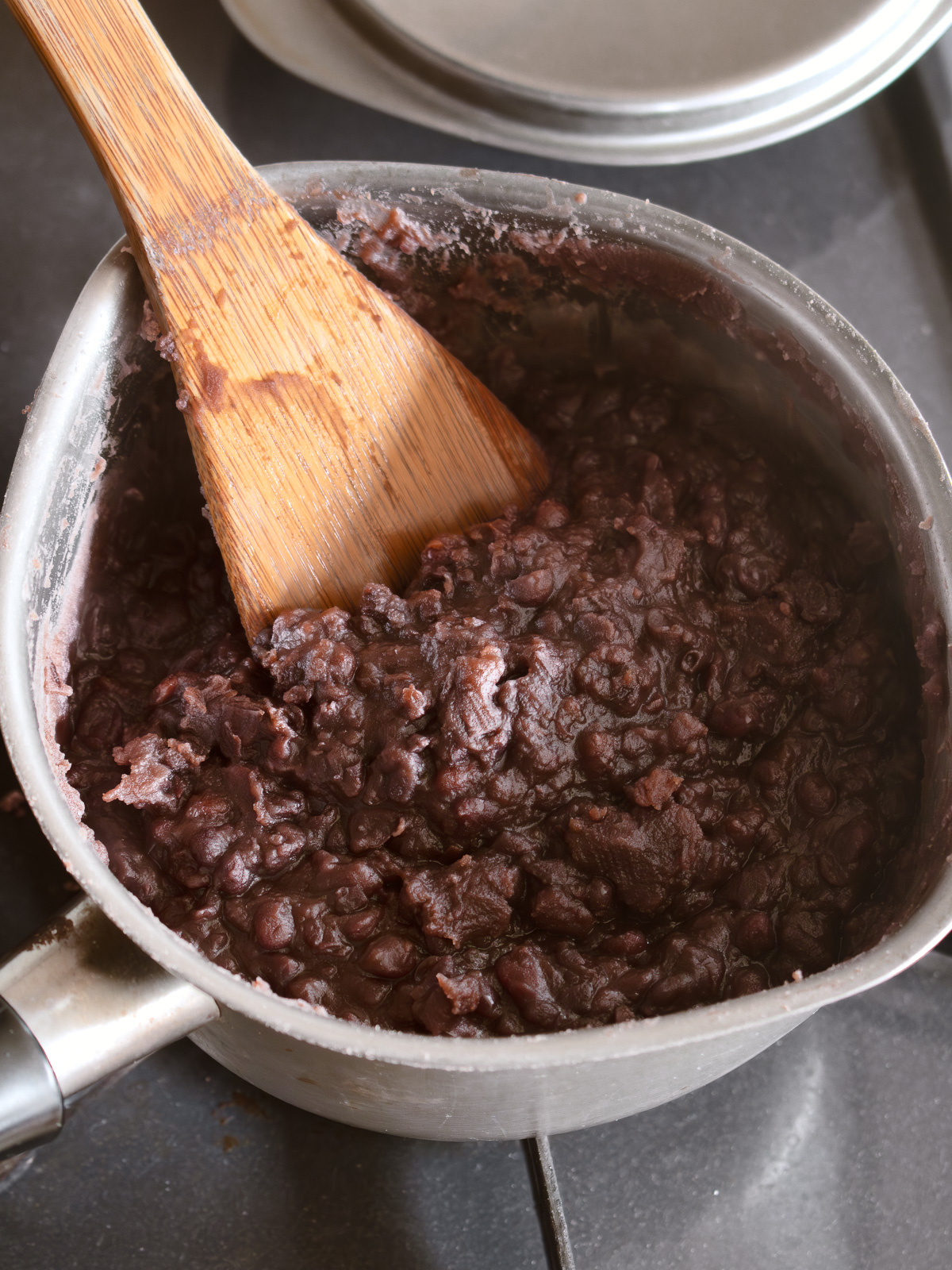
- Cool and store
- Once cooled, transfer to a container and refrigerate.
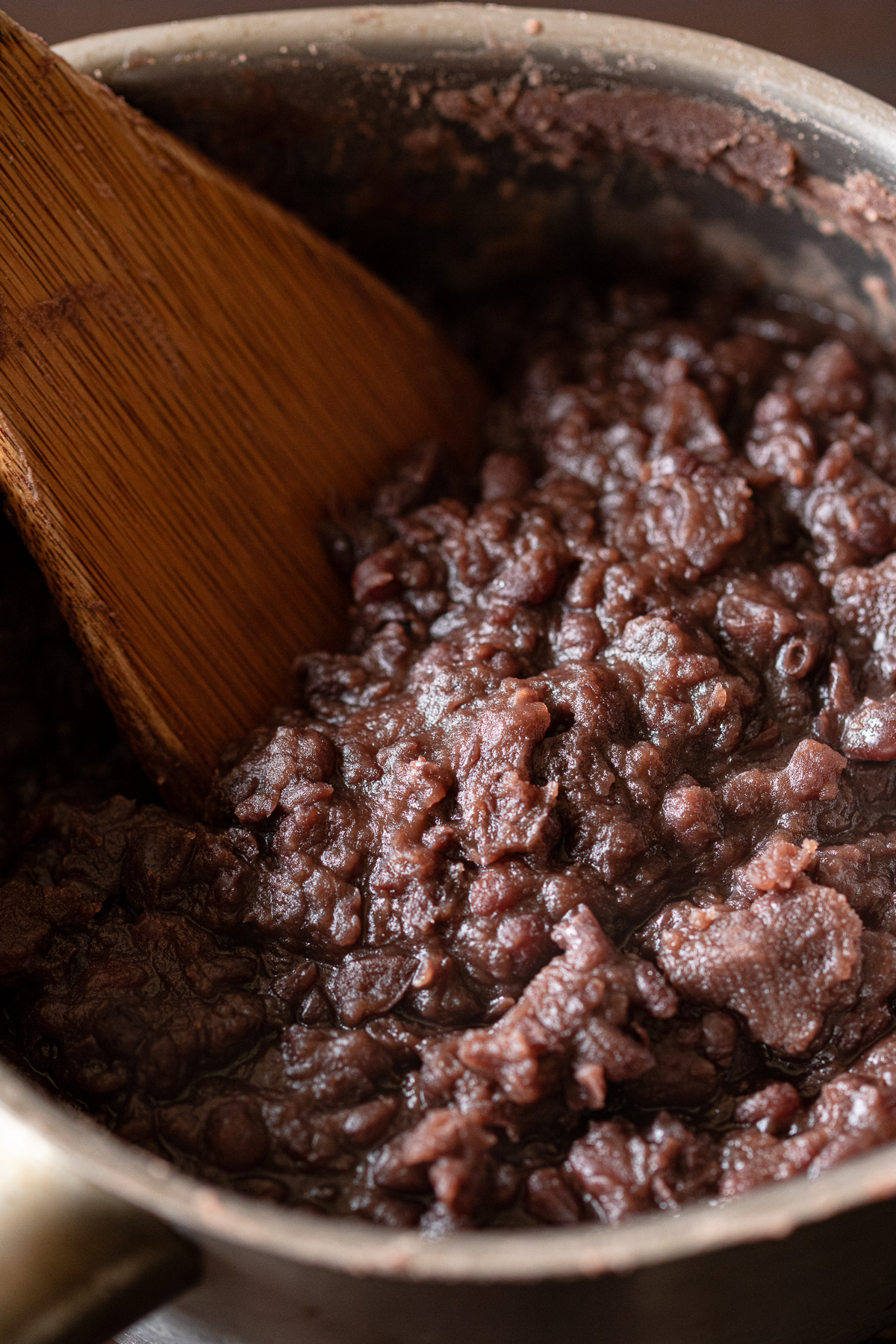
➤ Pattern B: Chunky Tsubu-an
The process starts the same as the smooth version — the key is to handle the beans as gently as possible.
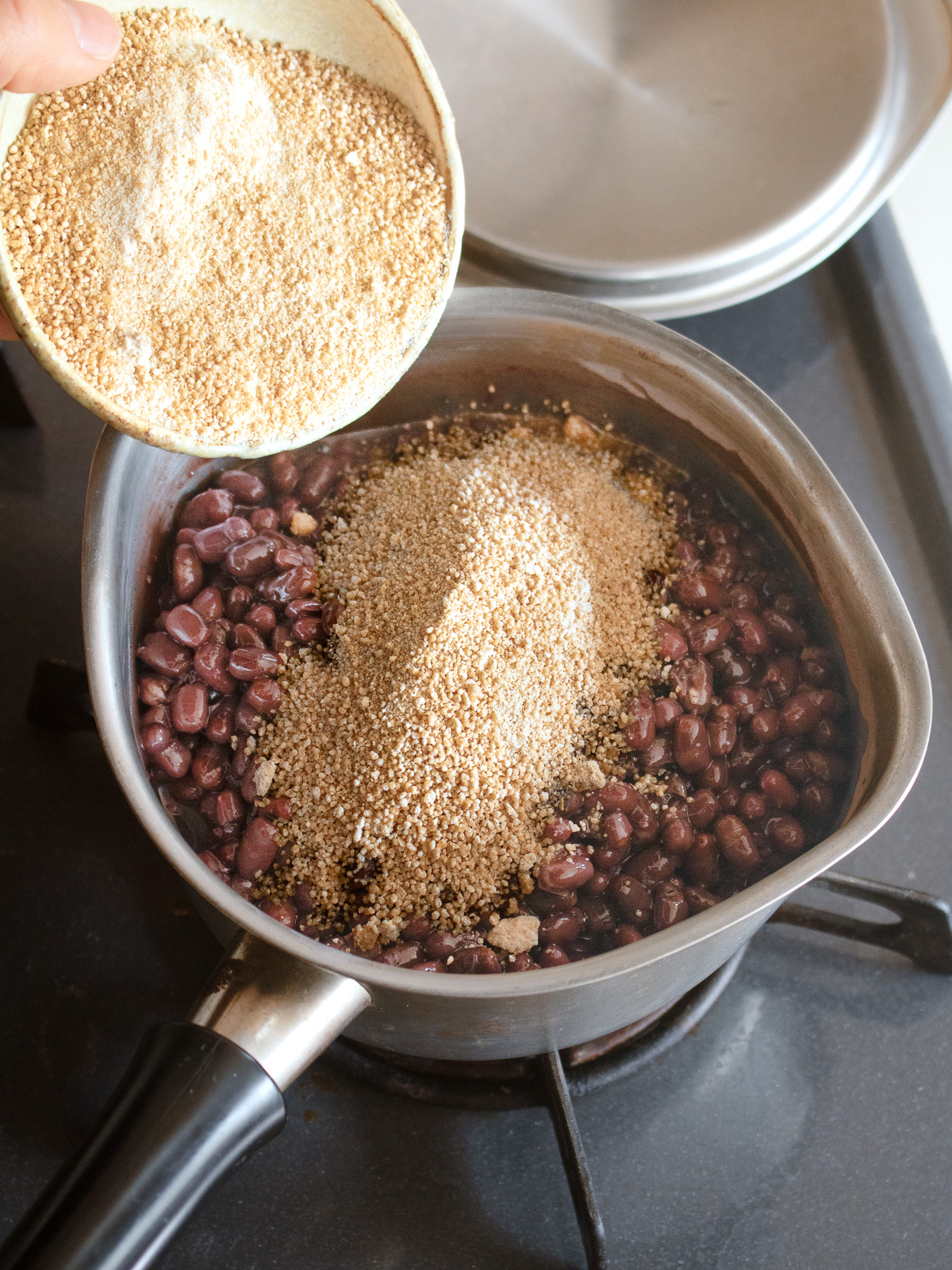
- Combine the beans and sugar
- Add the cooked adzuki beans to a saucepan.
- Add the sugar and gently stir to combine.
🌿 Tip: To fine-tune the sweetness, add the sugar in two or three additions.

Start with a smaller amount, taste once it has dissolved over heat, then add more as needed. The sweetness will mellow as the paste cools, so slightly sweeter than you want is the right spot.
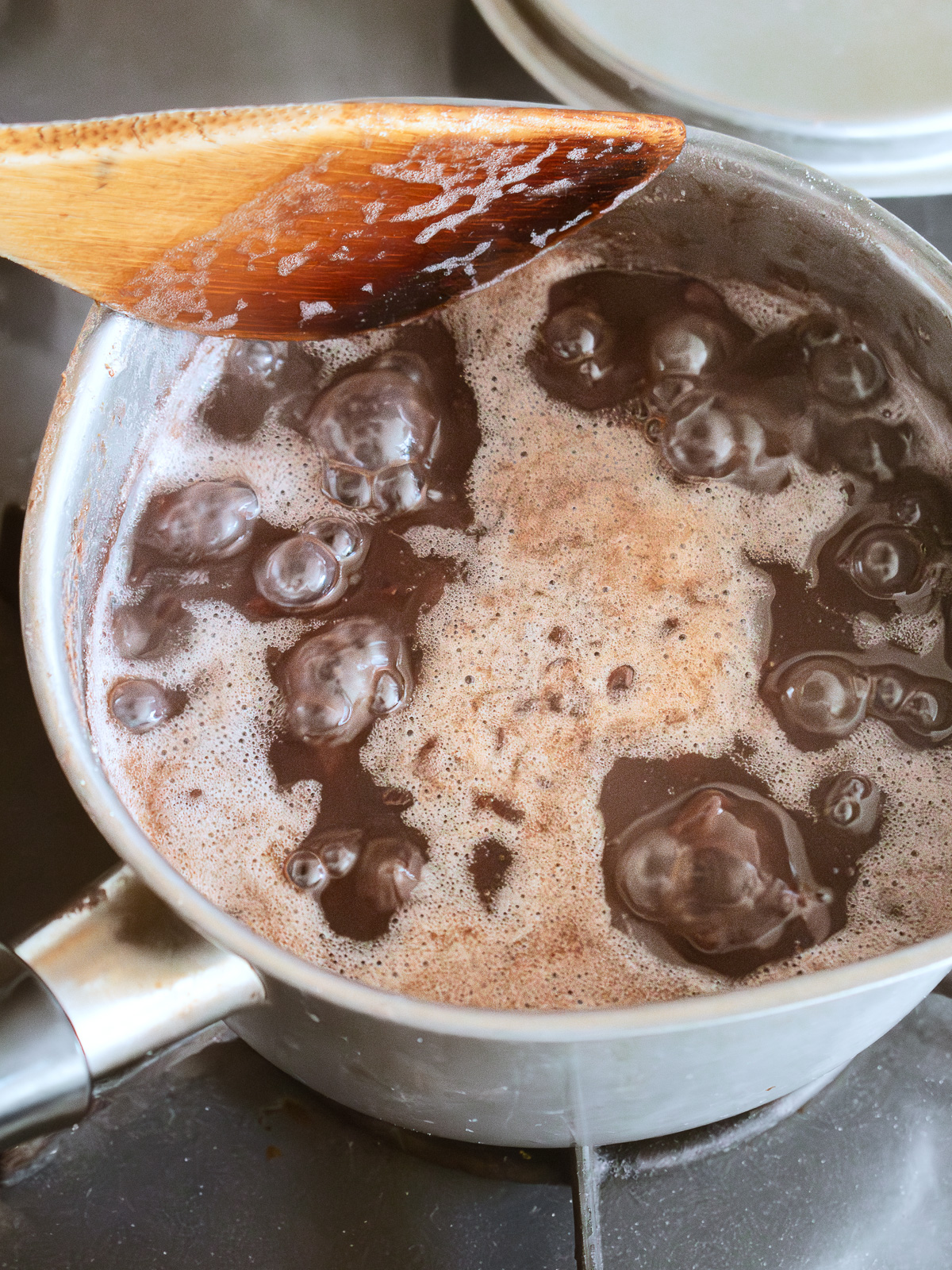
- Heat and reduce
- Place over high heat until the sugar dissolves.
- As soon as the mixture begins to bubble, reduce to low.
- Stir once or twice from the bottom — just enough to prevent scorching, without breaking up the beans.
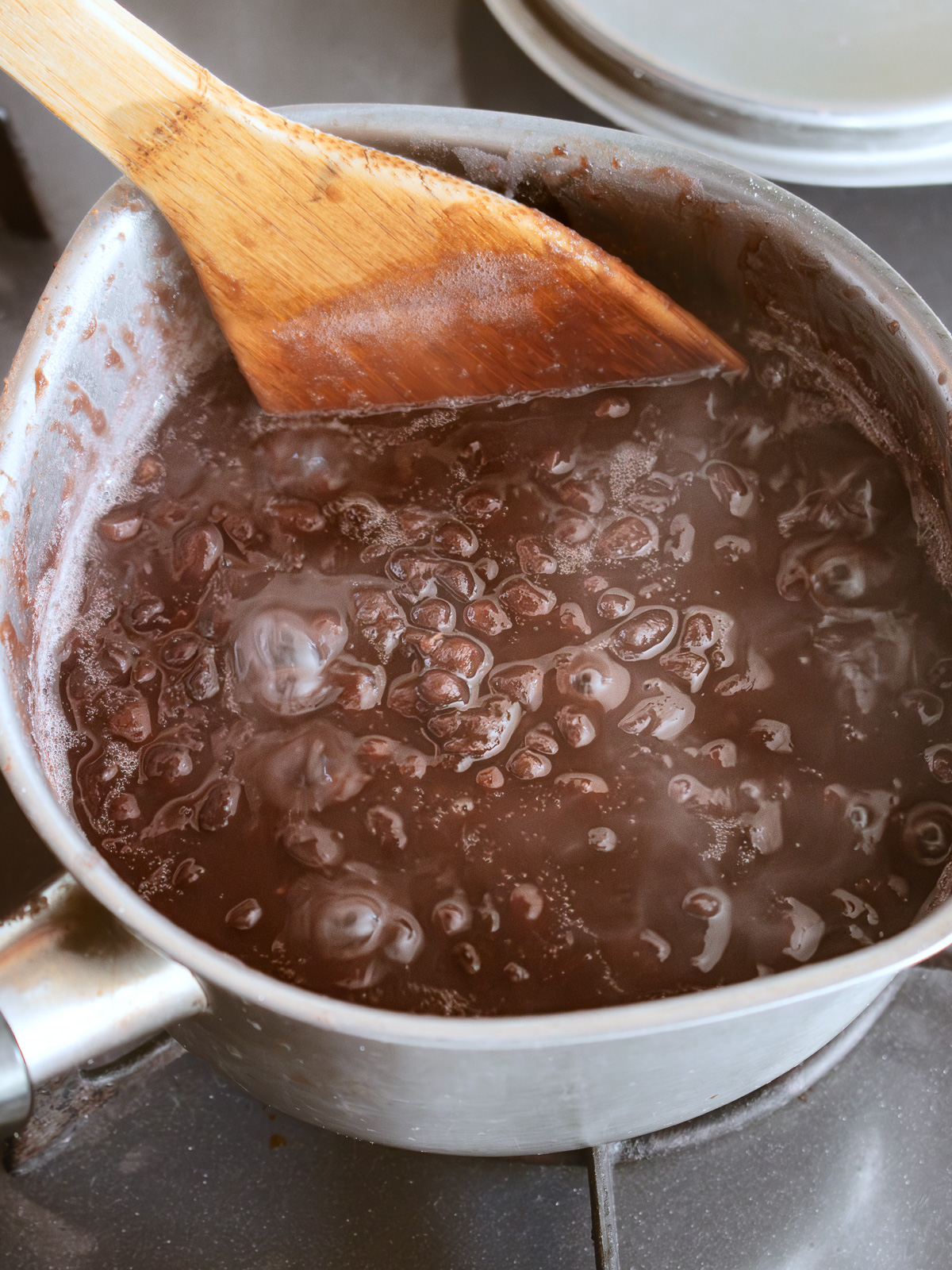
- Simmer down
- As the paste reduces, stir occasionally from the bottom of the pan to prevent scorching.
- When you hear a light sizzling sound as you stir, reduce to very low heat and switch to continuous stirring, keeping the spatula against the bottom of the pan at all times.
🌿 Handle the beans as gently as possible.
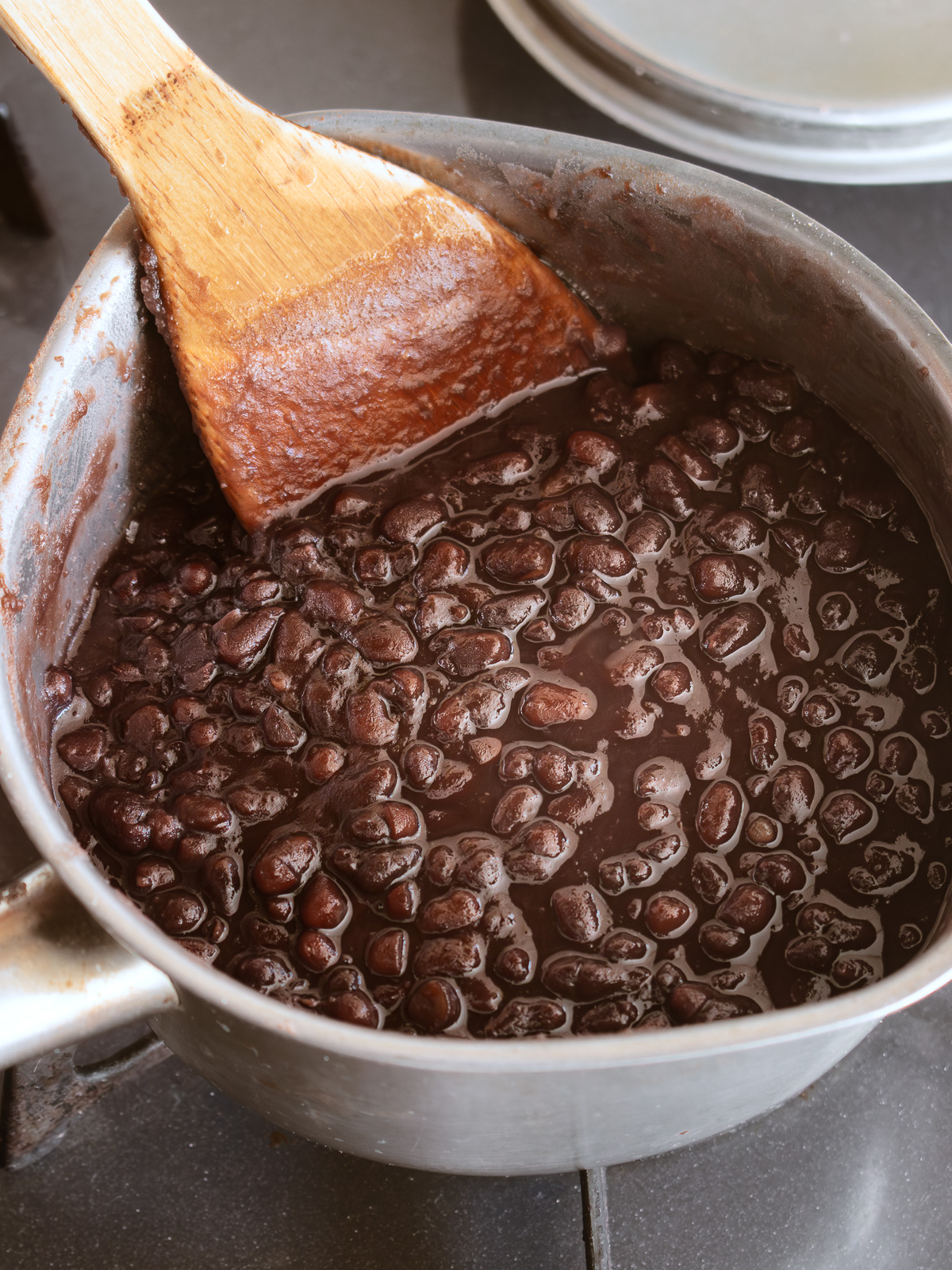
- Check the consistency
- Remove from heat just before you reach your desired consistency — the paste will firm up as it cools.
- Let the paste cool, then transfer to a container and refrigerate.
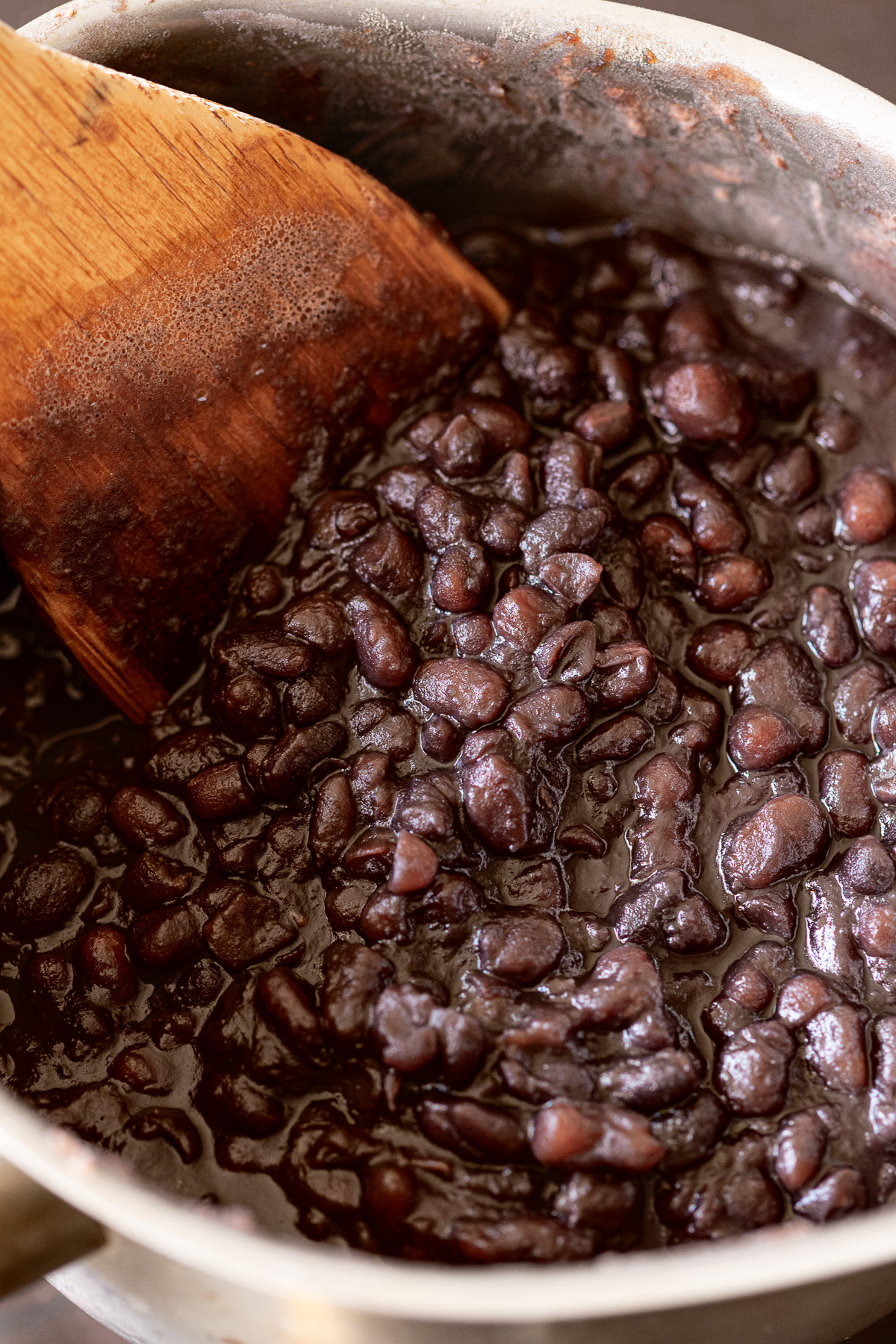
🛷 How Firm Should It Be?
Anko firms up as it cools, so how far you cook it down depends on how you plan to use it. If you remove it from the heat too early, the paste will turn out thin and watery.
Adjust the consistency depending on how you plan to use it:
➤ For wrapping, spreading, or filling — ohagi, daifuku, dorayaki — cook the paste slightly firmer. A softer paste may feel easier to handle, but as it sits, it can release moisture and become sticky or watery.
It takes a bit more time and effort, but the texture holds well once it’s set.
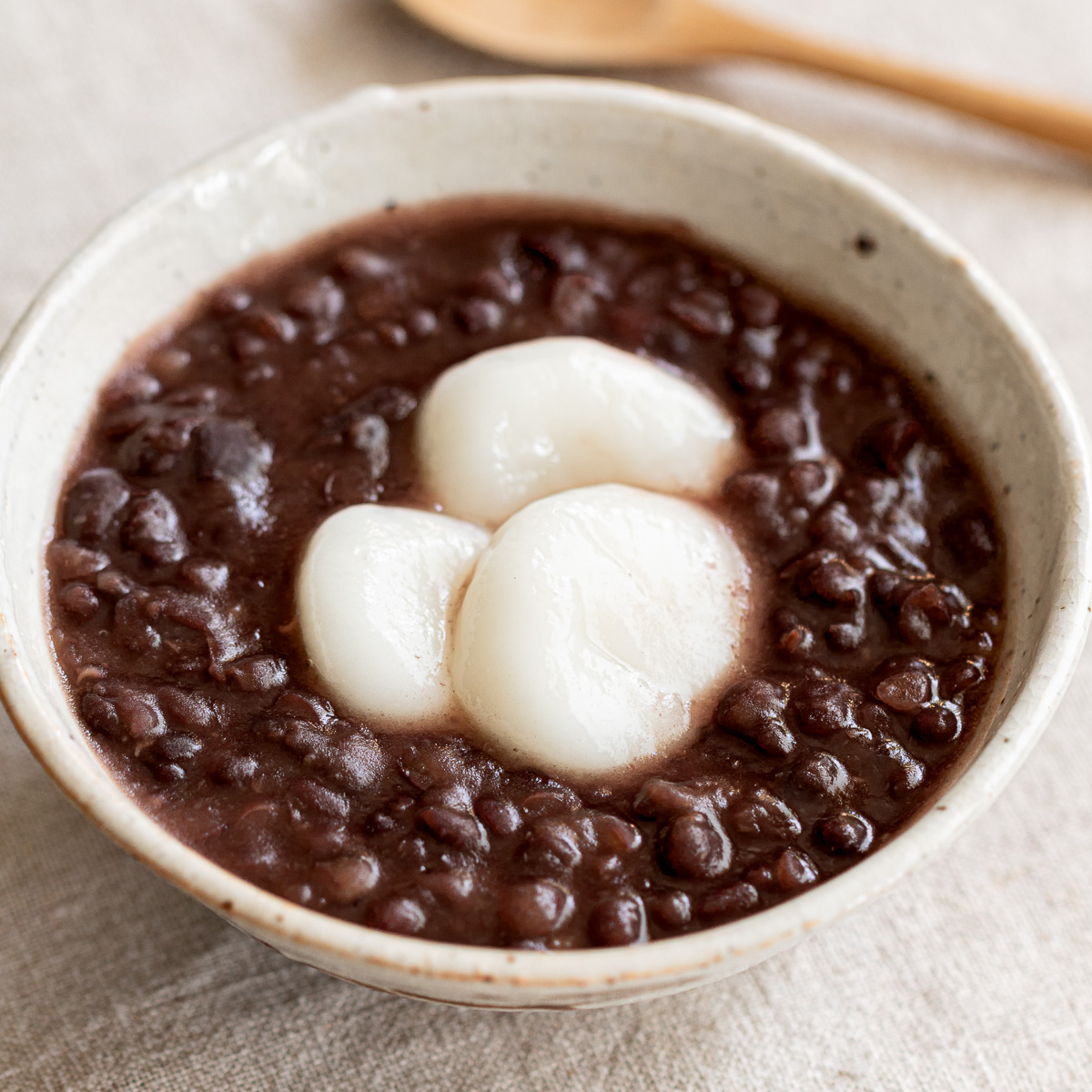
➤ For toppings or soupy desserts — anmitsu, oshiruko — A softer final texture works well here. You can stop cooking earlier, while the paste is still loose ー enjoy the softer texture as it is.
In all cases, remove the paste from the heat when it feels slightly softer than your desired final texture.
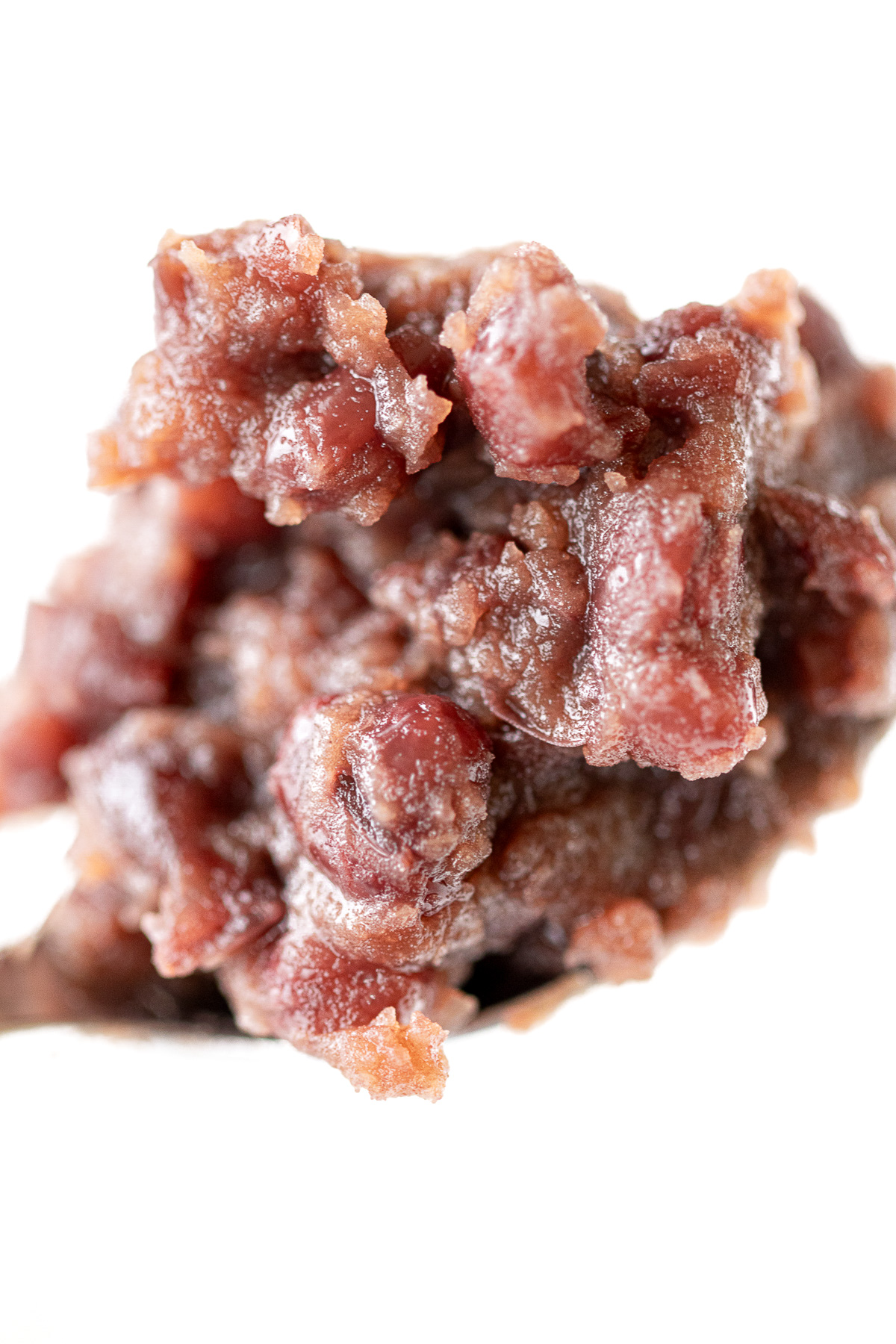
🫙 Storage
Anko is best eaten fresh — the flavour fades noticeably over time. It keeps in the refrigerator for a few days.
For longer storage, portion it out, wrap in cling film, and freeze. Use within a month for the best flavour. Thaw naturally at room temperature. Keep in mind that freezing can slightly change the texture, making it a bit more watery.
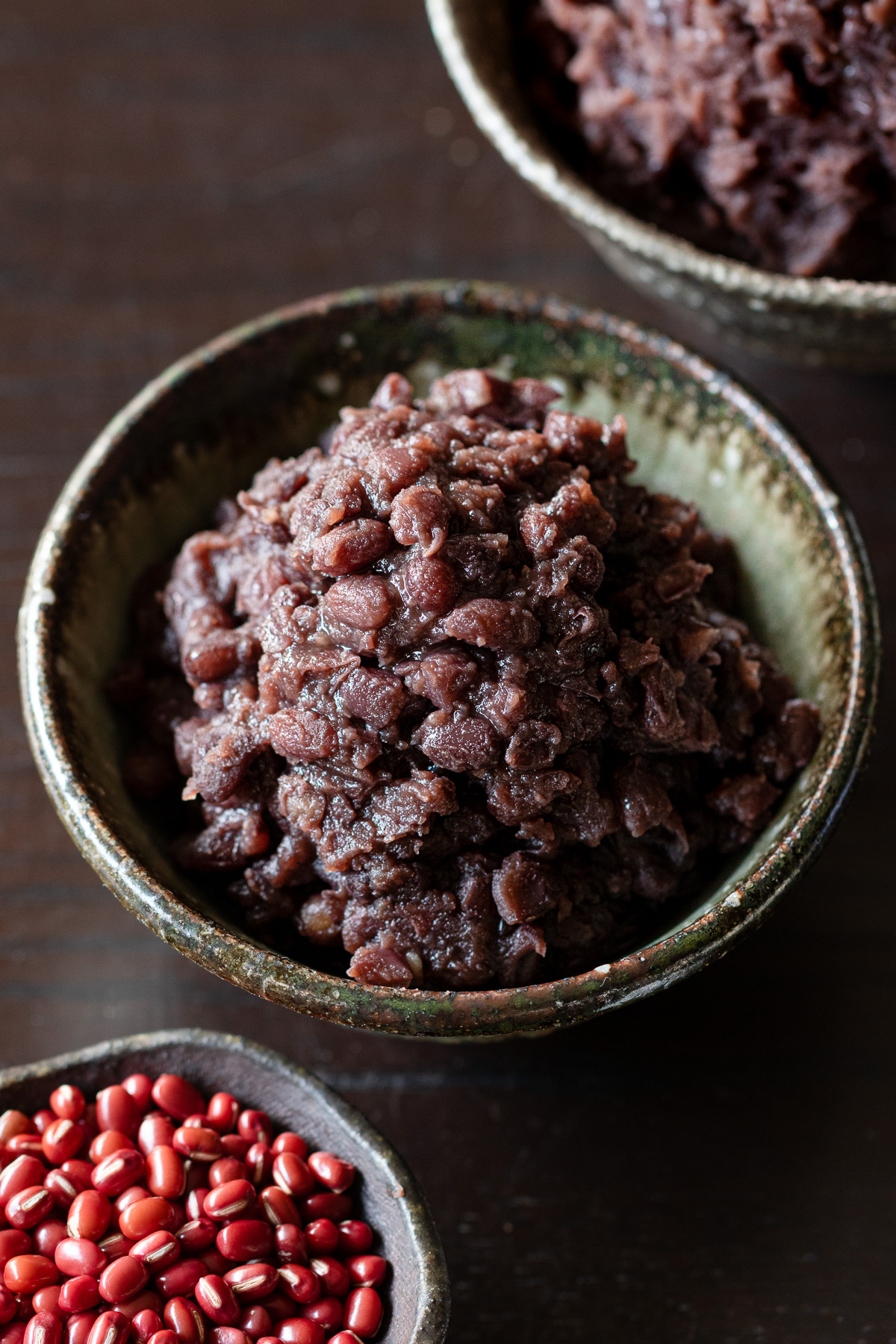
📚 FAQ
Tsubu-an keeps the beans whole (or mostly whole), with a rustic texture and a pronounced bean flavour.
Koshian is strained to remove the skins entirely, giving a smooth, silky paste. Tsubu-an is higher in fibre and has a more homemade quality to it.
Yes. Look for unsweetened canned adzuki beans and drain before using. Reserve the liquid — you can use it in place of water when simmering the beans to the right softness before making anko.
Dorayaki, taiyaki, daifuku, ohagi, anpan, monaka, and imagawayaki are all traditional wagashi that use tsubu-an. It's also great on toast or as a filling for sweet buns.
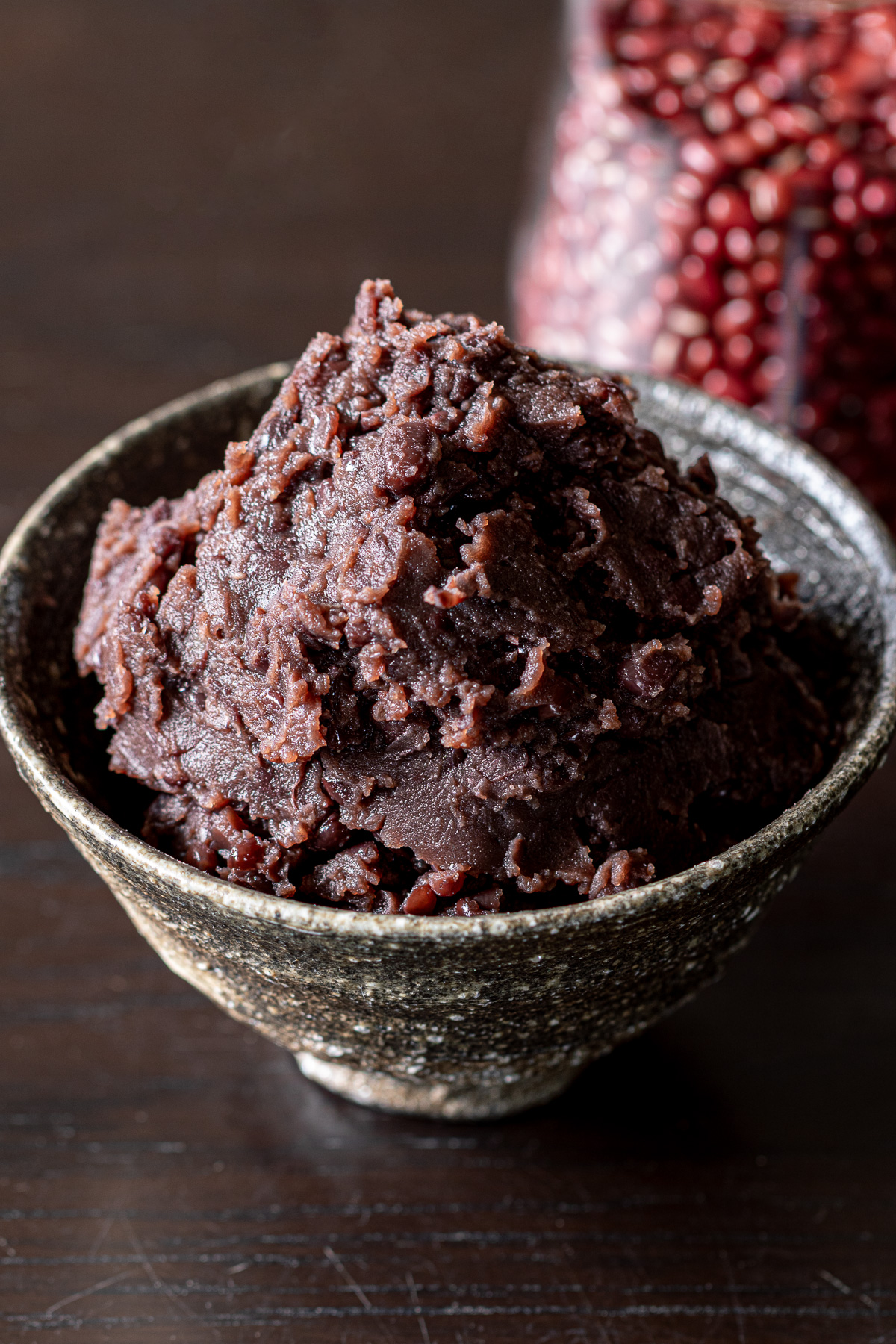
🥄 More Adzuki Beans Recipes
Recipes that start with cooked adzuki beans:
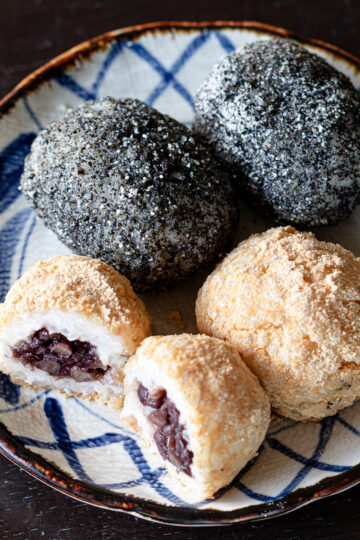
🥮 Recipes Using Anko
Vegan Japanese desserts with anko:
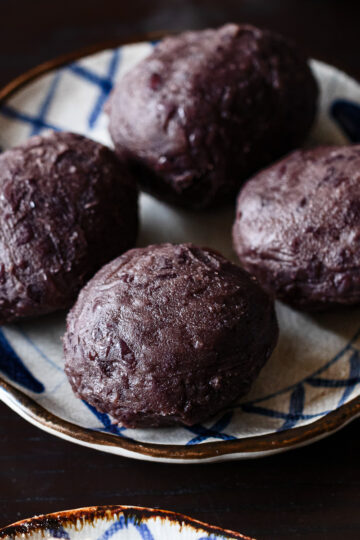
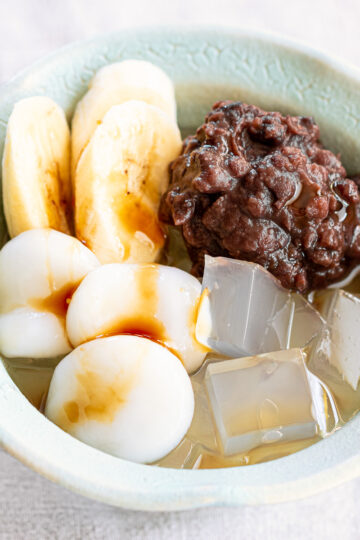

If you feel like whispering a thought, asking a question, or simply saying hello — the comment section is always open 📮
✏️ Recipe Card
Homemade Anko (Red Bean Paste) — Smooth or Chunky
Equipment
- Saucepan
- Spatula
Ingredients
- approx. 650 g cooked adzuki bean (unsweetened, from 200g dried)
- 100 g beet sugar or raw cane sugar (about 15% of the cooked bean weight)
- bean cooking liquid or water (as needed)
Instructions
Before you start
- Check that the adzuki beans are fully cooked. Press one between your fingers — it should mash without resistance. If still firm, add some cooking liquid or water and simmer until tender.approx. 650 g cooked adzuki beanbean cooking liquid or water
Add the sugar
- Add the cooked beans to a saucepan.
- Add a portion of the sugar and stir to combine.100 g beet sugar or raw cane sugar
- Place over high heat until the sugar dissolves, then taste.
- Add more sugar as needed, letting it dissolve each time, and adjust to your preference.
Pattern A: Cheat Koshian (for ohagi, mochi, fillings)
- Once the sugar has dissolved, keep the pan on high heat.
- When the mixture begins to bubble, reduce to medium heat and continue stirring, running the spatula along the bottom of the pan.
- When the paste starts to splatter, reduce to low and keep stirring continuously. The beans will mash naturally as you go.
- When the spatula leaves a clear trail through the paste, remove from the heat.
- Once cooled, transfer to a container and refrigerate.
Pattern B: Chunky Tsubu-an (for anmitsu, crepes, toppings)
- Once the sugar has dissolved and the mixture begins to bubble, reduce to low to medium-low heat.
- As the paste reduces, stir occasionally from the bottom of the pan, handling the beans as gently as possible.
- When you begin to hear a light sizzling sound, reduce to very low heat and switch to continuous stirring, keeping the spatula against the bottom of the pan.
- Remove from the heat just before it reaches your desired consistency — the paste will firm up as it cools, so stop while it still feels slightly softer.
- Let the paste cool, then transfer to a container and refrigerate.
Notes
▶︎ Sugar Ratio
Traditional anko often uses 70–100% sugar relative to the weight of dried beans. This recipe uses 100 g of sugar for 200 g of dried beans (about 50%), which gives a lightly sweet result — a level that feels balanced to me, as someone who doesn’t usually eat very sweet foods.If using store-bought cooked beans, use about 15% of the drained weight as a starting point.
▶︎ Keep a Record
The final texture and flavor can vary depending on the beans and their moisture content. It helps to keep track of the beans you use, how they were cooked, and the sugar and ratios each time. Over time, you’ll find a balance that feels right for you.
If this recipe made its way into your kitchen, and you'd like to share that moment, feel free to tag @veginveganvegun or use #vegin_vegan_vegun.
Your quiet stories inspire me deeply 🕊️

Akiko says
It turned out delicious!