
A byproduct of making umeboshi, ume plum vinegar is a traditional Japanese condiment used in kitchens for centuries.
This guide covers how to make it at home, how to store it, and the many ways to use it — from Japanese pickles to salad dressings and beyond.

Jump to:
🧺 What is Ume Plum Vinegar?
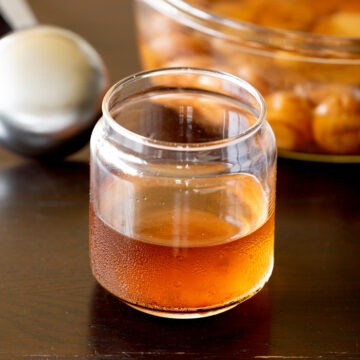
Ume plum vinegar — known in Japanese as umezu (梅酢) — is the liquid that forms naturally when plums are salt-pickled to make umeboshi.
Despite its name, it isn't a true vinegar: rather than acetic acid produced through fermentation, its sourness comes mainly from the citric acid naturally present in the plums.
The result is a briny, tangy condiment with a delicate plum fragrance.

White vs. Red Ume Plum Vinegar
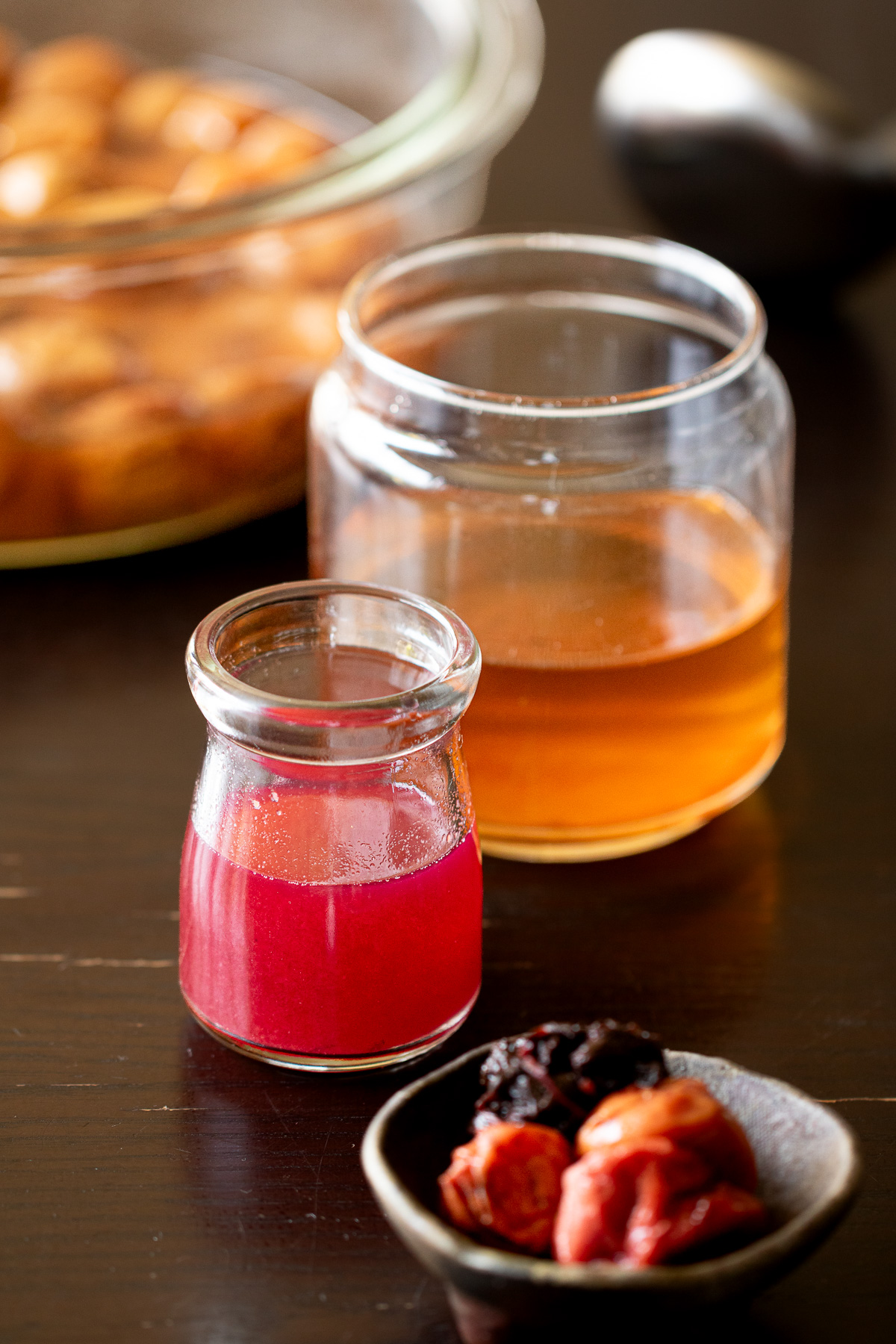
There are two varieties:
- White (shiro umezu) — produced when plums are salt-pickled without red shiso. Clear to pale yellow, with a clean, bright flavor. It gives pickles like beni shoga a soft, natural pink.
- Red (aka umezu) — made by steeping salt-massaged red shiso leaves in the plum brine. Deeply colored and fragrant, it turns pickles a deeper pink.
This recipe focuses on the white variety.
🥣 How to Make
Ume plum vinegar forms naturally as a byproduct of making umeboshi. Follow the steps in my basic umeboshi recipe to salt-pickle the plums first.

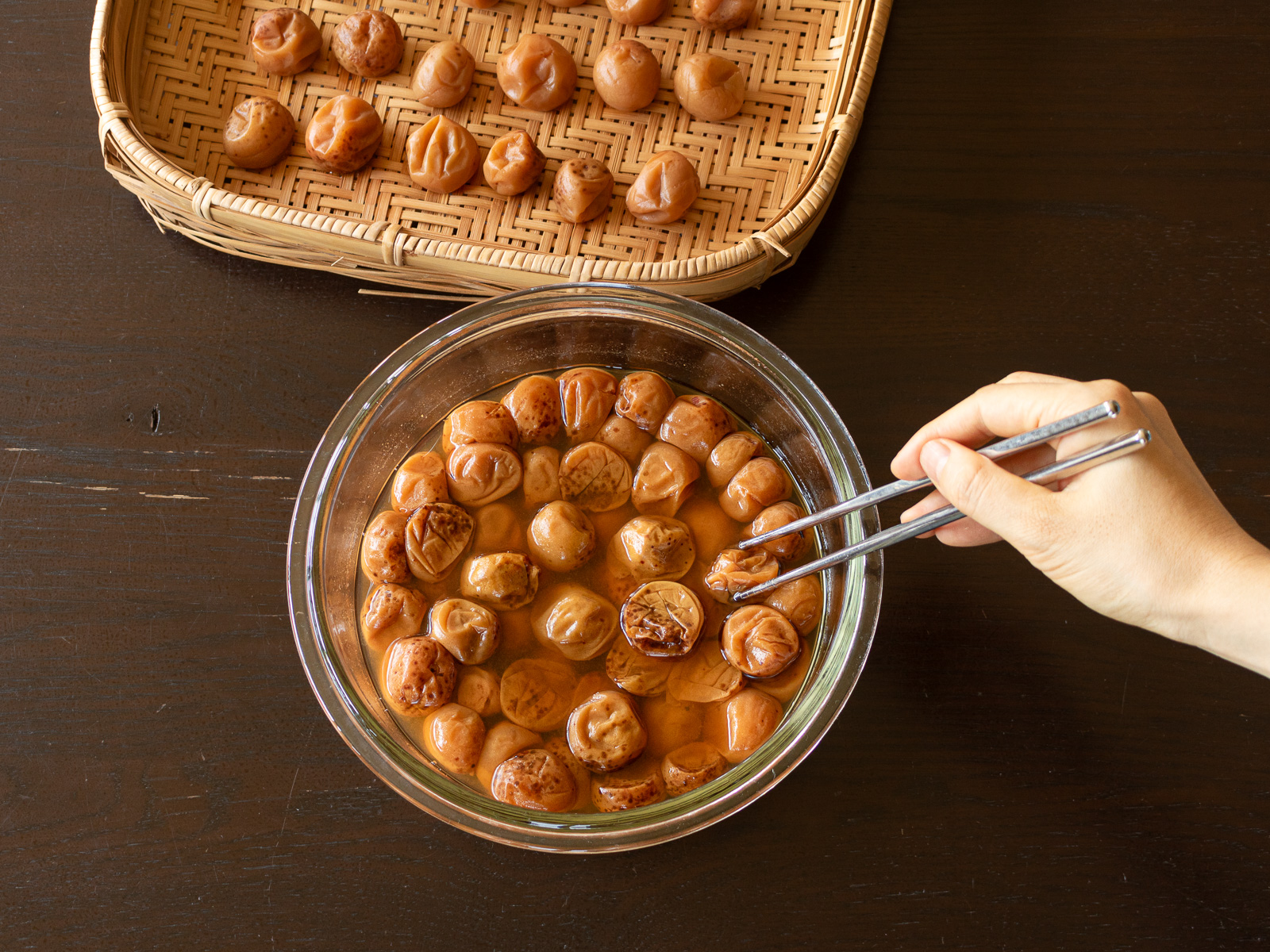
- Salt-pickle the plums
- Following the umeboshi recipe, pack the plums with salt and weigh them down.
- The liquid will begin to rise within 3–5 days — wait until the plums are fully submerged before moving on.
- If the liquid is slow to rise, add more weight.
- The plums will later be sun-dried to become umeboshi.
🌿 Sterilize all containers and utensils before use to prevent mold.
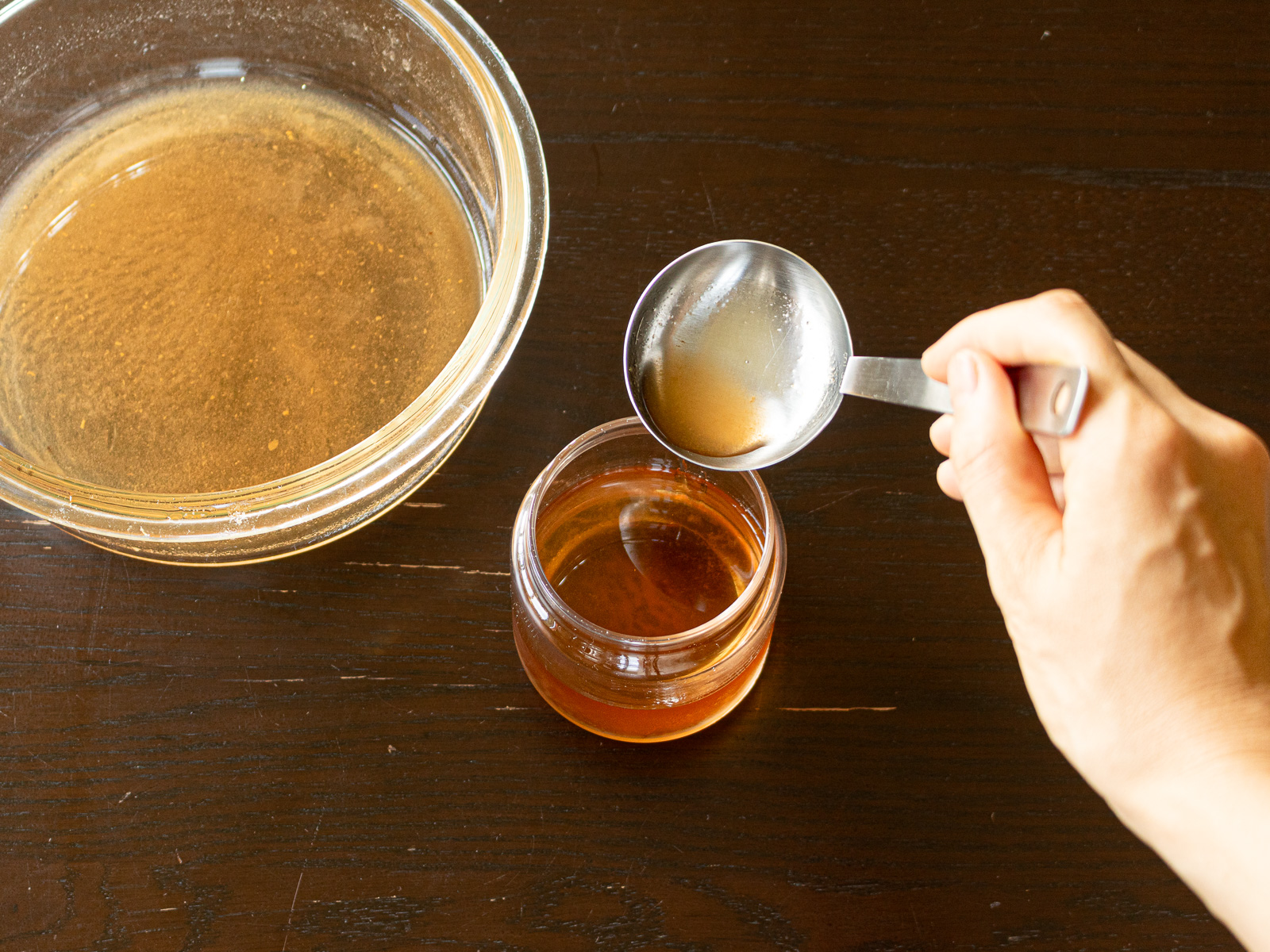
- Transfer and store
- Once the plums have been removed for drying, pour the remaining liquid into a clean storage container.
🌿 Glass containers are recommended, as they're resistant to acidity. If using a metal lid, place a sheet of plastic wrap or parchment paper between the lid and the container to prevent corrosion.

🌿 If you want to use some of the vinegar before putting the plums out to dry, leave enough liquid to keep them just submerged — this prevents mold.
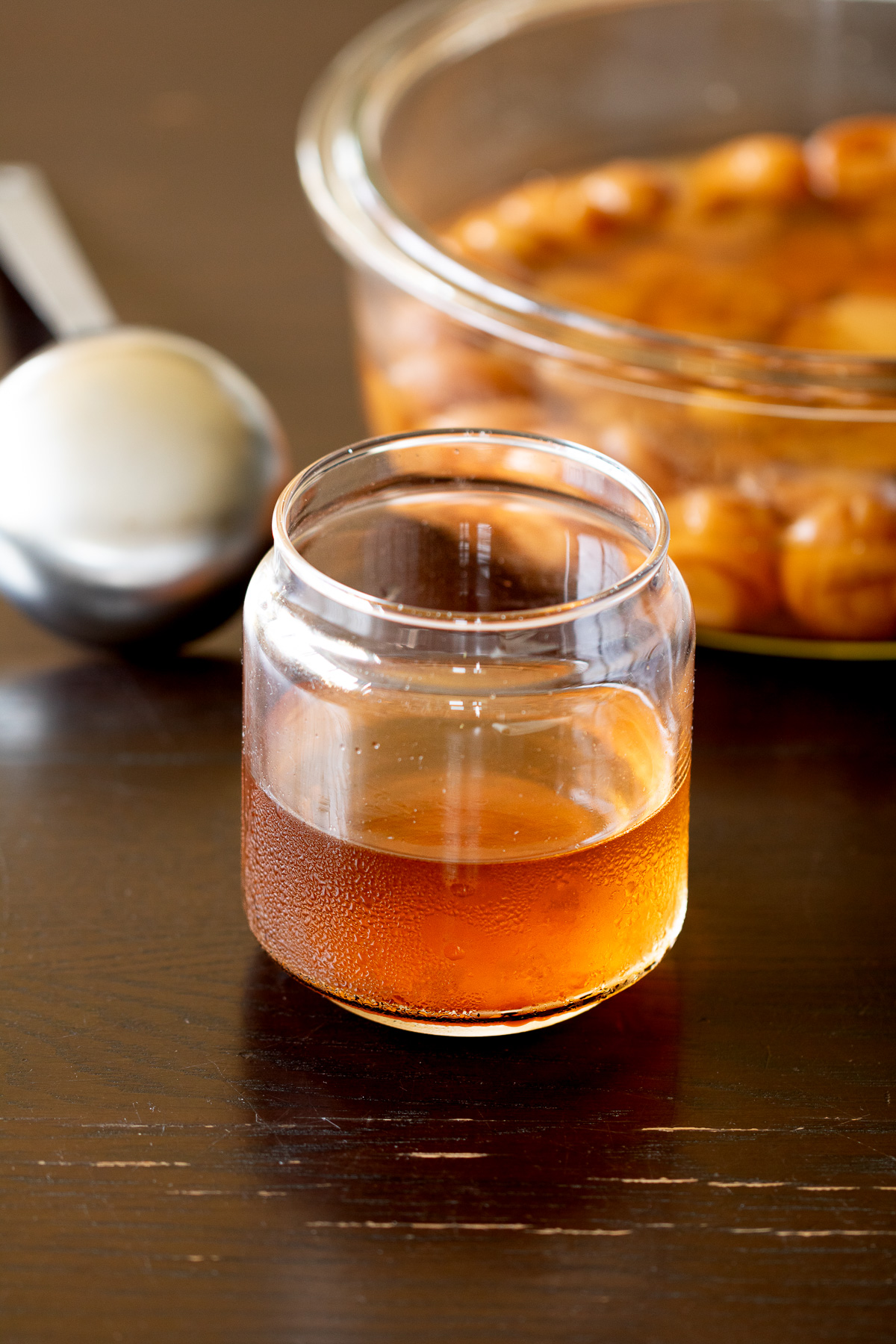
☀️ How to Store
- 15% salt concentration or higher — can be stored at room temperature, in a cool, dark place, away from direct sunlight
- Low-sodium (under 15%) — refrigeration is best
- Shelf life — up to 6 months to a year in the refrigerator. Properly stored, it can keep even longer
- Container — glass or enamel is recommended
🥄 Ume Plum Vinegar Uses
Ume plum vinegar is a versatile condiment that works well beyond Japanese cuisine. A little goes a long way — start with a small amount and adjust to taste.
As a seasoning
- Sunomono & dressed salads — use in place of regular vinegar for cucumber or seaweed salads.
- Salad dressing — mix with olive oil for a simple, bright dressing.
- Sushi rice — combine with sugar to season sushi rice.
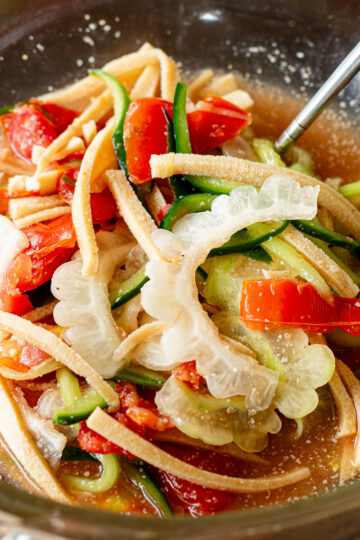
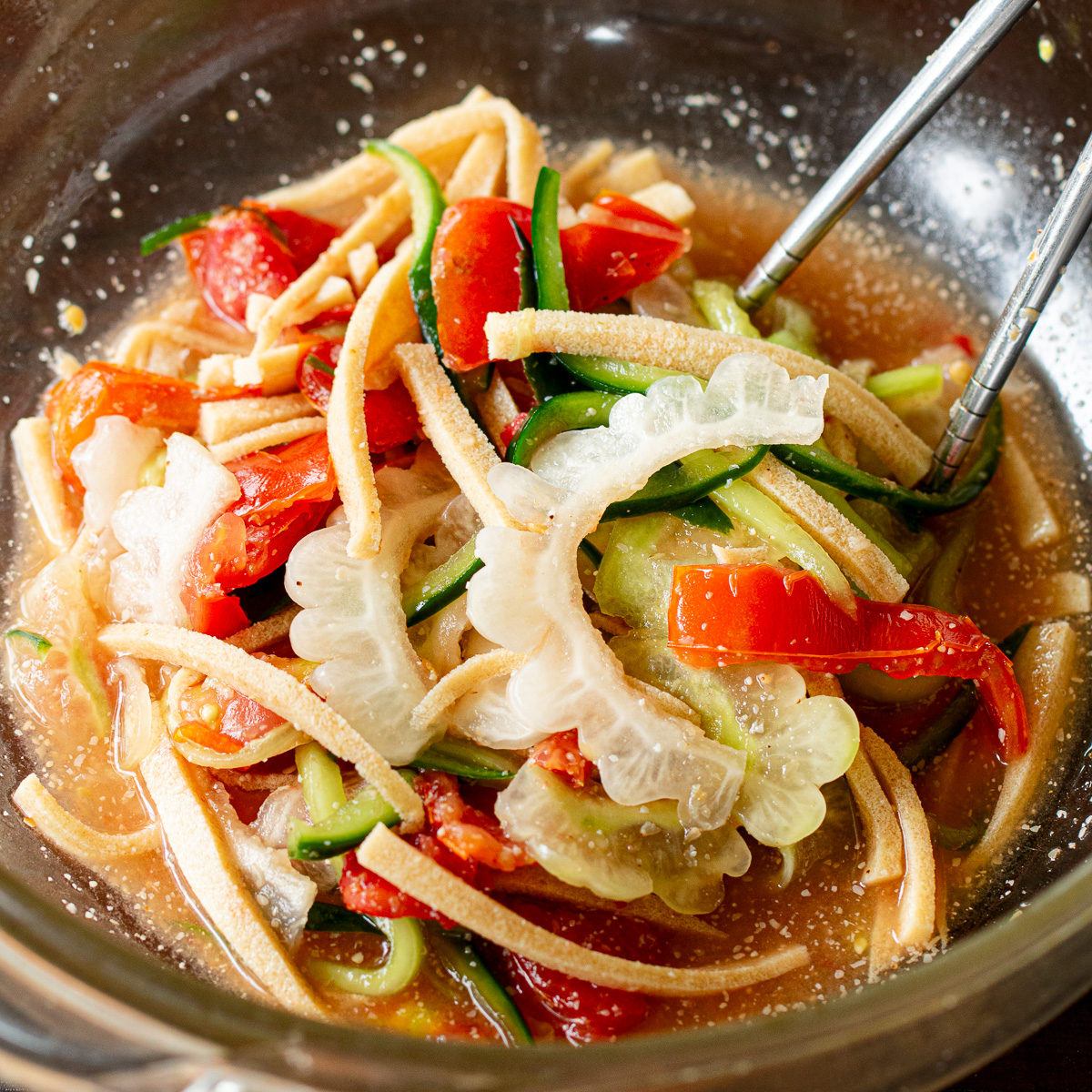
- Asian cooking — pairs well with Thai dishes like som tam and pad thai, as well as Vietnamese-style recipes.
For pickles & preserved foods
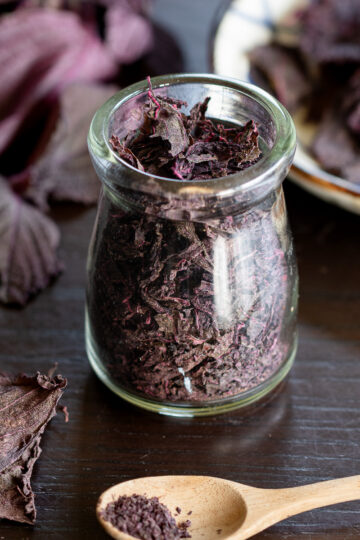
- Furikake — used in making yukari (red shiso furikake) and Korean perilla leaf furikake.
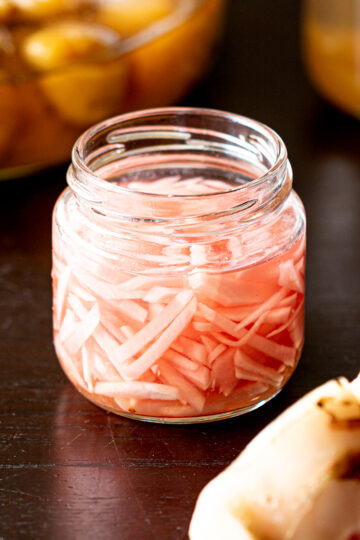
- Beni shoga — pickle fresh ginger in ume plum vinegar for a naturally pink pickled ginger.
- Japanese-style pickles — try it with cucumber, eggplant, or myoga for a quick, lightly seasoned pickle.
- Western-style pickles — substitute for regular vinegar in any standard pickle recipe.
- Pickled rakkyo — use in sweet vinegar pickles with rakkyo, a Japanese scallion bulb.
Everyday uses
- Onigiri hand water — use a little ume plum vinegar as hand water when shaping umeboshi onigiri. It adds a subtle umeboshi flavor from the first bite, along with mild saltiness and bright acidity.
- Cooking rice — add 1 tablespoon per 2 cups of uncooked rice before cooking.
The result is subtly seasoned with just the right amount of salt — delicious on its own, or simply wrapped in a sheet of nori. - Drinks — dilute with still or sparkling water for a citric acid boost — especially welcome after exercise.
📘 Kitchen Notes|Variations
- To make red ume plum vinegar — add salt-massaged red shiso leaves (see Yukari-style furikake recipe for how to prepare them) to the white variety. The shiso adds a vibrant color and a fresh, herbal fragrance — and gives beni shoga a deeper pink.
- Adjusting salt content — vinegar made from low-sodium umeboshi is lower in salt and easier to use as an everyday seasoning.
📚 FAQ
Ume plum vinegar is not fermented, so its sourness comes from citric acid rather than acetic acid. It also contains salt, so keep that in mind when using it in place of regular vinegar — you may need less salt elsewhere in the recipe.
It typically contains around 15–20% salt. When making it at home, the salt concentration reflects how much salt you use — though the exact percentage will vary.
At 15% salinity or higher, it can be stored at room temperature for an extended period. The low-sodium variety keeps for around 6 months to a year in the refrigerator.
It's available at Japanese grocery stores, natural food stores, and online. If you're already making umeboshi, the vinegar comes along for free — with the added bonus of controlling the salt level yourself.
Sterilize all containers and utensils before use — this is the most important step for preventing mold. Also, make sure to avoid metal containers, as the acidity can cause corrosion.
Strain it before storing if it bothers you.
Pulp tends to appear when damaged plums are used, so starting with unblemished, fully ripe plums will give you a cleaner, clearer vinegar.
Salt concentration also affects appearance — lower-salt batches tend to produce a paler, more translucent liquid. The flavor will vary depending on the plums you use, which is part of the fun of making it yourself.
🍑 Recipes Using Ume Plum Vinegar
Vegan recipes made with ume plum vinegar:
🥣 More Ume Recipes
From basic umeboshi to ume syrup and jam:
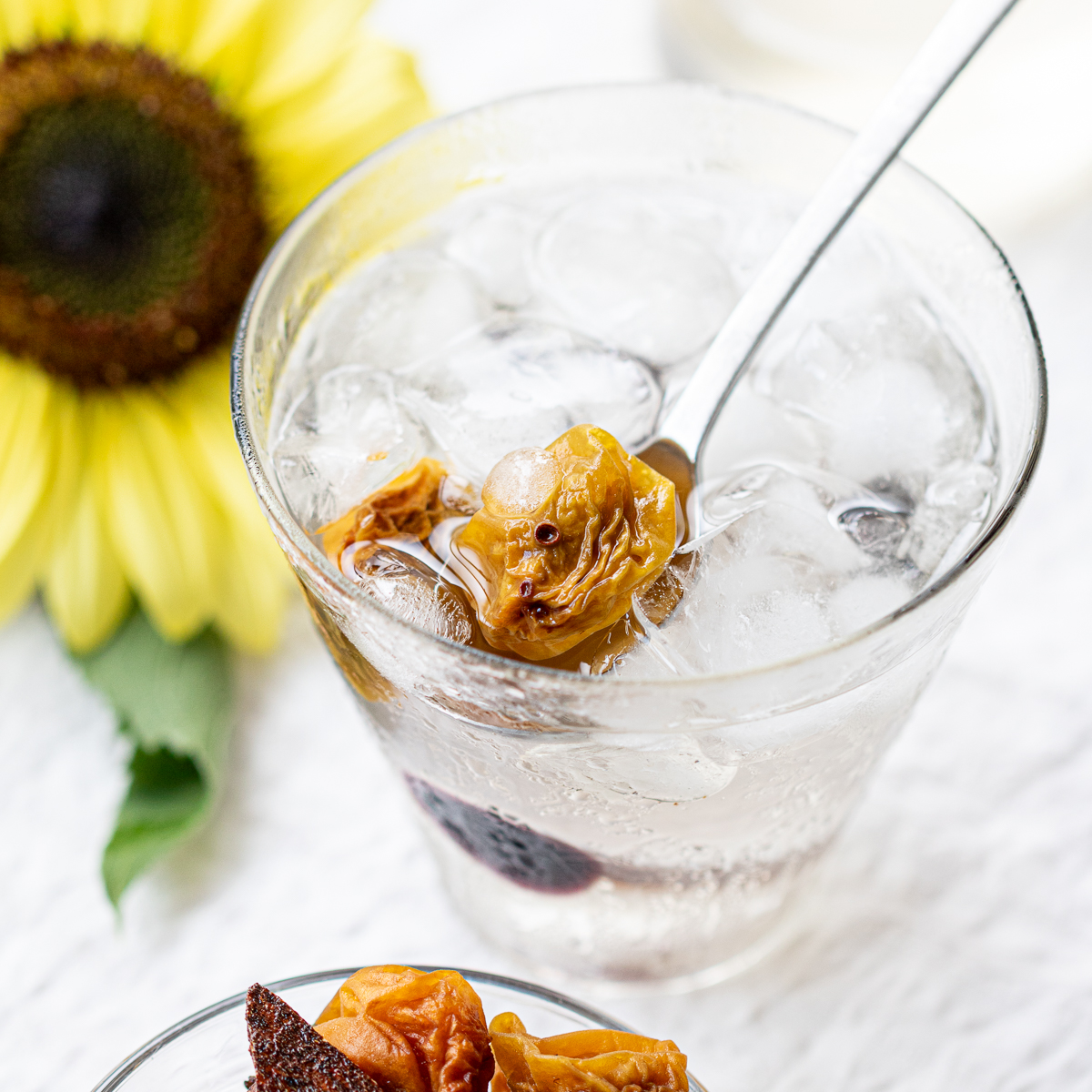
- Golden Ripe Ume Jam|A Jar of Hope in Winter
- Vegan Chai Plum Syrup (Japanese Ume Syrup with Spices)
- Korean Green Plum Syrup (Maesil-cheong)
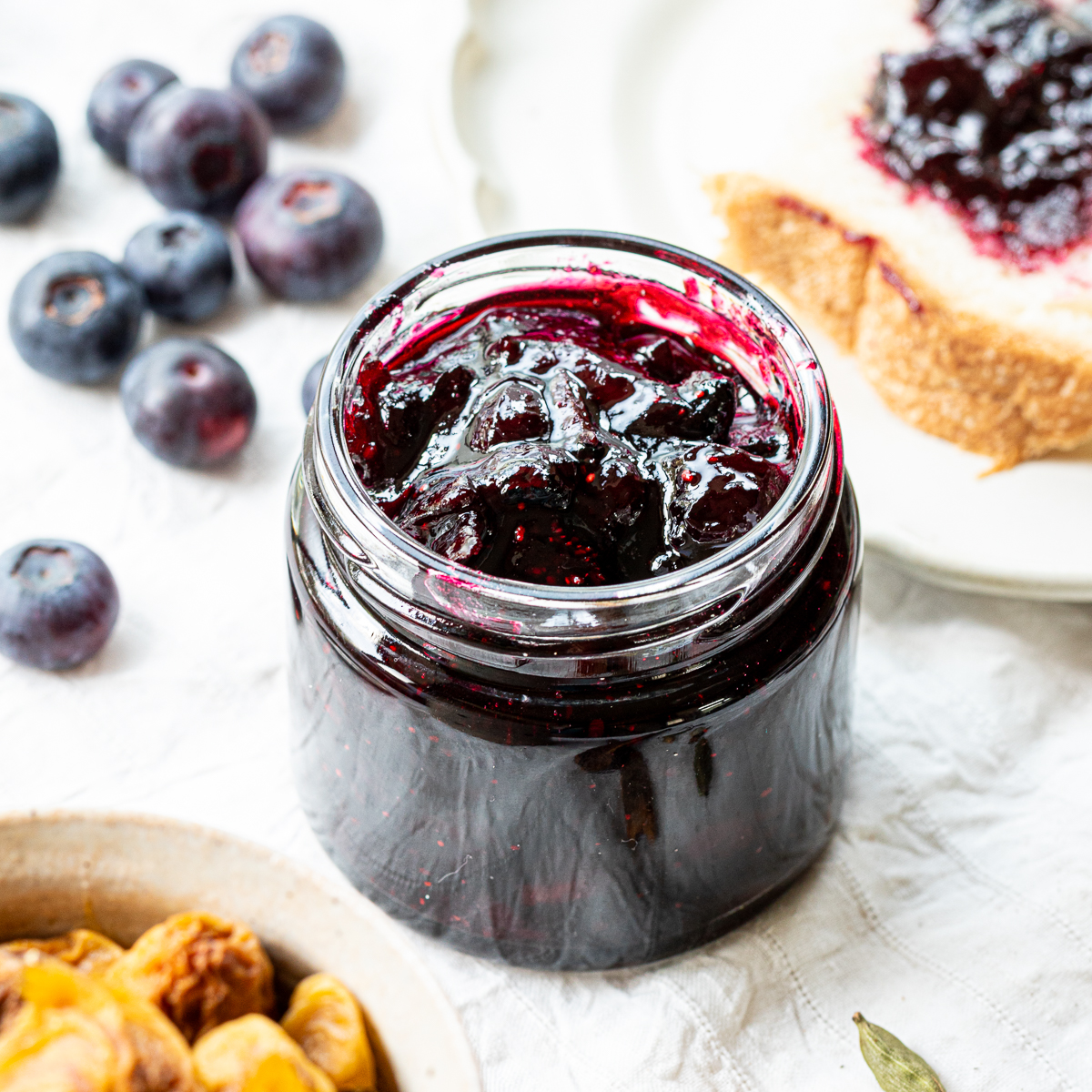
- Vegan Chai-Spiced Blueberry Plum Jam (Using Leftover Plums from Syrup)
- Maesil Jangajji (Korean Pickled Green Plums) – Sweet, Spicy, and Crunchy!
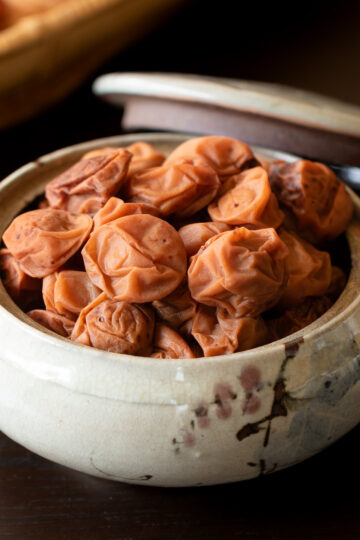
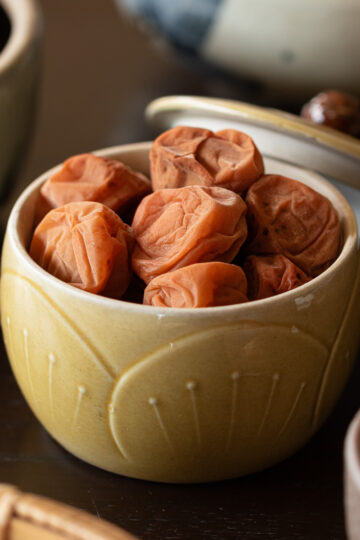
- How to Make Umeboshi (Japanese Pickled Plums)|15–18% Salt
- How to Make Low-Sodium Umeboshi|10% Salt, Refrigerator Method
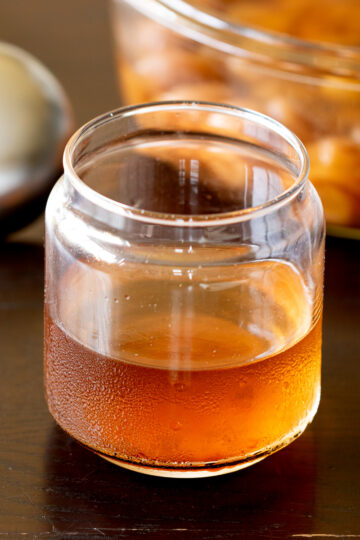
- How to Make Ume Plum Vinegar (Umezu / 梅酢)
🍽 Seasonal Vegan Recipes
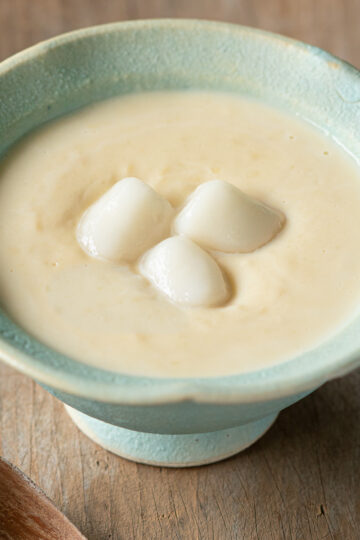
Latest vegan recipes:
✏️ Recipe Card
How to Make Ume Plum Vinegar (Umezu)
Equipment
- Glass or enamel storage container - for storing the vinegar
- Ladle or spoon
- Funnel - optional, but helpful
Ingredients
- 500 g ripe ume plums
- 75–90 g coarse salt (15–18% of plum weight)
- 2 tablespoon shochu (or vodka, or white ume plum vinegar)
Instructions
Salt-pickle the plums
- Follow the basic umeboshi recipe to salt-pickle the plums. Wait until the plums are fully submerged in the rising liquid.500 g ripe ume plums75–90 g coarse salt2 tbsp shochu
Collect the ume plum vinegar
- When the plums are ready to be removed for drying, carefully ladle the liquid into a clean glass or enamel container.
Store the vinegar
- Seal and store in a cool, dark place or in the refrigerator.
Notes
- 15% salt or higher — room temperature, in a cool dark place away from direct sunlight
- Low-sodium (under 15%) — refrigerate
- Shelf life — up to 6 months to a year; longer with proper storage
- As a seasoning — sunomono, salad dressing, sushi rice
- For pickles — beni shoga, Japanese-style pickles, rakkyo, Western-style pickles
- Everyday — onigiri hand water, add 1 tablespoon per 2 cups of uncooked rice
💐 Closing
Ume plum vinegar is one of those quiet kitchen staples that earns its place well beyond Japanese cooking.
This year I pickled more plums than ever — which meant plenty of ume plum vinegar to go around. Enough for pickles, dressings, and a few culinary adventures in other cuisines.
Here's to seeing where that little bottle takes me next.

Comments
No Comments