
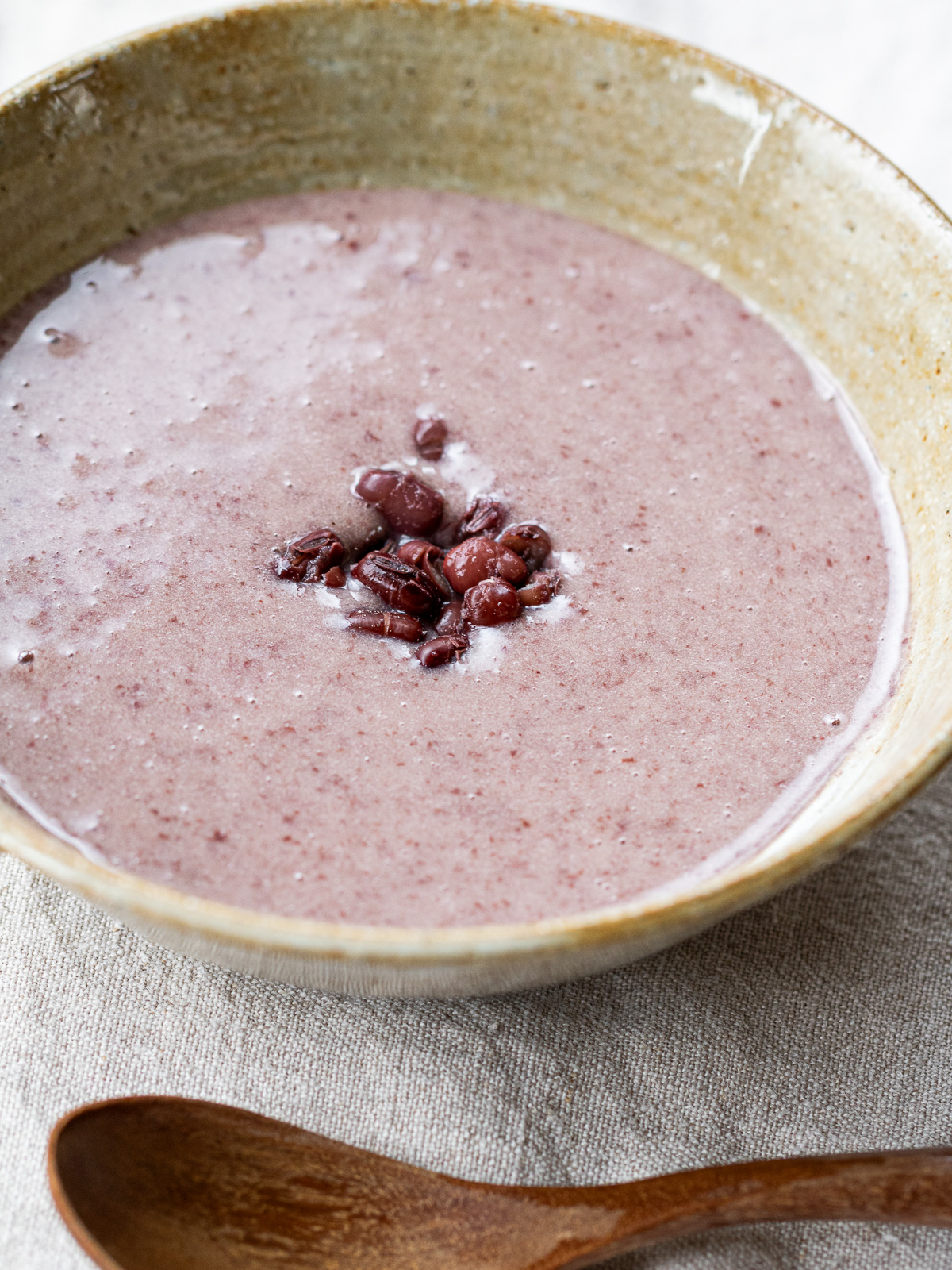
This patjuk (팥죽) recipe is one of my favorite ways to use up a batch of cooked adzuki beans. It comes together with just four ingredients, and the result is a warm, silky porridge that feels like dessert.
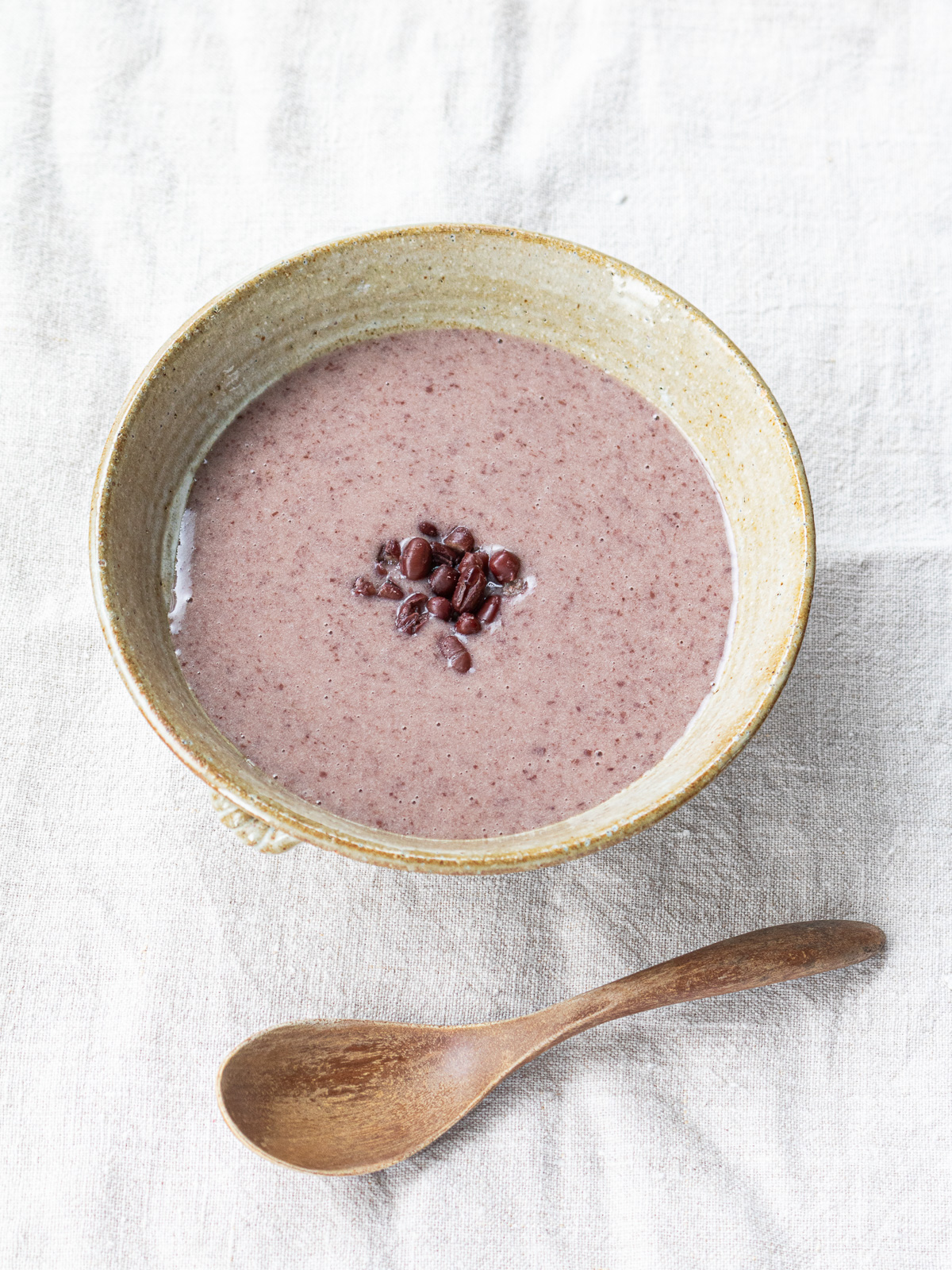
This recipe was inspired by the Korean variety show Youn's Stay, where a similar porridge appeared on the breakfast menu. The original version uses glutinous rice flour, but here I use whole glutinous rice cooked in a rice cooker — a more straightforward method that makes it easier to control the consistency, while still yielding a smooth, creamy texture.
The soft pink color is almost spring-like — a little cheerful, even in the middle of winter.
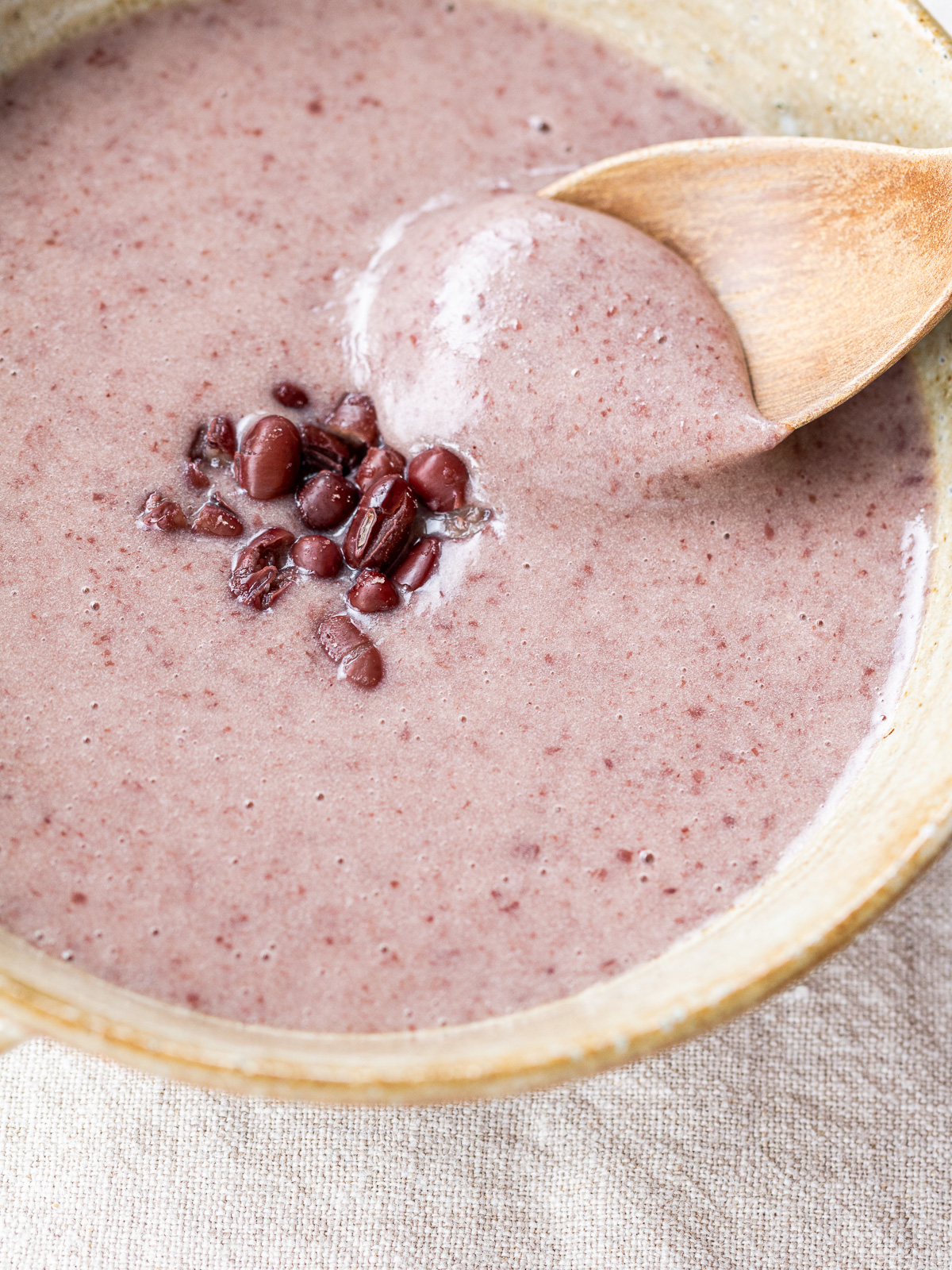
If you have never tried Korean-style porridge before, this is a great place to start. Serve it warm for breakfast or as an afternoon snack.
Jump to:
🧺 What Is Patjuk?
Patjuk (팥죽) is a Korean sweet red bean porridge made with glutinous rice. Unlike Japanese rice porridge (okayu/お粥) — which has a looser, grainy texture and is made from regular short-grain rice — patjuk is smoother and thicker. It comes in both sweet and savory versions. This recipe is the sweet kind — almost like a dessert rather than a savory bowl of typical Asian congee.
In Korea, patjuk has long been associated with the winter solstice (동지, Dongji). It is traditionally eaten on this day, as the deep red color of the adzuki beans was believed to ward off bad luck. Today it is enjoyed year-round as a warming breakfast or afternoon snack.
The glutinous rice is what gives patjuk its signature texture. It breaks down into a naturally thick, creamy consistency that regular rice simply can't achieve.
🌿 Ingredients
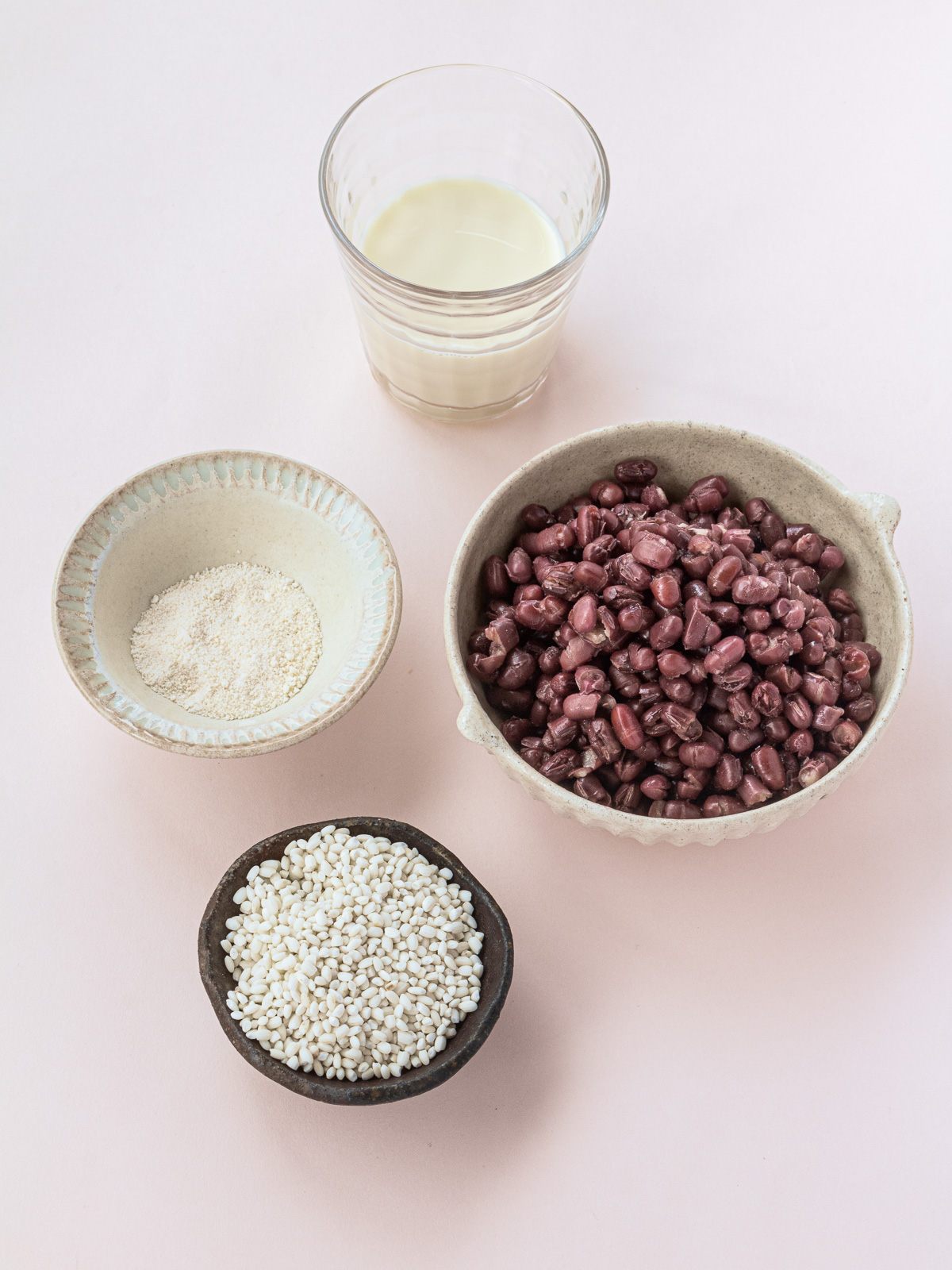
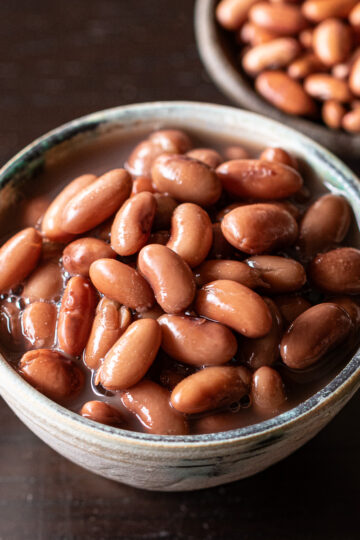
- Cooked adzuki beans: Unsweetened cooked adzuki beans work best here, as they allow you to control the sweetness to your taste. I make mine from scratch — here is how to cook dried adzuki beans.
- Glutinous rice: This is what distinguishes patjuk from regular rice porridge. Glutinous rice breaks down into a naturally thick, smooth consistency and adds a subtle sweetness that regular short-grain rice doesn't have.
- Unsweetened soy milk: Adds creaminess while softening the slight bitterness of the adzuki beans. Add as much or as little as you like to adjust the consistency.
- Sugar: I use powdered beet sugar for a clean, mild sweetness. For a slightly deeper flavor, you can add a small amount of unrefined cane sugar, though other sugars work just as well.
For exact quantities, see the recipe card below👇
🥣 How to Make Patjuk
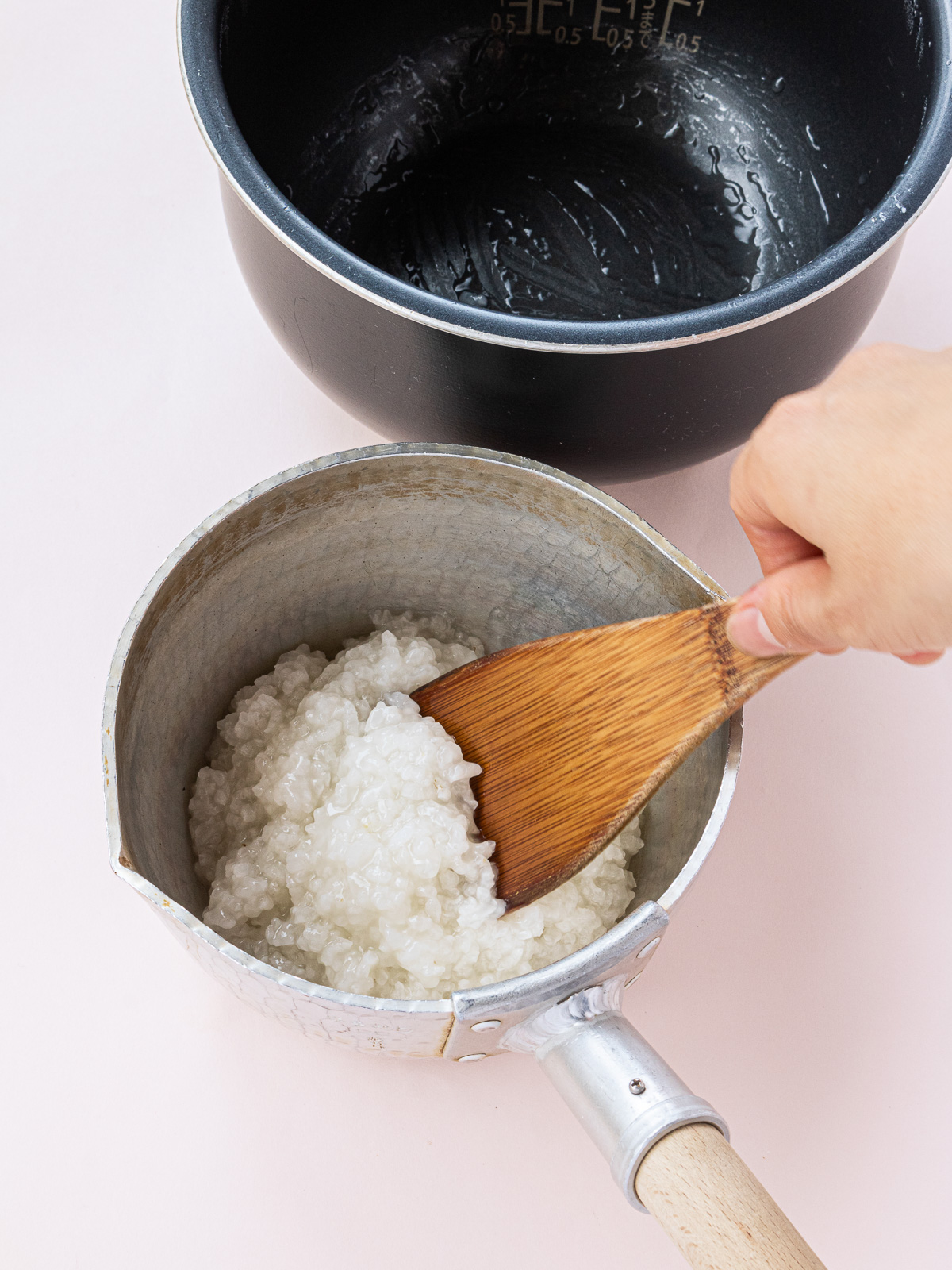
- Cook the rice porridge:
- Rinse the glutinous rice and add it to your rice cooker with water.
- Cook using the porridge setting, then transfer it to a pot once finished.
🌿 Don't have a rice cooker? See the FAQ below.
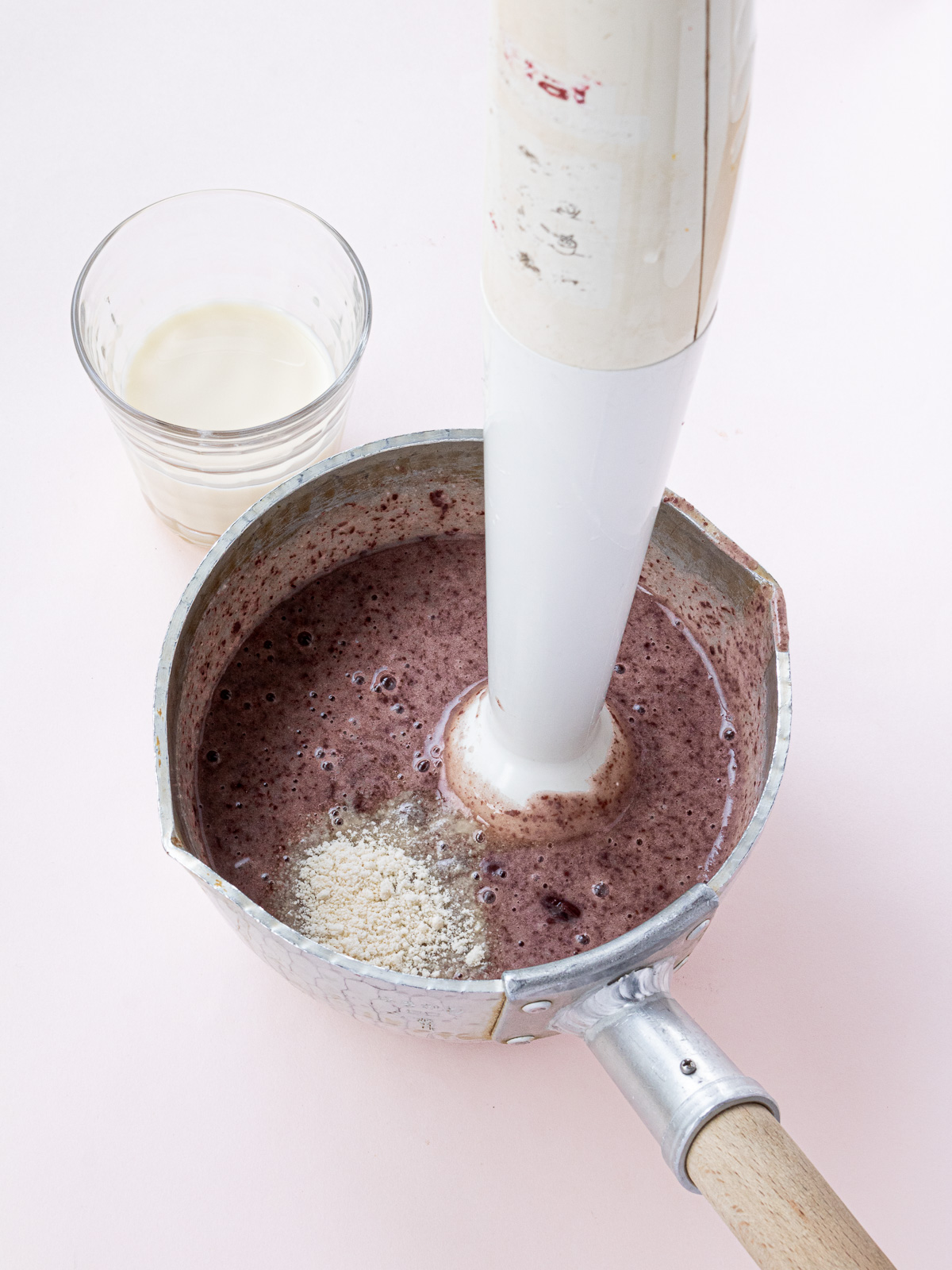
- Blend and adjust:
- Add the cooked adzuki beans and sugar to the pot, then blend with an immersion blender until smooth.
- Add soy milk a little at a time, adjusting the consistency and flavor to your liking.
- Once it reaches a texture you like, warm it over low to medium heat, stirring with a spatula to prevent burning.
- Serve while it's warm.
📕 Tips
- Adjust the consistency with soy milk: The porridge thickens as it cools, so add soy milk gradually and stop when it looks slightly thinner than your desired consistency.
- Stir while heating: Patjuk burns easily once it thickens. Keep the heat at low to medium and stir continuously with a spatula.
- Blend to your preferred texture: This recipe blends the porridge until smooth for a creamy texture ,but leaving some whole beans or adding some later is an option if you prefer more texture.
📘 Variations
- Swap the adzuki beans for kabocha: Replace the beans with steamed kabocha squash to make a Korean pumpkin porridge. Just as smooth and creamy, with a naturally sweet, dessert-like flavor.
🫙 Storage
Store any leftovers in an airtight container in the refrigerator. The porridge thickens as it sits, so add a splash of soy milk when reheating and stir well.
Since I usually make a small batch, I tend to finish it by the next day. As rice porridge spoils easily, it’s best to eat it as soon as you can — especially during the warmer months.
💭 FAQ
Yes. Cook the glutinous rice with water in a pot over low heat, stirring occasionally to prevent sticking. Be careful not to add too much water at once, as this can make the porridge watery. Start with 45ml glutinous rice : 200ml water, and add more water as needed.
Yes, regular milk works fine if you are not vegan. If you prefer to keep it plant-based, use soy milk or another plant-based milk.

If you feel like whispering a thought, asking a question, or simply saying hello — the comment section is always open 📮
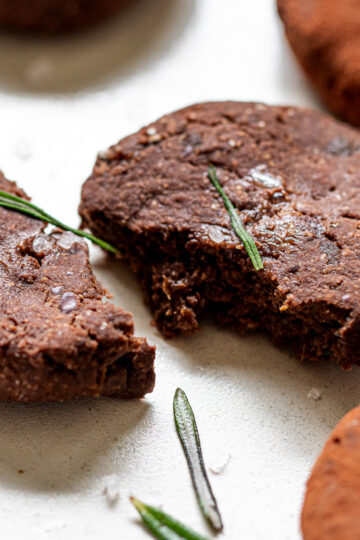
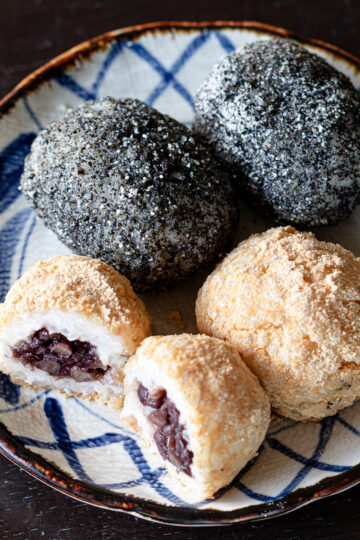
🫘 More Recipes with Adzuki Beans
Using leftover cooked adzuki beans:
🍚 More Porridge Recipes
Savory to sweet:




✏️ Recipe Card

Patjuk (Korean Red Bean Porridge)
Equipment
- pot
- rice cooker
- Immersion blender
- Spatula
Ingredients
- 250 g cooked adzuki beans (unsweetened; adjust to taste)
Porridge
- ¼ cup glutinous rice (using a 180ml rice cooker cup)
- 200 ml water (or follow your rice cooker's porridge setting)
To finish
- 50 ml+ unsweetened soy milk (adjust to taste)
- 5 tablespoon sugar (adjust to taste)
Instructions
Cook the porridge
- Rinse the glutinous rice and add it to the rice cooker with water. Cook on the porridge setting. No soaking needed.¼ cup glutinous rice200 ml water
- Once done, transfer to a pot.
Blend and adjust
- Add the cooked adzuki beans to the pot and blend with an immersion blender until smooth.250 g cooked adzuki beans
- Add the sugar and blend again.5 tablespoon sugar
- Add 50ml of soy milk. For a milder, creamier flavor, add more a little at a time.50 ml+ unsweetened soy milk
- Adjust the sweetness with sugar one more time if needed, then warm over low to medium heat, stirring with a spatula to prevent burning.
- Serve warm.

If this recipe made its way into your kitchen, and you'd like to share that moment, feel free to tag @veginveganvegun or use #vegin_vegan_vegun.
Your quiet stories inspire me deeply 🕊️


Comments
No Comments