
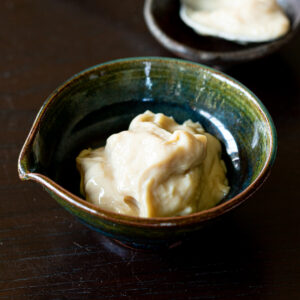
A thick, spoon-coating vegan custard made with soy milk and kudzu starch—rich, smooth, and lightly sweetened.
No eggs, no dairy, just gentle ingredients that bring comfort in every bite.
Spoon it into tarts or pies, or enjoy it on its own as a simple dessert.
Jump to:
🎐 Journal from the Kitchen
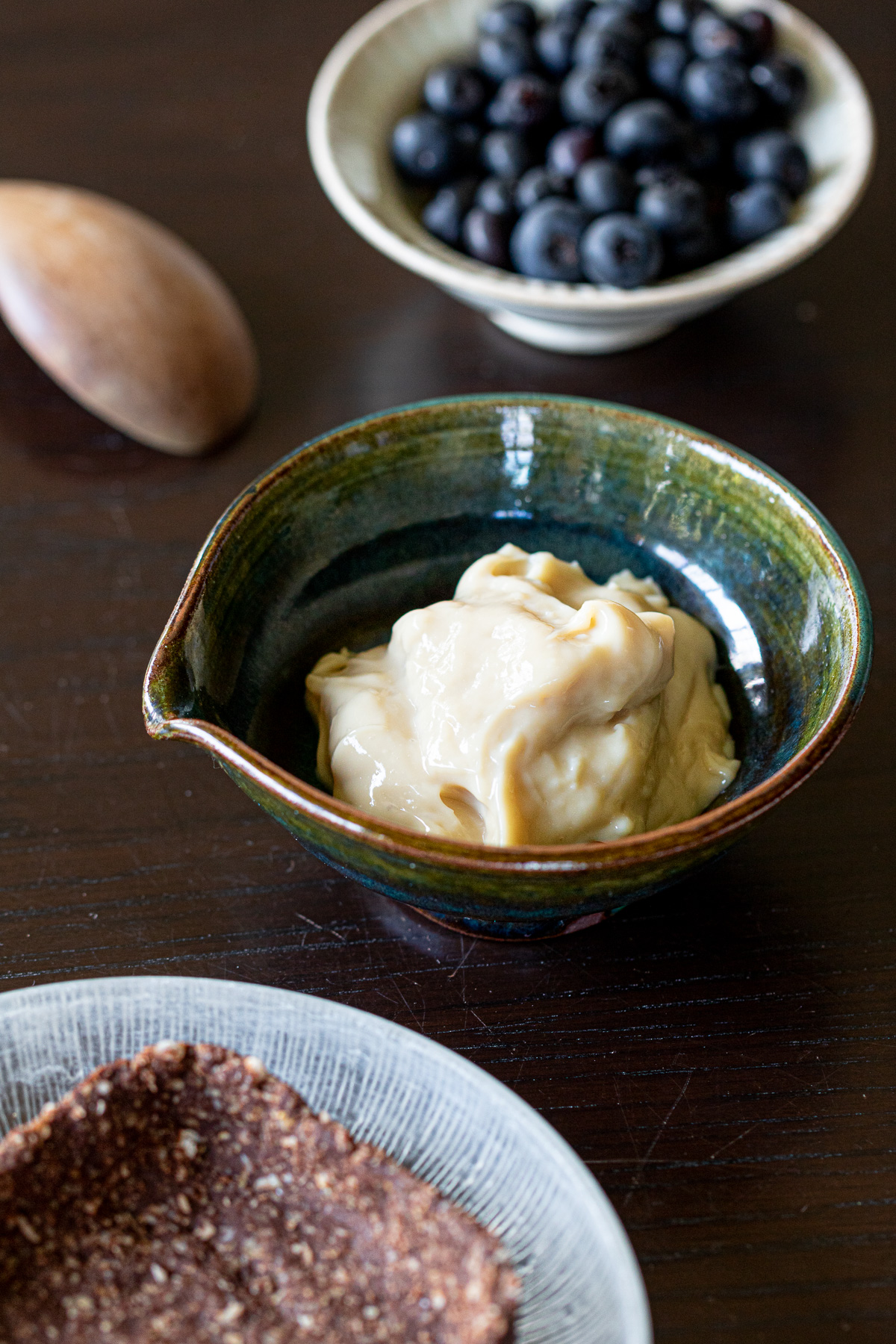
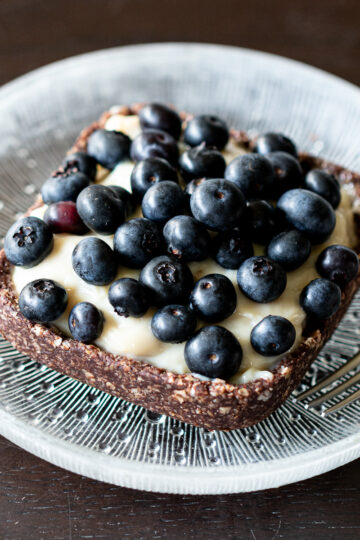
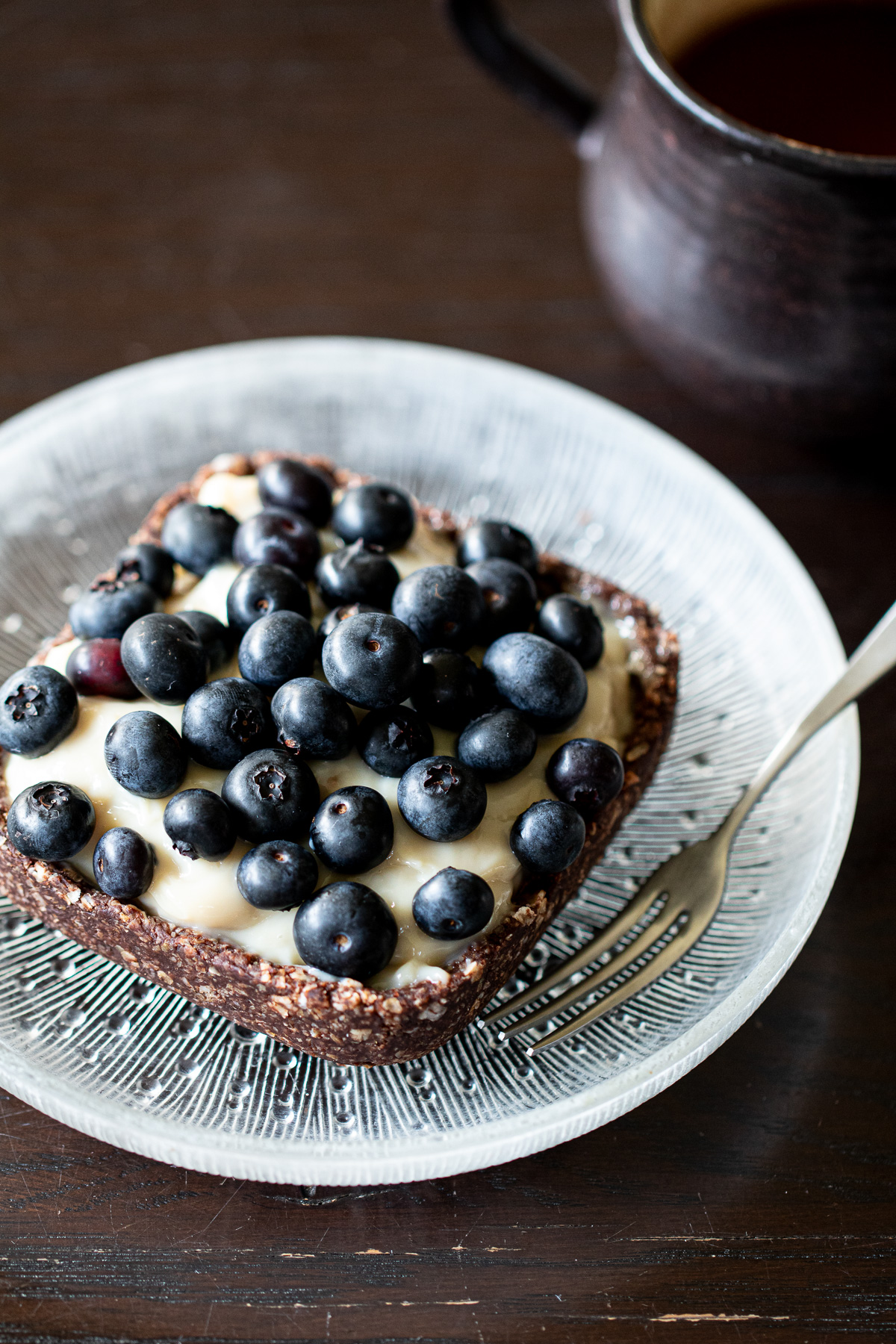
I wanted to make a blueberry custard tart, so I turned to kudzu starch to create a vegan custard cream.
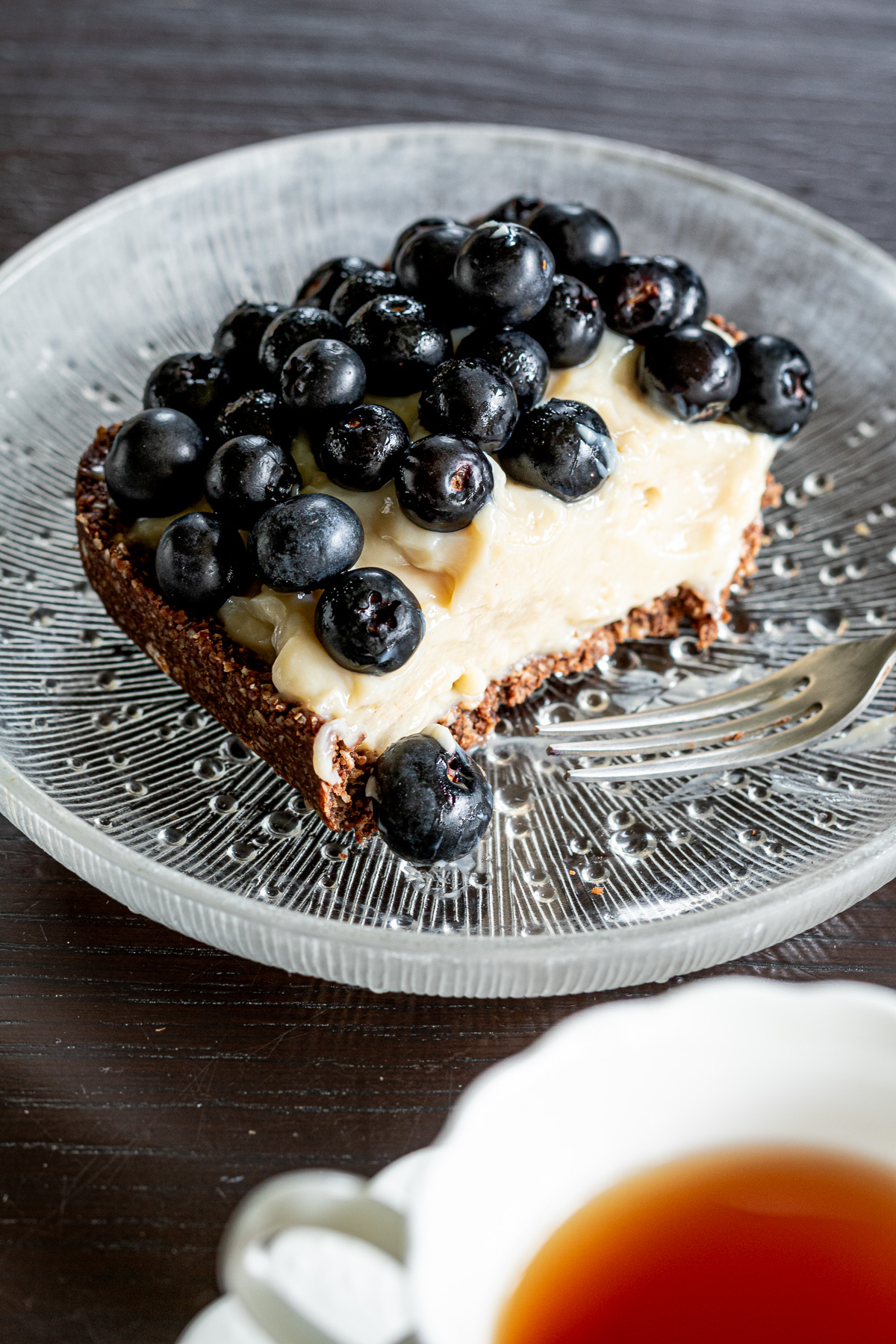
Into a no-bake cocoa oat crust, I spread a generous layer of this rich custard and crowned it with fresh blueberries. A simple gift to savor on a warm evening—summer’s own reward.
As the evening cicadas sing outside,
bite by bite,
I let the cool cream linger on my tongue.
Each mouthful feels like tasting the season itself—gentle, mellow, and deeply satisfying.
🕊 Why You’ll Love This Recipe
- Egg- and dairy-free yet still deeply satisfying
- Kudzu starch creates a silky, chewy richness that coats the tongue
- Lightly sweetened & lower in oil, making it gentle on the body
- Pairs beautifully with no-bake tart shells or pies
- Naturally gluten-free
🧺 Why I Chose Kuzu Starch
In my vegan lemon curd recipe, I used rice flour for thickening.
This time, I deliberately chose kuzu starch for a softer, more supple texture.
When heated, kuzu becomes translucent and smooth, giving the custard a velvety, slightly springy consistency that that gently coats the tongue.
Rice flour, on the other hand, creates a lighter texture with a slightly grainy feel.
That’s why kuzu felt right for a custard with a thick, rich texture.
It’s interesting how simply changing the starch can give the same custard a completely different character.
🥛 Ingredients
【 For one tart shell, about 10.6 × 10 × 5.4 cm — Noda enamel square S size】
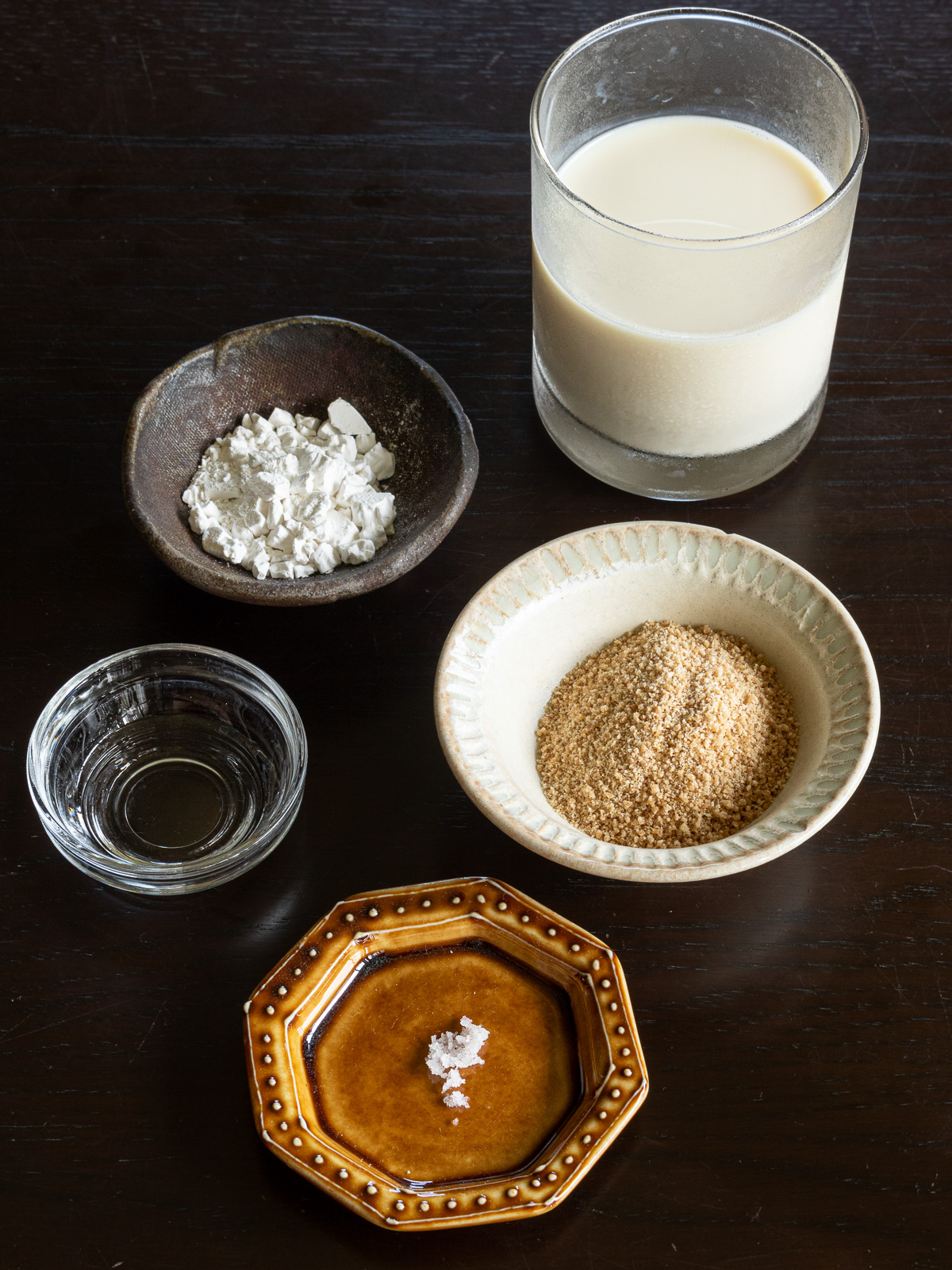
- kudzu starch (kudzu powder)
- beet sugar or unrefined cane sugar
- unsweetened soy milk
- coconut oil (neutral, or use another plant-based oil)
- salt (to balance flavor)
🥄 How to Make
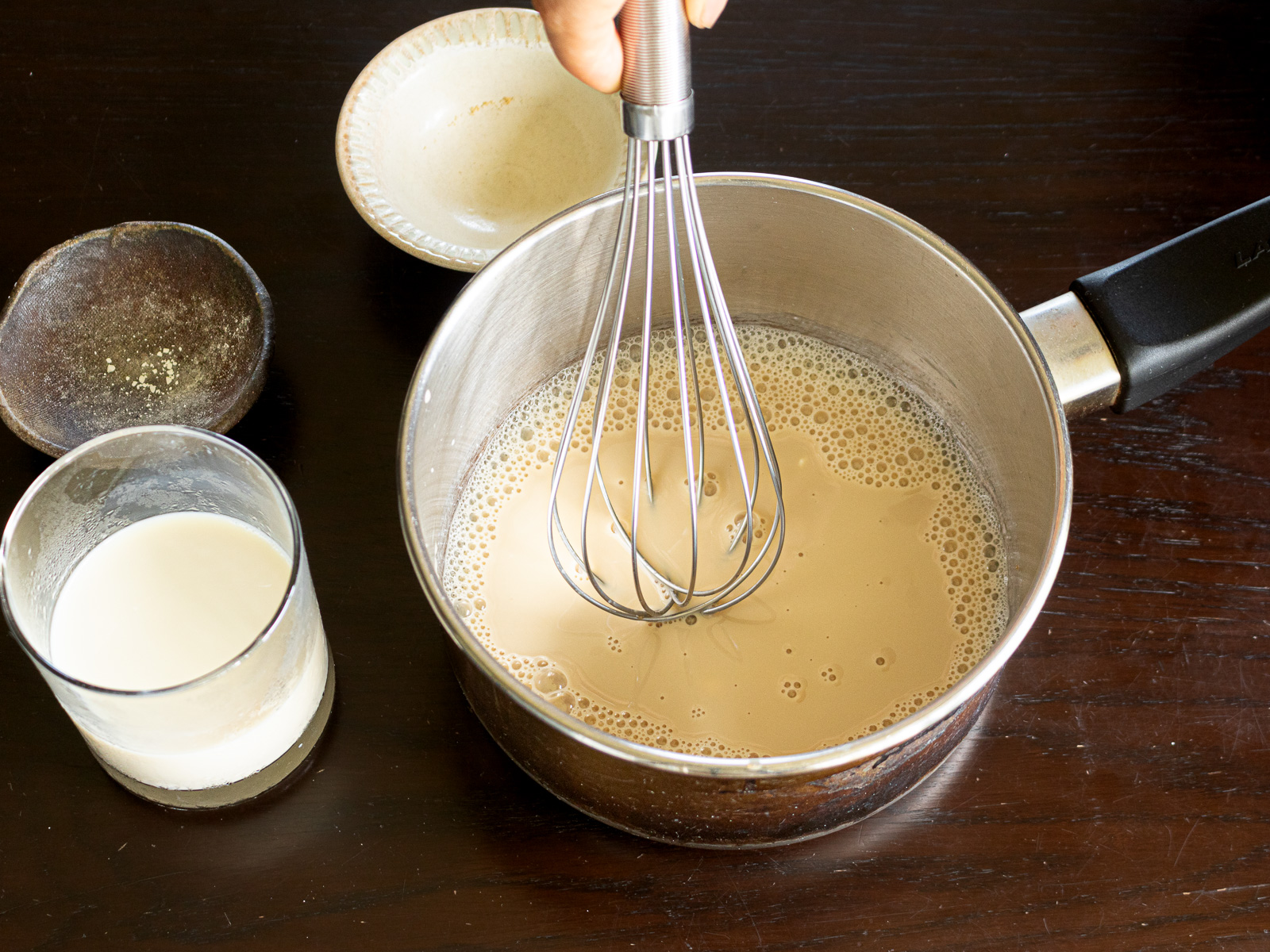
- Combine
- In a small saucepan, add the kudzu starch and sugar.
- Gradually whisk in about 50 ml of the soy milk until smooth.
🌿 If the kudzu grains are stubborn, let it sit for a few moments to dissolve more easily.
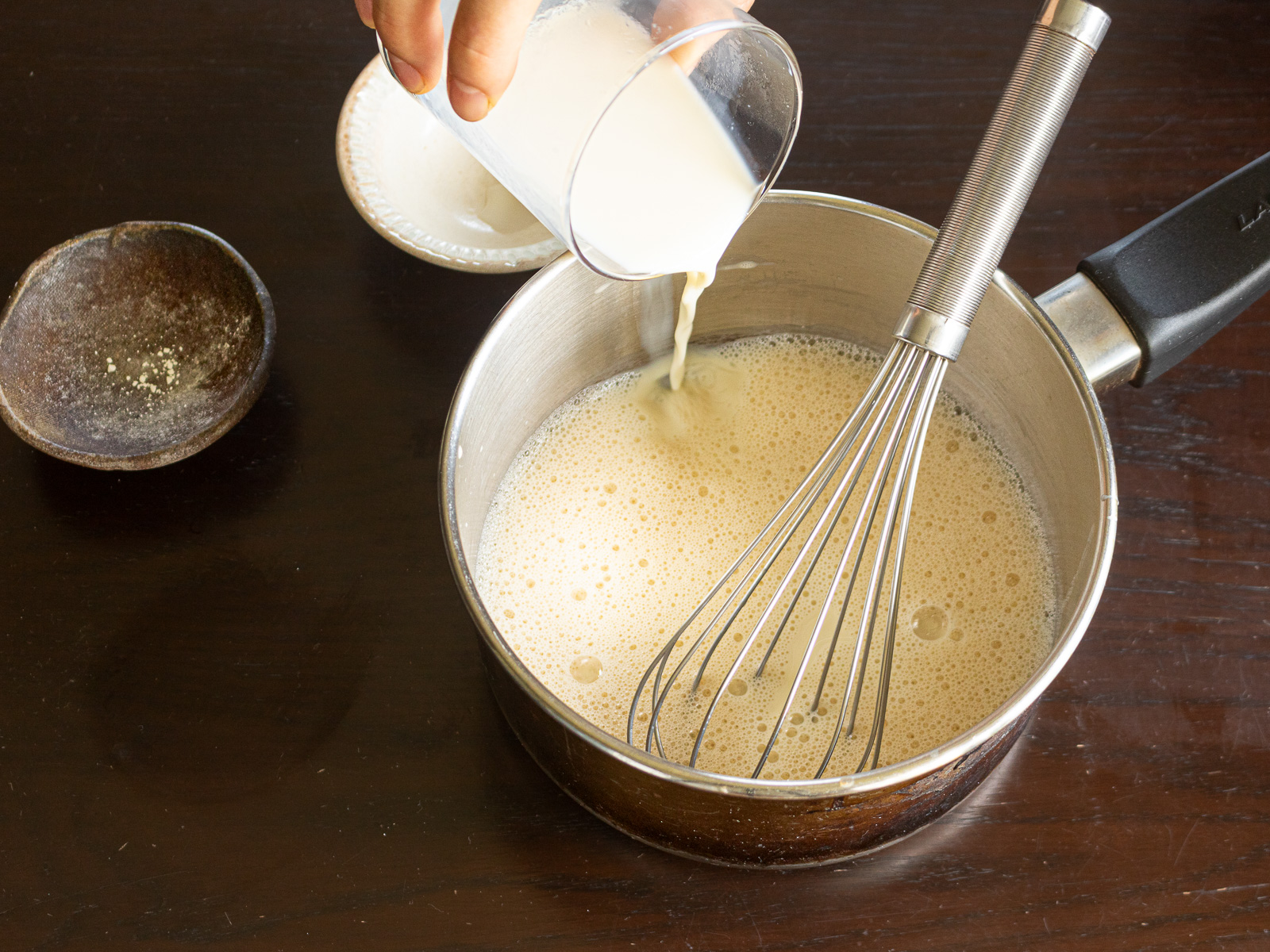
- Mix
- Gradually add the remaining soy milk, whisking until fully combined.
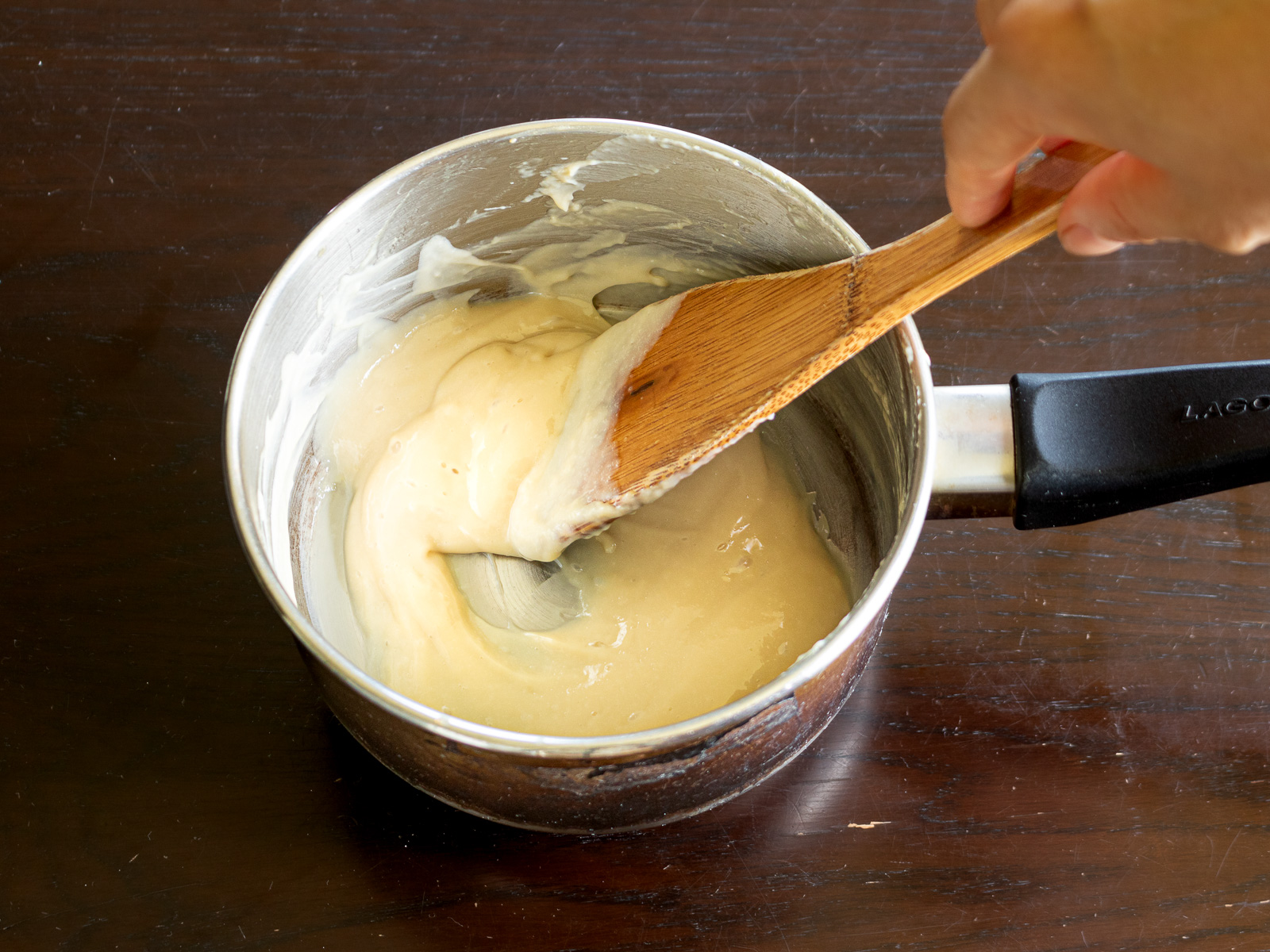
- Heat
- Place the pan over medium-low heat and stir gently but continuously with a wooden spatula.
- Once it starts to thicken, reduce to low heat and stir more quickly until it turns glossy with a slight translucence.
🌿 Thickening may seem slow at first, but once it starts, it happens quickly. Keep stirring steadily to prevent lumps.
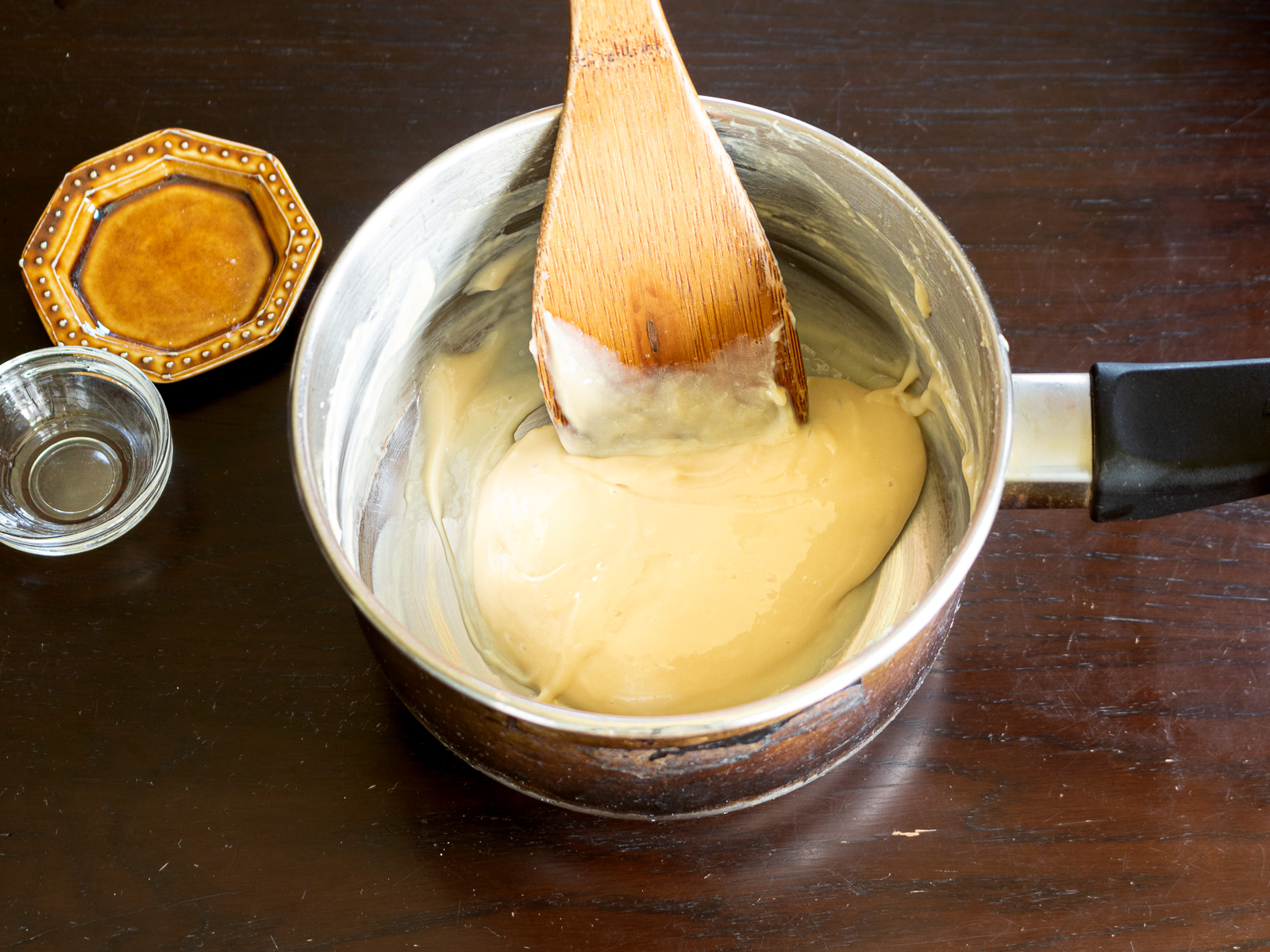
- Finish
- Remove from heat, add the coconut oil and salt, and gently stir until smooth.
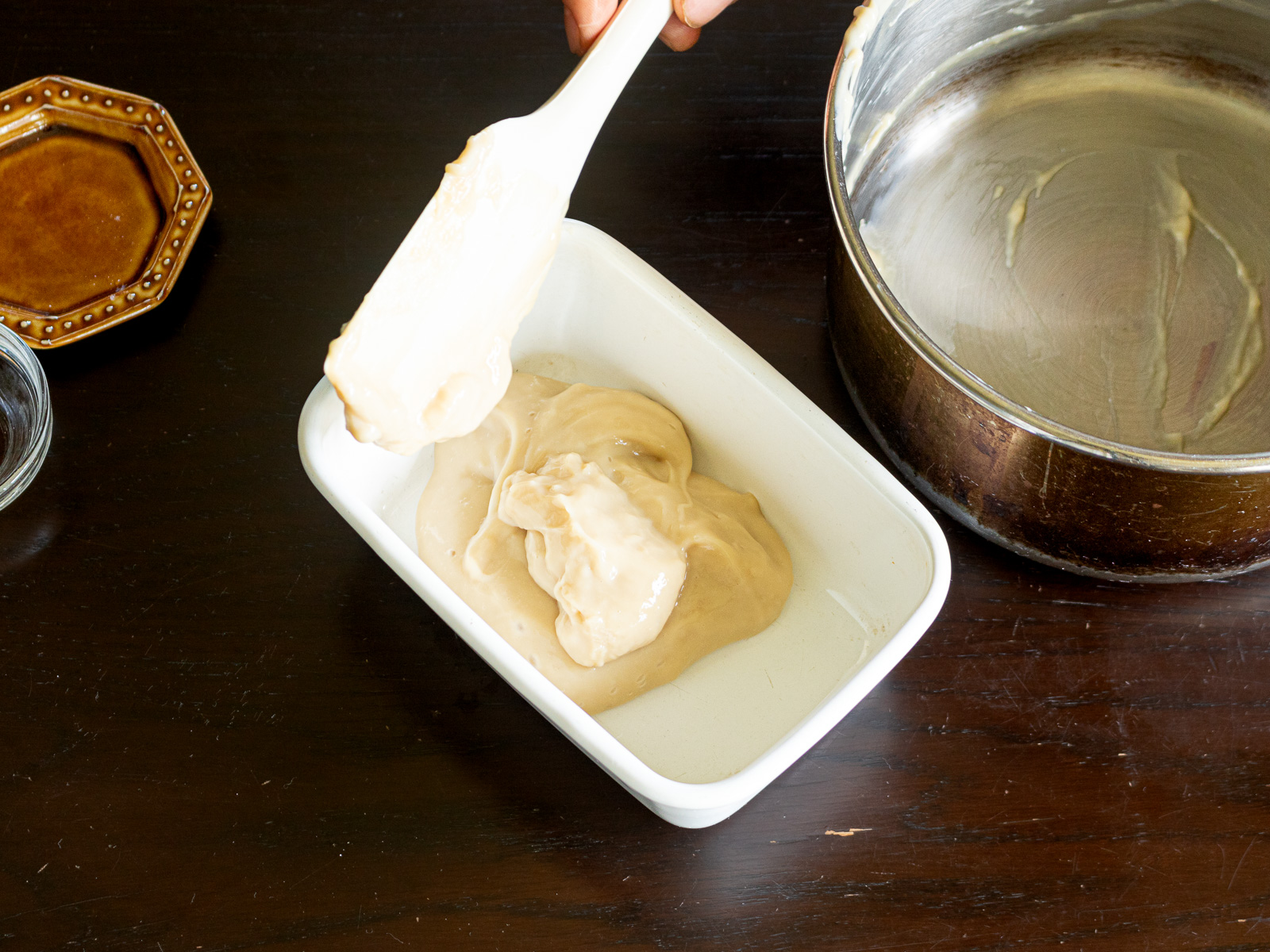
- Chill
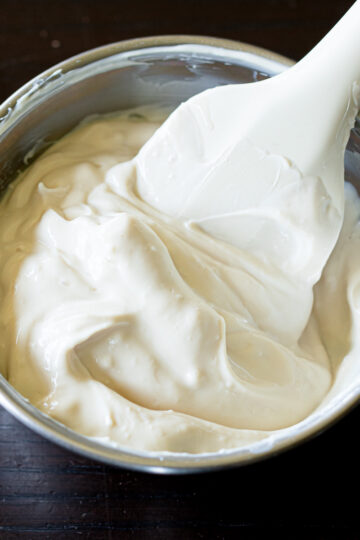
- Transfer the custard to a container, let it cool slightly, and refrigerate until chilled.
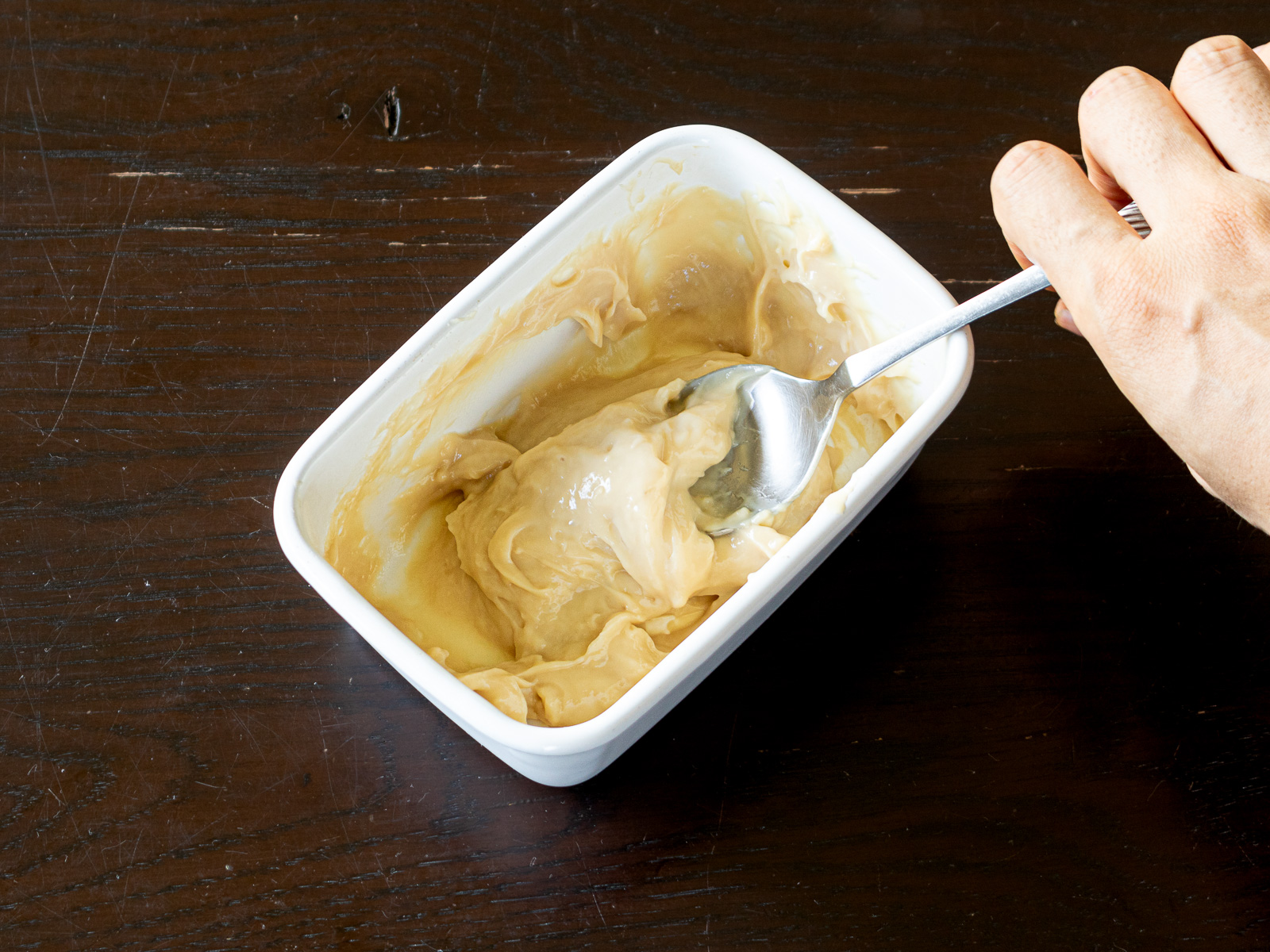
- Stir Before Serving
- Stir once more before using to return it to a smooth, spreadable consistency.
📘 Kitchen Notes|Tips & Variations
- Dissolve the kudzu starch thoroughly before heating.
- Once it begins to thicken, keep stirring steadily to prevent lumps.
- If you start to feel rushed, take a breath—keep your hands moving, and your mind calm.
- Once chilled, it sets with a soft, slightly springy texture. Stirring before serving brings back its smoothness.
- Add lemon zest or juice at the end for a simple lemon custard variation.
📗 Ways to Use
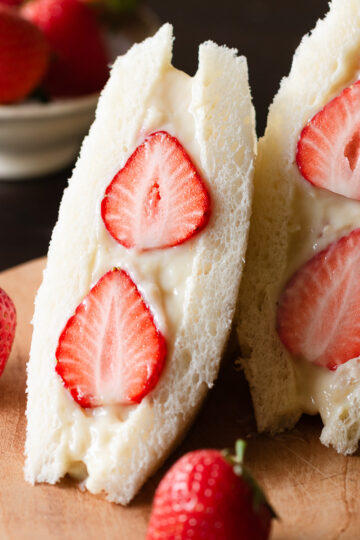
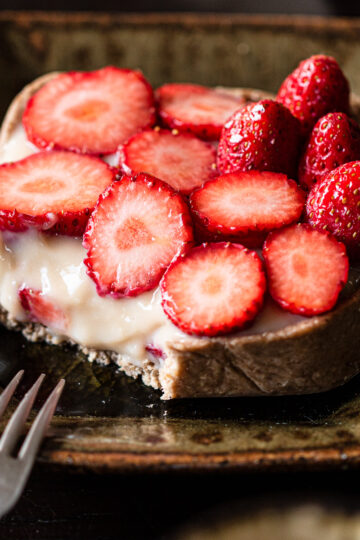
- Fill crepes
- Spread generously into a tart shell
- Layer with sponge cake and fruit for a trifle
- Wrap in soft mochi dough to make a creamy daifuku (クリーム大福)
- Use in cakes and other desserts
📚 FAQ
Best within 2 days. After that, the texture may change.
It will thicken, but won’t have the same translucent finish and soft, slightly springy texture that kudzu starch gives.
Yes, use about 10–12 g for 10 g of kudzu starch. The texture will differ—rice flour stays more opaque and slightly matte, with a lighter, more delicate consistency. Be sure to cook it longer to remove any floury taste.
Vegan Soy Milk Custard (Kuzu Custard) — Egg-Free & Gluten-Free
Equipment
- Small saucepan
- whisk
- wooden spatula (or heatproof spatula)
- Measuring spoons
- Storage container
Ingredients
- 10–12 g kudzu starch
- 18 g beet sugar or unrefined cane sugar (adjust to taste)
- 150 g unsweetened soy milk
- 1 teaspoon neutral coconut oil (or other mild plant oil)
- pinch of salt (to balance flavor)
Instructions
- Dissolve: In a saucepan, whisk kudzu starch and sugar with about 50 ml soy milk until smooth.10–12 g kudzu starch18 g beet sugar or unrefined cane sugar150 g unsweetened soy milk
- Mix: Add the remaining soy milk gradually, whisking well to combine.
- Heat: Place the pan over medium-low heat and stir slowly and continuously with a wooden spatula. Once it starts to thicken, reduce to low heat and keep stirring a bit more quickly until it turns glossy with a slight translucence.
- Finish: Remove from heat and stir in the oil and salt until smooth.1 teaspoon neutral coconut oilpinch of salt
- Chill: Transfer to a container, let it cool slightly, then refrigerate until chilled.
- Stir: Before using, stir well to return it to a smooth, creamy consistency.
Notes
- Kudzu starch must be fully dissolved before heating.
- Thickening happens suddenly—keep stirring to avoid lumps.
- Chill until set, then stir before serving to restore a smooth texture.
- Add lemon zest or juice for a fresh custard twist.
🫐 Closing Thoughts
The tart crust is already cooling in the fridge, and the custard has set nicely.
All that remains is to decorate with a handful of blueberries.
As I look at the finished tart, I remember a trifle I once ate in Canada—layers of fruit, cream, and fluffy sponge cake. I imagine recreating it someday with this vegan custard, adding bursts of color from summer fruits.
Even the simplest dessert can feel like a celebration when the custard is this rich and comforting.
Each bite carries a quiet sense of a summer evening.

Comments
No Comments