
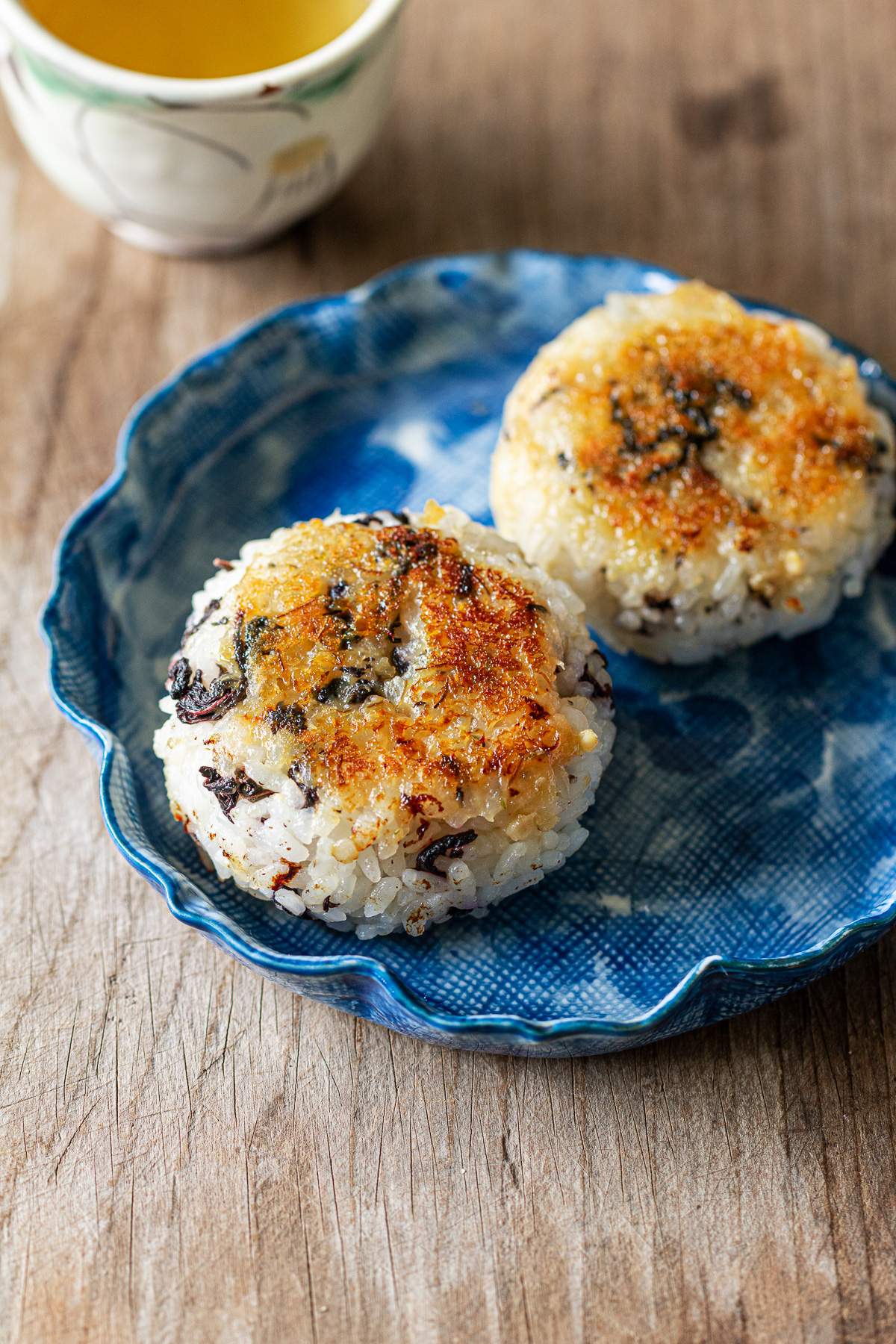
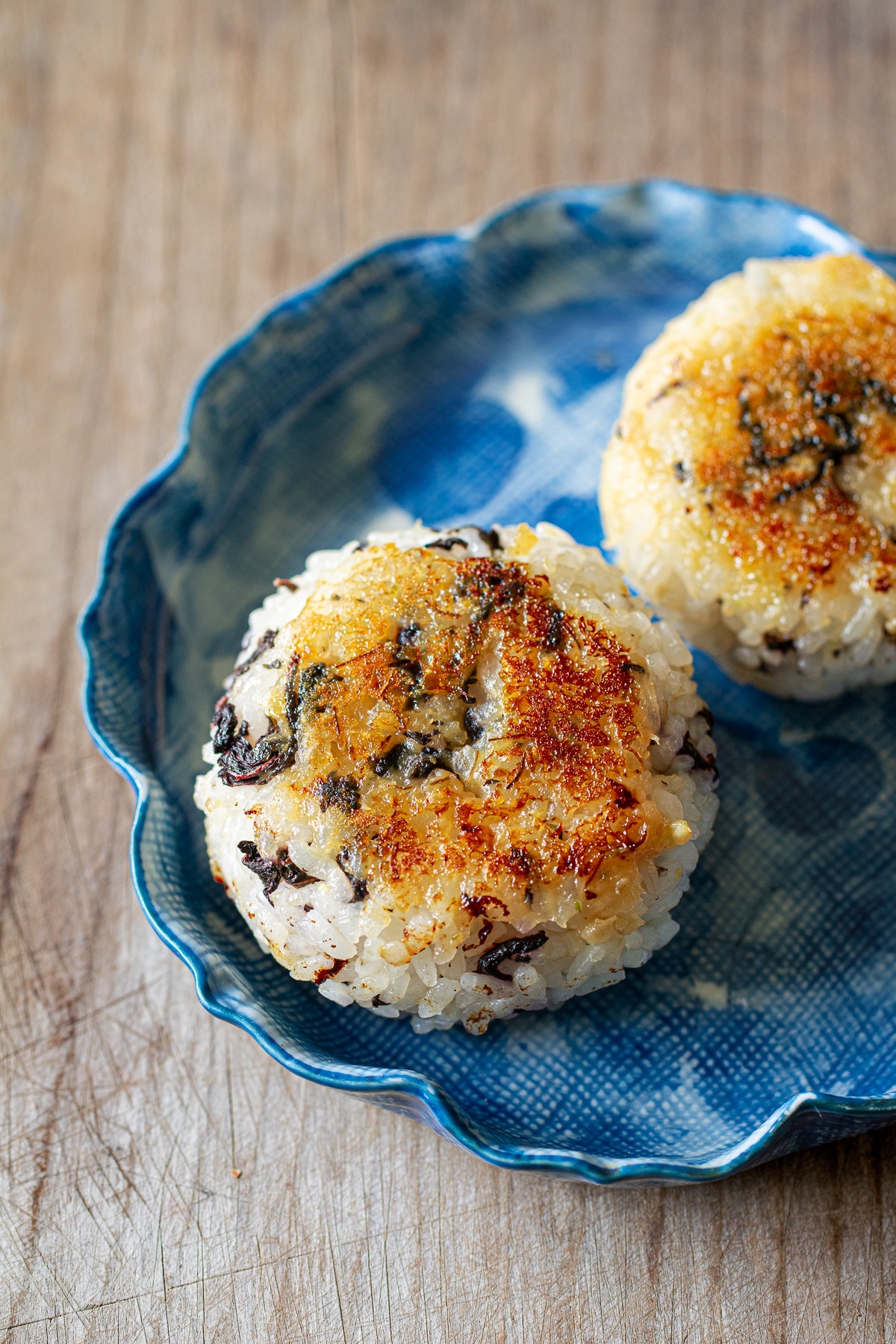
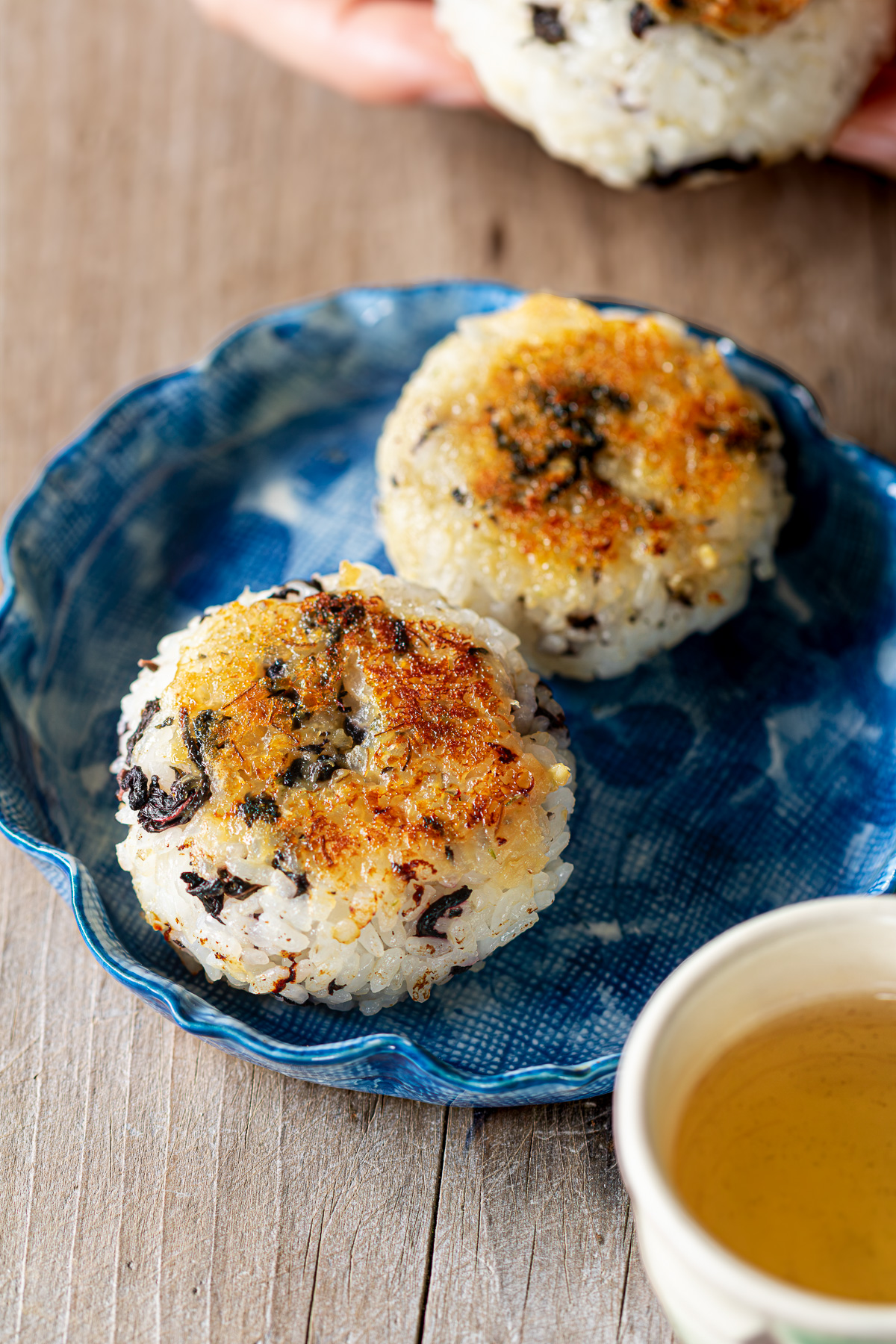
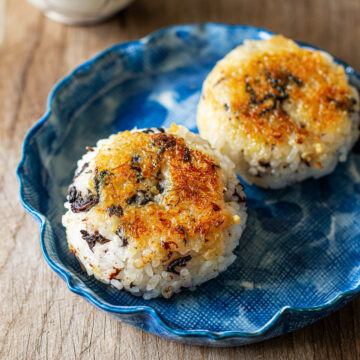
Pan-grilled rice balls, also known as yaki onigiri (焼きおにぎり), made with red shiso furikake mixed into the rice, brushed with a sweet and savory, citrus-infused miso glaze.
The salty, sour shiso furikake and citrus zest create a bright contrast to the sweet, savory miso.
📖 Why You'll Love This Recipe
Yaki onigiri (焼きおにぎり) are rice balls that are usually brushed with soy sauce, then grilled or pan-fried until the surface turns crisp.
This version swaps in a sweet miso paste instead, with red shiso furikake mixed right into the rice.
A beginner-friendly yaki onigiri. Soy sauce runs thin and burns fast in the pan, which is what usually causes rice balls to fall apart. Miso paste is thicker and much more forgiving. A step-by-step guide below walks through shaping and glazing for a clean result every time.
Sweet and salty in every bite. The miso paste leans a little sweet, which plays beautifully against the salt and tang of the furikake.
Just a frying pan. No grill, no oven — one pan does the whole job.
A hint of citrus, season by season. Yuzu zest in winter, sudachi or kabosu in summer — either way, it adds a bright note against the richness of the miso.
Good cold, too. The furikake and citrus hold their scent even after the rice cools, so this isn't just a straight-from-the-pan food.
Jump to:
🌿 A Little Backstory
Last New Year’s, I made zōni—a traditional Japanese New Year’s soup with mochi—for the first time with white miso, the sweet, mildly fermented kind of miso, and finished it with a little grated yuzu zest.
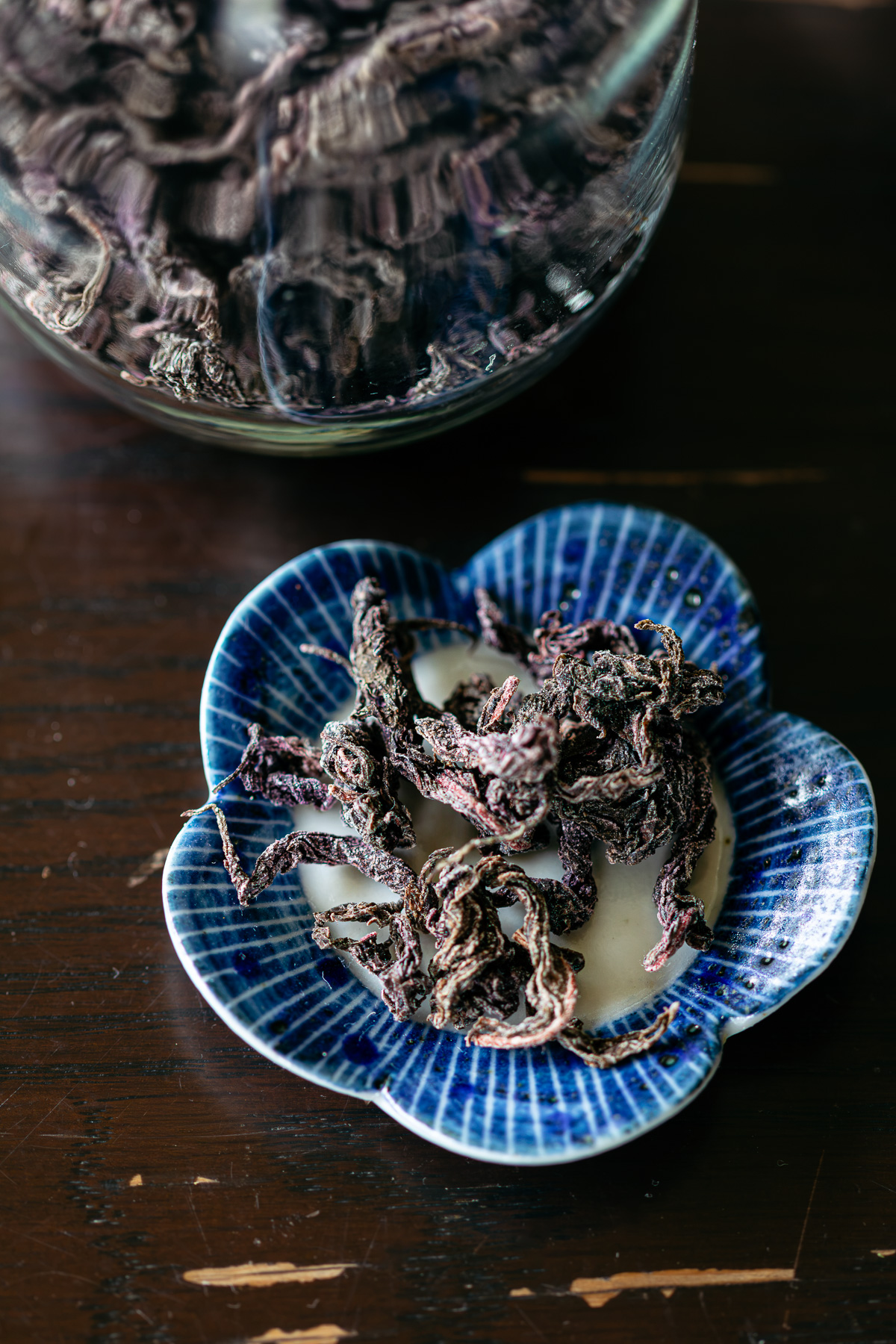
As I was making the soup, my homemade red shiso furikake from the summer caught my eye.
I wondered what would happen if I brought all those flavors together in one rice ball: the sweetness of white miso, the salty tang of red shiso, and the bright, citrusy aroma of yuzu. It felt like a bit of a bold choice, but somehow, like one that couldn't go wrong. That’s how this recipe started.
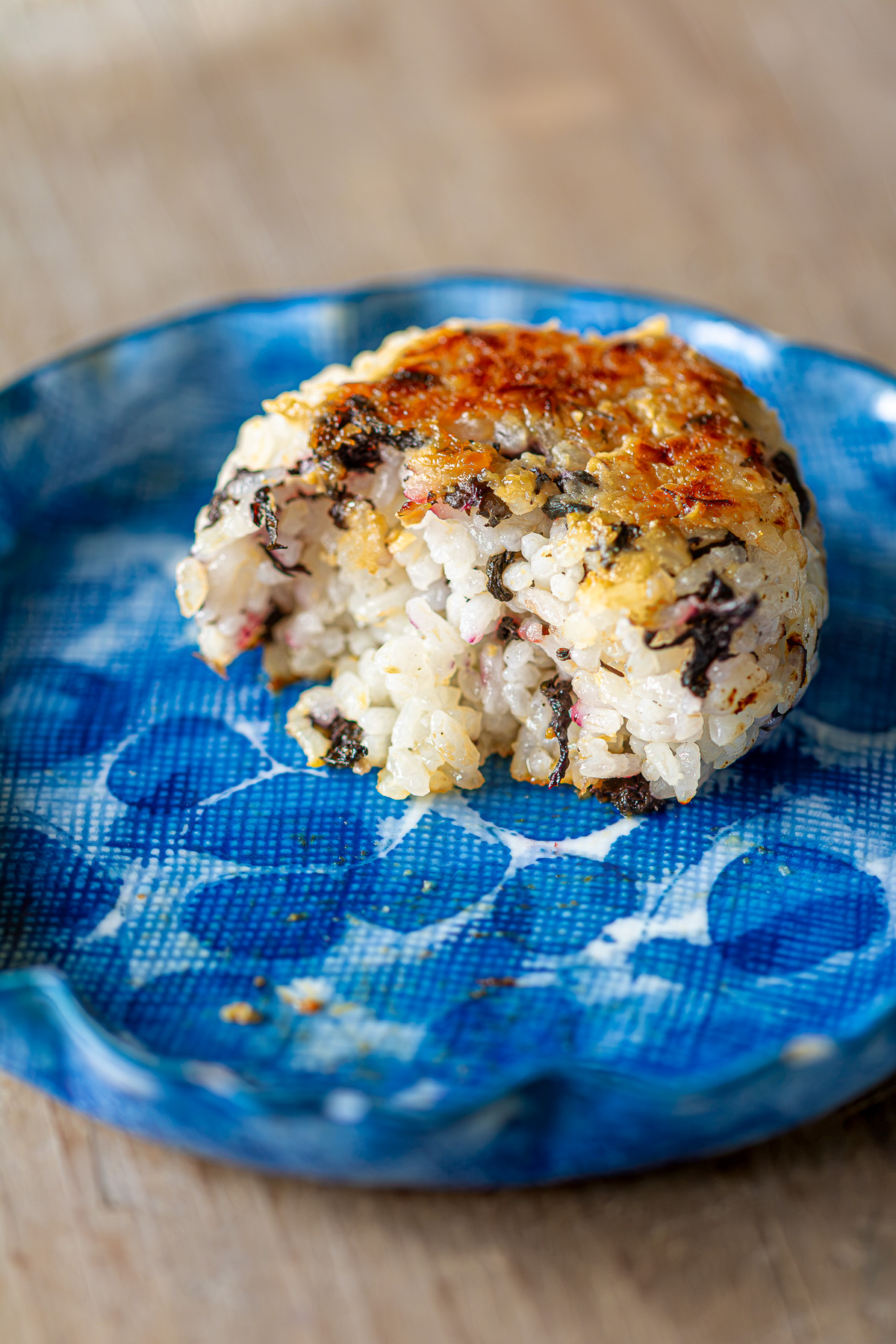
Naturally—or perhaps, without a doubt—these onigiri became one of my foodie eldest sister’s favorite New Year’s dishes last year.
She had spent the day visiting relatives and came home exhausted. By the time she got to these onigiri, they had gone completely cold. But she ate them anyway, one after another, licking her fingers and saying how good they were.
The yuzu zest and shiso still lingered, even when the onigiri were cold. Something about that sweet-salty balance seemed to keep drawing her back for another bite—maybe it was just what she needed after a long day.
🧺 Ingredients
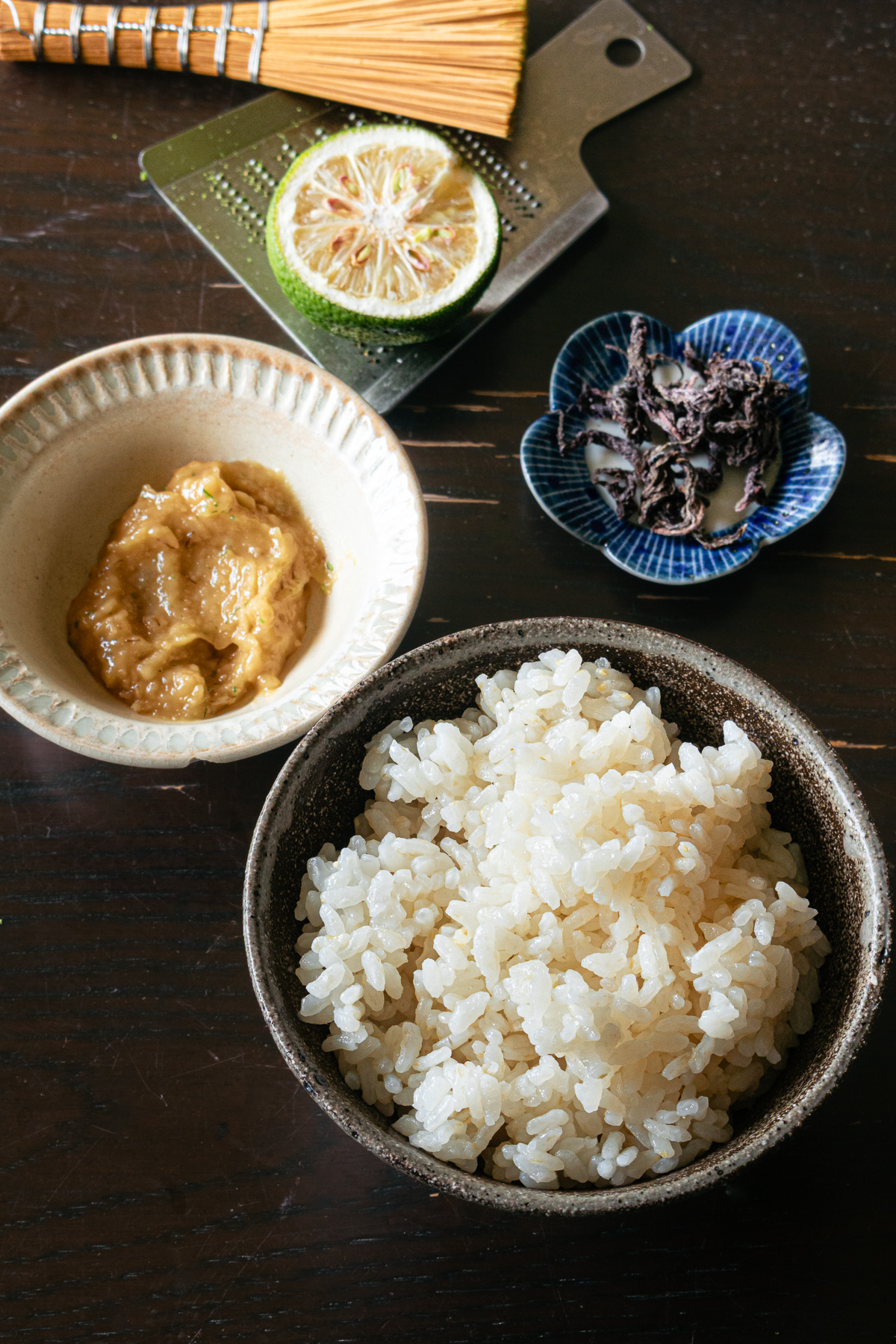
- Freshly cooked rice: Using rice straight off the cooker — not day-old rice — is key to onigiri that hold together while pan-frying.
- Red shiso furikake: I use my own MSG-free homemade furikake.
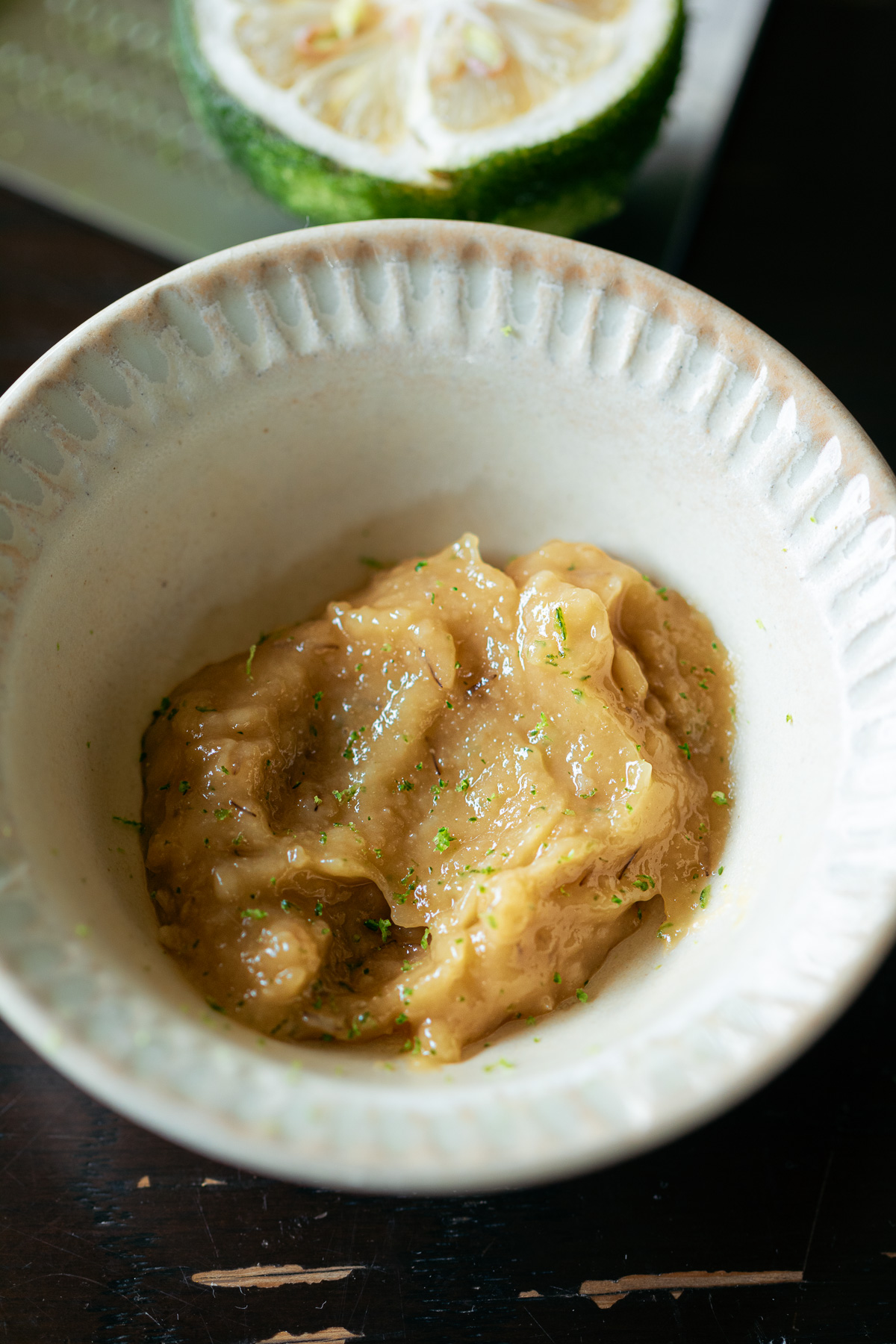
- Miso glaze: A 1:1 mix of white miso (白味噌/shiro miso) and barley miso (麦味噌/mugi miso) is my base.
Miso is like its own universe — even within the same category, like white miso or barley miso, every brand tastes different, milder or saltier or deeper depending on who made it. The ratio shifts a little each time, tasted and adjusted as I go, leaning a bit sweet to balance out the saltiness of the furikake. A splash of mirin or soy sauce sometimes finds its way in too, depending on the season or mood. - Citrus zest (optional): Grated yuzu in winter, or sudachi/kabosu in summer, stirred into the miso paste for a bright accent.
- Oil: Just a small amount for pan-frying — olive oil or rice bran oil are my go to.
- Toasted sesame seeds (optional): Mixed into the rice for a bit of nutty flavor and crunch, if you like.
👇 Scroll down to the recipe card for exact measurements.
🍳 Tips for Perfectly Shaped Miso Yaki Onigiri
Miso yaki onigiri may seem tricky to make...
But they really aren't.
The key to making neat, well-shaped yaki onigiri is taking your time and paying attention to the small details at each step.
One of the most common mistakes is trying to do everything at once: shaping the onigiri, adding the miso glaze right away, and grilling them all in one go. These steps work better done separately. Taking a little extra care between each one makes a real difference in the finish, and helps the onigiri hold their shape.
If you rush through the steps, the miso can burn before the rice is heated through, and the onigiri are more likely to fall apart.
Here are four things to keep in mind for a nicely grilled yaki onigiri.
1. Use freshly cooked rice
Use freshly cooked rice. Cold rice is less cohesive and more likely to fall apart while grilling, so freshly cooked rice is very important.
2. Shape the rice firmly, not gently
Onigiri are usually shaped loosely and gently, so the rice falls apart softly in the mouth. Yaki onigiri go the opposite way: shaping the rice firmly and tightly is the key to keeping them from falling apart on the pan.
Wet your hands well before shaping.
For a plastic-wrap shaping method, see my vegan tuna mayo onigiri recipe.
3. Grill both sides before glazing with miso
Rather than glazing the onigiri with miso right after shaping them, first lightly oil a frying pan and grill both sides until golden and lightly crisp.
Once the surface has developed a lightly toasted crust, the miso is easier to spread and the onigiri is less likely to fall apart.
4. Grill quickly over low heat after adding the miso glaze
Miso burns easily, so make sure to lower the heat before glazing the onigiri with miso. Once the glaze is on, move quickly and pay close attention while grilling both sides.
Adding a few drops of oil to the pan before placing the miso-glazed side down also helps prevent the glaze from sticking to the pan.
🍙 How to Make
Once you know a few key tips, miso yaki onigiri are easy to make.
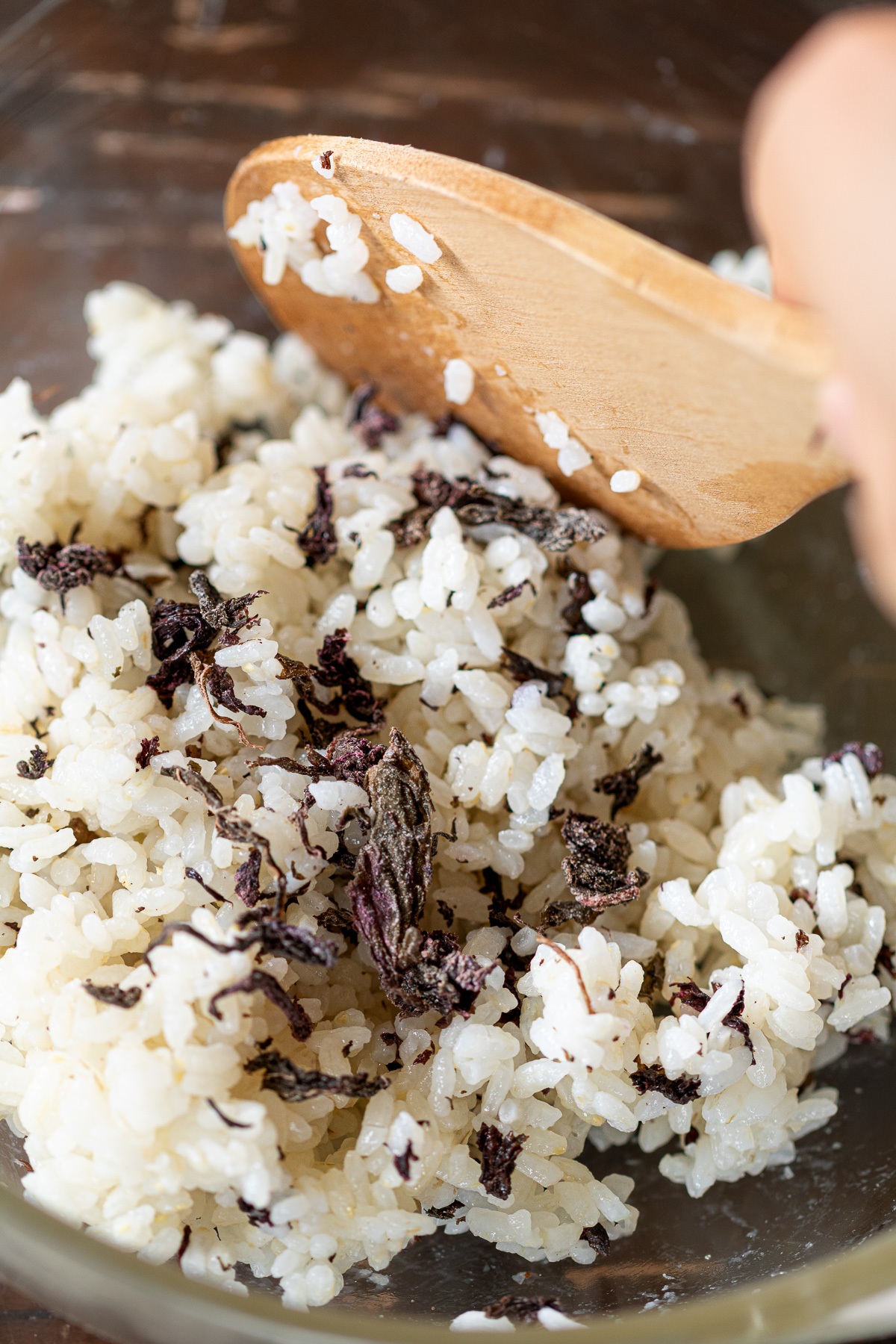
- First, mix the red shiso furikake into the freshly cooked rice.
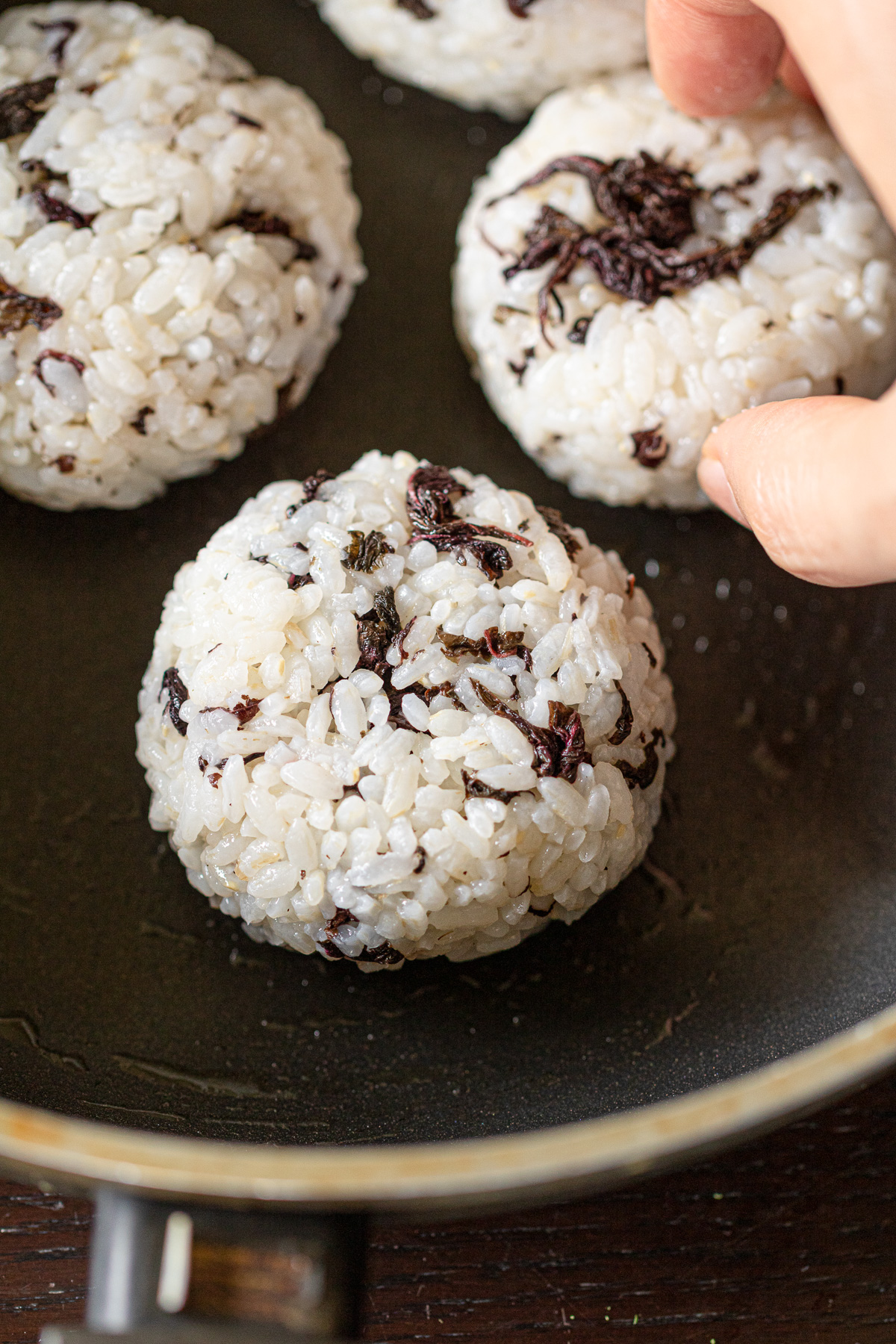
- Wet your hands and take a portion of the red shiso rice. Shape it firmly into an onigiri (see the shaping video).
Drizzle oil into a frying pan and arrange the onigiri in the pan with the heat off. Gently move the onigiri around to spread the oil over the surface of the pan and lightly coat the surface of the onigiri with oil. Flip each onigiri once and coat the other side with oil in the same way.
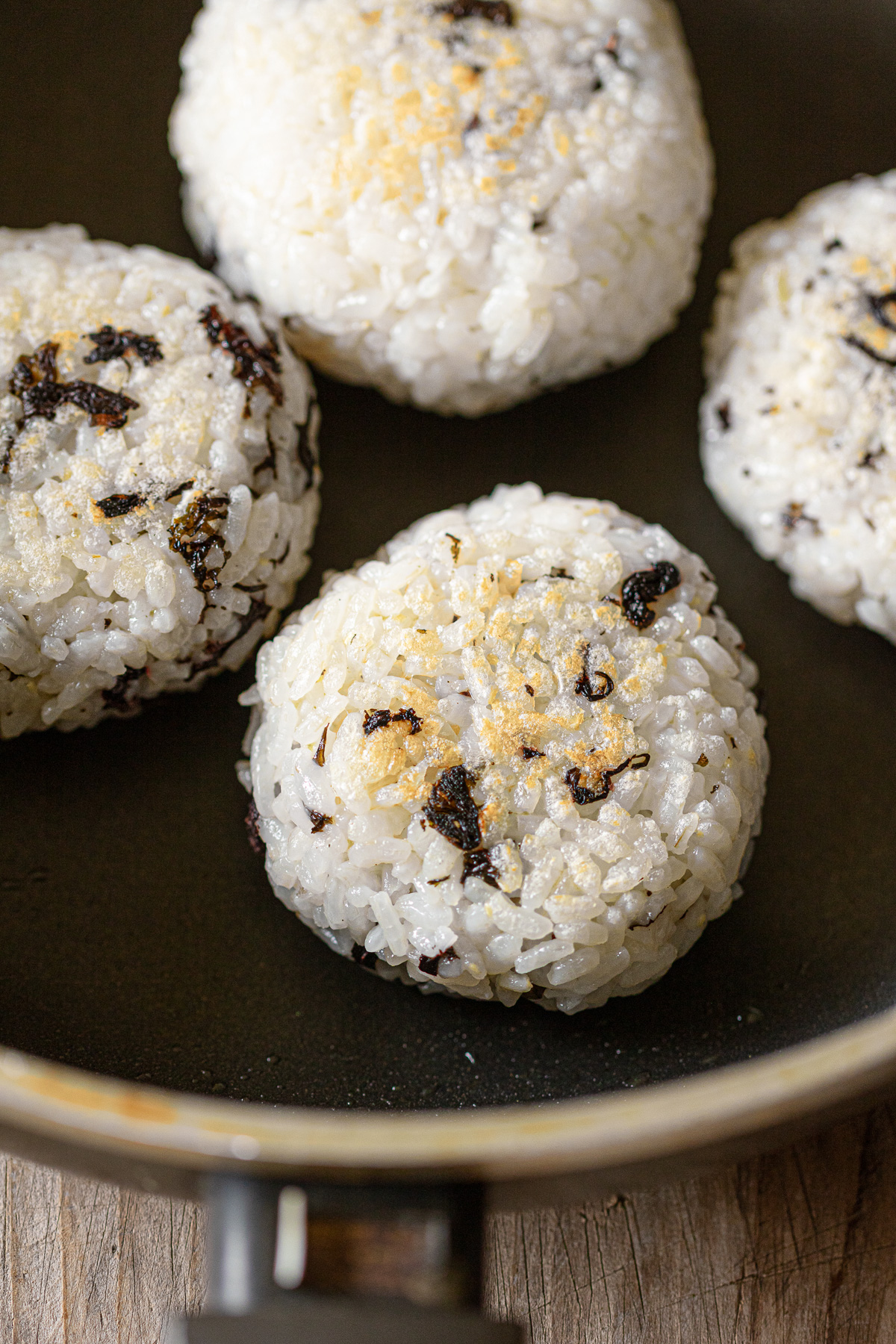
- Place the pan over medium heat and grill slowly until both sides are nicely browned.
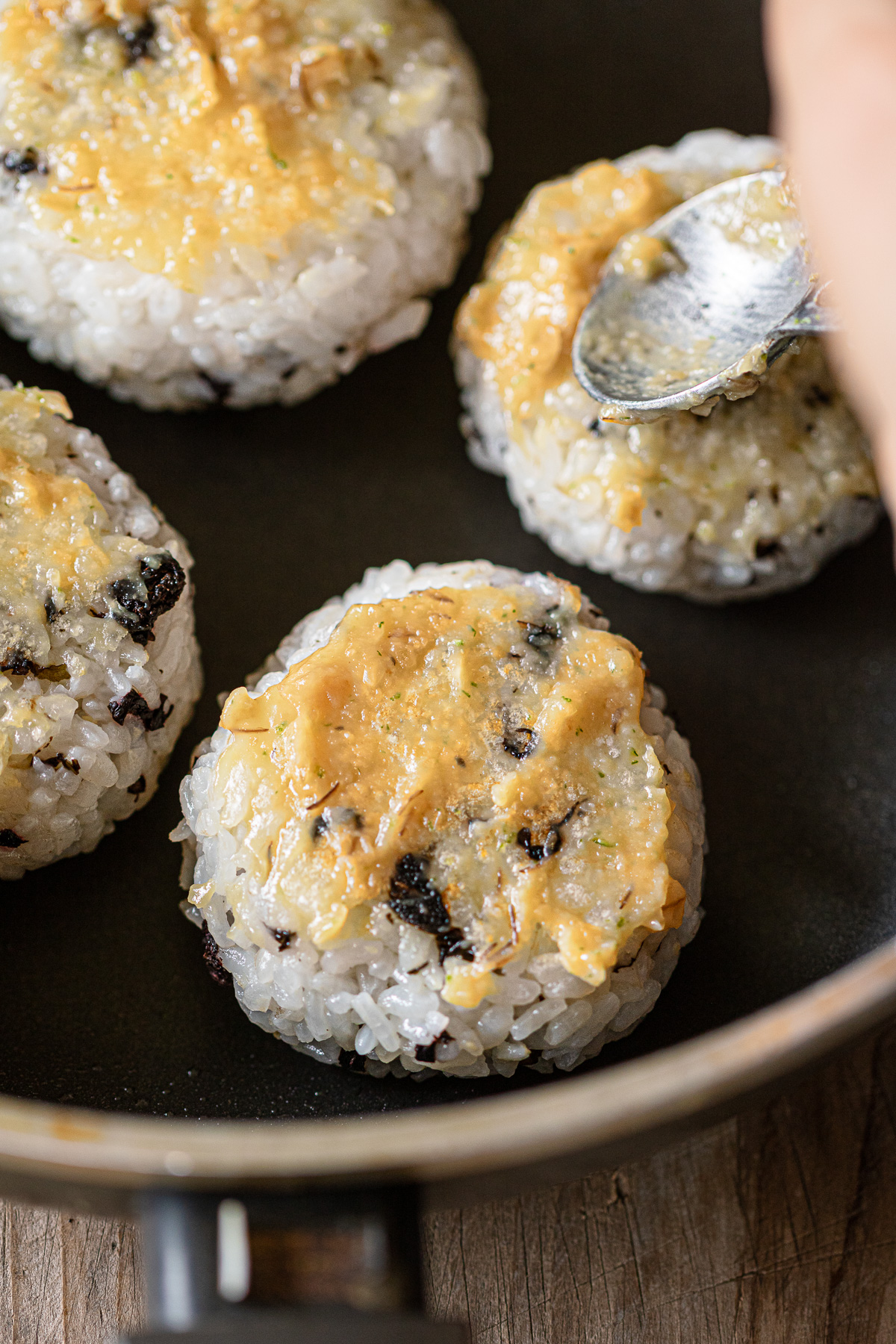
- Once the onigiri are browned, reduce the heat to low and spread the miso glaze over one side. Then drizzle a few drops of oil into the pan and flip the onigiri so that the miso-glazed side lands directly on the oil.
- While the first side is grilling, quickly spread the miso glaze over the other side, then flip the onigiri again and grill. Miso burns easily, so keep a close eye on them.
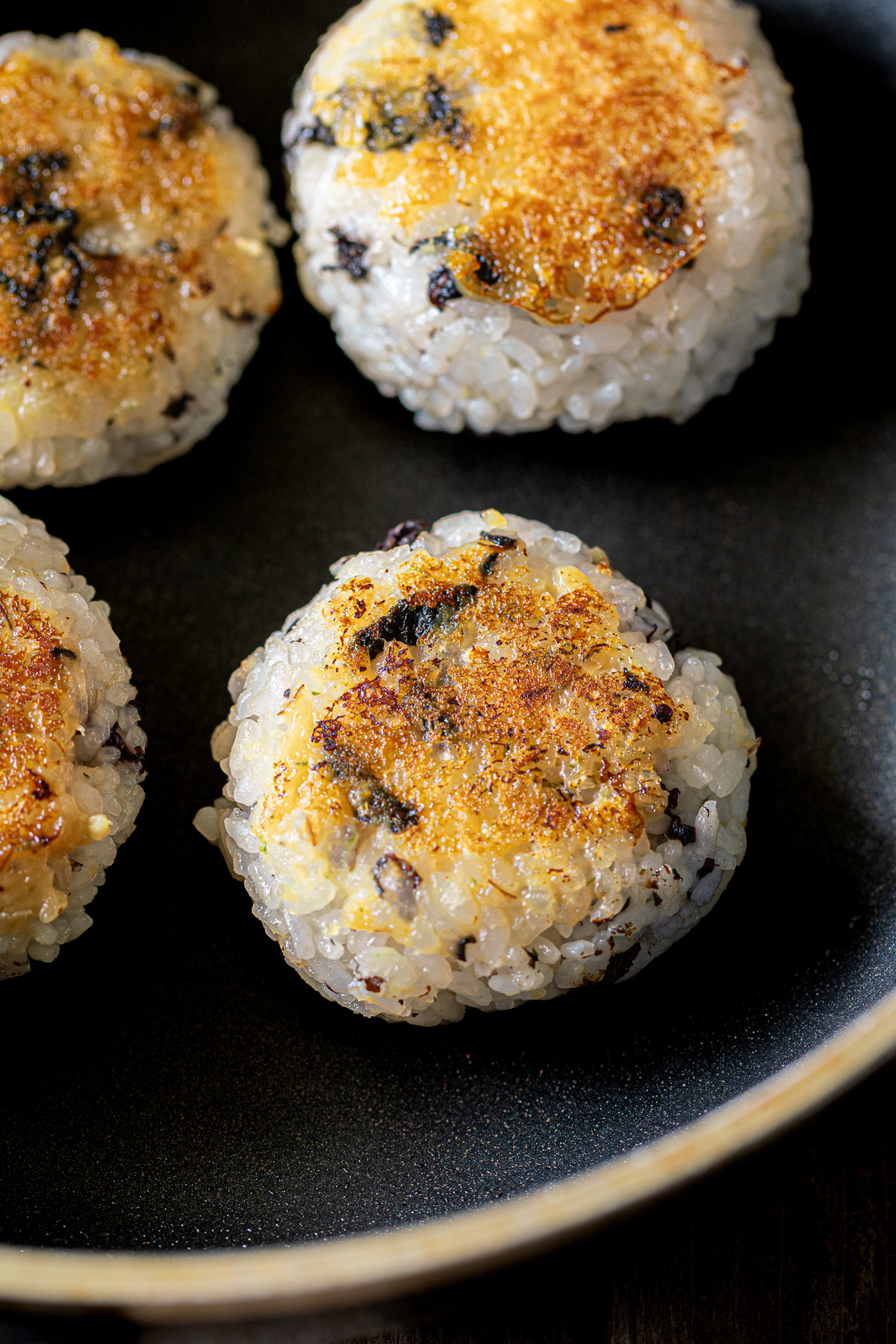
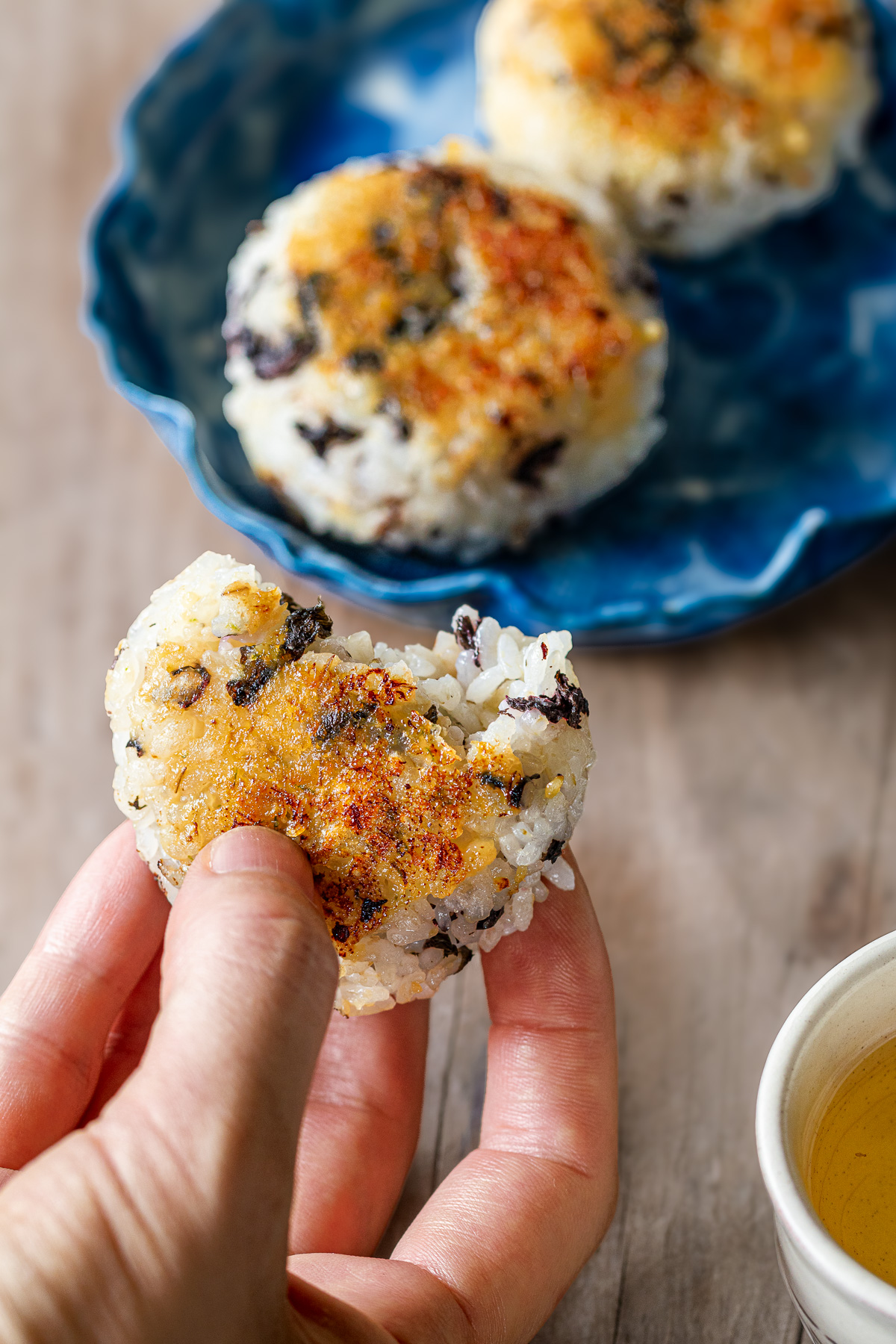
- Once both sides are nicely browned, transfer the onigiri to a plate and serve. Enjoy them while they’re hot. They’re also delicious once cooled.
🍵 Turning Yaki Onigiri into Ochazuke
This summer, I doubled the recipe and made four miso yaki onigiri. I ate two for lunch and saved the other two for snack time, turning them into ochazuke — a traditional Japanese dish of hot green tea or dashi poured over rice, often topped with savory ingredients like salmon, umeboshi (pickled plum), or nori (seaweed).

Instead of using plain rice, I placed the yaki onigiri in a bowl and topped them with some cucumber and ginger tsukudani (shiso hijiki-style) that I had made ahead. Simply pour freshly brewed green tea over everything and dig in.
It’s just as simple, light, and comforting as classic ochazuke.
It goes down easily, and the gentle warmth spreading through my stomach felt quite nice.
📚 FAQ
Yes, you can. However, the 1:1 blend of white miso and barley miso may be a little too sweet without the saltiness and tang of the red shiso furikake. You may want to increase the amount of barley miso, or use a saltier type of miso instead.
Yes, you can use store-bought red shiso furikake, although the flavor will be slightly different. Adjust the flavor of miso paste to suit the furikake you are using.
Absolutely. Feel free to blend different types of miso and experiment with the balance of sweetness and saltiness. Be creative and enjoy making your own miso yaki onigiri. If you find a pairing you love, I’d be happy to hear about it in the comments📮
📘 Recipes with White Miso
More recipes to use up leftover white miso:
📙 More Rice Recipes
Other vegan rice dishes(👉 browse all):
✏️ Recipe Card
Miso Yaki Onigiri with Red Shiso Furikake
Ingredients
For the onigiri
- 200 g freshly cooked rice
- red shiso furikake (homemade or store-bought, to taste )
- toasted sesame seeds (optional, to taste )
Miso glaze (makes extra)
- 2 teaspoon white miso
- 2 teaspoon barley miso
- ½ teaspoon mirin (optional, plus more to taste)
- ½ teaspoon soy sauce (optional, plus more to taste)
- citrus zest (yuzu, sudachi, or kabosu,optional, to taste )
Other
- oil (as needed , olive oil or rice bran oil recommended)
Instructions
- Combine the miso glaze ingredients in a bowl and mix well.2 tsp white miso2 tsp barley miso½ tsp mirin½ tsp soy saucecitrus zest
- Drizzle a little oil into a frying pan.oil
- Mix the red shiso furikake into the freshly cooked rice (add the sesame seeds too, if using).
- Divide the rice in two. Wet your hands and shape each portion firmly into an onigiri.
- Arrange the onigiri in the pan and gently move them around to coat the surface with oil. Flip and coat the other side the same way.
- Place the pan over medium heat and grill slowly until both sides are nicely browned.
- Reduce the heat to low and spread the miso glaze over one side.
- Add a few drops of oil to the pan, then flip the onigiri so the glazed side lands directly on the oil.oil
- Quickly spread the glaze over the other side, then flip again and grill. Miso burns easily, so work quickly.
- Once both sides are nicely browned, transfer to a plate and serve.

If this recipe made its way into your kitchen, and you'd like to share that moment, feel free to tag @veginveganvegun or use #vegin_vegan_vegun.
Your stories inspire me deeply 🕊️

Comments
No Comments