
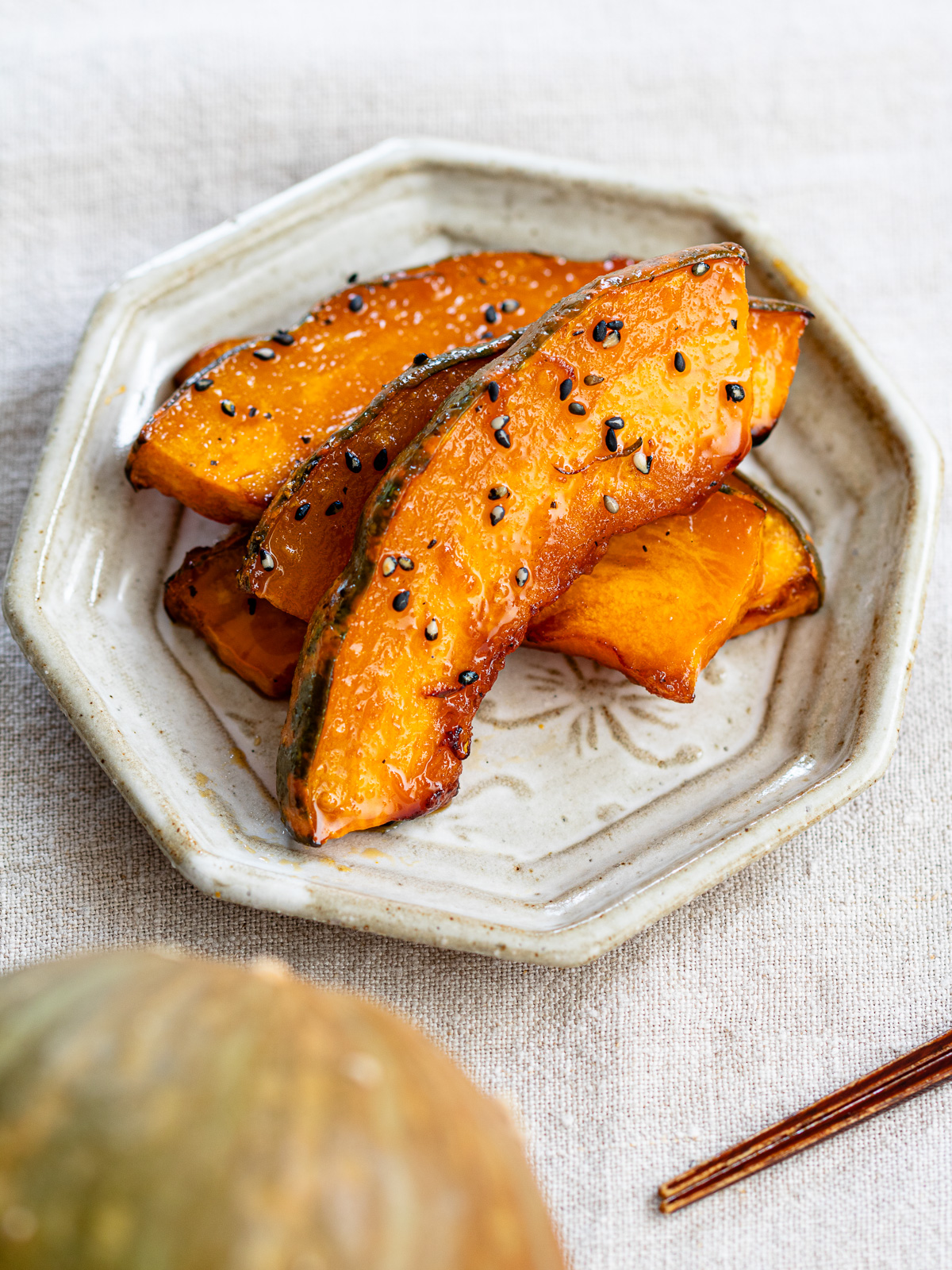
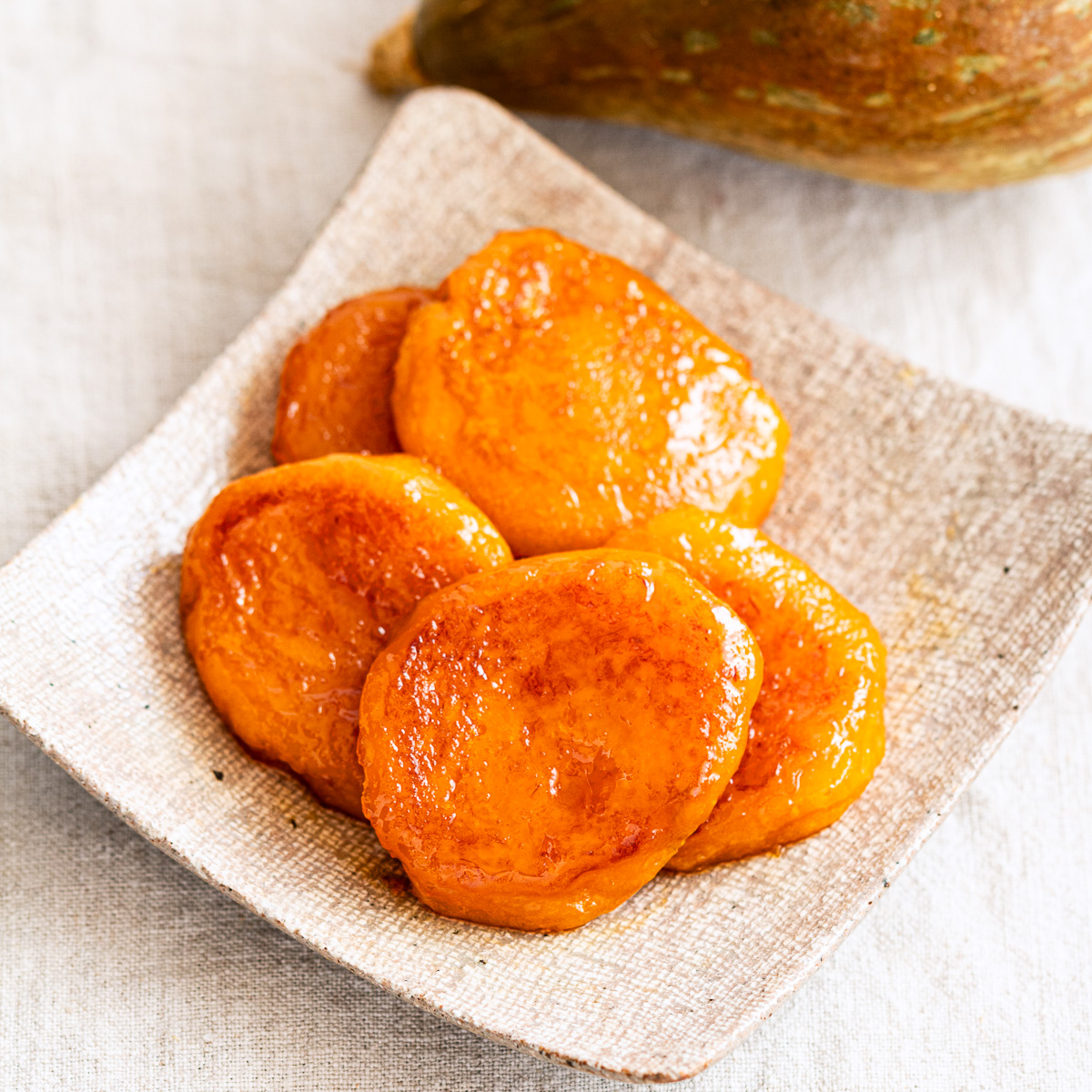
Japanese candied kabocha (daigaku-kabocha/大学かぼちゃ) from the toaster oven—fluffy, no-fry, and coated in a glossy maple-soy glaze that's impossible to resist.
Jump to:
🍁 What is Daigaku Kabocha?
Daigaku-kabocha (大学かぼちゃ) is a kabocha twist on daigaku-imo—that classic Japanese street snack of deep-fried sweet potato coated in a sweet, glossy glaze. Same idea, different vegetable, and just as irresistible.
The only thing that puts me off making them at home is the deep-frying.
The cleanup, the oil, the calories—it's a lot for a casual snack. So I started making it in the toaster oven instead, and honestly, I haven't looked back. The kabocha still comes out fluffy inside with caramelized edges, just without all the mess.
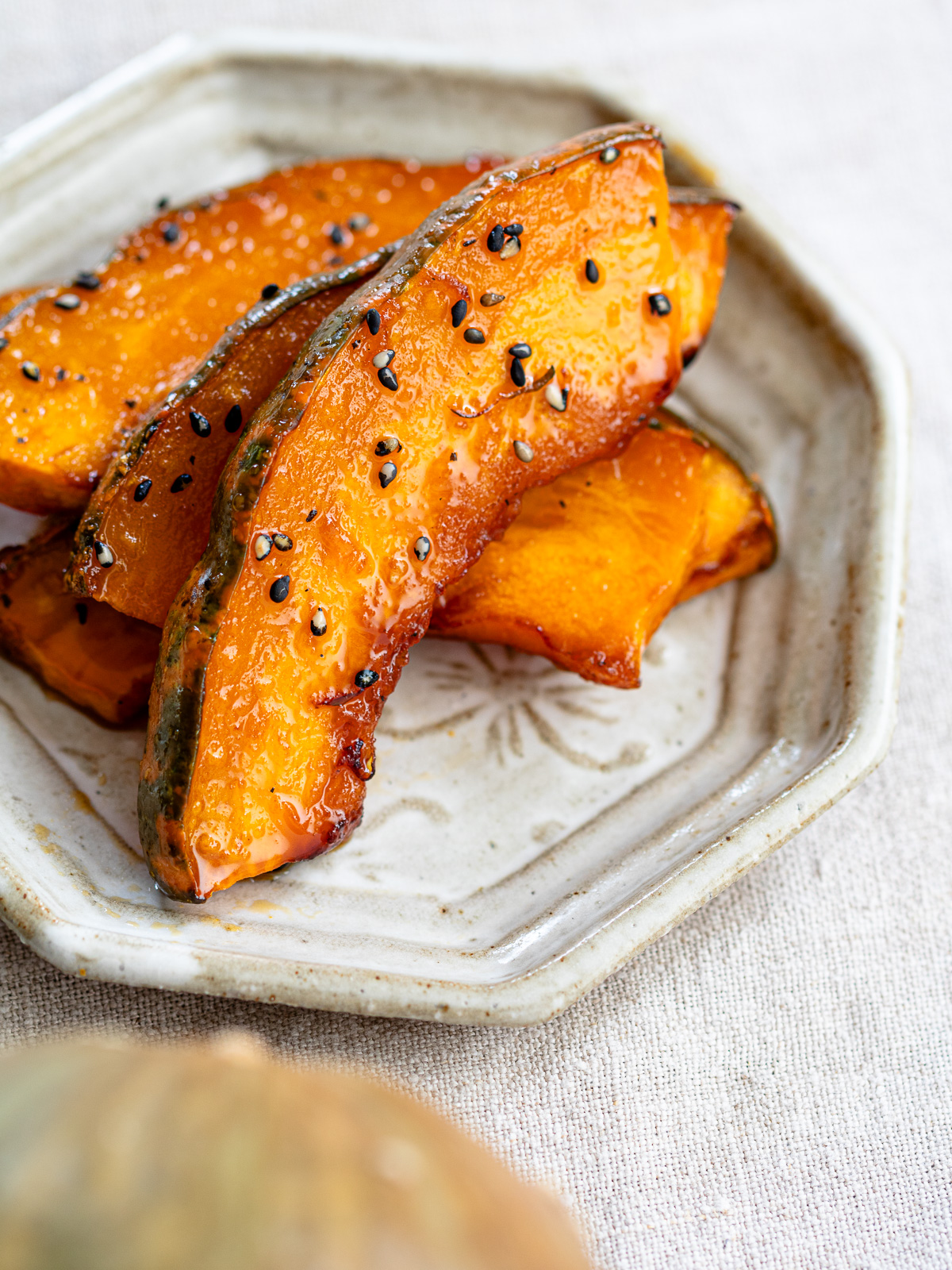
My glaze is maple syrup-based rather than the traditional sugar glaze—the warmth and slight caramel notes pair really well with kabocha, coating every piece in something that feels a little more autumn.
Good warm when the kabocha is still fluffy, and quietly good later when it's cooled and turned silky. I make it as a snack, pack it for lunch, eat it straight from the container. And you know, it never lasts that long.
🧺 Recipe Features
- Japanese vegan comfort food – easy, nostalgic, and satisfying
- No-fry toaster oven method – bakes fluffy without all the oil
- Maple-soy glaze – deeper flavor than regular sugar
- Simple ingredients – probably already in your kitchen
- Great for meal prep – good for snacking or lunch boxes
🎃 Ingredients for Baked Kabocha Squash

- Kabocha : I'm using Roron (ロロン) this time, which bakes up nicely fluffy. Any kabocha works—I usually skip butternut squash or other types that feel too watery or stringy when baked.
- Maple syrup : This is key for the glaze. The flavor and richness really complement kabocha in a way regular sugar doesn't. Sugar works if you don't have maple syrup, but the glaze won't have quite the same depth.
- Mirin : sweetness and shine
- Soy sauce : for color and a savory edge
- Oil : just for coating—skip if you want oil-free
- Black sesame seeds: for texture and that toasted flavor
🥄 Tools
- Knife and cutting board
- Toaster oven
- Bowl and spoon
- Frying pan
- Aluminum foil
- Chopsticks
🔪 Instructions
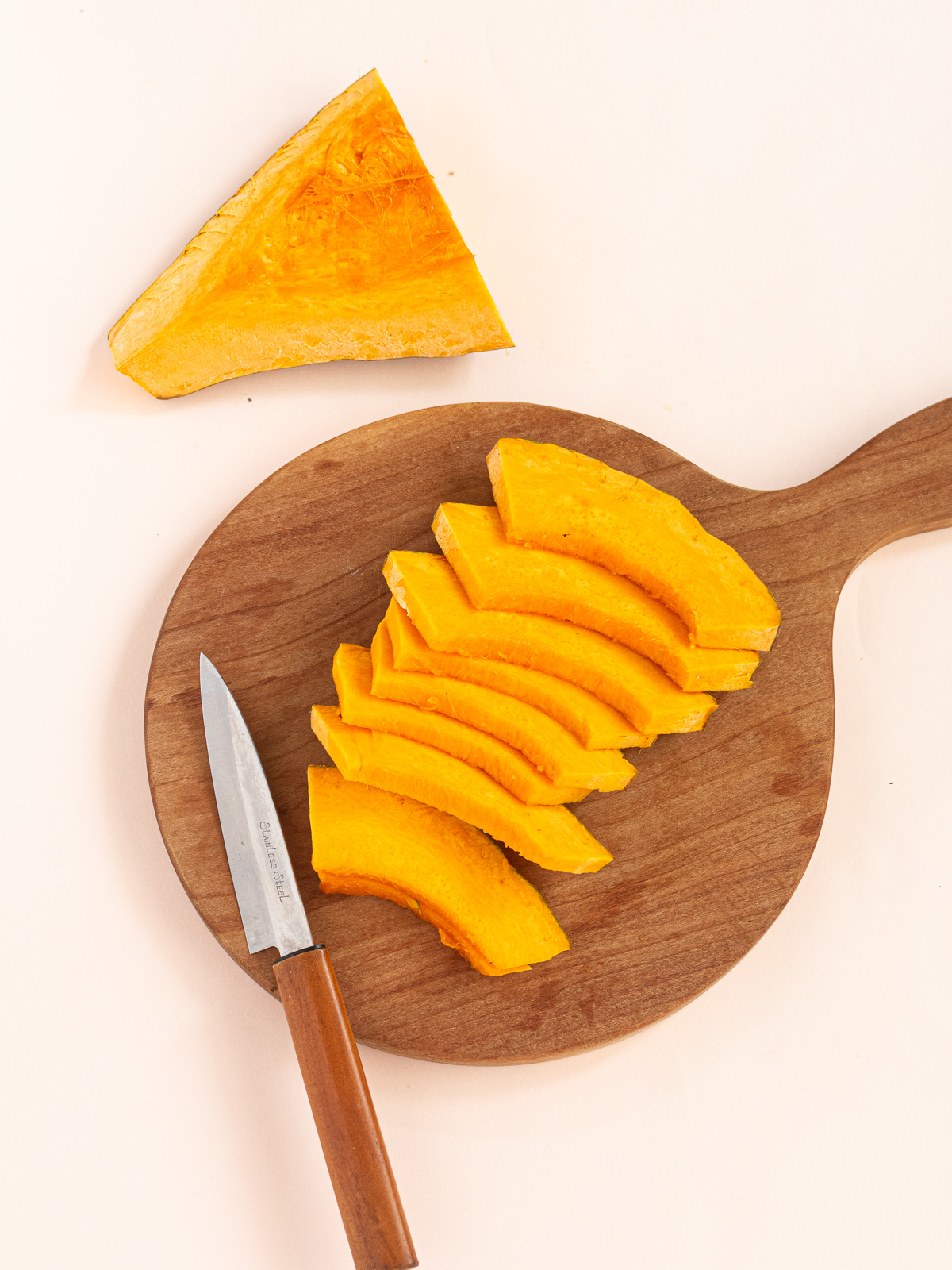
- Cut
- Scoop out the seeds and slice the kabocha 5-8mm thick.
🌿 Skin-on is fine.
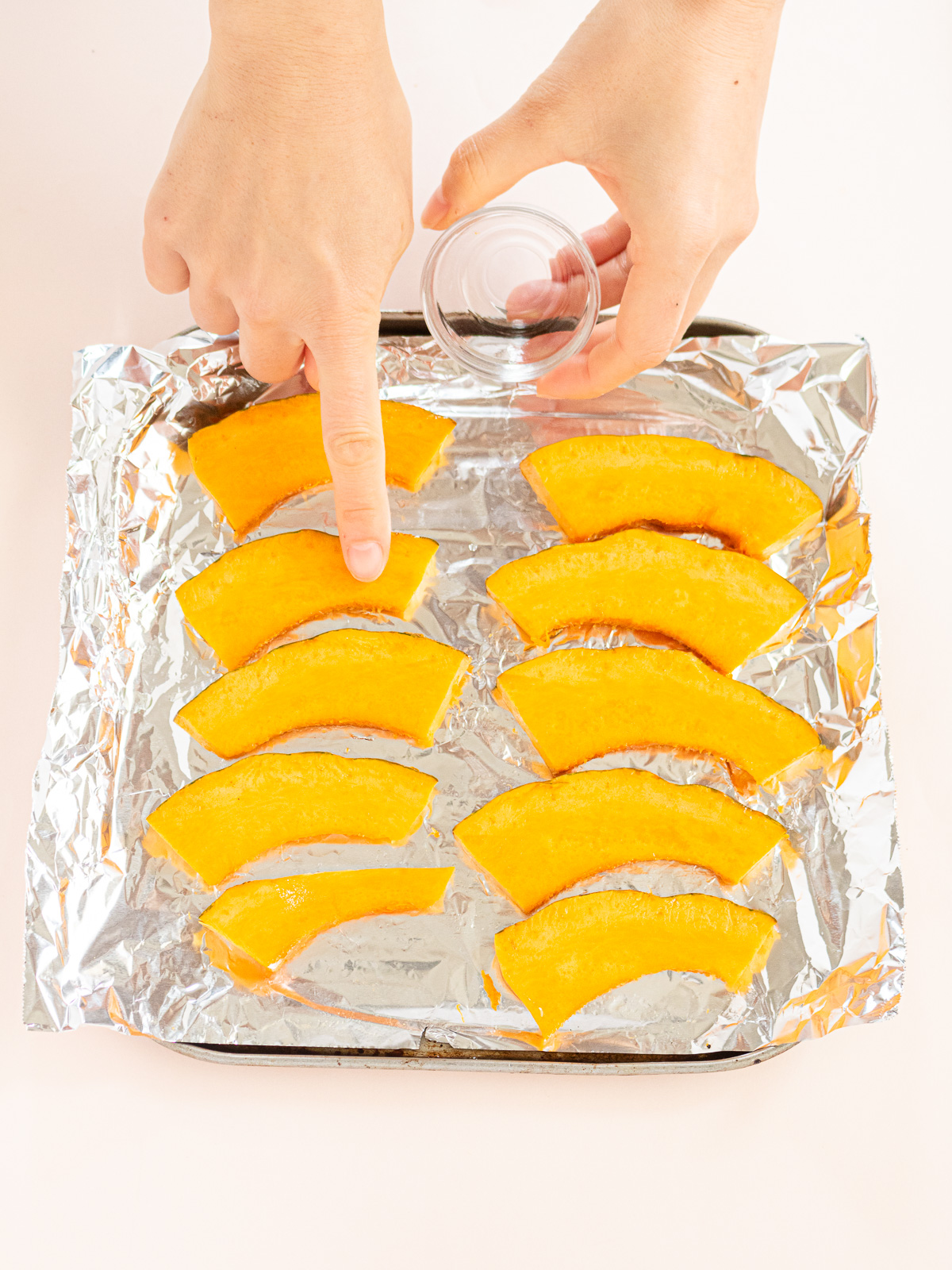
- Bake
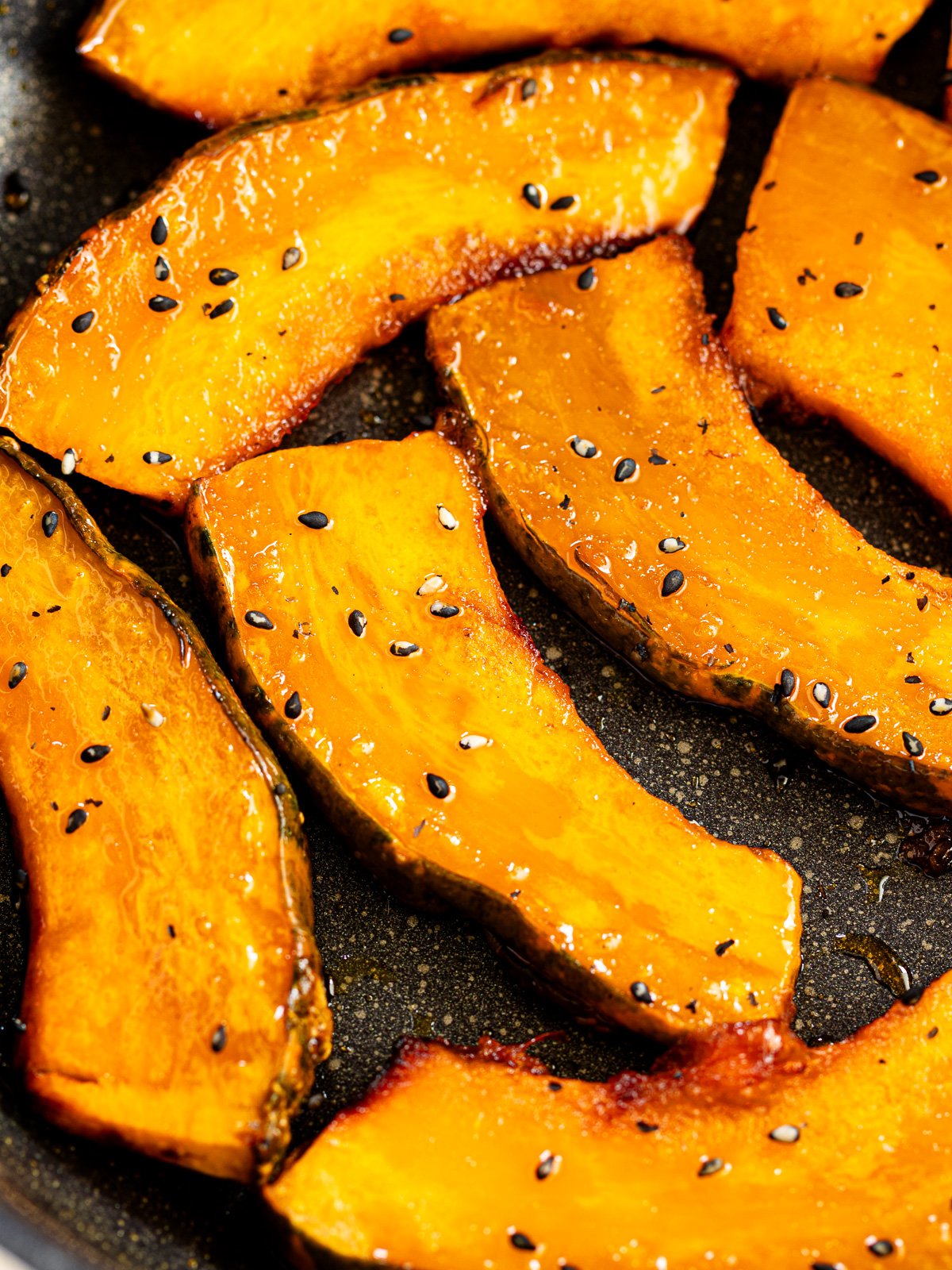
- Line a baking sheet with foil and arrange the slices so they don't overlap.
- Rub a thin layer of oil on the surface. Bake at 250°C (480°F) for 10-15 minutes until cooked through.
🌿 Flip the slices halfway through so both sides get some color.
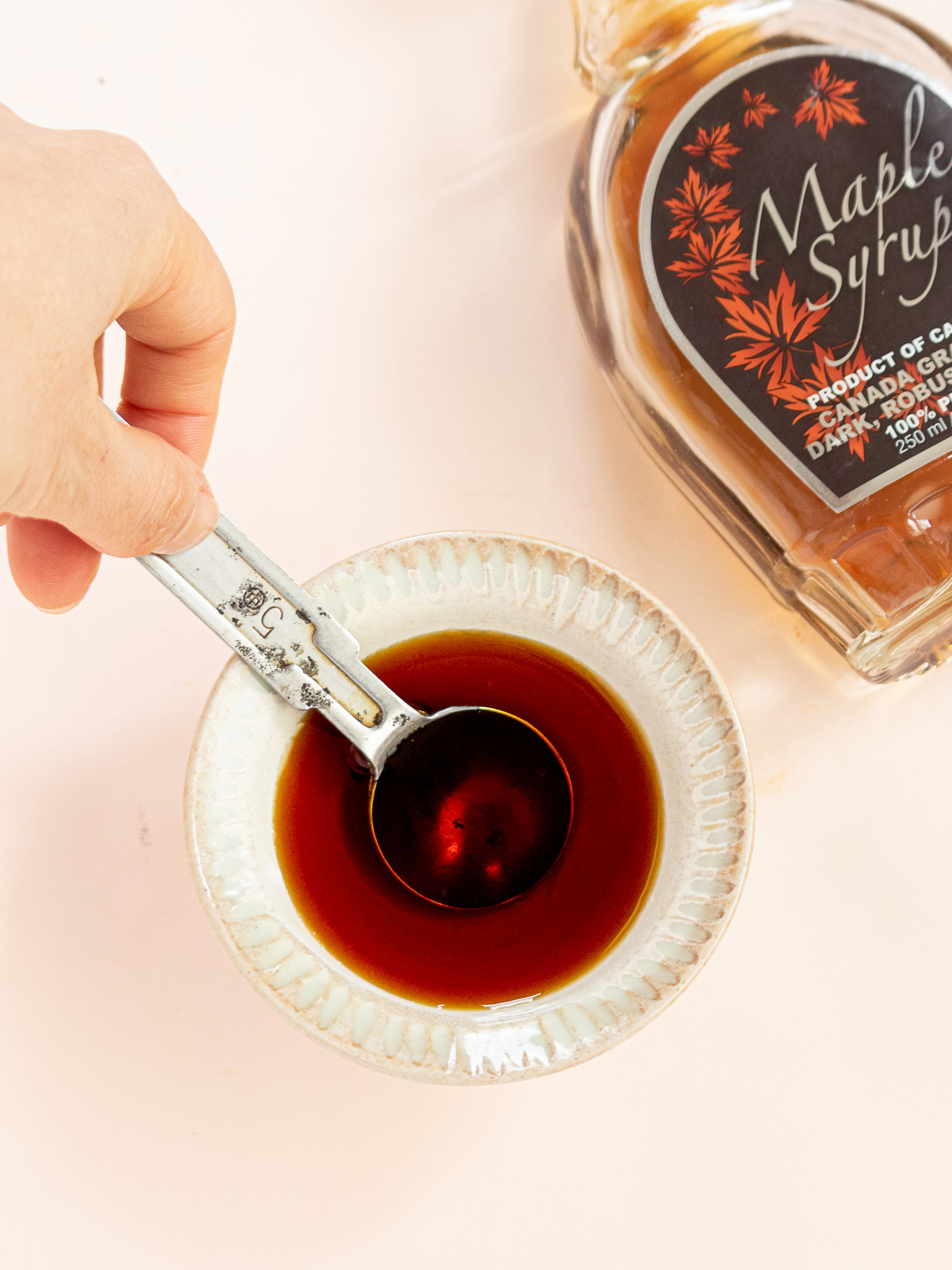
- Mix the Glaze
- Combine maple syrup, mirin, and soy sauce in a small bowl.
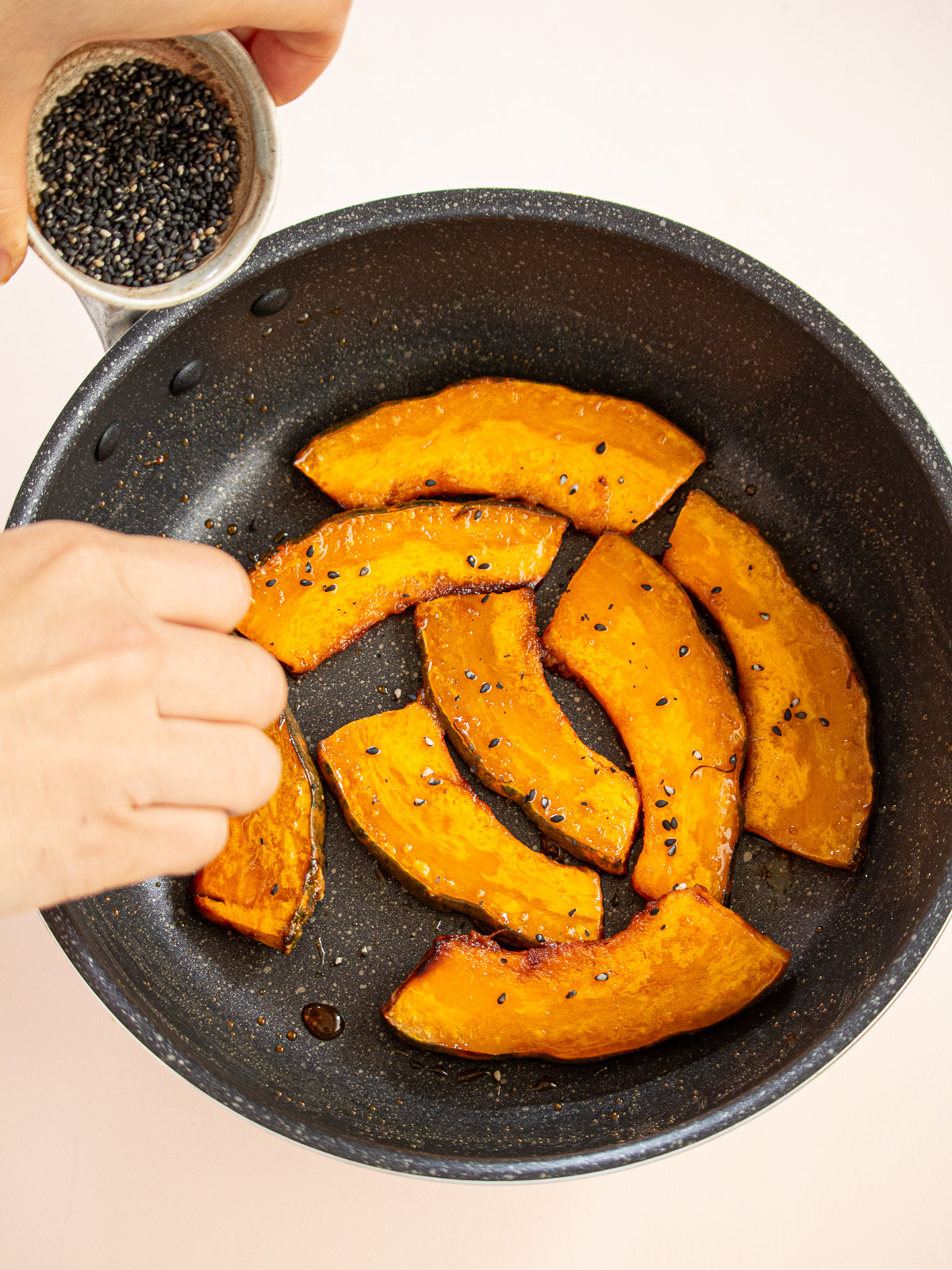
- Coat
- Pour the glaze into a frying pan and bring it to a simmer.
- Add the baked kabocha and cook, flipping occasionally, until the glaze thickens and coats each piece.
- Finish with black sesame seeds.
🌿 Watch the heat — it can go from glossy to burnt quickly.

🌿 If you want a sharper flavor, add a tiny pinch of salt at the end. It brings out the contrast between sweet and savory.

📘 Kitchen Notes
➤ Best Time to Eat
Warm, the kabocha is fluffy and the glaze is sticky. Cool, it turns silky and the flavors settle. Both are good—just different.
➤ About the Maple Syrup
I know it might seem like an unusual swap, but maple syrup brings a warmth and complexity that regular sugar doesn't. The glaze tastes richer, almost caramelized. If you're used to traditional daigaku-imo or daigaku-kabocha, this version might surprise you in a good way.
➤ Toaster Oven Temperature
If your toaster oven doesn't go up to 250°C, just use the highest setting you have. It'll take a bit longer, but the kabocha will still cook through fine.
📚 Notes|FAQ
Regular oven works just as well—same temperature and time.
Use the highest temperature available. The kabocha will just need a few extra minutes.
Yes. The kabocha won't get quite as caramelized, but it'll still be good.
It's best fresh when the kabocha is still fluffy. You can make the whole thing and keep it in the fridge—just eat it by the next day. The texture will turn more silky as it cools, but it's still good.
Sugar works, but the glaze won't have that same depth. Coconut sugar or brown sugar are good options too. (If you want the classic sugar glaze, I have a traditional daigaku-imo glaz recipe with sweet potatoes.)
Yes. It holds up well and tastes good at room temperature.
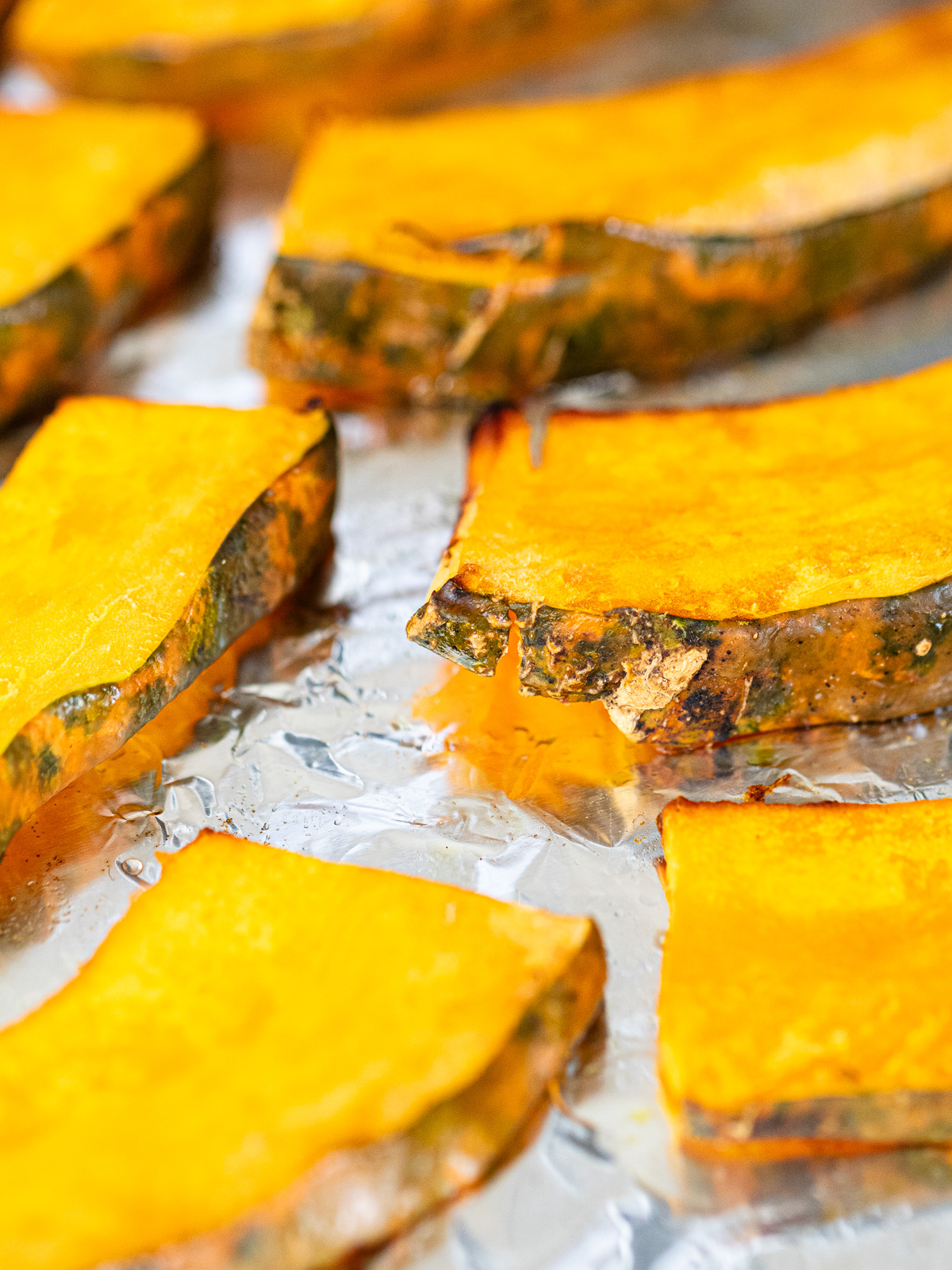
🎃 Got Extra Kabocha?
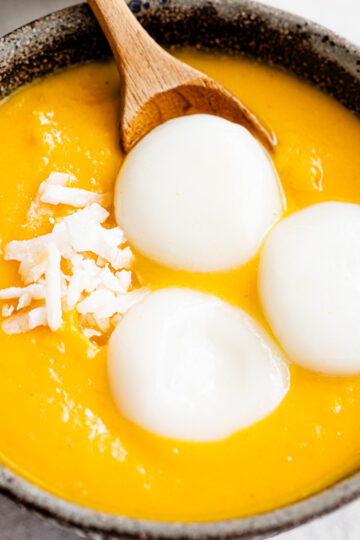
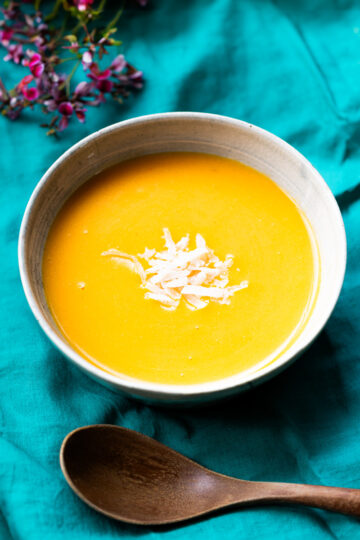
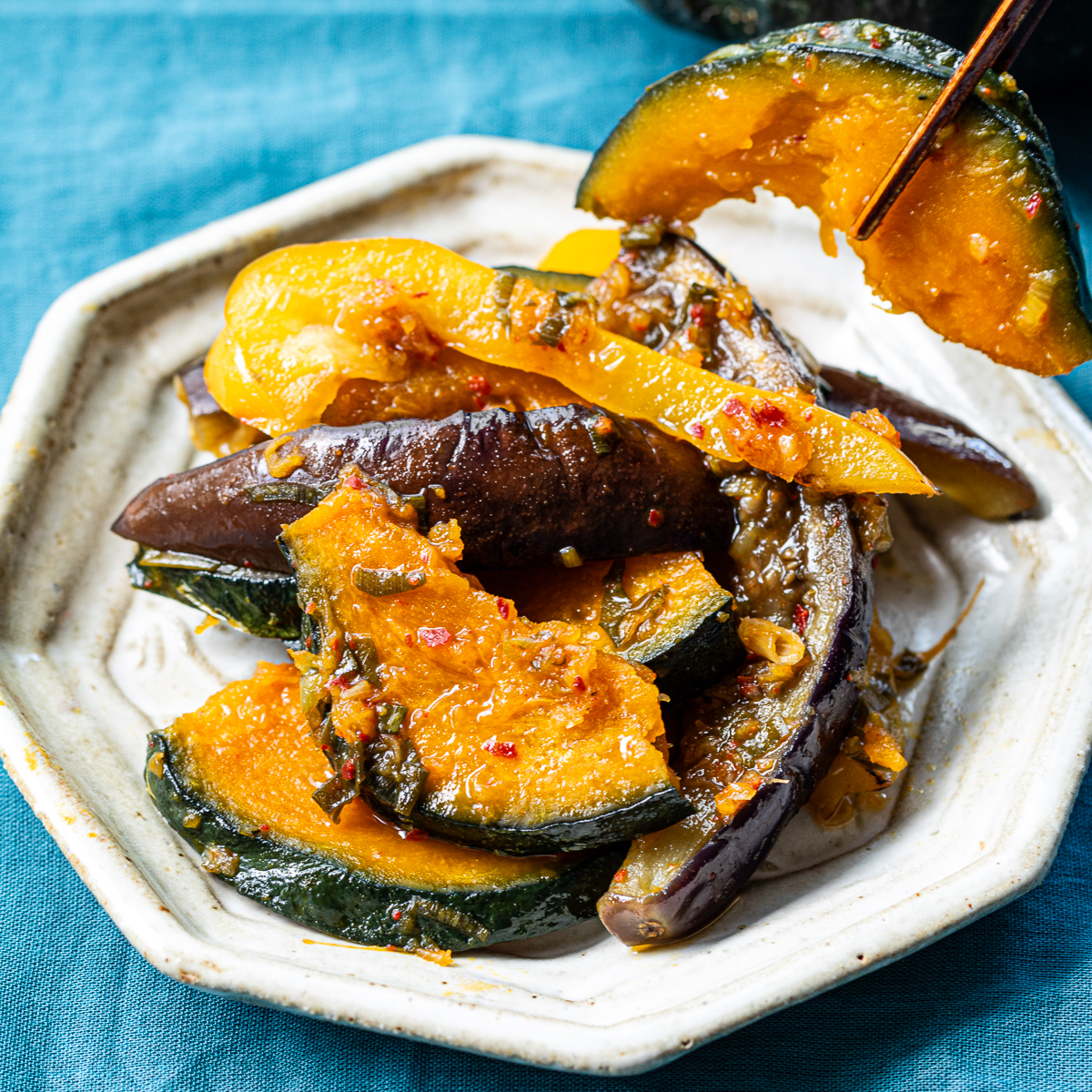
Other vegan ways I like to use kabocha:
📣 Seasonal Vegan recipes
Latest vegan recipes from my kitchen notes:

✏️ Recipe Card|Printable
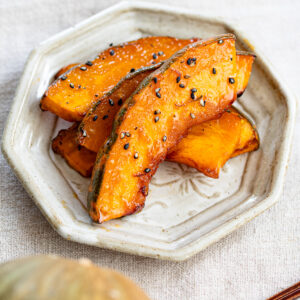
Candied Kabocha (Daigaku-Kabocha)|Easy Toaster Oven Recipe
Equipment
- kitchen knife
- cutting board
- Bowl
- toaster
- aluminum foil
- frying pan
- cooking chopsticks
- paper towel
Ingredients
Kabocha
- 200 g kabocha squash (seeds removed)
- ½ teaspoon oil
Glaze
- 2 teaspoon maple syrup
- 2 teaspoon mirin
- 1 teaspoon soy sauce
Finish
- black sesame seeds
Instructions
- Cut: Remove seeds and slice kabocha 5-8mm thick. Skin-on is fine.200 g kabocha squash
- Bake: Arrange slices on foil-lined baking sheet without overlapping. Rub oil lightly on surface. Bake at 250°C for 10-15 minutes until cooked through.*Flip halfway for even browning½ tsp oil
- Mix glaze: Combine maple syrup, mirin, and soy sauce in a bowl.2 tsp maple syrup2 tsp mirin1 tsp soy sauce
- Coat: Heat glaze in a frying pan until simmering. Add baked kabocha and cook, flipping occasionally, until glaze thickens. Sprinkle with black sesame seeds.*Watch heat to prevent burning
Notes
☕️ Final Thoughts
If you liked this recipe, try my kabocha mochi—same maple glaze, same ingredients, but completely different texture. Chewy instead of fluffy, and just hard to leave alone.

Comments
No Comments