
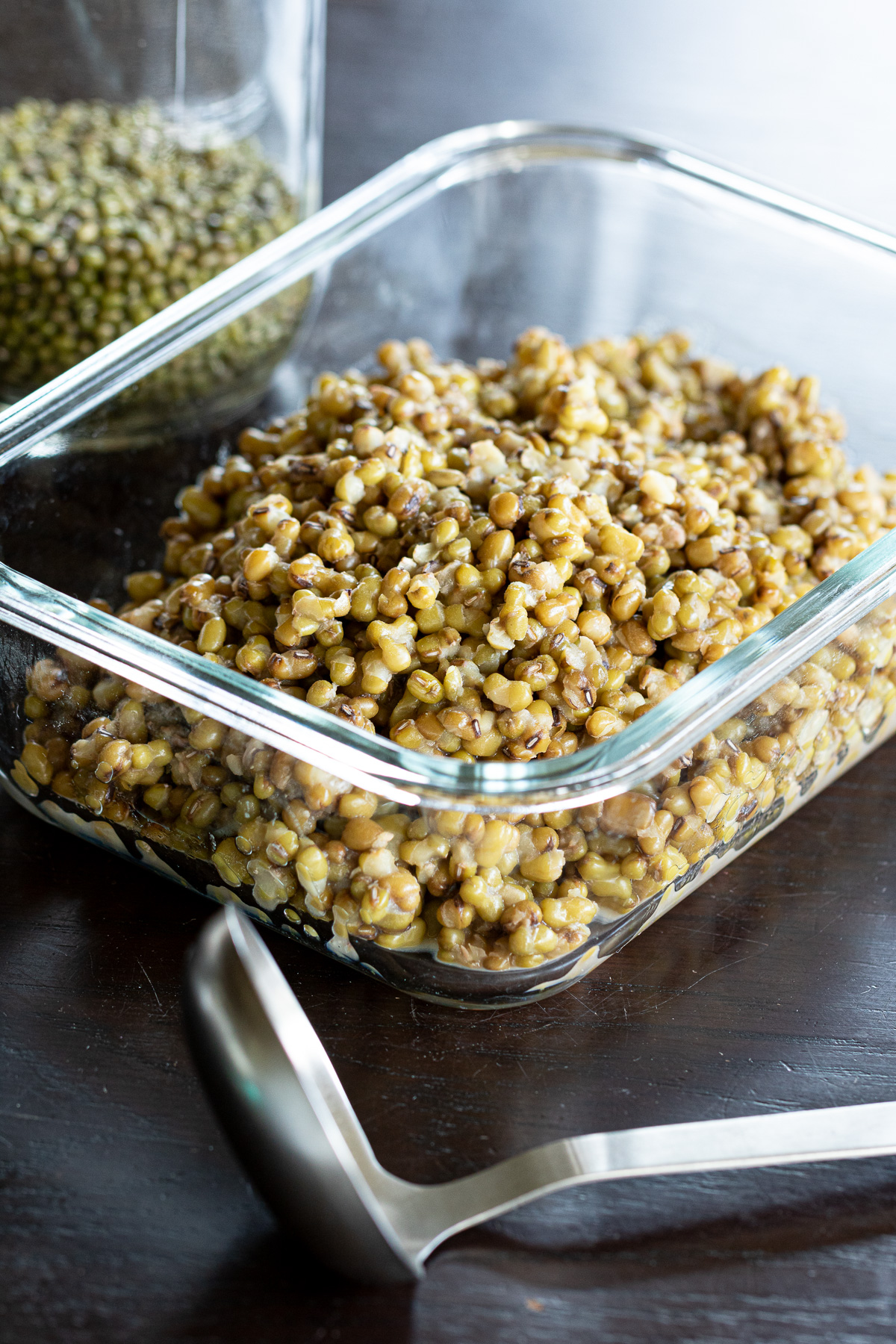
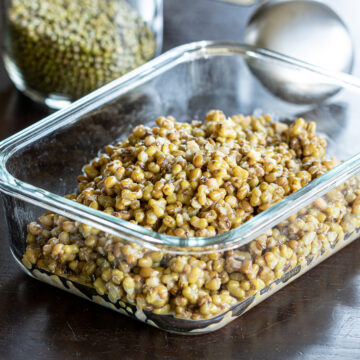
A simple guide to cooking mung beans in a pressure cooker.
Perfect for soups, curries, salads, desserts, and everyday dishes.
Jump to:
🍃 A Fridge Staple for the Humid Season
Once the rainy season arrives in Japan, I usually keep a container of cooked mung beans in the fridge.
Mung beans are often described in traditional Asian food culture as helping the body release excess heat and fluid — something I find myself thinking about more at this time of year.
Acne, mouth ulcers, a sense of overheating, summer fatigue, water retention, loss of appetite — these are the kinds of things Eastern medicine has long linked to excess heat and dampness in the body, and why mung beans have been part of medicinal cooking for so long.
I cook a batch and use it gradually over several days — they find their way into all kinds of meals.
Sometimes I simmer them with vegetables and glass noodles for a simple soup. Other times they become a coconut milk dessert, a quick banana cream, or a small pot of dal.
Not only during the rainy season, but also through summer and into the lingering heat of early autumn — mung beans are one of those quiet staples I keep coming back to.
🫘 Why You'll Like This Method
- Minimal active cooking time — After soaking overnight, the pressure cooker does most of the work. Just 5 minutes under pressure is all it takes.
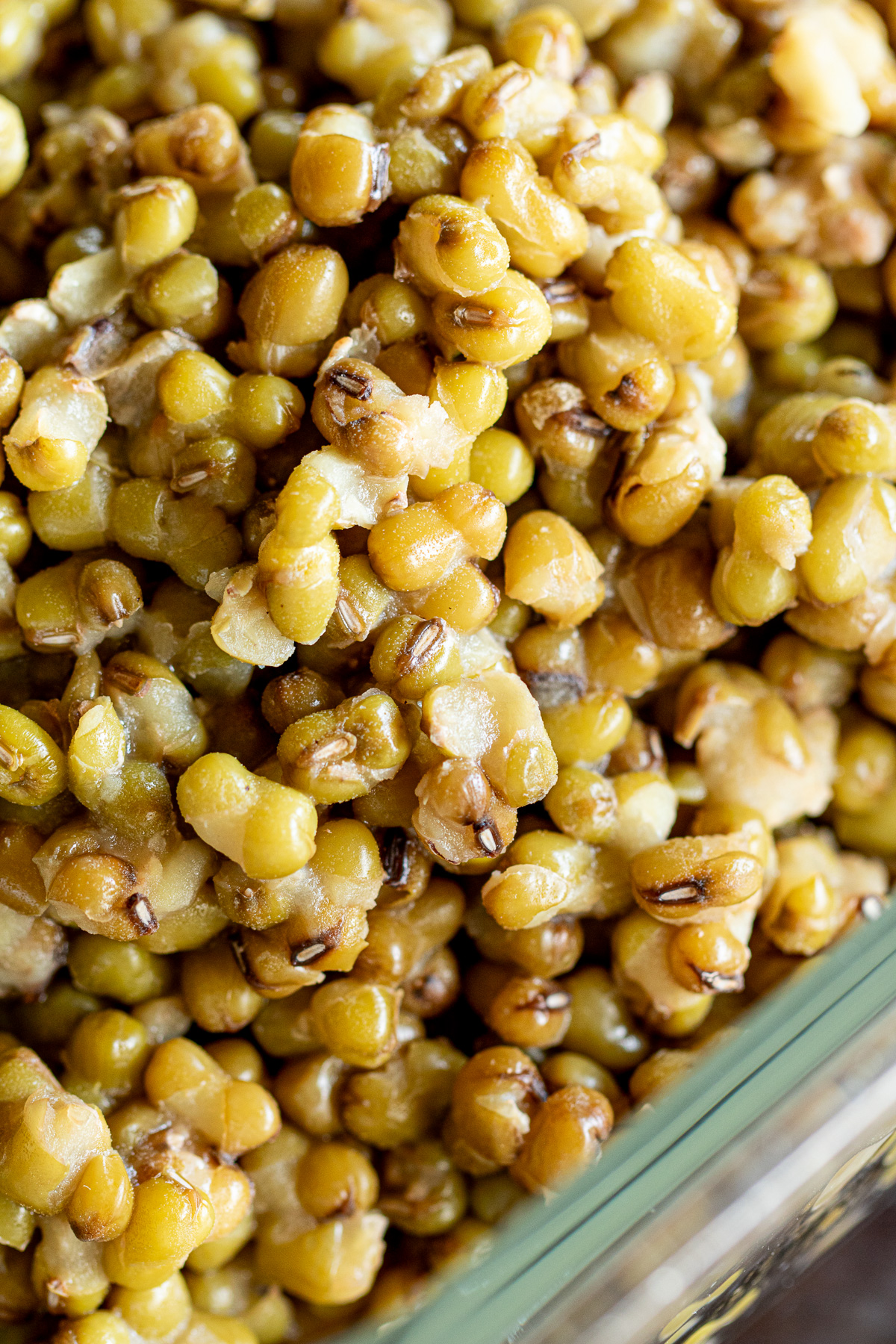
- A slight pop in every bite — Overnight soaking helps the beans stay intact, giving them a pleasant texture similar to well-cooked brown rice.
- Great for sweet or savory recipes — Use them in soups, curries, salads, desserts, and more.
🫖 Ingredients
Makes about 700 g cooked mung beans:
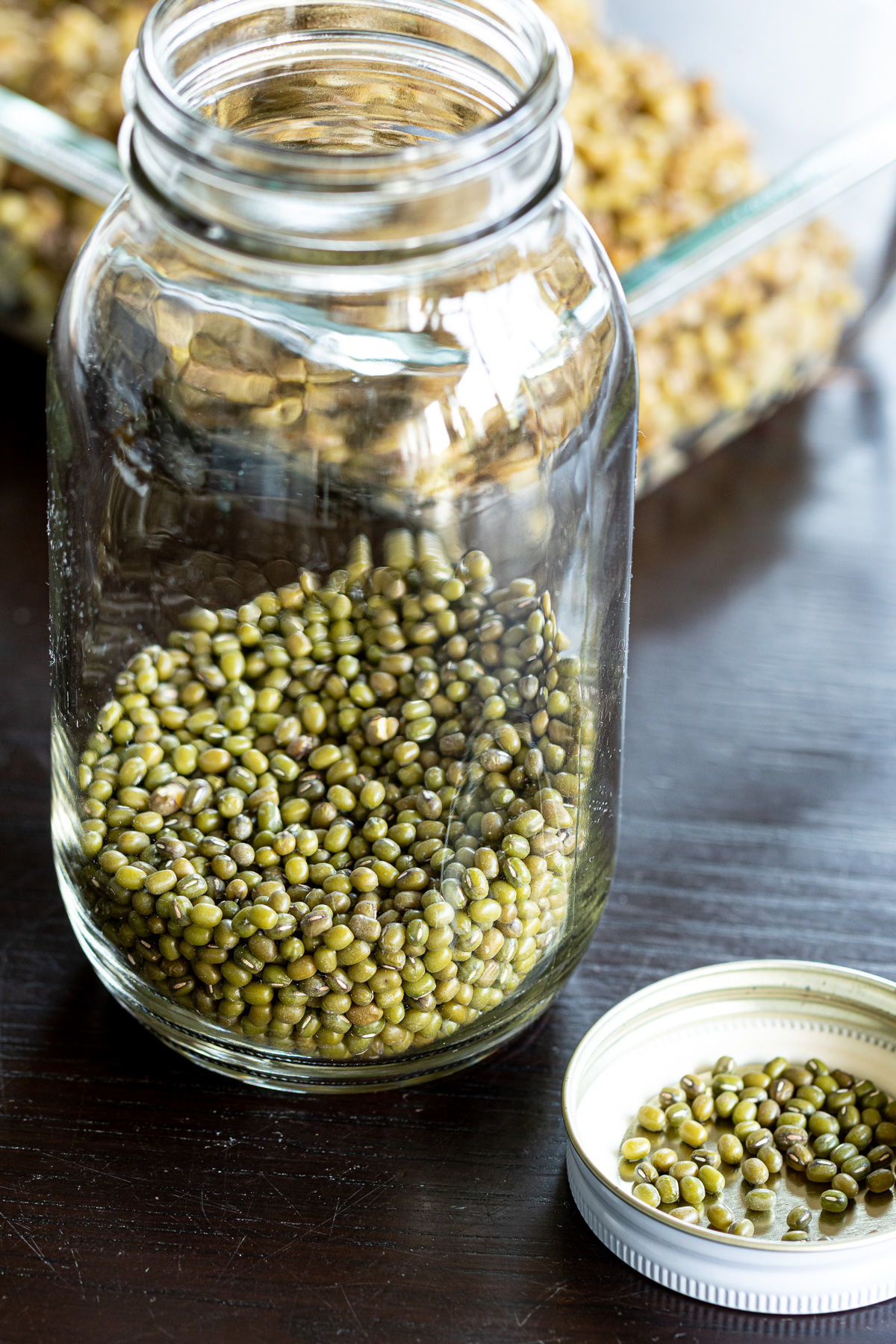
- 200 g dried mung beans
- 600 ml water (for soaking)
- 500 ml water (for cooking)
🥣 Instructions
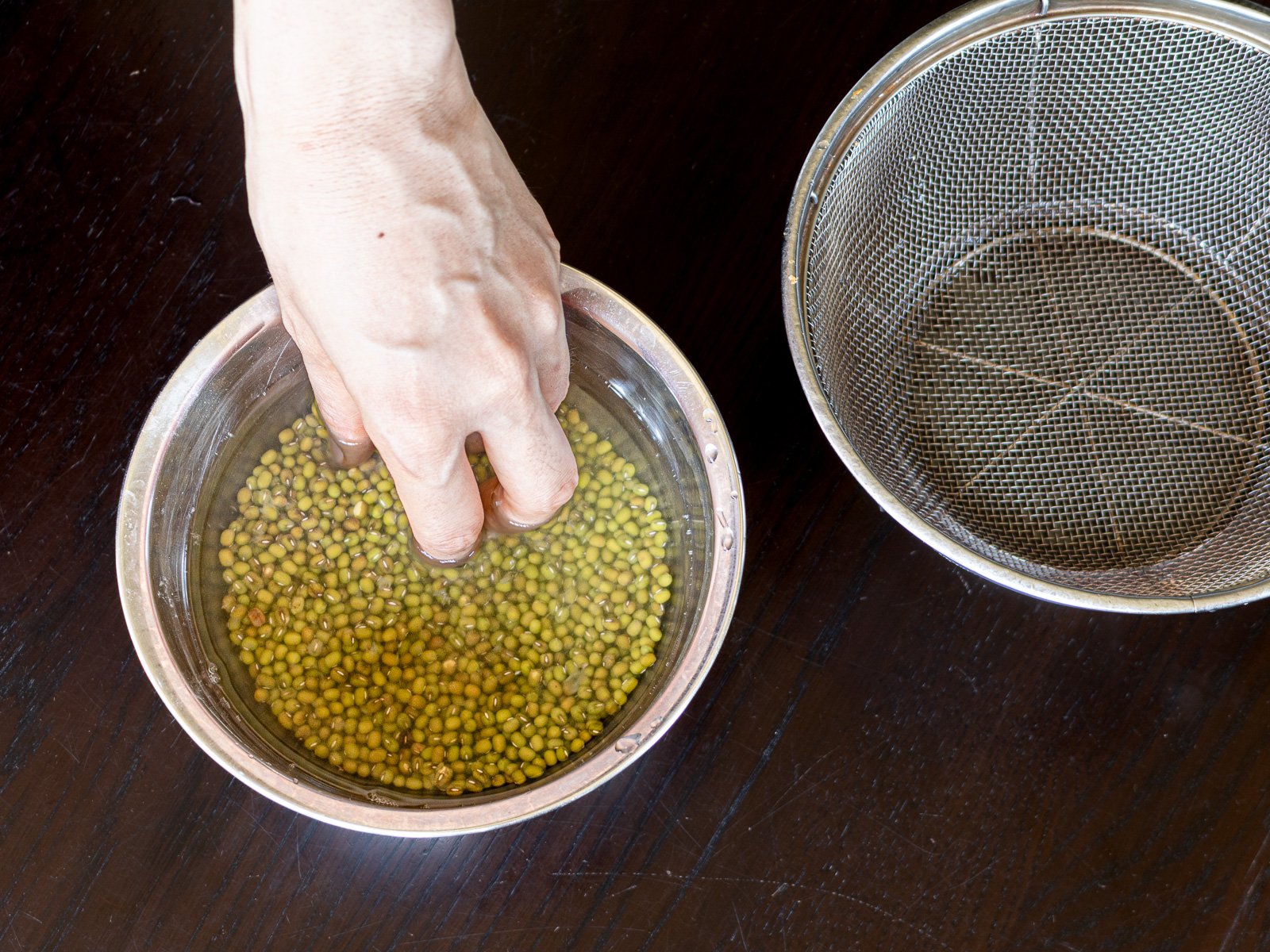
- Rinse the mung beans
- Rinse the dried mung beans under water to remove any dust or debris.
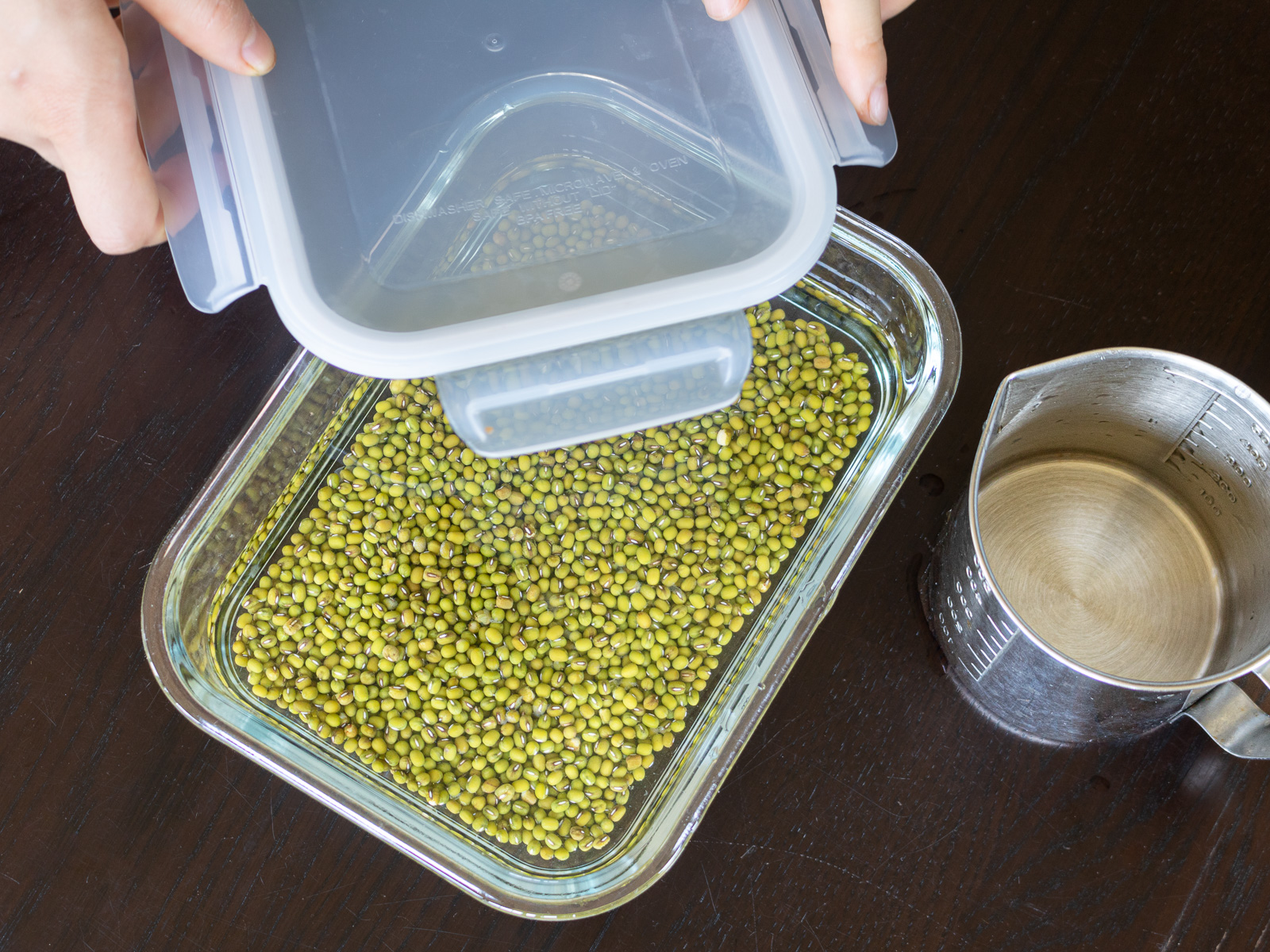
- Soak overnight
- Place the mung beans and 600 ml water in a bowl or container.
- Soak for 6–8 hours, or overnight.
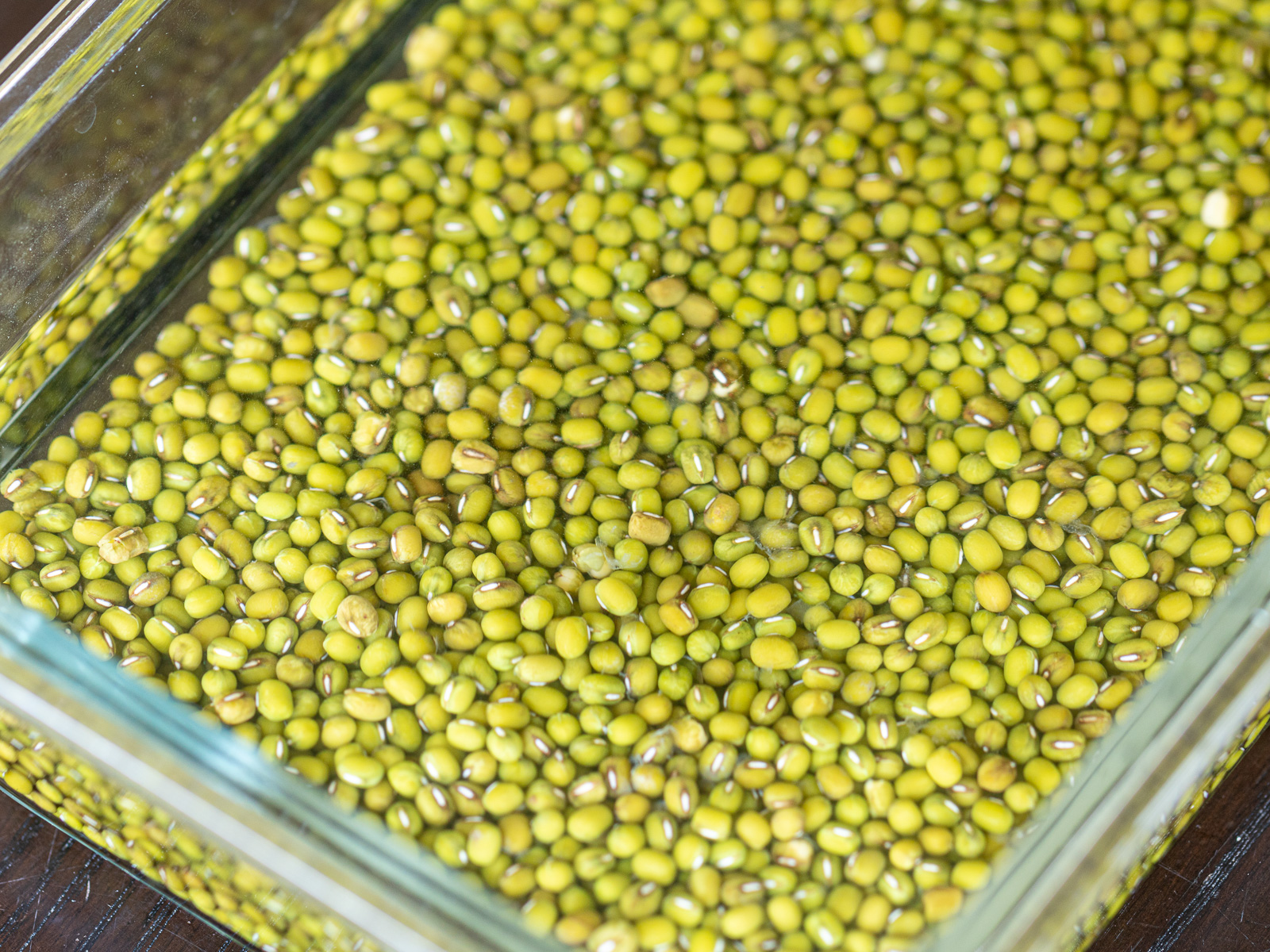
Before
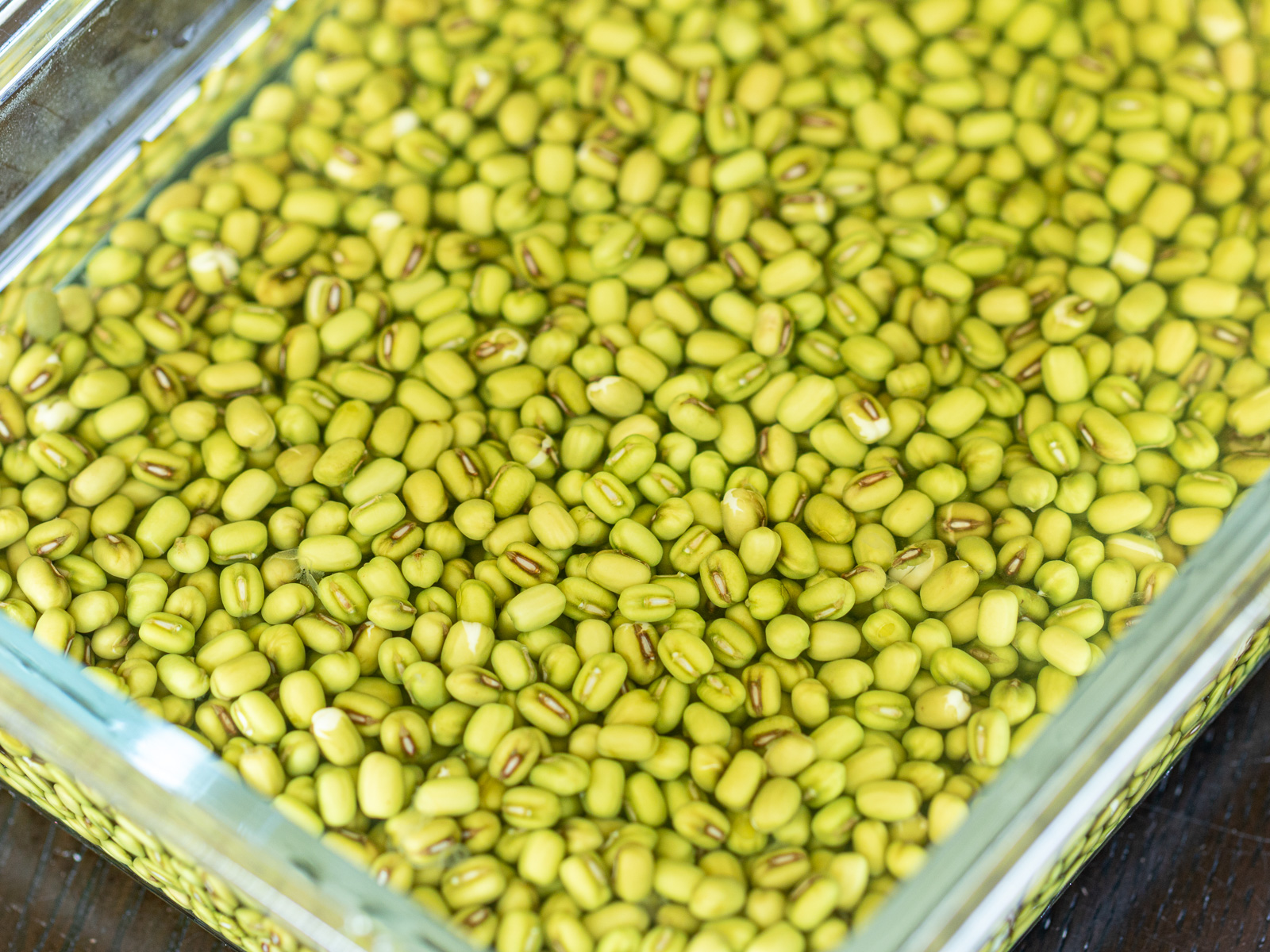
After
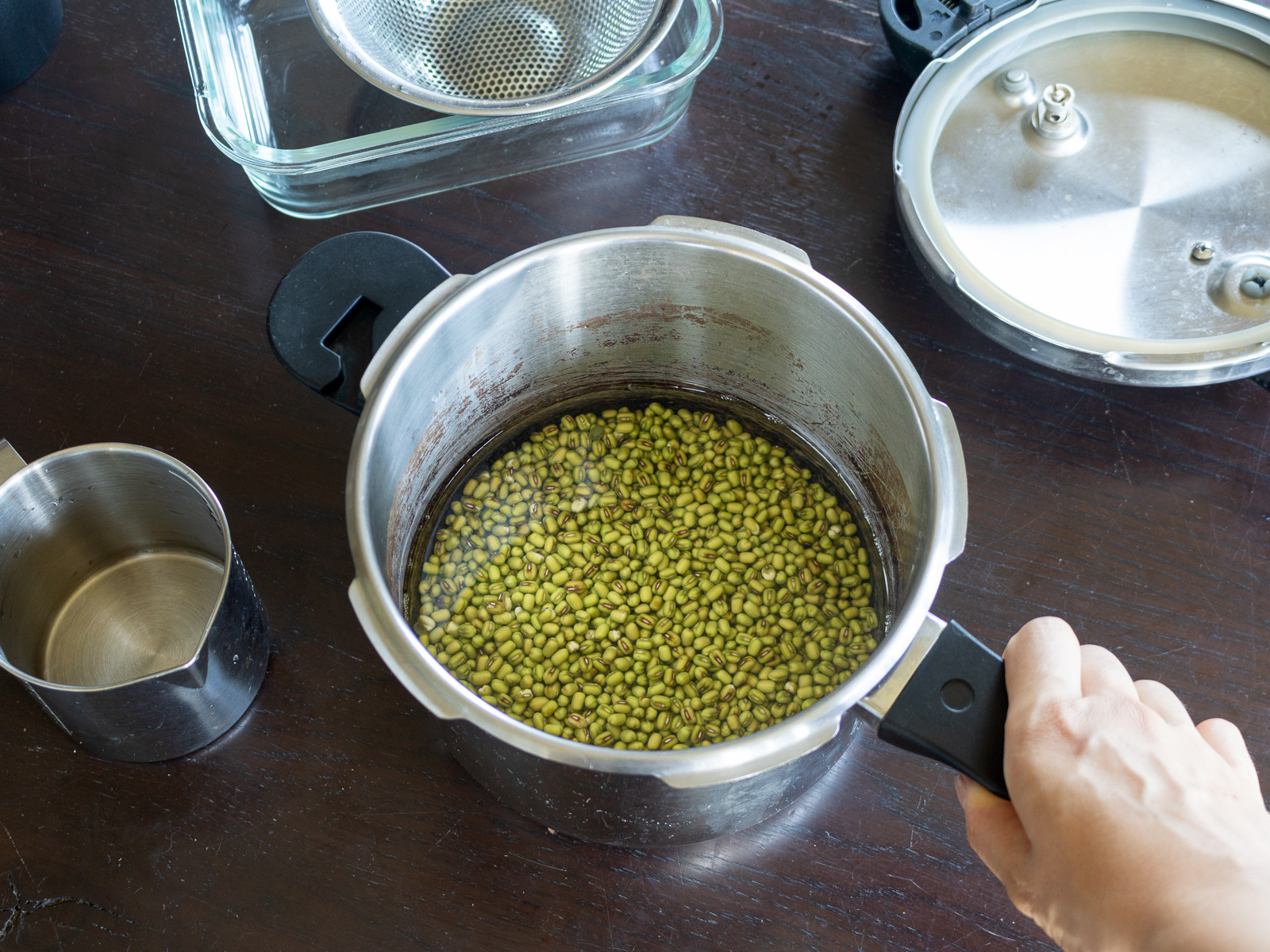
- Pressure cook
- Drain the soaked beans and transfer them to a pressure cooker with 500 ml fresh water.
- Cover and place over high heat.
- Once full pressure is reached, reduce the heat and cook under pressure for 5 minutes.
- Turn off the heat and allow the pressure to release naturally.
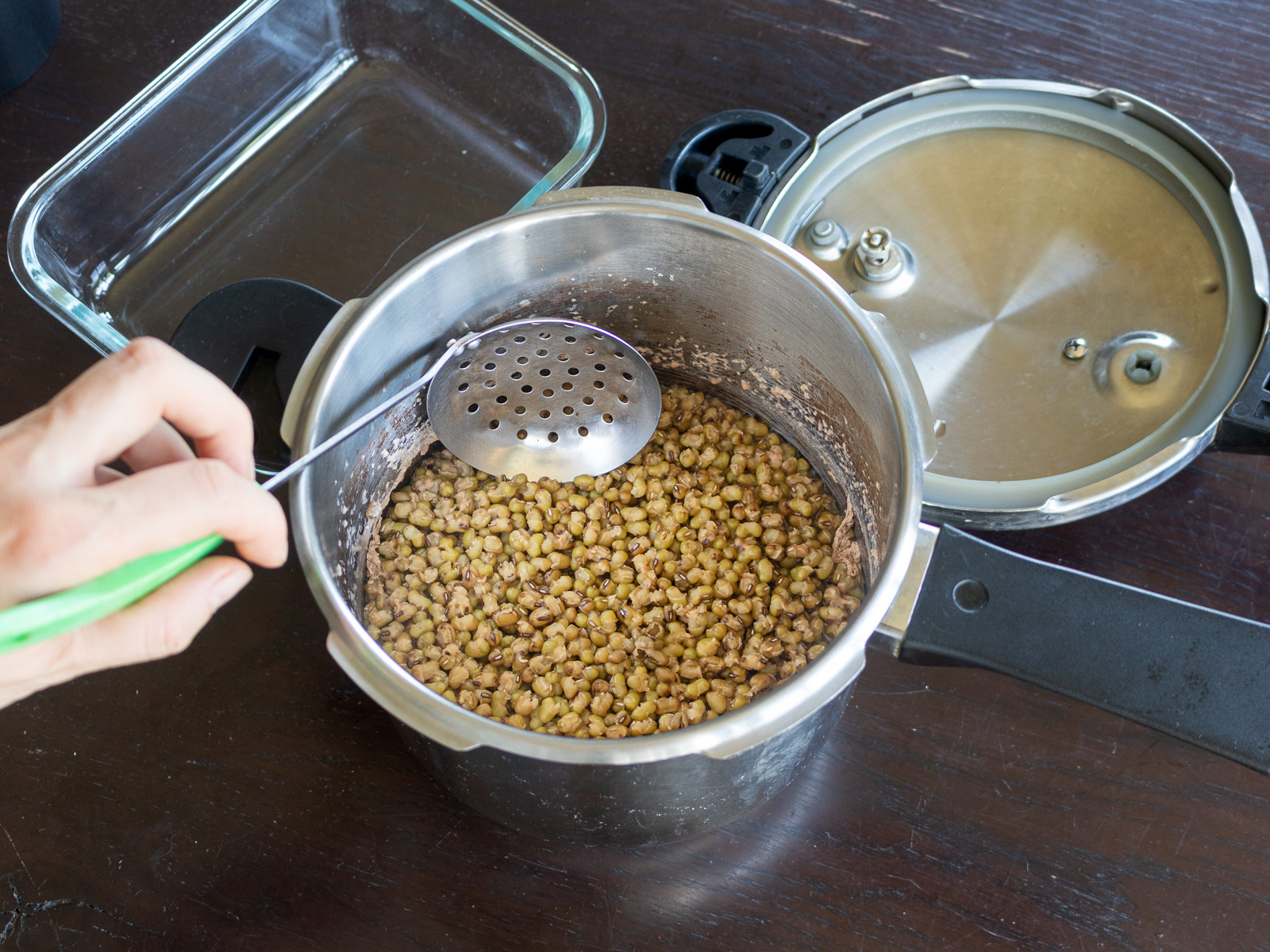
- Cool and store
- Let the beans cool slightly.
- Transfer them to a storage container using a slotted spoon if you would like to separate the cooking liquid.
🌱 Freshly cooked mung beans are quite delicate and can break apart easily, so handle them gently.

🌱 The cooking liquid can be used in soups, curries, or other dishes. You can also store the beans together with the liquid, depending on how you plan to use them.
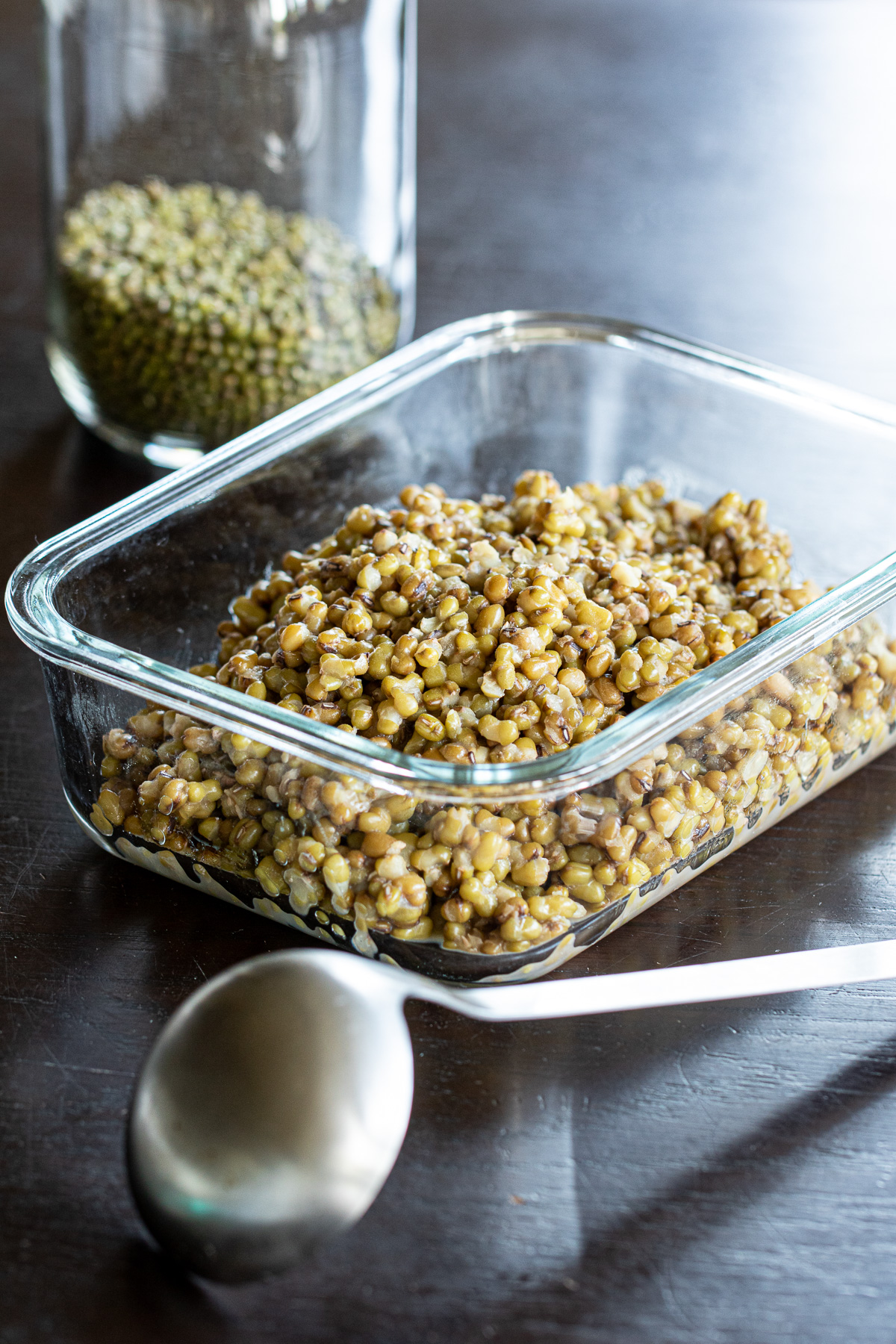
🫙 Storage
Store cooked mung beans in an airtight container in the refrigerator for 2–3 days or in the freezer for up to 1 month.
Storage time may vary depending on the season and storage conditions. Check for any off smell or signs of spoilage before using.
📚 Notes|FAQ
They may need a little more time. Try cooking them for an additional 2–3 minutes under pressure, or continue cooking without pressure. Either way, add a little more water if needed.
Freshly cooked mung beans are quite soft and delicate. Wait until they cool completely, then handle them carefully with a spoon or ladle.
If your mung beans are still too soft, try shortening the cooking time or reducing the amount of cooking water slightly next time.
No, but soaking helps the beans cook more evenly, reduces the cooking time, and gives them a plumper texture.
You can cook soaked mung beans in a regular pot. Cover them with water and simmer for about 30–40 minutes, or until tender.
Not necessarily. The cooking liquid can be used in soups, curries, or other dishes.
Whether you keep it or drain it depends on how you plan to use the beans.

If you feel like whispering a thought, asking a question, or simply saying hello — the comment section is always open 📮
📘 Kitchen Notes|What Mung Beans Are Known For
Mung beans have long been used in both traditional Chinese medicine and Ayurveda.
They are valued for their ability to clear excess heat from the body and support the release of excess fluid.
▶︎ Fluid balance
Mung beans are naturally rich in potassium, which is thought to help regulate fluid balance and ease puffiness and fatigue.
▶︎ A cooling food
They are also considered a cooling food in traditional Chinese medicine — commonly eaten during hot, humid weather and at seasonal transitions.
▶︎ Easy to digest
Small and thin-skinned, mung beans tend to be gentler on the digestive system than larger legumes like soybeans.
⛰️ In Everyday Cooking
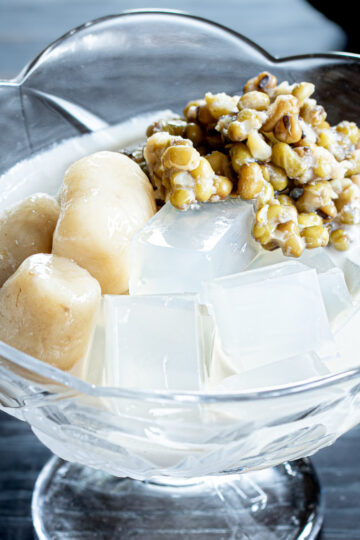
- On a hot summer afternoon: Serve chilled mung beans with coconut milk as a simple dessert. Here's how to.
- On a rainy evening: Simmer mung beans with vegetables for a warming soup that supports fluid balance.
- For a light lunch: Toss them into a salad for a satisfying pop of texture.
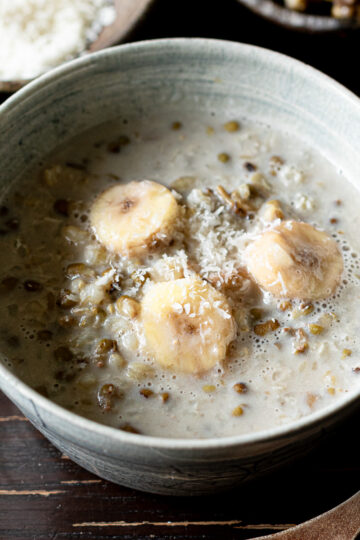
- At seasonal transitions: Cook them into a sweet congee or dal for something easy on the stomach.
🌿 If you're also dealing with signs of yin deficiency — such as feeling flushed or overheated — a mild lentil coconut curry might also be worth exploring.
🌱 Using Cooked Mung Beans
Use them in soups, curries, salads, desserts, and more:
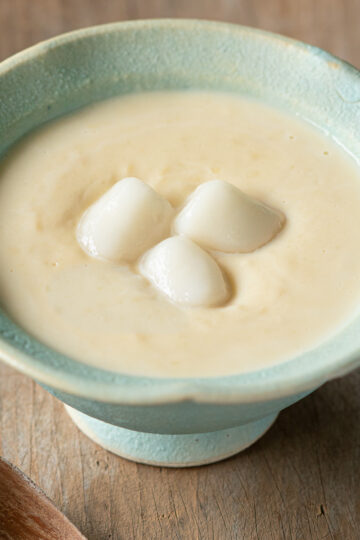
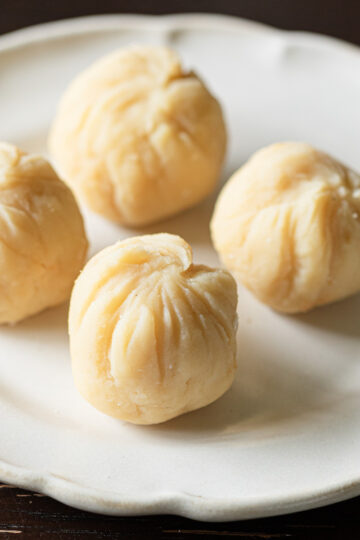
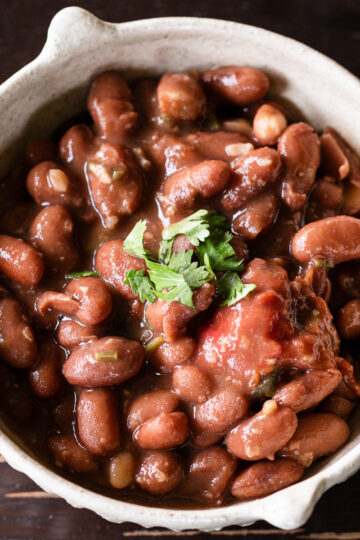
🚲 More Vegan Bean Recipes
Recipes using lentils, soybeans, adzuki beans, chickpeas, and more (see all):

♨️ More Ways to Cook Beans
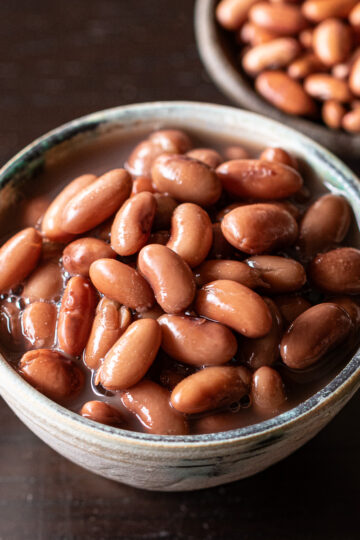
Simple methods worth learning — each one opens up a whole new range of recipes:
📖 Recipe Card
How to Cook Mung Beans (Pressure Cooker)
Ingredients
- 200 g dried mung beans
- 600 ml water (for soaking)
- 500 ml water (for cooking)
Instructions
- Rinse the dried mung beans under water to remove any dust or debris.200 g dried mung beans
- Place the mung beans and 600 ml water in a bowl or container. Soak for 6–8 hours, or overnight.600 ml water
- Drain the soaked beans through a colander.
- Transfer the beans to a pressure cooker with 500 ml fresh water. Cover and place over high heat.500 ml water
- Once full pressure is reached, reduce to low heat and cook for 5 minutes.
- Turn off the heat and allow the pressure to release naturally. Let the beans cool slightly.
- Transfer to a storage container using a slotted spoon to drain the cooking liquid as needed.

If this recipe made its way into your kitchen, and you'd like to share that moment, feel free to tag @veginveganvegun or use #vegin_vegan_vegun.
Your quiet stories inspire me deeply 🕊️




Comments
No Comments