
My favorite pan-fried vegan korokke (Japanese croquette) recipe — a lighter take on traditional Japanese croquettes.
No deep-frying, no batter, no panko.
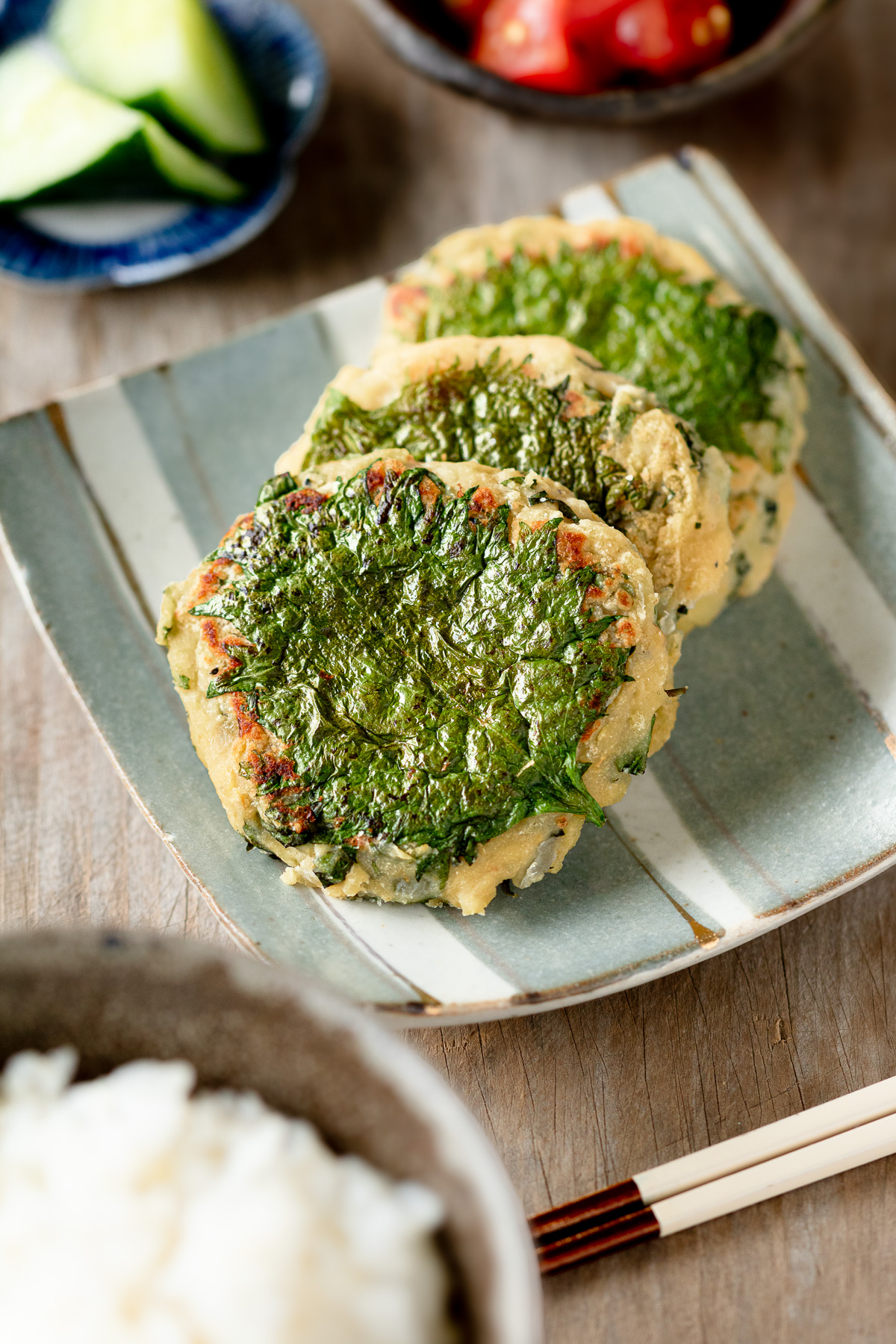
Just mashed mung beans and sautéed onion, seasoned with miso, sandwiched between shiso leaves, and pan-fried until golden — think of these as vegan patties with a Japanese korokke twist.
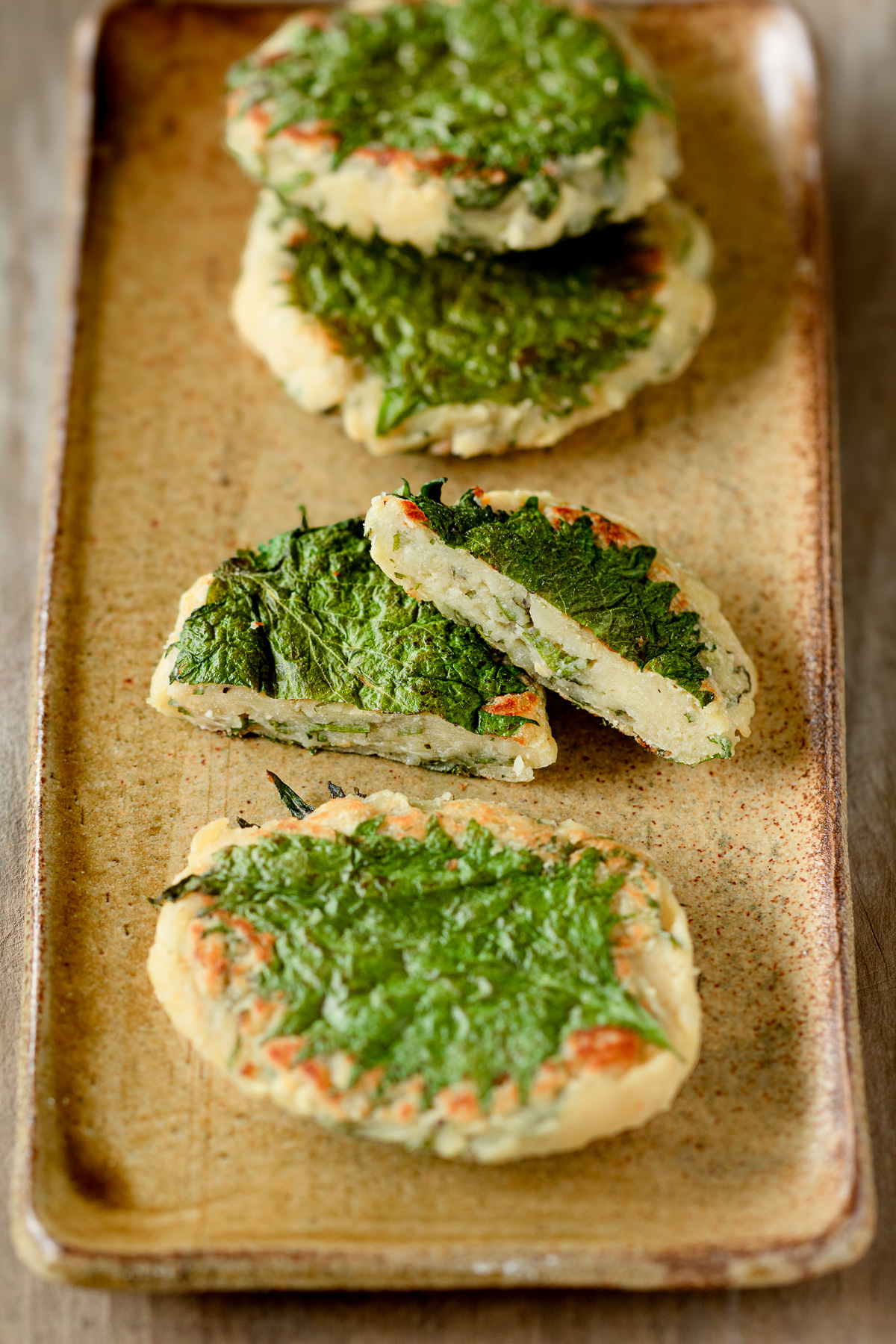
Straight off the pan, they're soft and creamy. Once cooled, they become fluffy, slightly crumbly patties.
Serve warm with rice like a traditional croquette, or pack them cold in a bento — either way, they're just as good.
Jump to:
🧺 What Is Korokke?
Korokke (コロッケ) is the Japanese take on the croquette — usually made with mashed potatoes and simple vegetables, sometimes mixed with ground meat, then coated in panko and deep-fried until crisp. It’s a staple of Japanese home cooking and also a popular snack at convenience stores. Often served as part of a meal with rice, shredded cabbage, and a drizzle of tonkatsu sauce.
Korokke isn't just one thing
When I was little, my mother often made korokke with all kinds of ingredients and seasonings. One of my favorites was her curry korokke, made with canned tuna, cabbage, and curry powder. And there was cheesy korokke too — melted cheese hiding in the middle.
They always looked the same on the outside, but there was always a little surprise waiting inside. I remember getting excited as soon as my mother started making them, wondering what she had put inside that day.
That’s what I love about korokke in Japan — it’s such a flexible dish.
My vegan version follows the same rule — no fixed filling, no fixed shape. This is how my vegan korokke took shape.
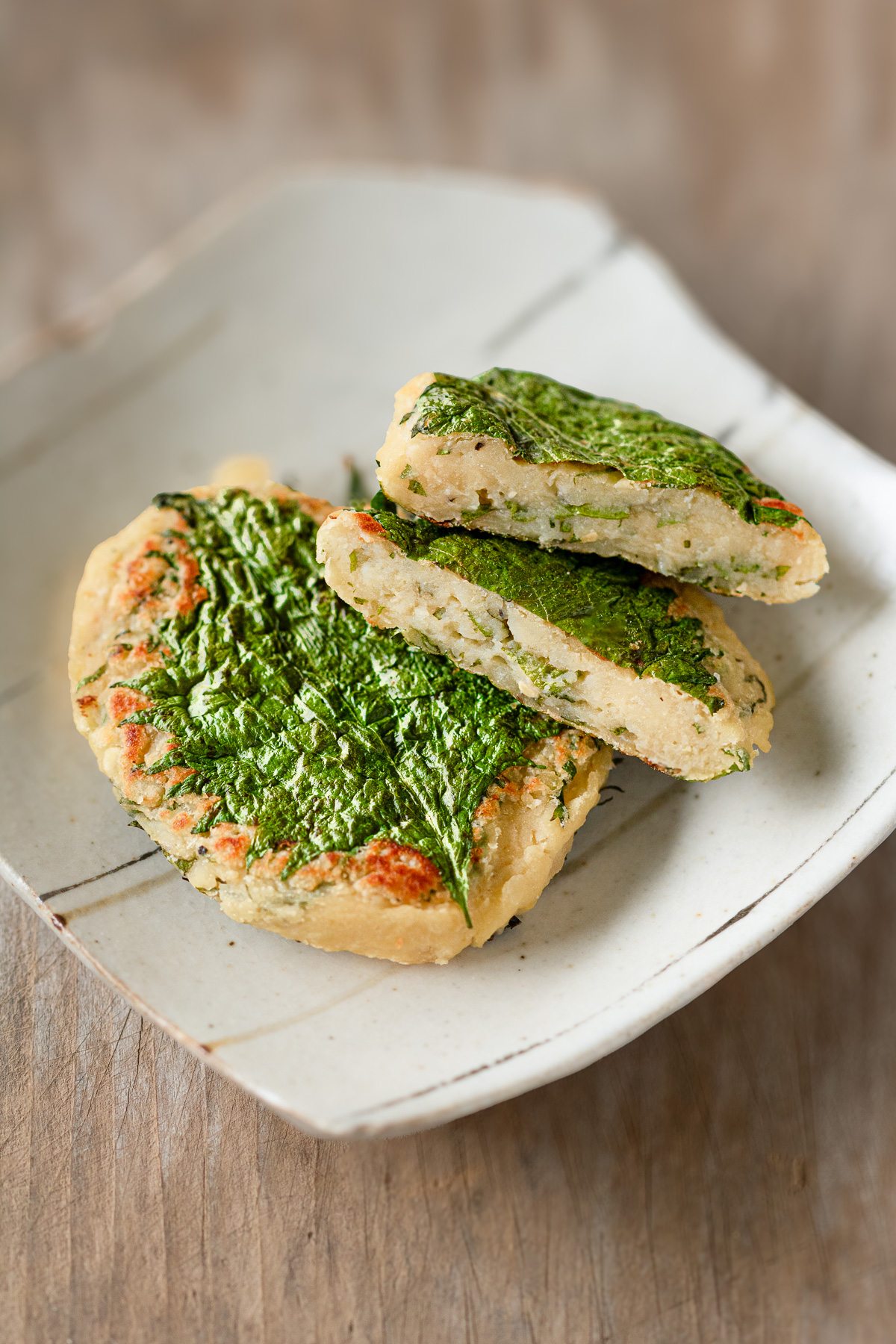
🕊️ My Korokke, My Way
Ingredients
For this recipe, I use protein-rich mung beans in place of potatoes, adding onion and miso for that deep richness and umami that ground meat would usually bring.
How to Cook
Once the mixture is ready, sandwich a spoonful of korokke mixture between shiso leaves and cook it slowly in a frying pan until nicely browned.
The process is much like making traditional korokke, but without the deep-frying, there’s less mess to clean up. Another advantage is that the finished korokke feels lighter on the stomach and easier on digestion.
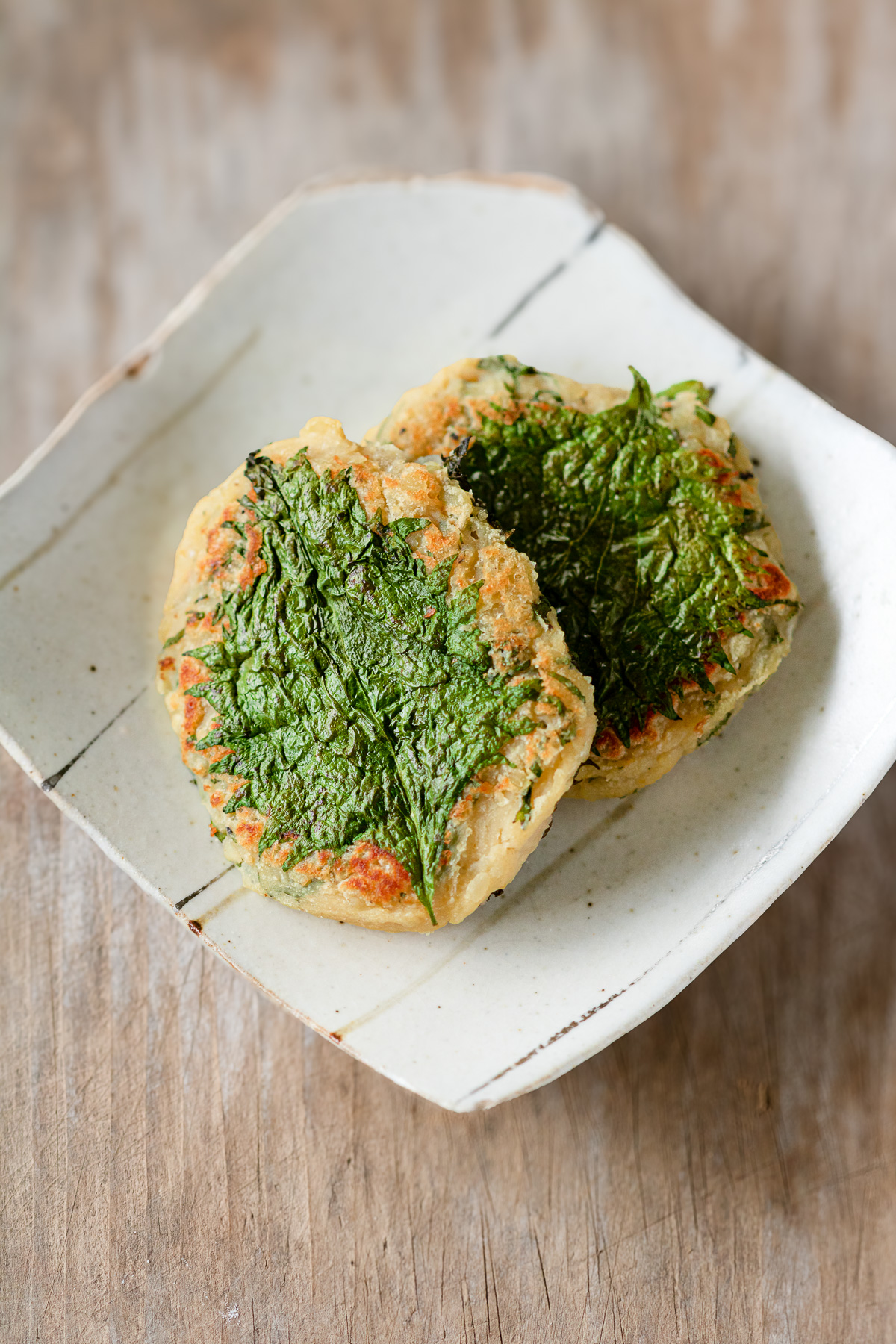
Texture
When they’re fresh out of the pan, they are creamy—almost like a cream korokke (クリームコロッケ) made with béchamel sauce. As they cool, the texture gradually changes, becoming soft and fluffy, more like a traditional potato korokke.
I've always loved korokke — the kind of love where I eat more than I should. This version never leaves me feeling weighed down after. No excuse to stop, apparently 😇
📖 More Reasons to Love It
These vegan korokke are also:
- High in protein — mung beans contain more protein than the potatoes used in a traditional korokke
- Gluten-free — no panko, no breading. (Just double-check your miso label — most miso, including the rice koji miso I use, is gluten-free, but it can vary by brand and manufacturing facility. )
🫘 Ingredients
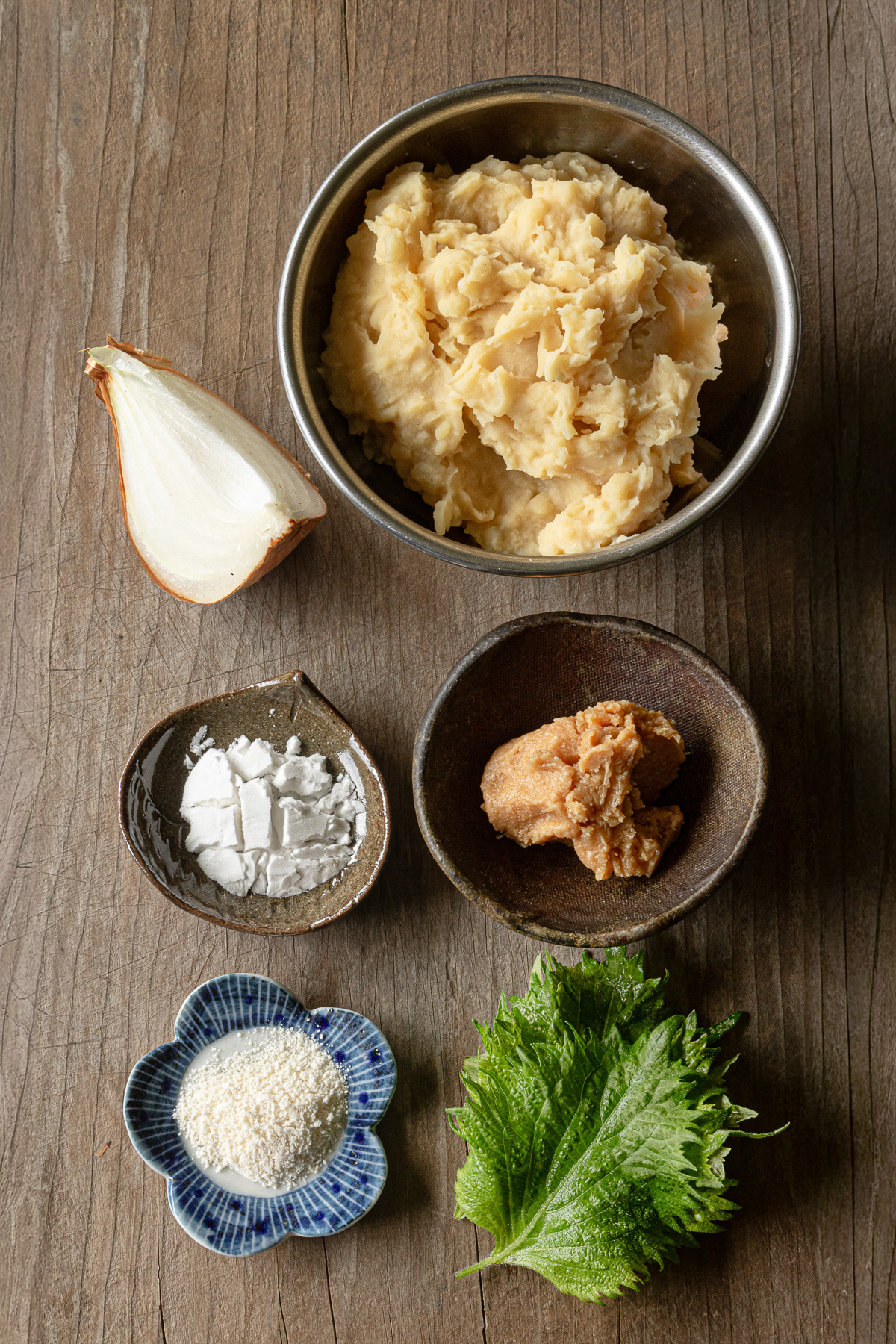
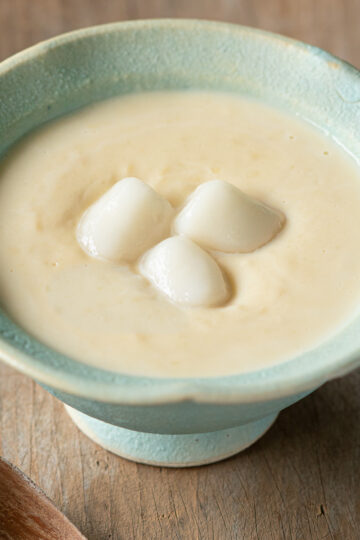
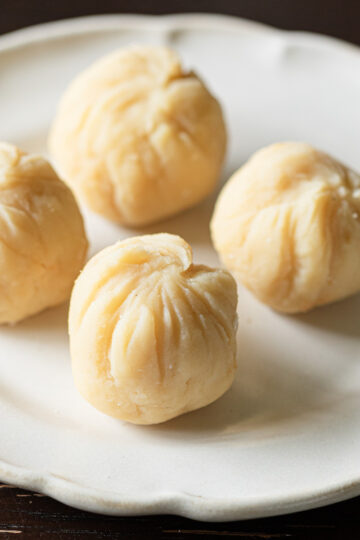
- Split mung beans (yellow mung dal) — I use skinless yellow mung dal, the same type of mung beans used for my dal curry, mung bean oshiruko (sweet mung bean soup with mochi), and sweet mung bean balls.
My go-to is Ambika's Yellow Mung Dal (an Indian brand available in Japan). A pressure cooker turns it into the perfect mash for these korokke. - Onion — just a small amount, finely chopped and sautéed with salt and pepper to add savory depth.
- Rice koji miso — the higher the rice koji ratio, the sweeter the miso. I always reach for a sweeter one, here and in everyday miso soup too. Saltiness varies by brand, so adjust to taste.
- Beet sugar (or your preferred sugar) — a small amount, if the miso alone isn't sweet enough. I use powdered beet sugar because it dissolves easily and its light color doesn't affect the final appearance of the korokke. Of course, other types of sugar work as well.
- Shiso leaves (Japanese perilla leaves) — a handful, fresh from my garden. Use plenty: some go into the mung bean mixture, the rest are for sandwiching it.
Full ingredient amounts and instructions in the recipe card at the bottom of this post 👇
🥣 Equipment
- Pressure cooker — I use a Pearl Metal pressure cooker with a switch between low (60 kPa) and high (100 kPa) pressure. I always use high pressure for cooking beans. An essential tool for bean-based recipes in my vegan cooking.
- Spatula
- Frying pan
- Mixing bowl
- Tray or plate
- Knife and cutting board
🥄 Instructions
There are two parts to this recipe: the mash, and the korokke themselves.
Once the mash is ready, the rest is simple — season, sandwich in shiso, and pan-fry until golden.
1. Make the Mung Bean Mash
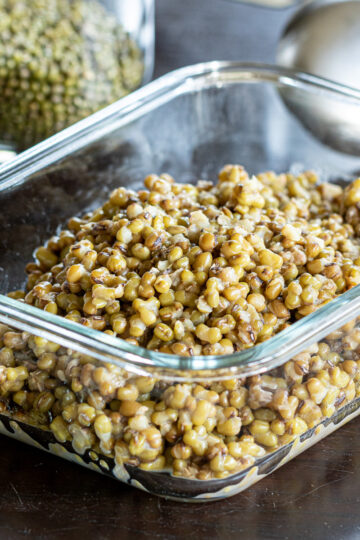
Cook the mung beans the same way as in my sweet mung bean balls and mung bean oshiruko recipes. I usually cook a double batch — half for this recipe, half to enjoy as a dessert.
Two things make or break this step:
- Use the minimum amount of water needed to cook the beans.
- As soon as the pressure releases, open the lid and stir well with a spatula while still hot, breaking down the beans as much as you can into a smooth paste.
In my Pearl Metal pressure cooker, a 1:2 ratio of mung beans to water, cooked 5 minutes at high pressure (100 kPa), gets exactly the right consistency.
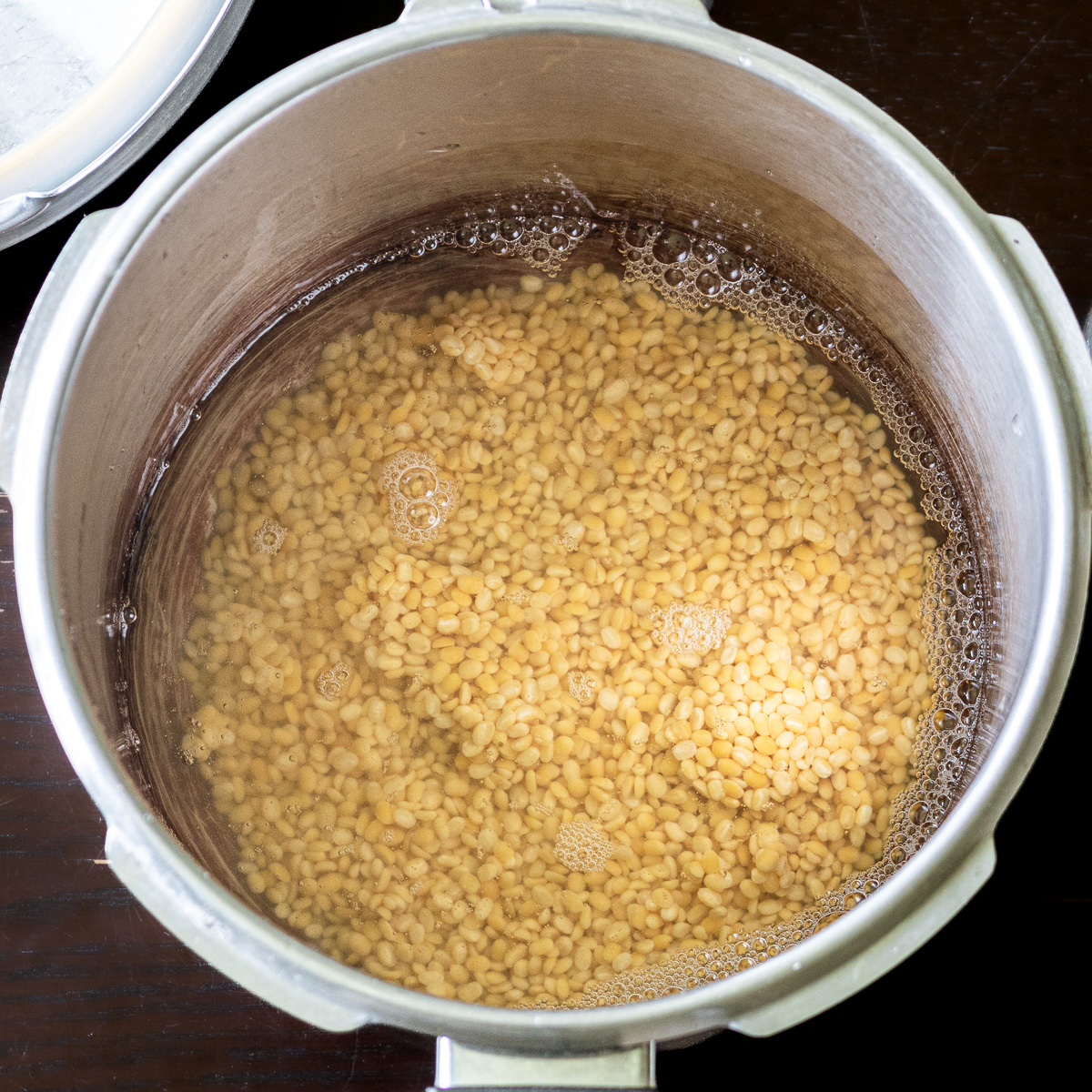
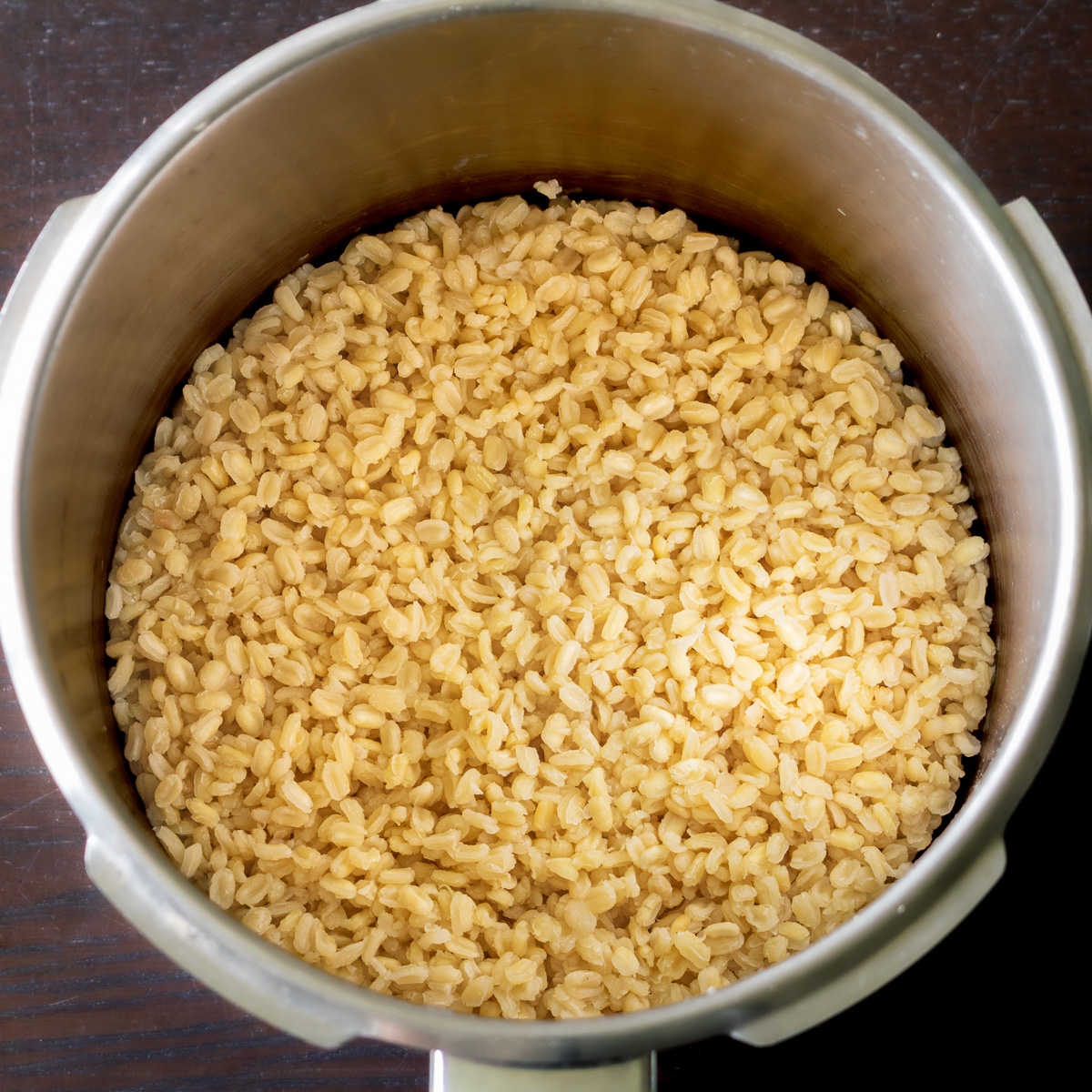
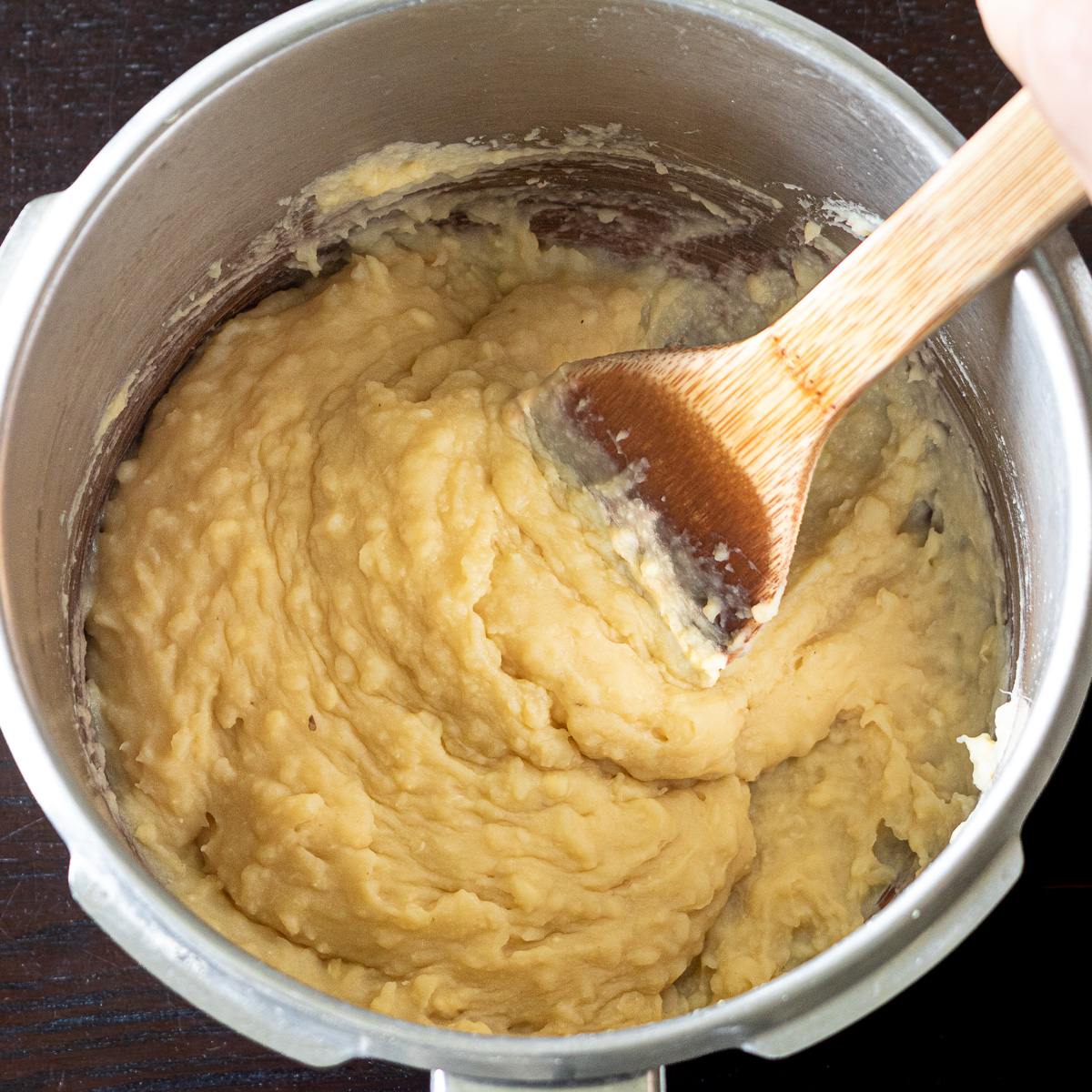
Once mashed, let it cool slightly, then chill thoroughly in the fridge — until a spoonful holds its shape when scooped.
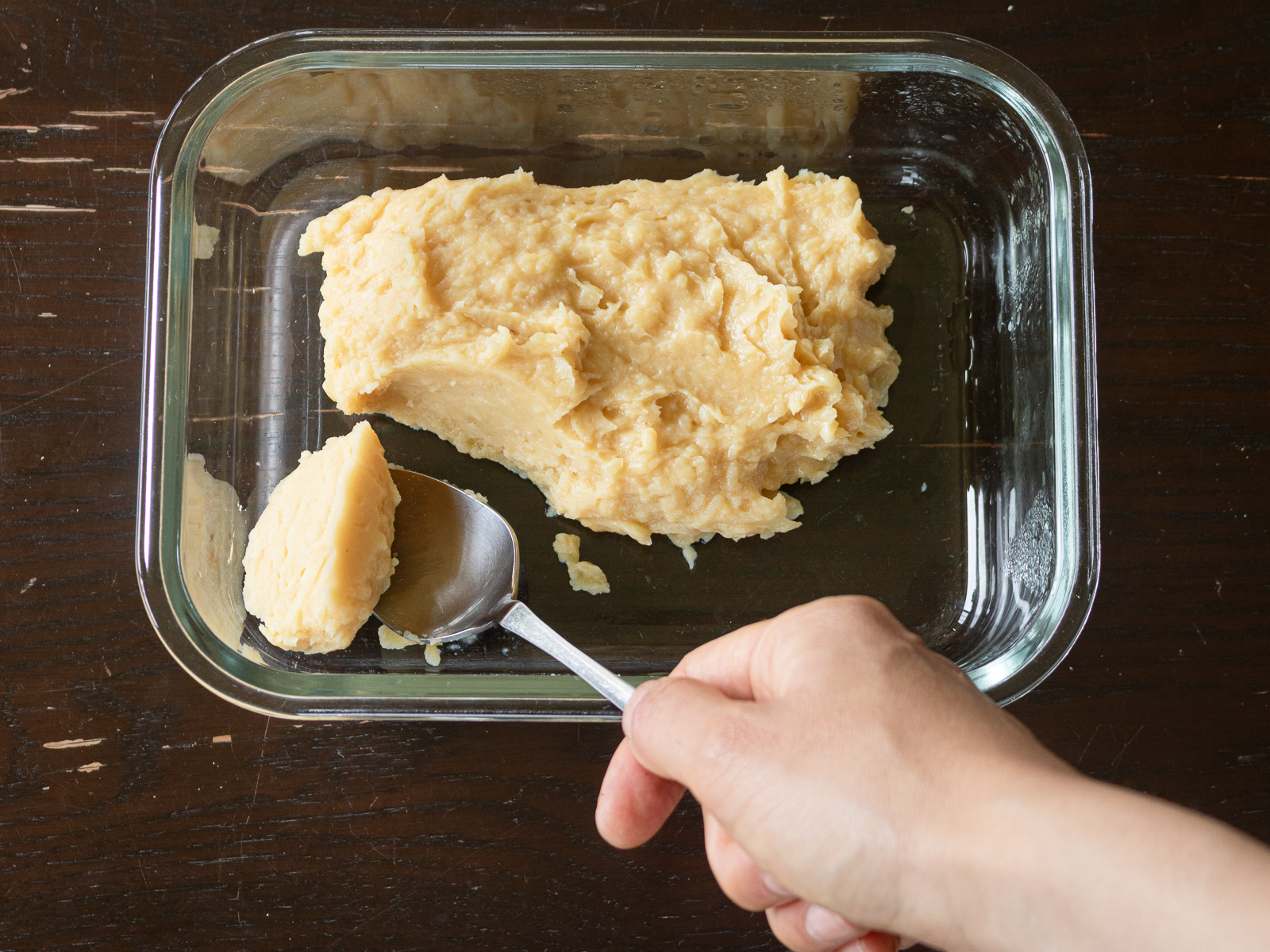
From here, the mash is ready whenever you are.
⒉ Shape and Cook
Now for the fun part — season, shape, and pan-fry.
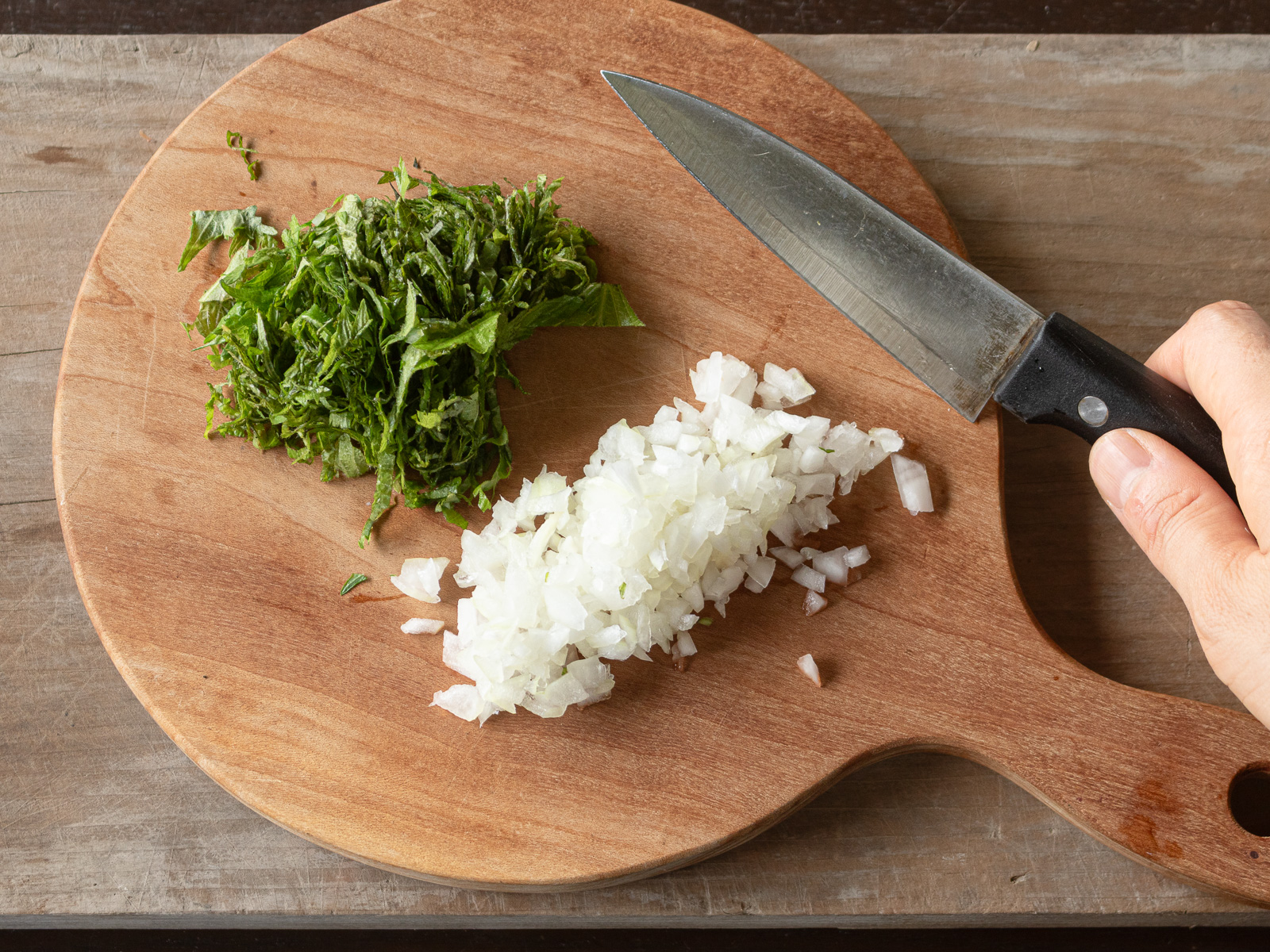
- Prep: Wash the shiso, pat dry, and slice about 10g into thin strips — leave the rest whole for sandwiching.
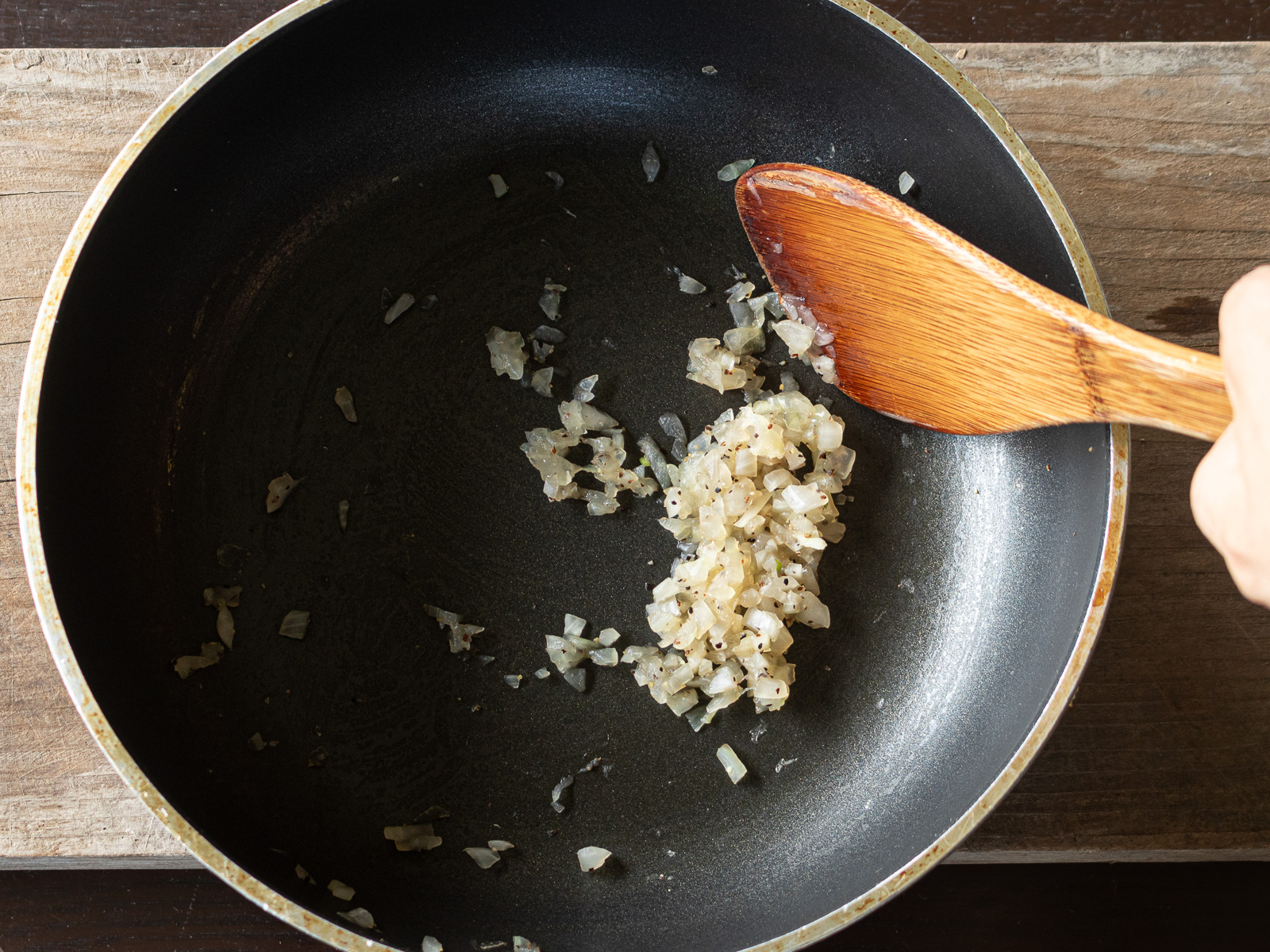
- Cook the onion: Season the chopped onion with salt and pepper, warm briefly, then add water and cook until it softens and the water is gone. Cool before mixing in.
🌿 For a richer flavor, sauté the onion with oil instead.
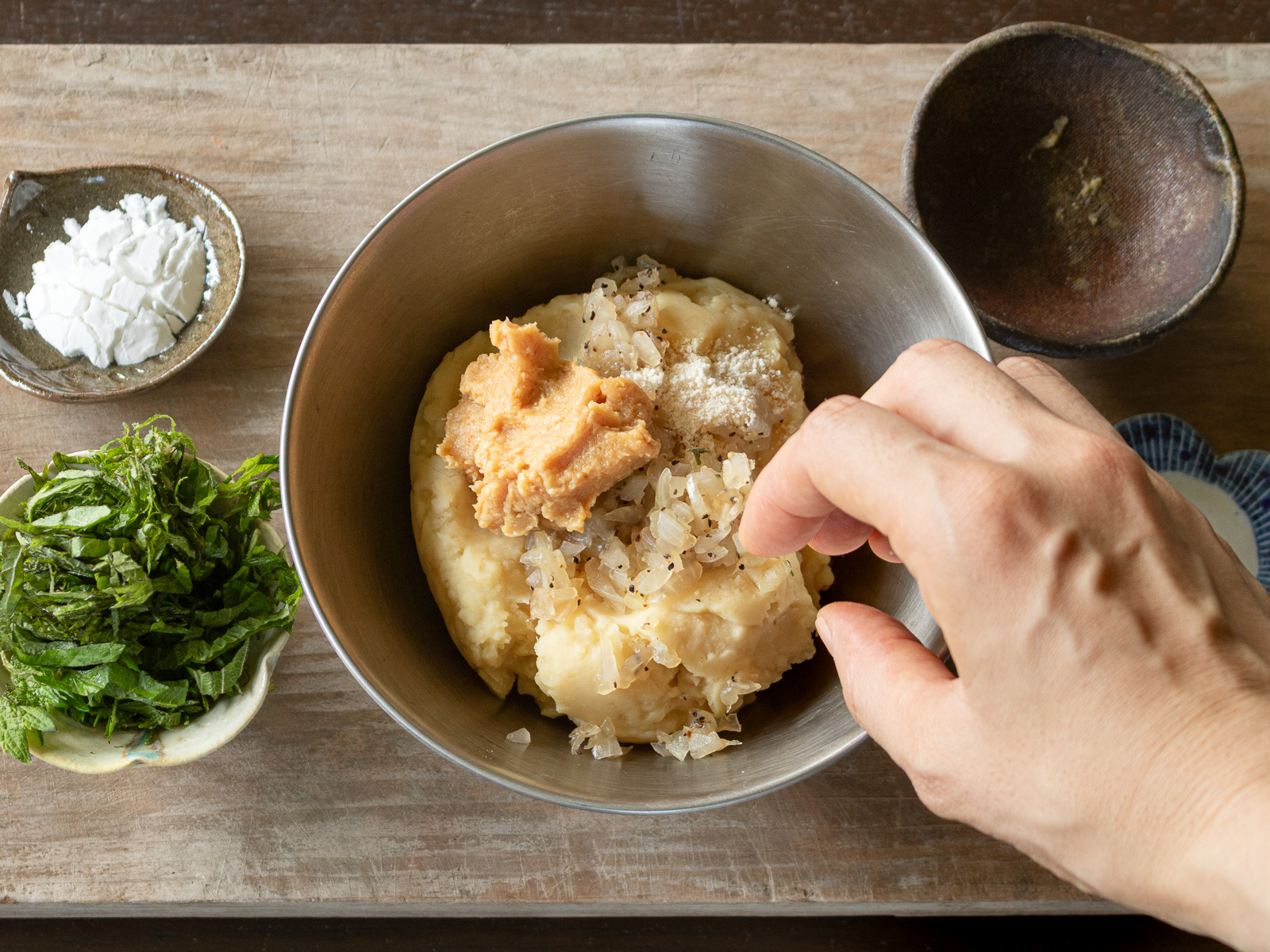
- Mix: In a bowl, combine the mung bean mash, cooked onion, and two-thirds of the miso, and mix well.
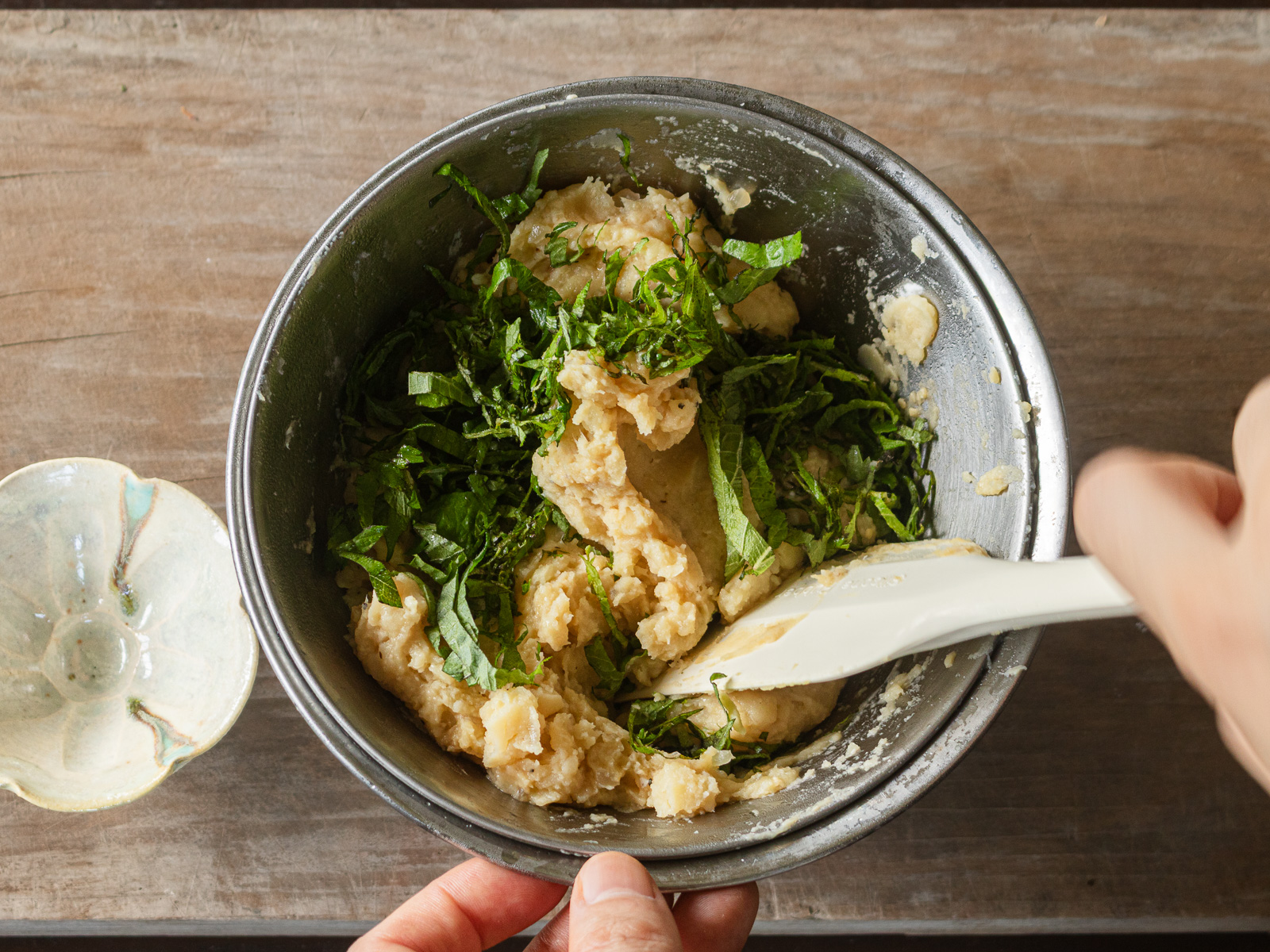
- Season: Mix in the sliced shiso. Taste and adjust — sugar, the rest of the miso, salt, pepper — until it's right. Mix in the potato starch.
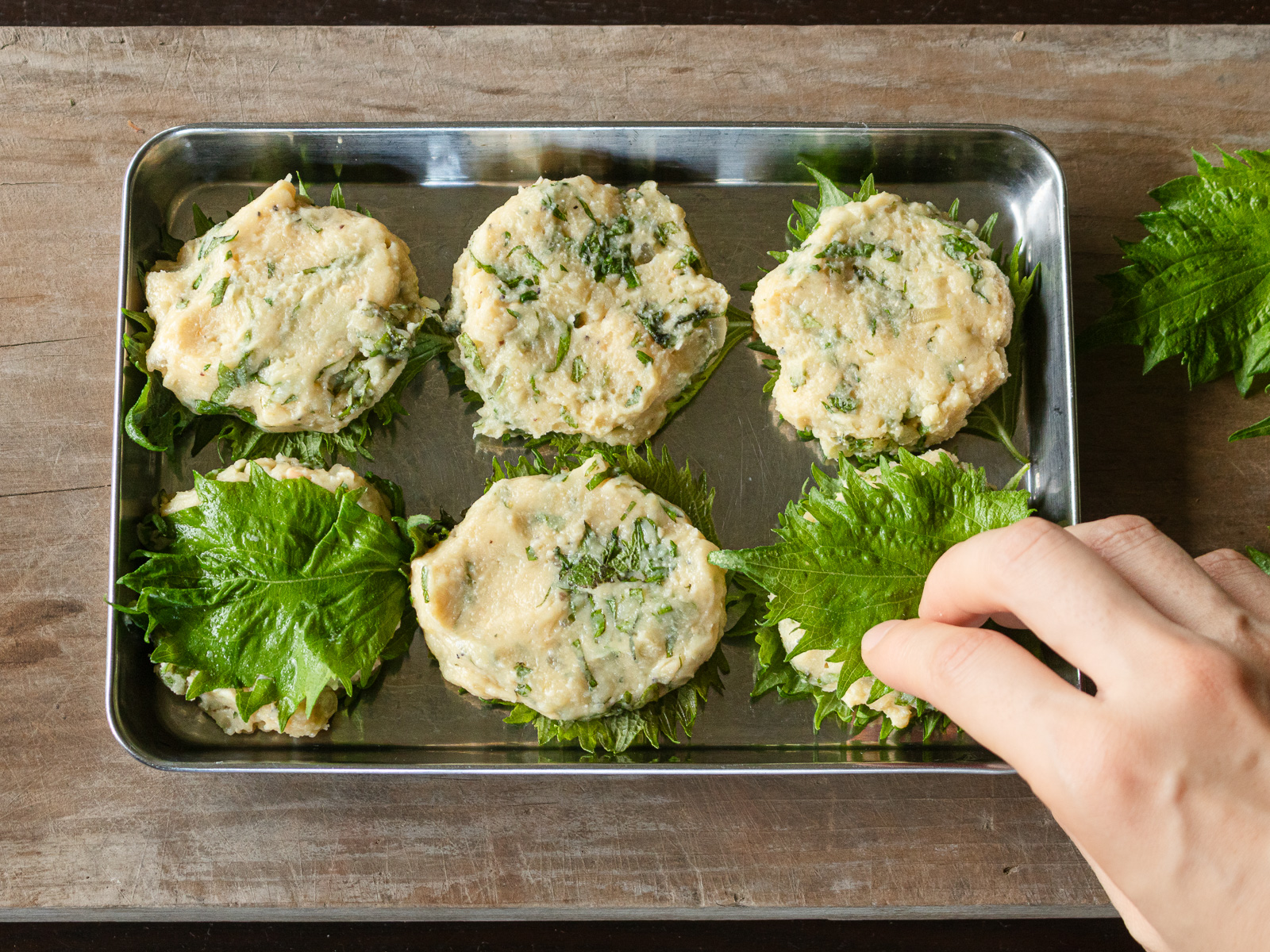
- Shape: Lay shiso leaves on a tray, spoon the mixture on top, and flatten to the size of the leaf. Top with another leaf and gently press to sandwich.
🌿 The mixture tends to be softer and stickier on hot days — shaping it directly on the shiso leaf is easier than rolling it by hand.
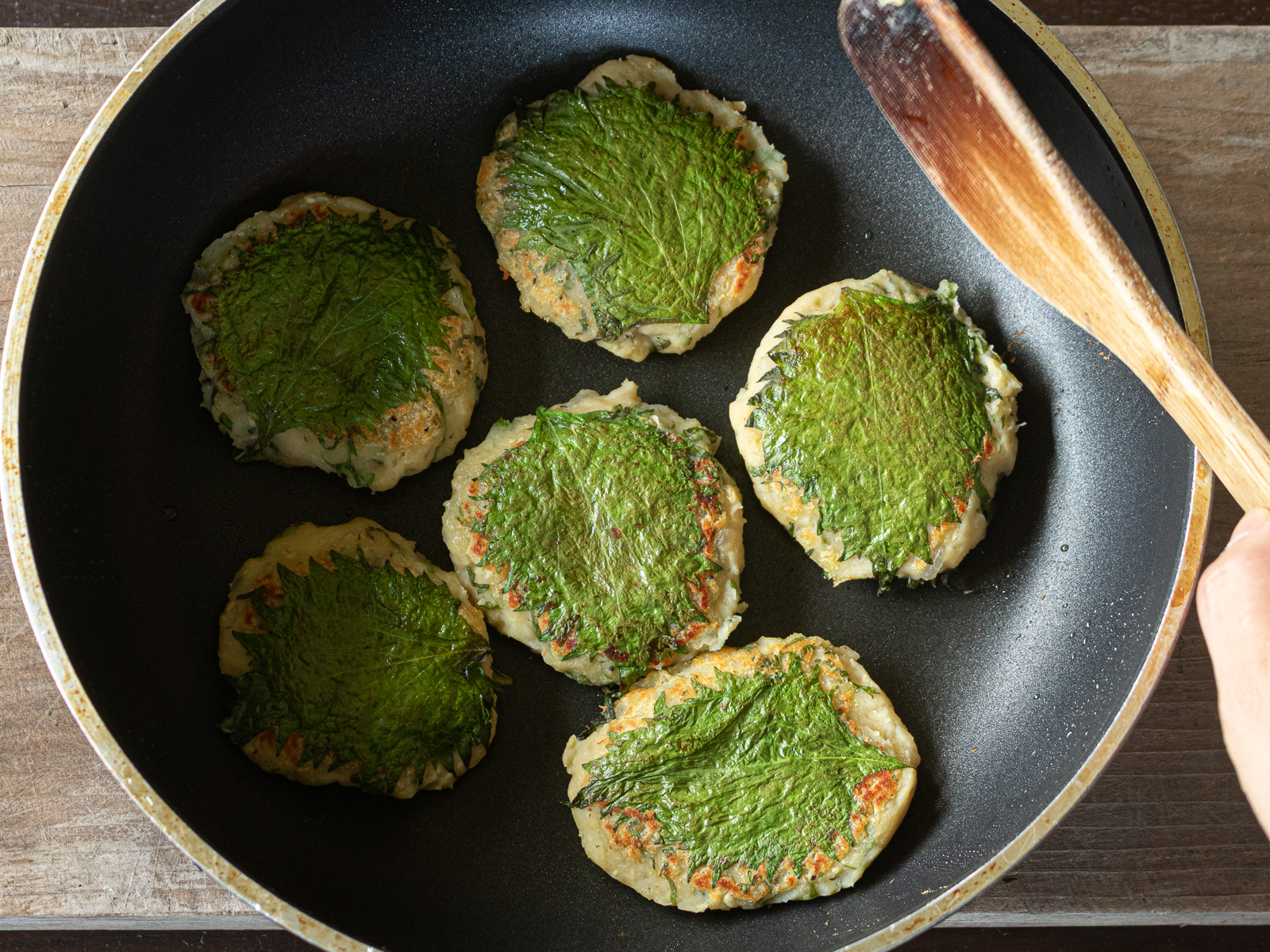
- Cook: Pan-fry over low heat in a thin layer of oil, about 3–4 minutes per side, undisturbed, until golden.
🌿 It's fragile the whole time it's hot. Try not to touch it more than necessary while it's cooking. When it's done, just wait a minute or two — the shape settles and it's easier to move to the plate.
🫙 Storage
The mung bean mash can be refrigerated before adding any seasonings. I like making a batch of mash ahead of time and keeping it in the fridge, then deciding later whether to turn it into these shiso korokke, mung bean oshiruko, or sweet mung bean balls.
For leftover korokke, store them in an airtight container or wrap them individually and keep them in the fridge. Since they're well seasoned, they're delicious even after they've cooled.
📚 FAQ
Lentils, chickpeas, other beans — I think they'd work too. But the cooking time and water needed to get that same smooth, mashed potato-like texture will likely vary a lot by bean. Chickpeas might need extra water when mashed. Lentils cook faster, so they might turn out mushier. The flavor would probably shift too. If I try another bean down the road, I'll come back and update this.
For this recipe, I use yellow mung beans — split mung beans with the green skin removed. Whole green mung beans still have their skins on. They're a little bitter because of it, and cooked and mashed, they don't turn into the same smooth paste. The cooking method is different too.
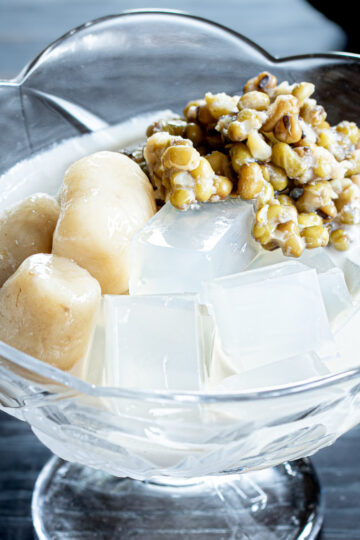
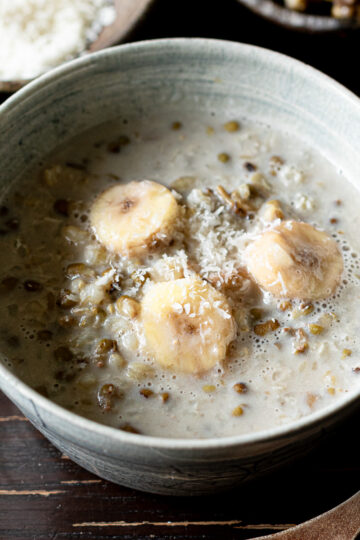
I use cooked whole green mung beans in dishes such as soups, mung bean banana cream, mung beans with agar and coconut milk, and sweet mung bean and banana brown rice porridge.
📔 Leftover Mung Beans?
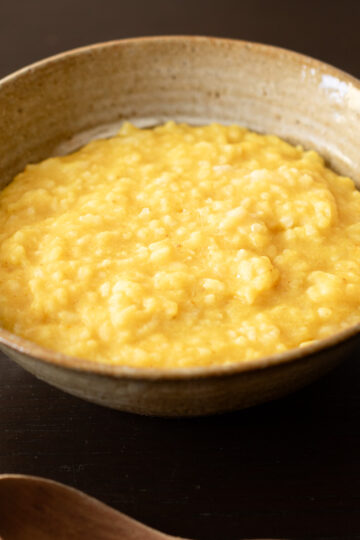
I like using them to make porridge, dal, and my own Japanese-inspired sweets.
🌿 Leftover Shiso Leaves?
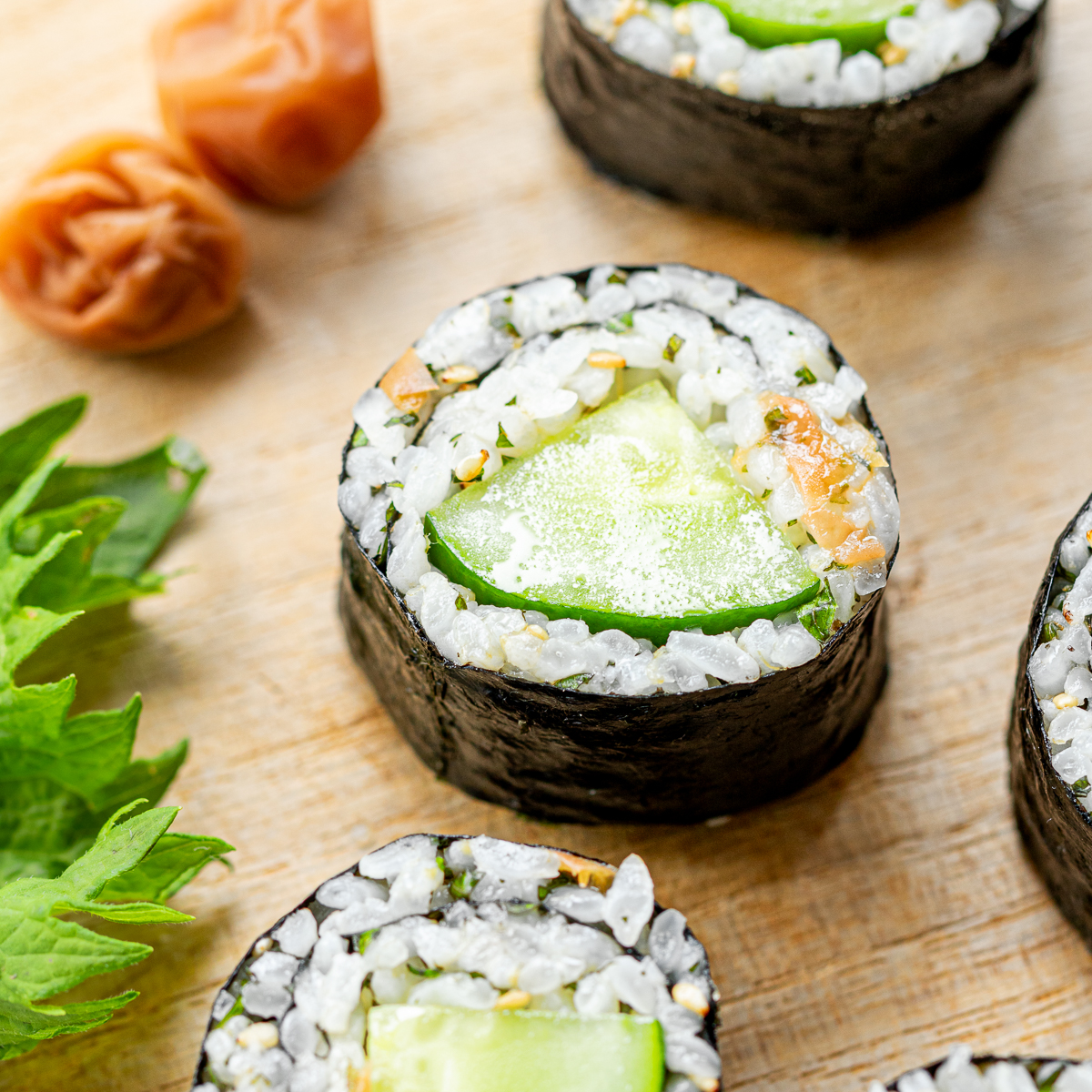
More vegan recipes using shiso leaves:
🌱 More Bean Recipes
Explore more vegan recipes made with a variety of beans and legumes (👉 See the full collection):
✏️ Recipe Card

Vegan Mung Bean Shiso Korokke (Pan-Fried)
Equipment
- pressure cooker - Pearl Metal pressure cooker
- Spatula
- frying pan
- Mixing bowl
- Tray or plate
- Knife and cutting board
Ingredients
Mung bean mash
- 100 g yellow split mung beans
- 200 ml water
Onion
- 30 g onion (finely chopped)
- salt and pepper (to taste)
- 50 ml water
Seasoning
- 1 tablespoon rice koji miso
- ½ teaspoon powdered beet sugar (or preferred sugar)
- 1 teaspoon potato starch
Shiso
- 10 g shiso leaves (sliced thin, for mixing in)
- 12–16 shiso leaves (whole, for sandwiching)
For pan-frying
- oil (as needed)
Instructions
Making the mung bean mash
- Combine the split mung beans and water in a pressure cooker. Cook at high pressure (100 kPa) for 5 minutes.100 g yellow split mung beans200 ml water
- As soon as the pressure releases, open the lid. Stir well with a spatula while still hot, breaking down the beans as much as you can into a smooth paste.
- Let it cool slightly, then chill thoroughly in the fridge — until a spoonful holds its shape when scooped.
Vegetable prep
- Finely chop the onion.
- Wash the shiso leaves and pat dry. Slice about 10g of shiso into thin strips; keep the rest whole for sandwiching.
Saute the onion
- Place the chopped onion in a pan. Season with salt and pepper and warm briefly over heat.30 g onionsalt and pepper
- Add water immediately and braise until the onion softens. Continue cooking until the water fully evaporates. Transfer to a plate and let cool.50 ml water
Mix
- In a bowl, combine the mung bean mash, cooked onion, and two-thirds of the miso, and mix well.1 tbsp rice koji miso
- Add the sliced shiso and mix well. Taste and adjust with sugar, the remaining miso, salt, and pepper as needed.½ tsp powdered beet sugar10 g shiso leaves
- Mix in the potato starch.1 tsp potato starch
Shape
- Lay shiso leaves on a tray.12–16 shiso leaves
- Spoon the mixture on top and flatten into a round shape roughly the size of the leaf.
- Top with a second shiso leaf and press gently to sandwich.
Pan-fry
- Heat a thin layer of oil in a frying pan over low heat.oil
- Pan-fry the korokke, undisturbed, for 3–4 minutes per side, until golden brown.


Comments
No Comments